







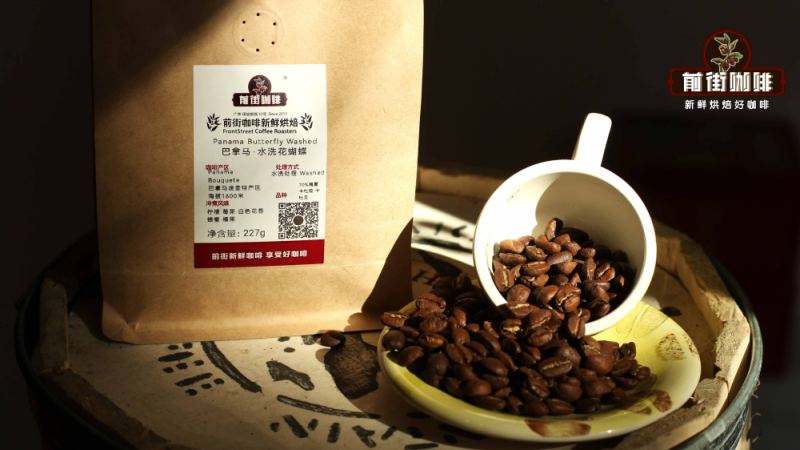
Panama, as an important origin of specialty coffee, has its western Baru Volcanic region nurturing coffees with rich flavor layers thanks to its unique microclimate and volcanic rock soil. This article focuses on Front Street Butterfly coffee beans, systematically reviewing the terroir conditions of the Boquete production area, the Geisha hybrid lineage and variety composition of Butterfly, and providing an in-depth introduction to the washed processing flow, roasting curve design, cupping performance, and pour-over parameter recommendations. At the same time, it explains the historical origins and cultivation characteristics of the three varieties Geisha, Caturra, and Catuai, helping coffee enthusiasts fully understand the complete journey of this coffee from green bean to cup and master practical techniques such as grind size judgment and staged extraction.
Front Street Panama Coffee Market Analysis Flavor Description Taste Characteristics Grind Setting Processing Method Introduction
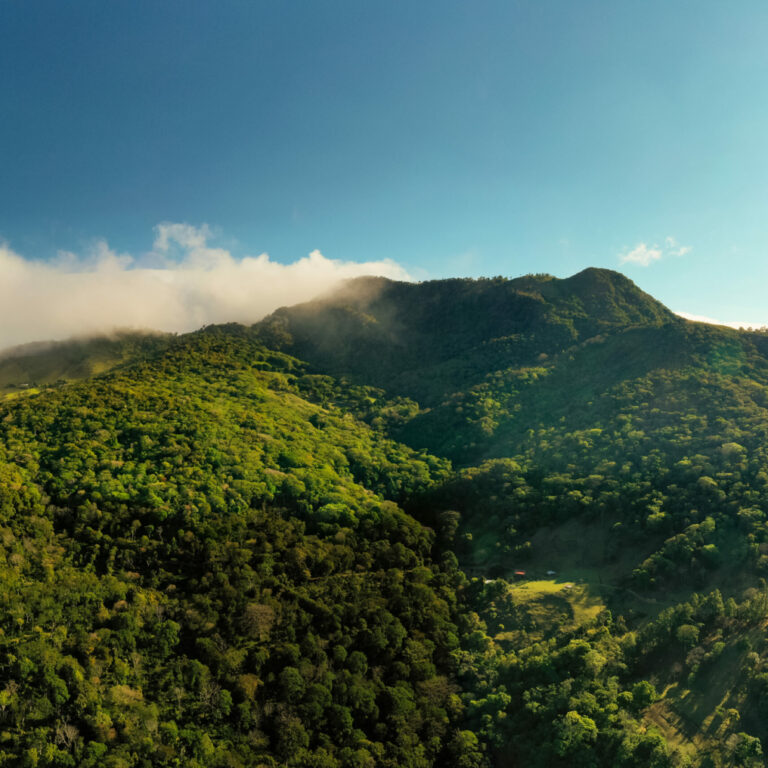
Panama's coffee production areas are mainly concentrated on the eastern and western slopes of the Baru Volcano in the west. Boquete is located on the eastern side of the Baru Volcano, where the area is cool year-round and shrouded in mist, with the mountainous terrain creating a distinctive microclimate. Low temperatures and frequent fog slow the ripening of coffee cherries, which in effect is similar to high-altitude cultivation. Front Street believes that coffees from this production area show a flavor spectrum ranging from cocoa to fruity notes, accompanied by a gentle acidity.
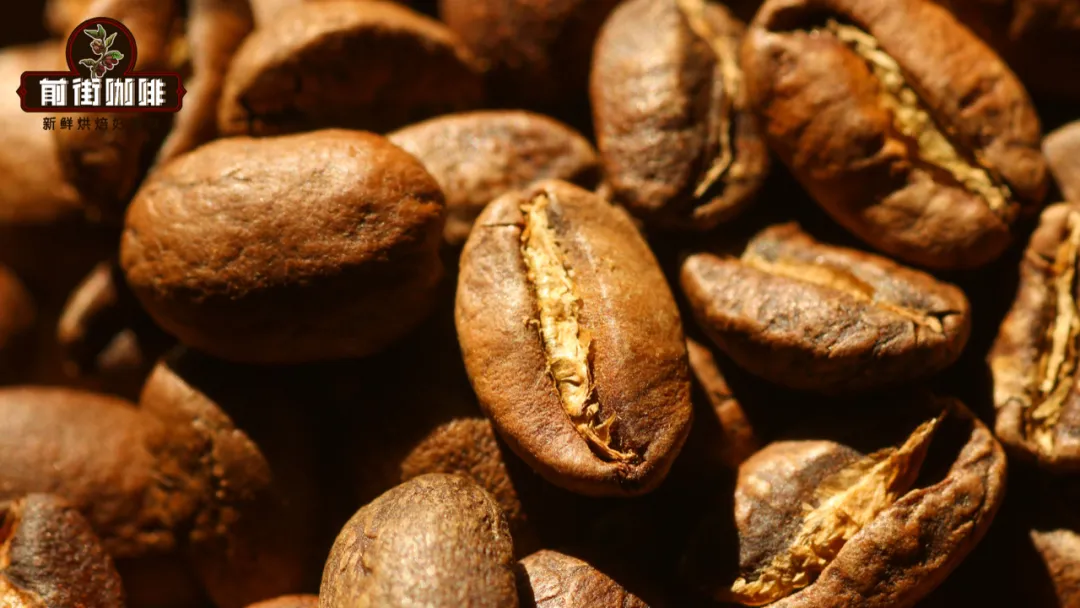
When it comes to standout value-for-money choices among Panamanian coffees, Front Street Butterfly is undoubtedly on the list. This single-origin bean is medium-light roasted and naturally carries elegant floral and fruity aromas, and it performs well with various extraction methods such as pour-over, cold brew, drip bags, French press, and moka pot.
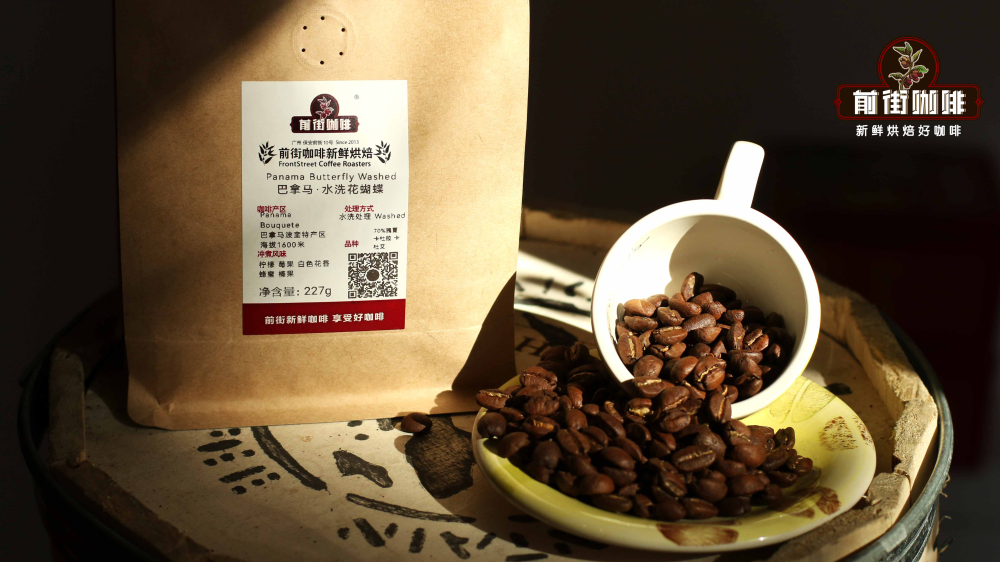
Butterfly Coffee Bean Varieties
Panama Butterfly coffee beans contain 40% to 50% Geisha lineage and are a blend of three varieties: Geisha, Caturra, and Catuai, grown in the Baru Volcano area of Boquete. The region's unique microclimate brings abundant rainfall and significant day-night temperature differences. Combined with volcanic rock soil and careful, meticulous picking and processing, this coffee shows outstanding performance in body, citrus acidity, and the jasmine aroma signature to Geisha. However, Geisha's bean shape and flavor are not like typical Central and South American coffees; instead, they are closer to the heirloom style of Ethiopia. So what exactly is Geisha's origin?
Geisha: first discovered in the Geisha forest of Ethiopia in 1931. It was later sent to the Kenyan Coffee Research Institute, introduced to Uganda and Tanzania in 1936, entered Costa Rica in 1953, and arrived in Panama around 1960. Although Geisha has strong disease resistance, its yield is low, so at the time it was used only as plant material for variety improvement and then faded from view. It was not until the owner of Hacienda La Esmeralda rediscovered it in a windbreak and submitted it separately in 2004 to the Best of Panama cupping competition, where it won first place, that Geisha rose to fame. Since then, Geisha has been introduced to places such as Colombia. Although Geisha grown in other production areas does not perform as amazingly as during the windbreak period, its floral aroma and acidity still perform excellently.
Caturra: a natural mutation of the Arabica Bourbon variety, discovered in Brazil in 1937. Its tree shape is shorter than Bourbon. Because it inherits Bourbon lineage, its disease resistance is relatively weak, but its yield is higher than Bourbon. Although discovered in Brazil, Caturra did not adapt well to Brazil's growing conditions, so it was not widely promoted locally. Instead, it became widespread in Central and South America, with large-scale cultivation in countries such as Colombia, Costa Rica, and Nicaragua.
Catuai: artificially crossbred from Caturra and Mondu Novo. Catuai has strong resistance to natural disasters, especially wind and rain. Its tree is relatively short, and the fruit grows more firmly than on ordinary coffee trees, making picking slightly more difficult. The fruit comes in red and yellow types. At present, there is no evidence that yellow fruit tastes better than red fruit. On the contrary, some cuppers have pointed out that although coffee processed from certain yellow fruits may have acceptable acidity, its cleanliness is inferior to that of red fruit.
Butterfly Coffee Bean Processing Method This Front Street Butterfly coffee uses fine washed processing. During washing, the skin and pulp are first removed, and the beans are fermented for 12 to 18 hours. Then the fermented beans are moved into a washing channel, where they are pushed back and forth; through friction between the beans and the flushing action of water, the coffee beans are cleaned until their surface is smooth and clean. After washing, the coffee beans are still wrapped in parchment, with a moisture content of about 50%, and must be dried in the sun to reduce the moisture content to 12% to 14%; otherwise, they will continue to ferment or even mold and spoil. After drying is completed, the coffee beans are sorted and then stored in dedicated warehouses.
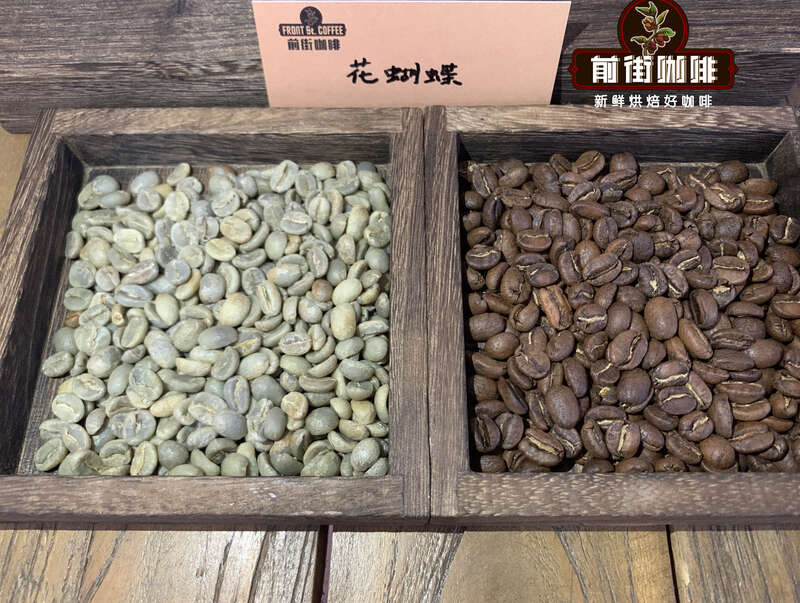
Front Street Coffee Green Bean Analysis Butterfly coffee beans are washed processed and have the cleanliness and clear floral aroma typical of washed beans, with a moisture content of only 9.9%. Therefore, Front Street's roaster plans to charge at a low temperature, then use high heat and a small airflow opening to accelerate dehydration. After the dehydration stage ends, switch to medium airflow and medium heat to avoid an overly rapid Maillard reaction. Drop the roast when first crack is at its densest.
Front Street Coffee Roasting Data
Yangjia 800N, roasting amount 550g: preheat the roaster to 200°C and charge, after 30 seconds adjust the heat to 160, open the airflow to 3, turning point at 1 minute 31 seconds, maintain the heat; at 4 minutes 50 seconds turn yellow, the grassy smell dissipates, entering the dehydration stage, at 165°C lower the heat to 130°C, keep airflow at 4. At 7 minutes 50 seconds dehydration is complete, the bean surface shows wrinkles and dark blotches, the toasted bread aroma turns into coffee aroma, entering the pre-first-crack stage, at which point it is necessary to listen for the sound of first crack. First crack begins at 8 minutes 31 seconds, open the airflow fully to 5, adjust the heat to 70°C. After first crack, develop for 1 minute 28 seconds and drop at 193°C.
Front Street Coffee Cupping Report
Dry aroma: citrus, berries, floral Wet aroma: citrus, jasmine
Flavor: peach, grape, caramel, honey
Front Street Coffee Brewing Tips
Dripper: V60 #01
Dose: 15g
Coffee-to-water ratio: 1:15
Grind size: 80% passing a No. 20 sieve
Water temperature: 90-91°C
*Regarding grind size, Front Street uses sieving to confirm it. Based on the Specialty Coffee Association of America SCA's grinding recommendations for pour-over coffee, and combined with practical verification, Front Street has found that brewing with different grind sizes produces noticeably different results, and the suitable grind size for each coffee bean is different, which is exactly the significance of sieving. If you do not have a sieve at home, Front Street Coffee recommends judging by observing the flow rate: if the flow is too fast, the grounds are too coarse; if the flow is too slow, the grounds are too fine.
Front Street recommends choosing freshly roasted coffee beans when brewing coffee. Usually, flavor performance is better starting from the 4th day after the roast date. Therefore, Front Street Coffee insists on roasting fresh coffee beans. However, Front Street also understands that some customers want to brew immediately after receiving the beans, without waiting for the resting period, so when shipping, beans roasted within 5 days are sent. Adding 1 to 2 days of transit time, they arrive in customers' hands at around 4 to 7 days, just when the coffee beans have rested properly and can be brewed immediately.
Front Street Coffee uses staged extraction, also called three-stage brewing: first bloom with 30 grams of water for 30 seconds, then pour in a small stream in circles until 125 grams for the stage break, and when the water level drops and is about to expose the coffee bed, continue pouring until 225 grams and stop. When the water level again drops and is about to expose the coffee bed, remove the dripper. The extraction time is 2 minutes 05 seconds, starting from the beginning of the bloom.
Butterfly brewing flavor: jasmine aroma, black tea-like tea body, the sweet-tartness of berries and citrus, a finish with slight nuts, smooth mouthfeel, low bitterness, moderate acidity, medium aftertaste.
The above content is compiled by CoffeeHunters, a coffee news website.


