







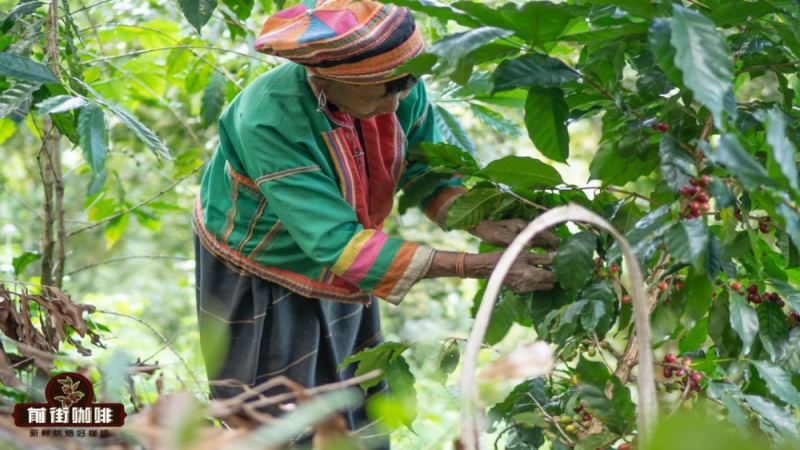
Yunnan's connection with coffee can be traced back over a century, from the first coffee tree introduced by French missionaries to today, the coffee industry on this land has undergone variety replacements from Typica and Bourbon to Catimor, and has also witnessed a transition from commercial bulk raw materials to specialty transformation. This article sorts out the historical context and development milestones of Yunnan small-grain coffee, analyzes the varietal meaning of the term "small-grain," and delves into the differences between Typica and Catimor in disease resistance, yield, and flavor. At the same time, Front Street will share the cultivation practices, sun-drying processing methods, and medium-roast approach for Yunnan Typica coffee beans, along with pour-over parameter suggestions, to help coffee enthusiasts comprehensively understand the flavor characteristics and brewing key points of Yunnan coffee.
The Evolution Trajectory of Yunnan's Coffee Industry
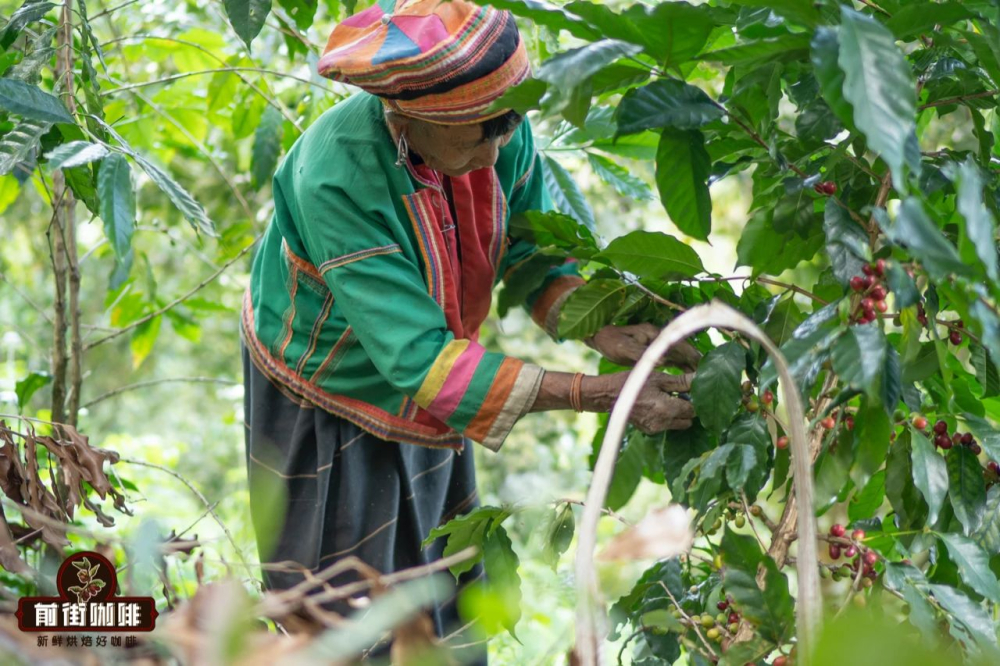
In 1904, French missionary Tian Deneng brought coffee saplings to Zhugula Village in Binchuan, Yunnan. This action opened the prelude to coffee cultivation in Yunnan and also meant that this land has been accompanied by coffee for more than a century.
Entering the 1950s and 1960s, Yunnan's coffee planting area further expanded, and this was also the beginning of China's truly large-scale coffee cultivation for commercialization purposes. After the founding of New China in 1952, under the leadership of agricultural academy expert Ma Guojin, coffee cultivation formally embarked on a path of scale, with products mainly supplied to the Soviet Union. As early as 1937, patriotic overseas Chinese Mr. Liang Jinshan brought a batch of seeds back from Myanmar to Baoshan and opened up the coffee planting area in Lujiangba. At that time, the varieties planted in Yunnan all belonged to Typica and its variant Bourbon, and the planting scale once reached 50,000 mu.
However, the good times did not last long. Global leaf rust swept through Yunnan, a large number of coffee trees died, and the planting area shrank sharply. It was not until the 1980s after reform and opening up that Yunnan coffee gradually moved toward the international market. In 1988, Nestlé and other foreign-funded enterprises established branches in China and supported Yunnan's coffee industry from multiple levels. On the one hand, they introduced high-yield and disease-resistant varieties such as Catimor; on the other hand, they promised to purchase Yunnan coffee beans as production raw materials by referring to the then U.S. futures prices. These actions not only allowed the planting area to expand again, but also mobilized coffee farmers' enthusiasm for production, and at the same time established the pattern in which Catimor replaced traditional varieties such as Typica and became the main planted variety of Yunnan coffee.
In recent years, with the rise of China's coffee consumption wave and society's attention to the rural economy and sustainable development, coffee practitioners from all over the world have successively entered Yunnan, and Front Street is among them. Everyone has started from multiple dimensions such as pest and disease control, shade tree management, soil and water conservation, selection of planting altitude, and fresh fruit picking and processing techniques to continuously improve the quality of local coffee, and Yunnan coffee has therefore gradually won attention and recognition. Domestic and international brands such as Starbucks, Blue Bottle Coffee, Luckin, and Manner have successively launched products from Yunnan production areas, allowing more consumers to recognize the flavor and quality of Yunnan coffee.
Compared with the past, people today are more willing to actively get to know Yunnan as an "emerging production area." Many customers who come to Front Street stores to taste pour-over coffee will ask whether there are Yunnan beans. This shows that the image of Yunnan coffee in people's minds is changing in a positive direction, and at the same time it is continuously advancing in the process of specialization to win the favor of more coffee consumer groups.
What Kind of Coffee Does "Small-Grain" Actually Refer To?
The so-called "small-grain" is actually the Arabica variety. Compared with the medium-grain coffee (Robusta) planted in Hainan, China, its fruit is smaller. As Front Street mentioned above, the coffee trees first introduced to Yunnan all belonged to the two pure Arabica varieties, Typica and Bourbon. Arabica grown in high-altitude environments has rich sweet and sour aromas and is recognized by the industry as a high-quality variety.
But the shortcomings of these two varieties are also obvious: extremely weak disease resistance, susceptibility to infection, and relatively low fruit yield per plant. Therefore, most Yunnan farmers who rely on coffee for their livelihood switched to planting the higher-yielding Catimor.
Although Catimor is classified under Arabica, genetically speaking it carries about 25% Robusta lineage. According to materials consulted by Front Street, Catimor "CIFC7963" is a hybrid variety bred by the Portugal Coffee Rust Research Center (CIFC) to combat coffee rust. In appearance, this variety shows a compact tree shape, short plant, dense branching, short fruit nodes, vigorous growth, and tenacious vitality. Its most prominent advantages are astonishing rust resistance and high-yield characteristics. Precisely because it inherits Robusta genes, Catimor not only has strong disease resistance and high yield, but after roasting the coffee beans also release a large amount of oil, while carrying the "devil flavor" unique to Robusta. Its performance in cupping is often rather mediocre, lacking memorable points, and it also cannot compare with pure Arabica varieties grown under the same altitude conditions, such as Caturra and Bourbon.
So, besides Catimor, does Yunnan currently grow other small-grain varieties? The answer is yes. The coffee trees selected and bred by Front Street in Lincang, Yunnan in 2013 are precisely the ancient variety Typica. After five or six years of careful cultivation, the first batch of fruit was finally harvested in 2020, processed by the sun-drying method, and named "Front Street 2013."
Is Yunnan Small-Grain Coffee Good?
In the past, Yunnan coffee farmers lacked mature experience accumulation in coffee cultivation. Coffee trees were mostly planted at lower altitudes, and coupled with rough processing methods, the quality of the coffee produced was mediocre. Most of it was purchased for the production of commercial instant coffee, which also led the public to form a fixed impression that Yunnan coffee was of poor quality. With the promotion of domestic specialty coffee culture, more and more coffee practitioners and researchers have devoted themselves to the cultivation stage in Yunnan production areas, continuously improving coffee quality from aspects such as pest and disease control, shade tree management, soil and water conservation, planting altitude, and fresh fruit picking and processing methods. Today's Yunnan small-grain coffee not only has a clean profile, but can also show unique flavor characteristics through different post-processing methods.
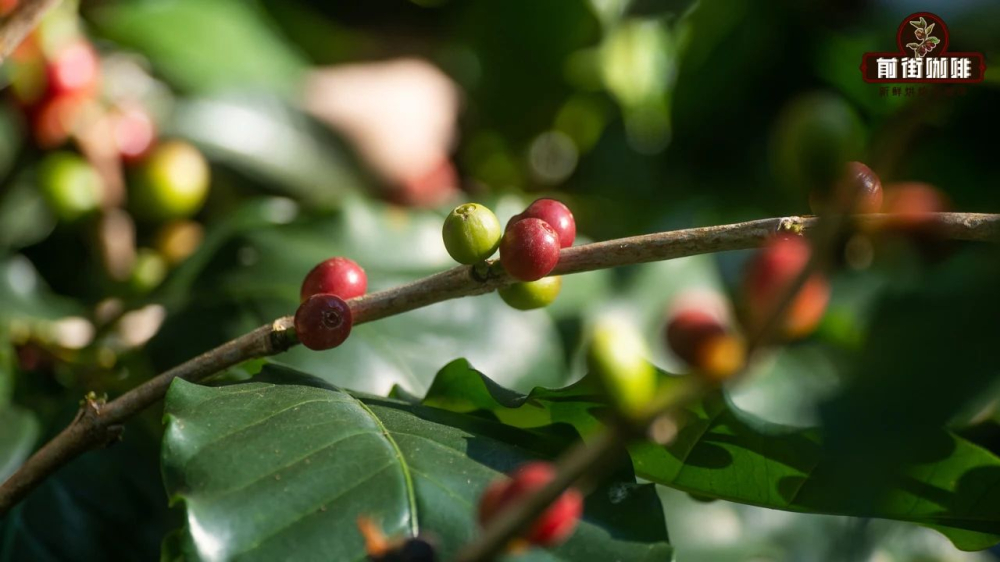
Around November each year, the coffee fruits grown by Front Street gradually mature. Front Street arranges workers to pick the red coffee cherries on the trees one by one, and spreads the fresh fruit in the sunlight in a timely manner for natural drying, turning it irregularly to ensure uniform dehydration and prevent negative flavors caused by excessive fermentation. After the coffee beans are dehydrated to a purplish-red color and reach the target moisture content, they are sent to the hulling and roasting stages. After several days of sun exposure, Front Street 2013 Typica coffee shows a fuller fermentation aroma, with especially prominent sweetness, carrying aromas of caramel, berries, and black tea.
Whenever Front Street chats with everyone about the flavor characteristics of Yunnan coffee, some describe it as chocolate, some think it is like sweet potato, and some friends think it is like Sanhua plum. Front Street believes that the flavor of Yunnan small-grain coffee follows a neutral and balanced route, presenting sourness, sweetness, and bitterness. Therefore, the Yunnan coffee on Front Street's bean shelf is uniformly medium-roasted, which not only highlights caramelized aromas such as chocolate and nuts, but also retains part of the fruit acidity. In cupping, Front Street 2013 Yunnan small-grain Typica presents aromas of chocolate, nuts, dried apricot, and brown sugar, as well as a round sweetness of melons and fruits. After swallowing, a black-tea-like aftertaste remains in the mouth.
Front Street's Pour-Over Suggestions for Yunnan Small-Grain Coffee
Dripper: hario v60
Dose: 15g
Water temperature: 90°C
Grind size: 75% passing through a No. 20 sieve
Water-to-coffee ratio: 1:15
Three-stage pouring: First wet the coffee bed with water twice the weight of the coffee grounds, form a dome, and let it bloom for 30 seconds. Then pour in a thin stream in circles from the inside out. Pause the staged pouring at 125g. Wait until the coffee bed drops to half the height of the dripper, then pour the third stage in the same thin stream to 225g. After all the coffee liquid has filtered through, remove the dripper. The total time is about 2 minutes.
Front Street Yunnan Small-Grain Everyday Bean Coffee Flavor: It smells of obvious nutty aroma. On the palate, it presents flavors of herbs, chocolate, and caramel. The aftertaste carries a faint hint of fruit acidity. The overall mouthfeel is balanced, and the cleanliness is quite good.
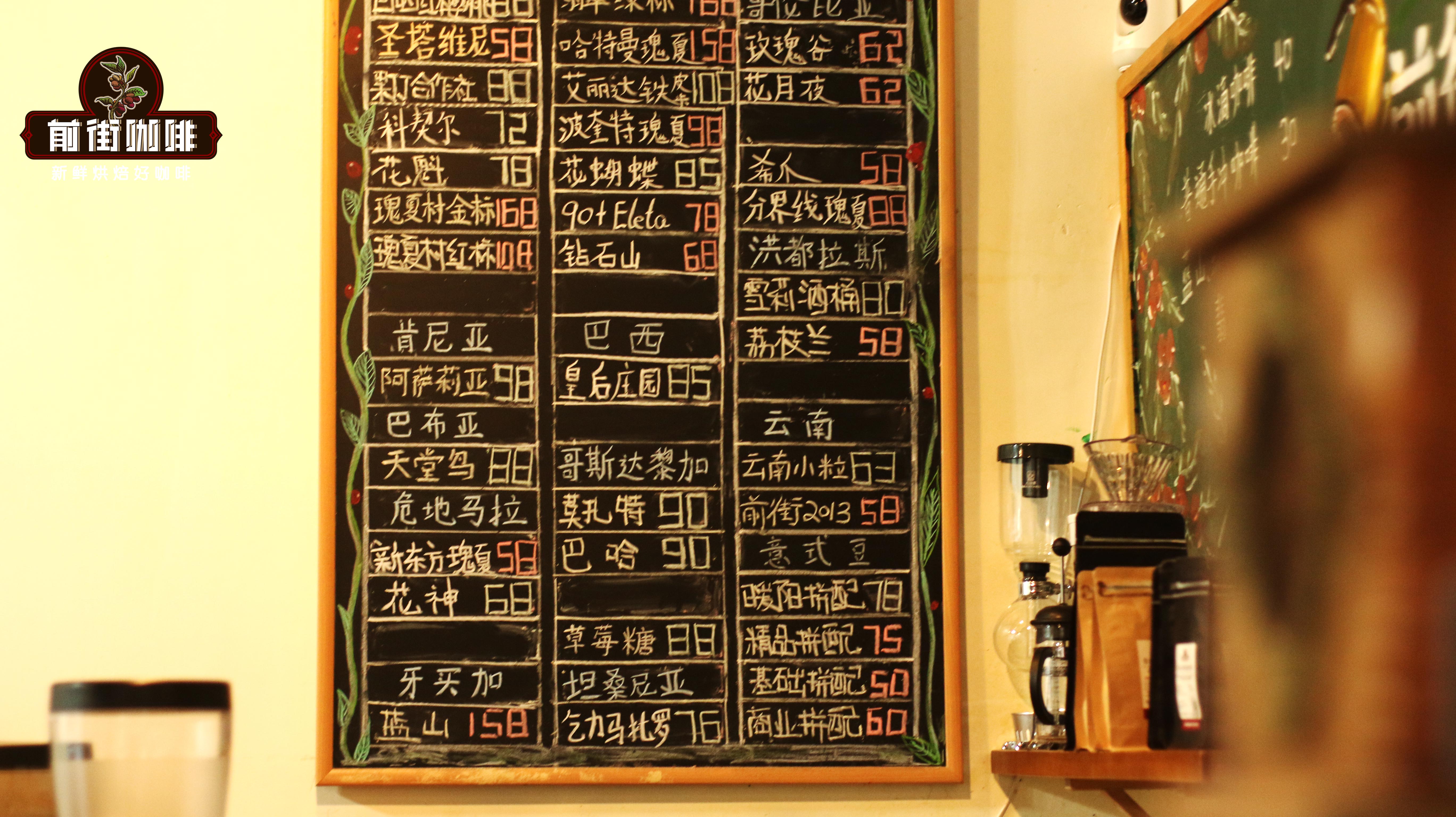
Front Street 2013 Sun-Dried Typica Coffee Flavor: The dry grounds give off aromas of caramel, nuts, and citrus; at high temperature it shows chocolate, fermentation, and berries. As the temperature drops, it presents plum-like acidity, as well as a clear sweet finish like black tea and sugarcane. The body is medium-high, the mouthfeel is clear, and the layers are rich and varied.
The above content is compiled by CoffeeHunters, a coffee news website.


