







Yunnan, as the starting point of coffee cultivation in China, has always held a key position in the coffee landscape. Front Street Coffee has been rooted in Lincang, Yunnan since 2013, participating in everything from seed selection to processing, and ultimately cultivating the "Front Street 2013" natural Typica. This article revolves around this bean, first outlining the botanical characteristics and flavor profile of the Typica variety, then reviewing Front Street's cultivation journey in Yunnan and the rationale behind choosing natural processing, and finally providing specific parameters for pour-over extraction in-store along with a three-stage pouring scheme, helping coffee enthusiasts fully understand the complete picture of Yunnan Typica from seed to cup.
Front Street 2013 Natural Typica opens with a base of caramel, nuts, and chocolate, accompanied by fermented notes, berry-like sweet acidity, and a finish reminiscent of black tea and sugarcane. The body is medium-high with a clean texture, and the black tea character lingers for a long time, offering rich layering overall.
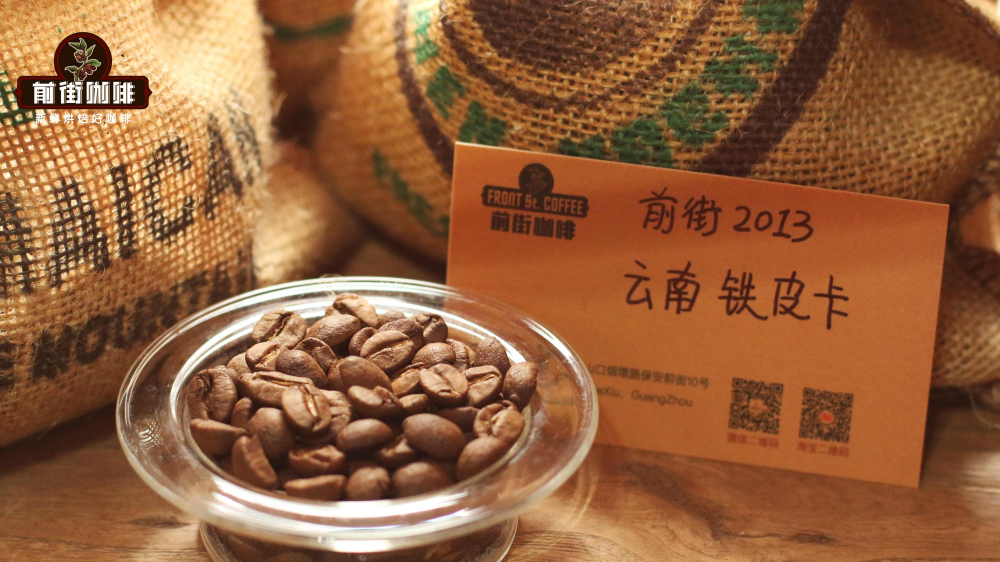
Yunnan is the earliest region in China to cultivate coffee and holds an irreplaceable position in the history of Chinese coffee development. Front Street Coffee began investing in Yunnan cultivation about ten years ago, participating personally from the very source. The "Front Street 2013" on the bean list is the crystallization of years of effort, using the time-honored Typica variety and processed naturally, shared for all coffee lovers to taste.
What are the characteristics of the Typica variety?
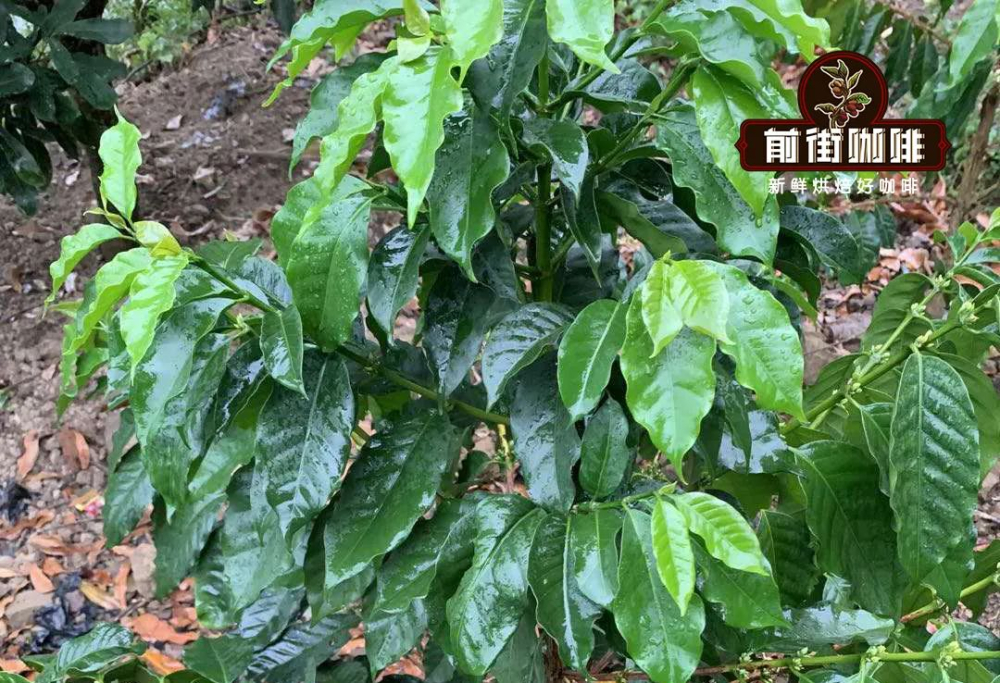
The most直观 feature of the Typica coffee tree is that the terminal bud and young leaves are reddish-bronze in color, hence the name "red-top coffee." The trunk is relatively slender, the branches are thin and slightly inclined, with the angle between lateral branches and the vertical main stem ranging from 50 to 70 degrees. A mature plant can reach about 5 meters in height, making manual picking inconvenient. At the entrance of Front Street Coffee's shop, there happens to be a pot of Typica and a pot of Catimor, so you can observe and compare them while enjoying your coffee. Typica coffee beans are relatively large, elongated, with pointed and slightly upturned ends, somewhat resembling an egg in shape. In terms of flavor, Typica often carries citrus-like acidity and a sweet finish, regarded by many in the industry as a representative of elegance and clarity—Jamaican Blue Mountain coffee is itself a Typica variety.
Typica has extremely weak disease resistance, with virtually no defense against common diseases such as leaf rust and berry disease, and its yield is quite limited. Once a coffee tree is infected with leaf rust, it is essentially given a death sentence, eventually withering or even dying. Coffee is an economic crop, and Typica—low-yielding and frail—is difficult to profit from, leading many growers to abandon it and switch to varieties with better disease resistance. Growing an elegant and pure Typica is no easy task: terroir conditions, plant management, fruit picking, and post-processing each require full assurance for the beans to develop positive flavors and mouthfeel. This also means that producing优质 Typica requires more labor costs and technical dedication.
How does Front Street Coffee cultivate Typica?
China has a deep-rooted tea culture, and coffee is an imported product, so the general public's understanding of coffee knowledge is relatively limited. In order to explore more coffee knowledge, Front Street headed to Lincang, Yunnan in 2013, officially beginning its chapter of coffee cultivation. From site selection, seed selection, seedling raising, planting, harvesting, processing to roasting, everything was personally handled by Front Street colleagues, accumulating considerable experience and knowledge about varieties, altitudes, and processing methods.
Yunnan originally cultivated the ancient Typica and Bourbon varieties, but later global leaf rust invaded Yunnan's coffee-producing regions, causing widespread death of coffee trees and a sharp reduction in planting area. Subsequently, with the support of several foreign enterprises, the high-yield, disease-resistant Catimor was introduced. This turn of events allowed Catimor to replace the ancient Typica's position, becoming the dominant variety in Yunnan coffee today. Typica has low yield, is susceptible to disease, and has high management costs; growers face a longer exploration cycle, which is why most Yunnan coffee farmers are unwilling to plant it.
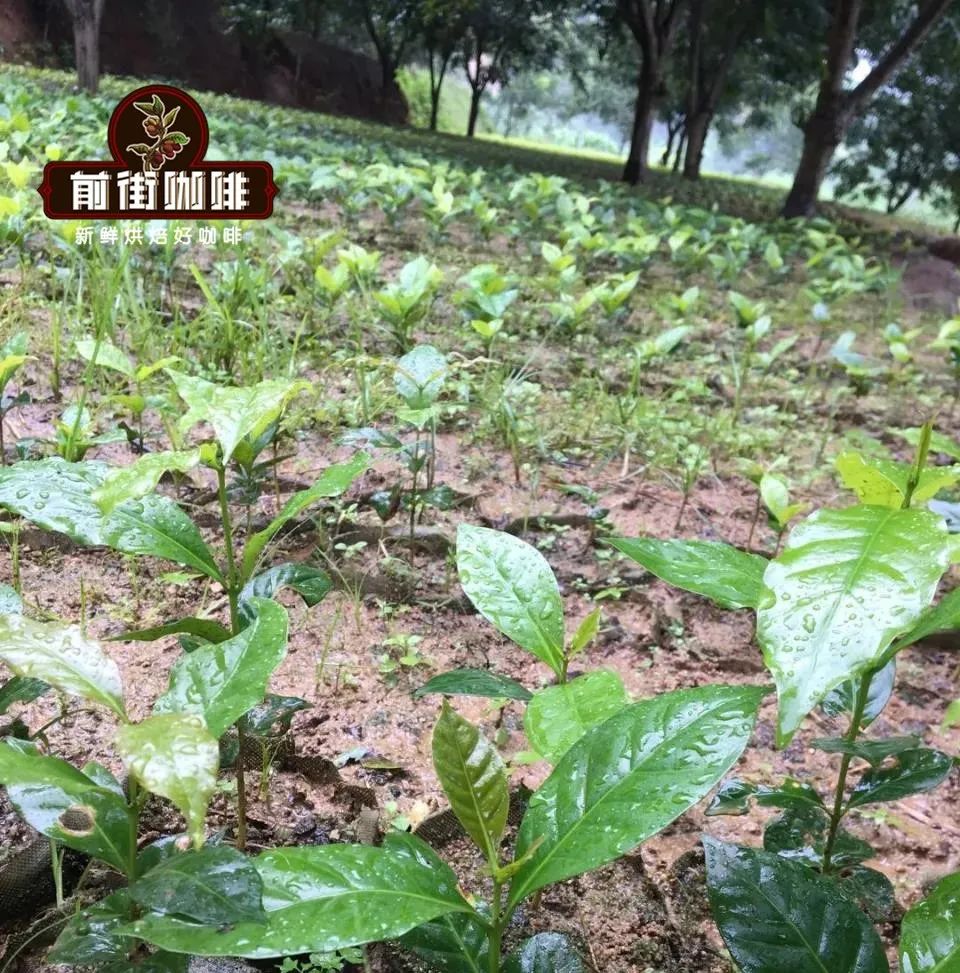
Lincang, Yunnan is influenced by the warm, humid airflow from the Indian Ocean and the southwest monsoon, with indistinct boundaries between seasons but a clear distinction between dry and rainy seasons. It has abundant rainfall, long sunshine hours, and a short frost period—some areas are frost-free year-round—with significant three-dimensional climate characteristics, making it very suitable for Arabica coffee cultivation. Front Street therefore specifically chose the most primitive Typica. However, the delicate Typica is known for low yield and poor resistance, so Front Street put considerable effort into planting and management. After 5 to 6 years of cultivation, in 2020 Front Street finally harvested its first crop, processed it by natural sun-drying, and named it "Front Street 2013."
Why use natural processing?
At Front Street, Yunnan coffee beans are available in only two processing methods: washed and natural. For this Typica, Front Street chose natural. Natural processing requires no complex equipment; the core is simply letting the coffee cherries dry evenly under consecutive sunny days. The steps may seem simple, but to do natural processing well, every detail of each stage must be controlled precisely.
After picking, coffee cherries must be processed immediately. They first undergo screening, with flotation being one of the common screening methods. The screened cherries are then sun-dried. Front Street assigns personnel to turn them regularly to prevent uneven heating and excessive fermentation. When the coffee cherries dehydrate from bright red to dark purple and reach the target moisture content, they can proceed to hulling and roasting. Compared to washed processing, natural Typica presents a fuller fermented flavor, with prominent sweetness and aromas of caramel, berries, and black tea.
The pour-over flavor and mouthfeel of Yunnan Typica coffee
In terms of roasting strategy, Front Street believes Yunnan coffee should possess both a rich coffee aroma and a certain acidity, so a medium roast is used. Daily in-store output is extracted by pour-over, striving to present the coffee's own aroma to the drinker.
Pour-over black coffee is both the daily extraction method used by Front Street Coffee (FrontStreet Coffee) baristas and a method many coffee enthusiasts can easily do at home. Front Street takes into account the relatively balanced mouthfeel of Yunnan Typica coffee, which should not have excessively high acidity or heavy bitterness. Front Street tends to use a V60 dripper, paired with a medium-fine grind and medium water temperature for extraction.
Front Street matches corresponding parameters when brewing different coffee beans. For darker-roasted beans, such as Mandheling coffee and Brazil coffee, Front Street uses water at 87 to 88 degrees Celsius and a medium-coarse grind; for lighter-roasted beans, such as Ethiopian Yirgacheffe and Panama Geisha coffee, it uses high temperatures of 91 to 93 degrees Celsius and a medium-fine grind to bring out the aroma of high-altitude hard beans. Returning to the brewing of Front Street Yunnan small-bean coffee, Front Street uses a medium water temperature and grind to highlight a balanced, neutral mouthfeel.
Brewing parameters :
Dripper: hario v60
Dose: 15g
Water temperature: 90 degrees Celsius
Grind: 75% passing through a No. 20 sieve
Water-to-coffee ratio: 1:15
Three-stage pouring: First, wet the coffee bed with twice the coffee's weight in water, wait for it to form a dome and bloom for 30 seconds, then pour in a slow stream in circles from inside out until reaching 125g, pause the stage, wait for the bed to drop to half the dripper's height, then pour the third stage with the same fine stream until 225g. Once all the coffee liquid has drained, remove the dripper. Total time is about 2 minutes.
The above content is compiled by CoffeeHunters, a coffee news website.


