







What does cafe monkey parchment mean in Yirgacheffe coffee?
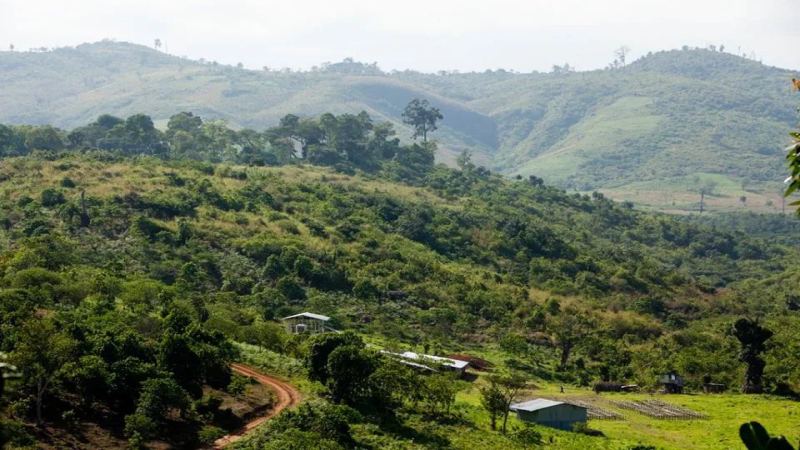
Yirgacheffe is a small town in Ethiopia's Gedeo Zone, northwest of Sidamo and downstream of the Great Lakes, ringed by springs and rivers that supply local washing stations. Its flavors, citrus, jasmine, berry and honey, have become closely associated with specialty coffee. Two representative lots, the washed Gutingding Cooperative and the natural Red Cherry, sit at the center of this profile.
Smallholder families grow about 90 percent of Ethiopian coffee, roughly 1.2 million households, and most cherry is delivered to nearby processing plants, which sell the coffee under their own name. This cafe monkey parchment system explains why cooperative and washing station names appear on bags, and why the raw coffee bean meaning here ties directly to a place rather than a single farm.
Yirgacheffe is one of Ethiopia's most iconic specialty coffee regions, renowned worldwide for its citrus, jasmine, and berry notes. From the perspective of Front Street Coffee, this article systematically reviews the geographical and historical background of the town of Yirgacheffe, explains in detail the processing methods, cup profiles, and roasting approaches of two representative coffees—the washed Gedingding Cooperative and the natural Red Cherry—and includes complete V60 three-pour brewing parameter recommendations to help coffee enthusiasts fully understand the unique charm of this region.
When it comes to African coffee, Front Street first thinks of the birthplace of coffee—Ethiopia. Citrus, citric acidity, jasmine, ripe strawberry, tropical fruit, berries, honey—these words are often used to describe the flavor characteristics of Ethiopian coffee beans. Among the many producing regions, Yirgacheffe has the loudest reputation, and its flavors have almost become synonymous with specialty coffee.
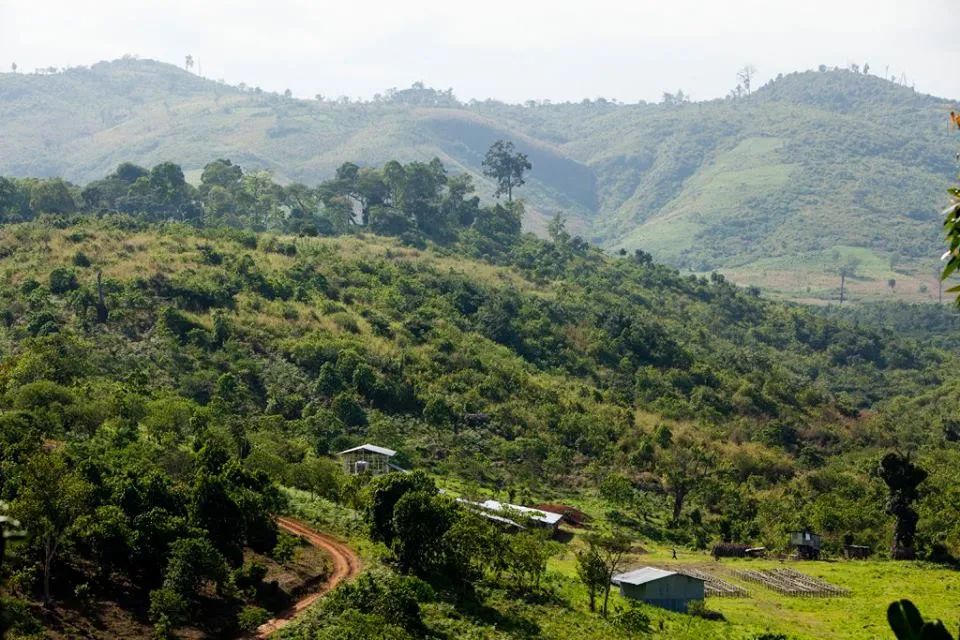
Yirgacheffe is actually a small town
Coffee cultivation in Ethiopia is mainly concentrated in the western and southern regions, where smallholder families account for 90% of overall cultivation, with about 1.2 million households relying on coffee farming for their livelihood. Local coffee production systems can be classified into four categories: forest coffee, semi-forest coffee, garden coffee, and large plantations, with garden coffee being the most common form. Because each smallholder's output is limited, coffee cooperatives and green bean processing plants of varying scales have formed within the region to handle unified processing. Farmers deliver their harvested coffee cherries to processing plants near water sources for centralized processing, after which the coffee is sold externally under the processing plant's name. The Yirgacheffe producing region operates in exactly this way.
Yirgacheffe is a small town northwest of the Sidamo Province in Ethiopia, located in the Gedeo Zone, situated just downstream of the Great Lakes, surrounded by abundant springs and crisscrossing rivers that provide ample freshwater resources for washing stations. Front Street also noted that in the ancient Ethiopian language, "Yirgacheffe" is a combination of two words: Yirga (ይርጋ) meaning calm, to settle down, and cheffe (ጨፌ) referring to marshy wetlands—together meaning "let us settle and make our home on this wetland."
Nestled against mountains and beside a lake, at an altitude between 1,700 and 2,100 meters, it is one of the highest coffee-producing regions in Ethiopia. It originally belonged to Sidamo, but later, because of its outstanding flavors and growing reputation, it became independent from the greater Sidamo region and became the exclusive Yirgacheffe producing region. The small town is shrouded in mist year-round, with spring-like weather in all four seasons, gentle breezes, cool rather than hot, humid but not damp, and no cold damage in winter, making it very suitable for coffee crop growth. The coffee produced here naturally carries distinctive citrus and floral aromas.
Front Street's bean list features several Yirgacheffe coffees, all processed naturally by washed or natural methods, among which the washed Gedingding Cooperative and the natural Red Cherry are the most representative.
Washed Gedingding Cooperative Coffee
The Gedingding Cooperative has 300 partner smallholders and is known for growing coffee of the highest quality in Ethiopia. Its processing method follows the most traditional washing techniques and has been praised by many as "the last pure land of Yirgacheffe." Among the guests who come to Front Street for coffee, if they want a coffee with a washed fruity profile, the baristas at FrontStreet Coffee will always first recommend the Gedingding Cooperative coffee on the bean shelf. This washed bean does not have the heavy bitterness of traditional black coffee; its fresh, bright citrus and citric acidity along with the fragrance of jasmine make many coffee lovers fall in love at first sip.
In the traditional method, farmers harvest coffee cherries and spread them directly on patios or the ground, using sun exposure to dry them. When the moisture content of the coffee fruit drops to around 12%, it can be sent for hulling and packaging. This processing method easily produces earthy flavors, over-fermentation, and rotten fruit notes. To improve the defective flavors caused by sun exposure, Ethiopia introduced washed processing technology from Central and South America.
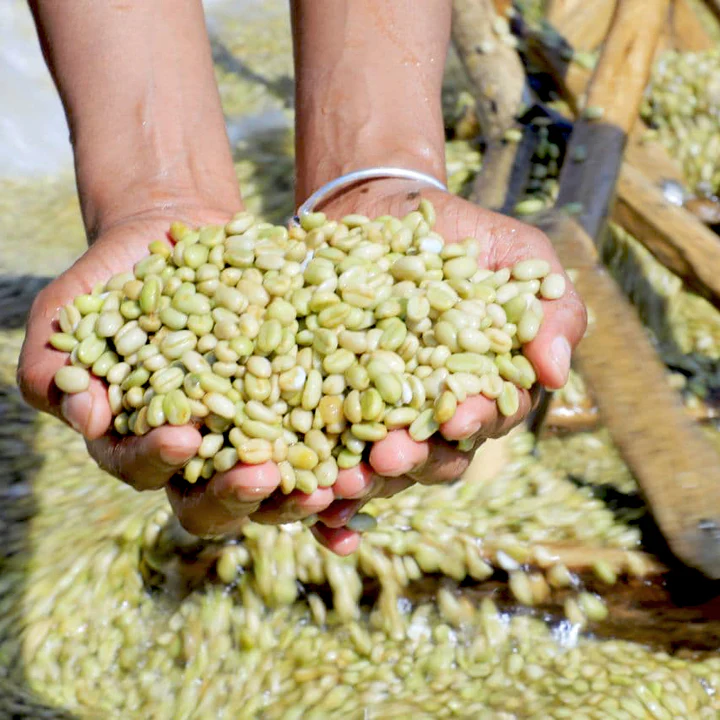
The washing process is as follows: pour coffee cherries into a tank, remove floating unripe beans, use a machine to remove the skin, then place the beans in a clean tank to ferment. The acidic substances produced by the fermentation of the green beans cause the mucilage layer to fall off, then rinse the surface of the parchment beans with clean running water, and finally dry them in sunlight to complete the process. The washing process includes multiple steps that can remove defective beans, resulting in a cleaner acidity in the cup.
Natural Red Cherry Coffee
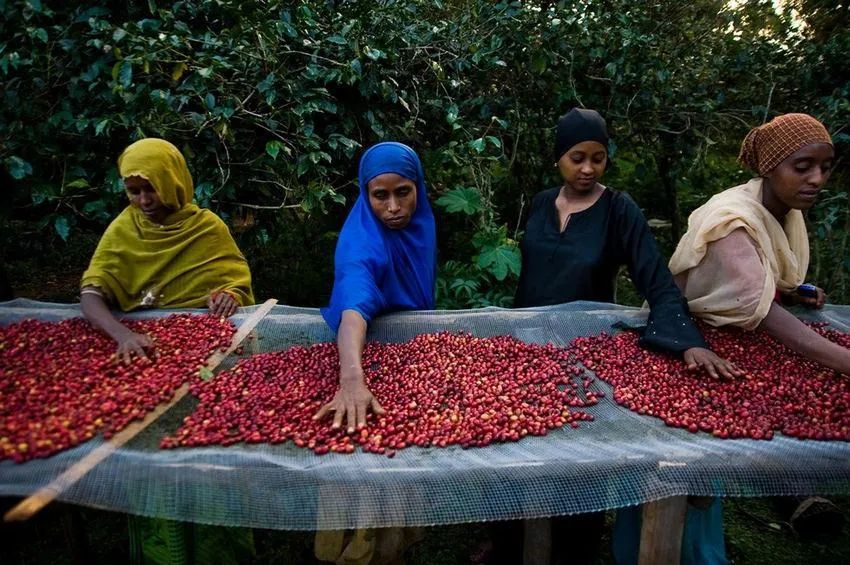
The "Red Cherry Project" is a project initiated in 2007 by the Dutch trading company Trabocca BV, aimed at improving the quality of Ethiopian coffee.
This project mainly targets high-altitude producing regions such as Yirgacheffe in Ethiopia, improving washed, semi-washed, and natural processing techniques, and bringing in professional cuppers to participate. During the harvest season, different harvest volumes are set for different microclimate areas, picking only 100% ripe red coffee cherries, with production of about 1,500 to 3,000 kilograms. The economic loan support, new hardware equipment, and production knowledge and technology provided by Trabocca have significantly improved the quality of coffee beans in the Yirgacheffe region and even throughout Ethiopia. Coffee prices have also risen accordingly, thereby increasing the income of coffee farmers.
Front Street's natural Yirgacheffe Red Cherry coffee beans use fully red cherry natural processing from the Aricha Farm. The green coffee beans are pale yellow, plump, complete in appearance, with a low defect rate, reaching G1 grade. The natural Yirgacheffe has a more intense flavor and richer layers, with vinous fermentation notes and relatively high sweetness.
The Aroma and Flavor of Yirgacheffe
In terms of roasting, Front Street considers that Yirgacheffe should have acidity as its main flavor direction, so it adopts a medium-light roast. The washed Yirgacheffe Gedingding Cooperative coffee beans use a light roast to retain more bright acidity and white floral notes; the natural Yirgacheffe Red Cherry coffee beans use a medium-light roast, presenting full berry sweetness and acidity. Every time Front Street releases a coffee bean, it conducts at least one cupping evaluation. Under the same standards, cupping allows us to more objectively feel the strengths and weaknesses of the coffee.
Cup profile of the washed Gedingding Cooperative coffee: the dry fragrance releases fresh passion fruit, citrus, and berry acidity; the wet aroma is citrus and berries; on the palate there is citrus acidity, berry sweetness, accompanied by almond and tea notes, with a honey-like sweetness in the finish. Low body, bright acidity, clean and refreshing.
Cup profile of the natural Red Cherry coffee: the dry fragrance shows full berry sweetness and acidity; when sipped at different temperatures, one can perceive soft berry sweetness and acidity, ripe fruit fermentation, obvious honey sweetness, and a black tea finish, with a smooth mouthfeel.
Yirgacheffe Brewing Recommendations
Regardless of the extraction method used, Front Street believes that the freshness of coffee beans is very important. If the roast date is more than two months ago, the coffee's aroma has likely already faded, and even the best extraction techniques will find it hard to restore the aroma in the cup. To let everyone experience coffee at its best tasting stage, Front Street only ships beans freshly roasted within 5 days, so by the time you receive them, they are just about ready to brew.
Because Yirgacheffe uses a light roast, the coffee beans are relatively hard and require hot water at 92°C to 93°C to draw out the floral and fruity flavors in the coffee. For grind size, Front Street recommends medium-fine grinding (78% passing through a Chinese standard No. 20 sieve). Too coarse and it cannot extract rich substances, making the brewed coffee seem thin; too fine and it is prone to over-extraction at high water temperatures, making the brewed coffee prone to bitterness.
During cupping, Front Street noticed that this bean expresses different flavors at different temperatures, so the brewing method uses three-pour extraction, allowing different flavor substances to show their best selves as the coffee bed rises in temperature in stages. To highlight the fresh and alluring aroma of washed Yirgacheffe, Front Street uses a V60 dripper for brewing. The dripper's spiral rib design allows the coffee grounds to degas better, maximizing the volatilization and dissolution of aromatic acidic substances.
In terms of brewing ratio, Front Street believes 1:15 to 1:16 are both acceptable. If you want a richer mouthfeel, use 1:15; if you want to feel the floral sweetness more clearly, use 1:16 to let the flavors spread out more.
Dripper: V60 Water temperature: 92-93°C Dose: 15g Coffee-to-water ratio: 1:15 Grind size: fine granulated sugar size (78% passing through a No. 20 sieve)
Three-pour brewing: Wet the coffee bed with water at twice the weight of the coffee grounds, forming a dome, and let it bloom for 30 seconds. Then pour in a thin stream in circles from the inside out until reaching 125g, pause, and wait for the coffee bed to drop to halfway down the dripper. Continue pouring the third pour with the same thin stream until reaching 225g, then let all the coffee liquid filter through, remove the dripper, and the total time is about 2 minutes.
For professional coffee knowledge exchange and more coffee bean information, please follow Coffee Workshop (WeChat public account: cafe_style)
For more specialty coffee beans, please add the private WeChat of Front Street Coffee (FrontStreet Coffee), WeChat ID: qjcoffeex
The above content is compiled by CoffeeHunters, a coffee news website.


