







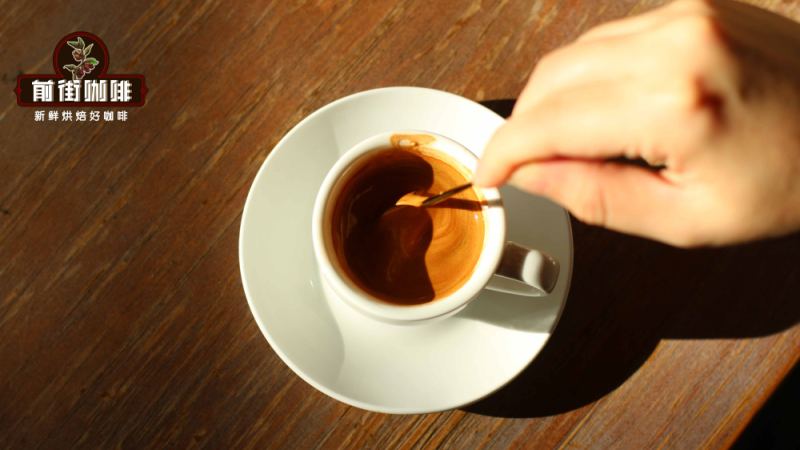
Making a proper espresso: tamping looks simple, but it is a key step that affects extraction uniformity and consistency in the cup. A flow rate that is too fast often indicates under-tamping, while a flow rate that is too slow may mean over-tamping—both directly change the direction of the coffee’s flavor. Drawing on Front Street Coffee’s hands-on experience, this article outlines the core purpose of tamping, the difference between distribution and tamping, whether a distribution tool is necessary, and details such as tamper selection, tamping posture, and pressure control. It also combines a comparative experiment with Front Street Sunflower Warm Sun Blend to help coffee lovers understand how to reduce channeling through standardized operation and make espresso extraction more stable.
For more specialty coffee knowledge, please follow: Front Street Coffee (Frontsteet Coffee)
To make a good espresso, Front Street Coffee (FrontStreet Coffee) has always believed that tamping is the most basic yet most unignorable step. A faster flow usually means insufficient tamping pressure; a slower flow is mostly due to tamping too hard. These directly show up in the state of the finished espresso and the sensation on the palate. In practice, the portafilter, distribution tool, and tamper are common tools at hand, so people often ask Front Street Coffee (FrontStreet Coffee): since there is already a tamper, is a distribution tool still necessary? Exactly how much pressure is appropriate for tamping? Today Front Street Coffee (FrontStreet Coffee) will help you clarify these questions one by one.
When extracting espresso, even if the parameters are exactly the same, pulling several shots in a row may still be unstable. After excluding machine factors, the problem often lies in insufficient consistency during tamping. When Front Street Coffee (FrontStreet Coffee) extracts espresso, the tamper is an essential tool; the purpose is to make extraction more uniform, production more stable, and reduce the error rate.
The purpose of tamping
1. Suppress channeling and make extraction more uniform.
After distribution is completed, the gaps between coffee particles are not necessarily uniform, and the loose puck is easily broken apart by 9 bar hot water during extraction, making channeling more likely. Compacting the puck can arrange the coffee grounds more tightly and minimize differences in particle gaps, thereby reducing the probability of channeling.
2. Maintain consistency in the cup as much as possible and reduce mistakes.
Extracting espresso is itself a technical task. Every time you dose and distribute, it is difficult to ensure the particle gaps are completely identical, and tamping, as the final step before extraction, plays a decisive role in whether the espresso is stable.
Below is a comparison of the differences between espresso extracted with tamping and without tamping. The coffee beans used are Front Street Coffee (FrontStreet Coffee)’s own Front Street Warm Sun Blend. This Front Street Coffee (FrontStreet Coffee) Sunflower Warm Sun Blend is made by blending Front Street Sherry Barrel-processed coffee beans with Front Street sun-dried Yirgacheffe Red Cherry Project. The coffee bean information is as follows:
Front Street Coffee (FrontStreet Coffee)·Front Street Sunflower Warm Sun Blend
Blend composition: Front Street Honduras Sherry Barrel & Front Street Yirgacheffe Sun-Dried Red Cherry
Flavor description: vanilla, cream, fermented wine aroma, chocolate
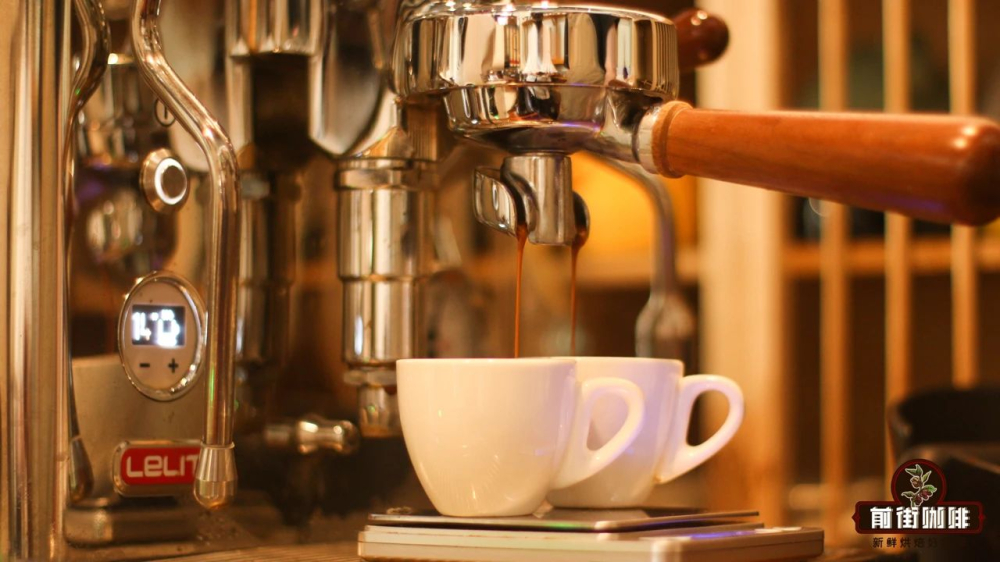
Front Street Coffee (FrontStreet Coffee) uses 20 g of coffee powder to extract 40 g of Espresso. The experimental results are as follows:
Distributed with distribution tool, no tamping
Coffee liquid amount: 40g
Extraction time: 22s
Observe the extraction process: there is spurting when the liquid flows out, and the flow rate is unstable throughout.
Sensory: sharp acidity, watery
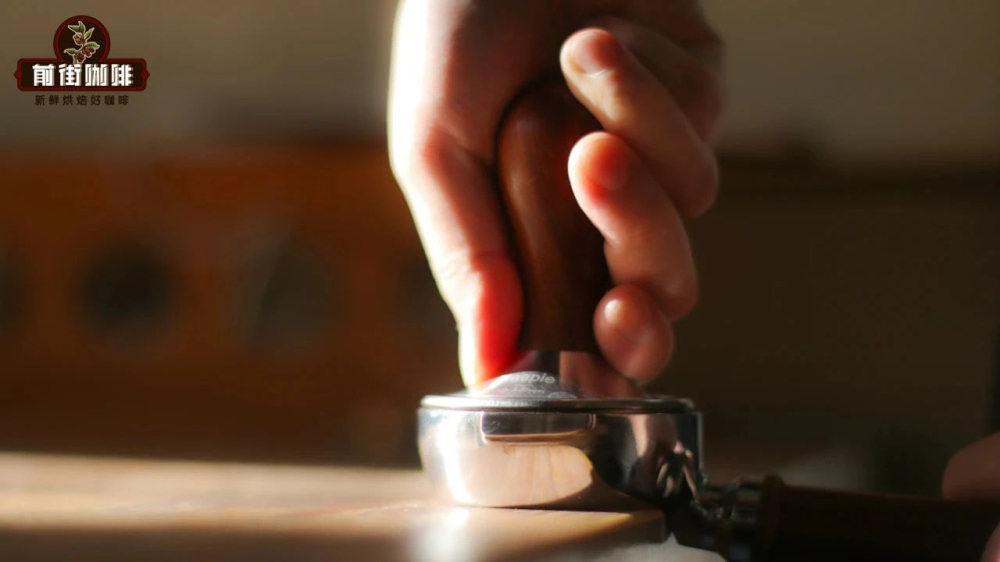
Tamped
Coffee liquid amount: 40g
Extraction time: 27s
Observe the extraction process: the overall flow rate is uniform, with no spurting.
Sensory: rich chocolate and fermented wine aroma
Distribution tool
Front Street Coffee (FrontStreet Coffee) believes that when making a proper espresso, distribution is an important step. The quality of distribution can even affect the success or failure of a cup of coffee, and it is also a key item in barista assessments and scoring.
The two most important purposes of distribution: breaking up and leveling
1. Breaking up
Make the coarse and fine particles output by the grinder as evenly distributed as possible, avoid concentration of coarse or fine powder, and prevent clumps;
2. Leveling
Make the grounds spread flat in the basket and distributed evenly, without too much or too little in any area, neither piled up nor empty.
Common distribution methods include finger distribution and distribution tool distribution. Finger distribution is to gently move your fingers back and forth above the basket to level the surface of the grounds. Note that you should move horizontally at the edge of the basket, not press down into the puck.
A distribution tool can mix coffee grounds, break up clumps, and evenly distribute particles, but it also has some shortcomings: it wastes coffee grounds, the tool is relatively complex, operation requires some skill, the downward pressure during distribution may cause internal cracks, and it only smooths the surface while distribution and thickness cannot be guaranteed to be consistent.
Tamper
Tamping is using a tamper to compact loose coffee grounds so that the puck forms a certain resistance against 9 bar water pressure.
1. Suppress channeling and make extraction more uniform.
After distribution is completed, the gaps between coffee particles are not necessarily uniform, and the loose puck is easily broken apart by 9 bar hot water during extraction, making channeling more likely. Compacting the puck can arrange the coffee grounds more tightly and minimize differences in particle gaps, thereby reducing the probability of channeling.
2. Maintain consistency in the cup as much as possible and reduce mistakes.
Extracting espresso is itself a technical task. Every time you dose and distribute, it is difficult to ensure the particle gaps are completely identical, and tamping, as the final step before extraction, plays a decisive role in whether the espresso is stable.
The difference between a distribution tool and a tamper
After reading the above introduction from Front Street, the difference between the two should be clear. Front Street Coffee (FrontStreet Coffee) summarizes simply: a distribution tool only makes the coffee grounds even, while tamping uses a tamper to compact the loose coffee grounds so that the puck forms a certain resistance against 9 bar water pressure.
So is a distribution tool necessary?
Front Street Coffee (FrontStreet Coffee) believes that if the grinder output quality is acceptable and clumping is not serious, you can simply level it directly. Smoothing by hand or tapping flat can basically distribute it evenly, and with a suitable tamper and hand-tamping technique, stable production can be achieved. If you are producing in large quantities or have higher quality requirements, you can choose suitable tools as needed to assist.
How to tamp correctly
Front Street Coffee (FrontStreet Coffee) thinks that first you should choose a tamper that matches the diameter of the coffee portafilter. A mismatched diameter may make it impossible to press down, or create a gap with the edge of the basket, making tamping meaningless.
Tamping posture varies from person to person, but the core idea is the same: the tamper handle should be perpendicular to the basket, and the force applied to the tamper should be evenly distributed. Press down on the basket so that the puck is flat and smooth. If uneven force causes a slanted tamp, the high-temperature, high-pressure hot water from the group head will seek the layer with the least resistance to penetrate, causing uneven extraction.
Tamping pressure also varies from person to person. Around 2000, when La Marzocco was designing the Swift automatic fill device, it conducted extraction experiments with force from 2 pounds to 30 pounds (about 15 kg) and found that no matter how much force was used, by the time the force reached the bottom of the puck it was almost no longer under force. Therefore, the amount of tamping pressure has little effect on espresso extraction; as long as the grounds are compacted tightly, it is fine. When tamping, you can also “feel” the compression change of the puck; there is no need to press too hard. If the puck is pressed too tightly, the resistance is too great, the time required for water to penetrate the puck becomes longer, and the final extracted coffee will be viscous and burnt-bitter.
After tamping, a small amount of fine powder may stick to the tamper or the surface of the basket. At this point, simply rotate the tamper gently and then remove it.
For more specialty coffee beans, please follow the WeChat public account: Front Street Coffee (FrontStreet Coffee)
The above content is compiled by CoffeeHunters, a coffee news website.


