







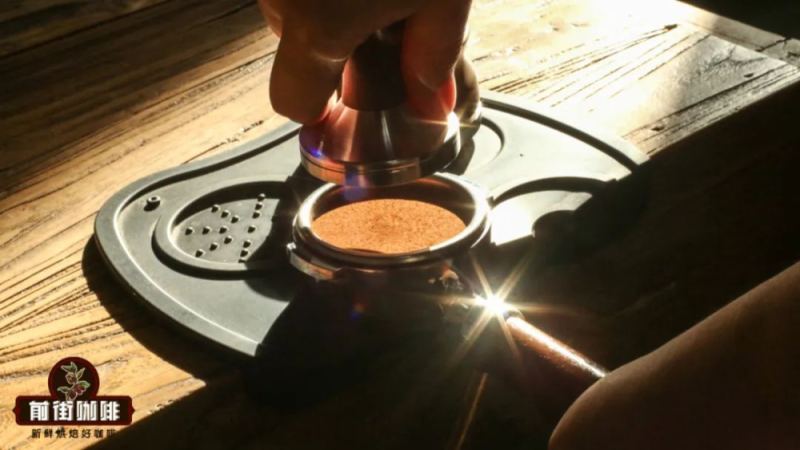
In the process of making espresso, distribution and tamping are often regarded as key steps that determine extraction quality. However, how much force does tamping actually require? Do different force levels really change extraction time and flavor? This article will use comparative experiments to analyze the differences in espresso extraction time and taste under three conditions: light tamping, heavy tamping, and no tamping, and further explain the actual concept of a coffee machine's 9-bar pressure and its effect on the puck. At the same time, the article will also explain why tamping is still necessary under such high pressure, and how moderate tamping can reduce channeling, allowing hot water to penetrate the coffee bed more evenly, thereby achieving a more balanced espresso flavor.
For more specialty coffee knowledge, please follow the WeChat public account: Front Street Coffee (FrontStreet Coffee)
In the article "The Importance of Distribution and Tamping," Front Street shared that in the preparation stage before espresso extraction, whether the coffee grounds are evenly distributed in the portafilter basket and whether the tamping pressure is applied evenly will both affect extraction and influence the taste of the espresso. However, because it did not mention how much force should be used for tamping, many friends privately messaged Front Street on the backend: how much force should be used for tamping?
Actually, Front Street has previously shared several test articles about tamping force, but because those articles only contained experimental comparisons, I believe many friends could not understand it thoroughly. Therefore, today Front Street will focus on sharing: the impact of tamping force on extraction, and what exactly the concept of a coffee machine's 9-bar pressure is. Why mention the coffee machine's pressure? Keep reading and you will know!
Extraction Experiment So first, let's get straight to the point and look at what changes occur in espresso extraction time and espresso taste when the same dose is tamped with different levels of force. Considering the characteristics of espresso, the coffee beans used for extraction are Front Street's Classic Blend coffee beans, which are rich in crema. This is a recipe composed of beans from three origins: Brazil, Indonesia, and Vietnam. It uses a dark roast, which can maximize the coffee's rich aroma and also make it easy for everyone to extract abundant and dense coffee crema. Whether making an Americano diluted with water or a latte paired with milk, it is very suitable. It can be purchased and ordered at the Front Street Taobao store or the Front Street Tmall flagship store.
In the first step, the dose we used was 20 g, the target yield was 40 ml, and the tamping forces were 2 kg for light tamping and 18 kg for heavy tamping. To ensure the stability of the results, Front Street extracted a total of 6 espressos, then took the average extraction time. The results are as follows:
The average time for the three pucks using 2 kg light tamping was: 33 s. The average time for the three pucks using 18 kg heavy tamping was: 34 s. In terms of taste performance, there was almost no major difference between the two: balanced acidity, sweetness, and bitterness, with prominent flavor. But the matter did not end there. Front Street then extracted two special espressos. What was special about them?

What was special was that after distribution, these two espressos were not tamped at all and were extracted directly. Their extraction result was likewise 33 s. We can see from the extraction time that whether light tamping, heavy tamping, or no tamping, the extraction time did not change significantly.
This may differ somewhat from most people's understanding. Front Street once also thought that when the tamping force we use is greater, the grounds can be pressed more tightly, and the extraction time would be relatively prolonged due to increased puck resistance, thereby improving extraction efficiency. In fact, this is not the case. The reason is simple, because many people overlook the extraction method of the coffee machine.
Exactly how strong is the extraction pressure of a coffee machine? As is well known, espresso machines use pressure to quickly make a cup of coffee in a short time. Generally speaking, during espresso extraction, the coffee machine will use 9 standard atmospheres of pressure for extraction, which is what we often call 9 bar.
Perhaps because the number is a single digit, many friends cannot understand exactly how strong this force is. That's okay, let's do a simple conversion: 1 bar from a coffee machine applied to a puck in a 58 mm portafilter basket is approximately equal to about 27 kg of force, so 9 bar is about 27*9 = 243 kg, which is equivalent to the weight of 4 adults. One can imagine why a coffee machine can extract the substances from coffee so quickly. So we can know that no matter how forcefully one tamps, in the face of pressure as high as 9 bar, it is simply insignificant. But this raises another question: why do we tamp? If tamping is ineffective, wouldn't it be fine to extract directly after distribution?
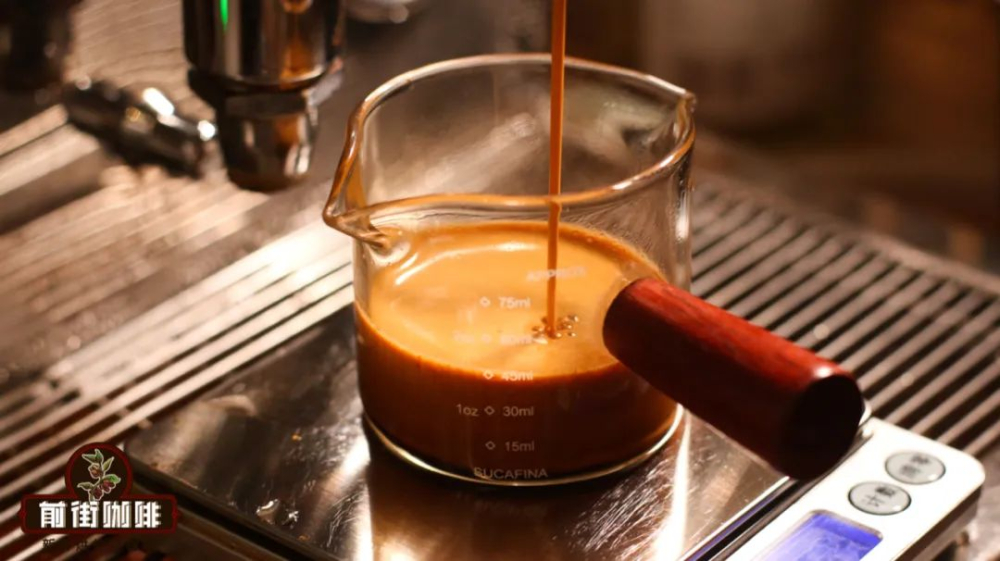
Why tamp? This question is actually very simple, because we need to reduce channeling. As the saying goes: water flows to the low places. Because water has inertia, it will flow to places where it can move easily. The same applies during extraction! Without tamping, there will be many gaps between the coffee grounds. These gaps will cause hot water to pass through in concentrated paths during extraction, thereby resulting in uneven extraction.
The reason Front Street did not release taste impressions for the no-tamping extraction above is precisely because the uneven extraction produced negative taste performance. Therefore, we need proper tamping to eliminate gaps as much as possible, so that hot water can extract more evenly. The force does not need to be excessive; moderate is enough.
The above content is compiled by CoffeeHunters, a coffee news website.


