







What sugar goes in coffee and which pour-over parameters change the cup?
Six factors shape pour-over flavor: water temperature, coffee-to-water ratio, grind size, pouring technique, time and water quality. Inconsistent results usually trace back to one of these drifting between brews rather than to a single decisive variable. Fixing the ratio and grind first makes the other adjustments far easier to read.
Water quality is often overlooked: minerals carry extraction, and what sugar goes in coffee does not fix a poorly extracted bed. Once temperature, ratio and grind are stable, pouring technique and total time can be varied on purpose. Switch beans or drippers one at a time, and note what sugar is used for coffee only after the brew itself is consistent.
The charm of pour-over coffee lies in its variability, but behind that variability, there are discernible patterns. Many enthusiasts follow tutorials to brew, yet the taste is inconsistent—sometimes good, sometimes bad. The problem often lies in grasping the core parameters. Based on Front Street Coffee's production experience, this article systematically outlines the six major factors affecting pour-over flavor: water temperature, coffee-to-water ratio, grind size, pouring technique, time, and water quality. It delves into how to choose the water temperature range, how the coffee-to-water ratio balances extraction yield and concentration, why grind size is crucial, and how to adapt pouring techniques on the fly, using specific cases and recommended bean lists to help you find consistent good taste amidst changing parameters.
Many friends, after reading Front Street Coffee's articles, make special trips to the shop to exchange ideas, and the most discussed topic is still pour-over parameters. A customer once asked Front Street Coffee: With so many variables in pour-over, which one is the decisive factor?
He asked this because he carefully followed tutorials each time, but the coffee he brewed was always inconsistent—whether it tasted good or not seemed like a matter of luck, so he suspected he was making a mistake at some key step. Taking this opportunity, Front Street Coffee will today sort out with everyone which parameters truly influence coffee flavor and who plays a key role in extraction.
The charm of pour-over coffee lies in: variability
I believe everyone has heard the saying "coffee is a metaphysics," such as the tail end must be cut off to avoid bitterness, the filter paper should be rinsed before adding grounds, the bloom should bubble up, and changing the cup makes the coffee more aromatic... When we don't understand the principles behind these operations, they indeed seem mysterious; but once we understand what extraction is and what flavor is from a scientific perspective, these questions naturally cease to be mysterious.
The same goes for parameters. There are many details affecting pour-over; every time you switch to a new bag of beans, change a dripper, or adjust a variable, the brewing end can bring a completely new experience. From experience, brewing a good cup of coffee relies on six elements: water temperature, coffee-to-water ratio, grind size, pouring technique, time, and water quality. The first four are most closely watched, time is constrained by the first three, and water quality can be referenced in Front Street Coffee's previous articles. Below, Front Street Coffee will break them down one by one.
| Water Temperature
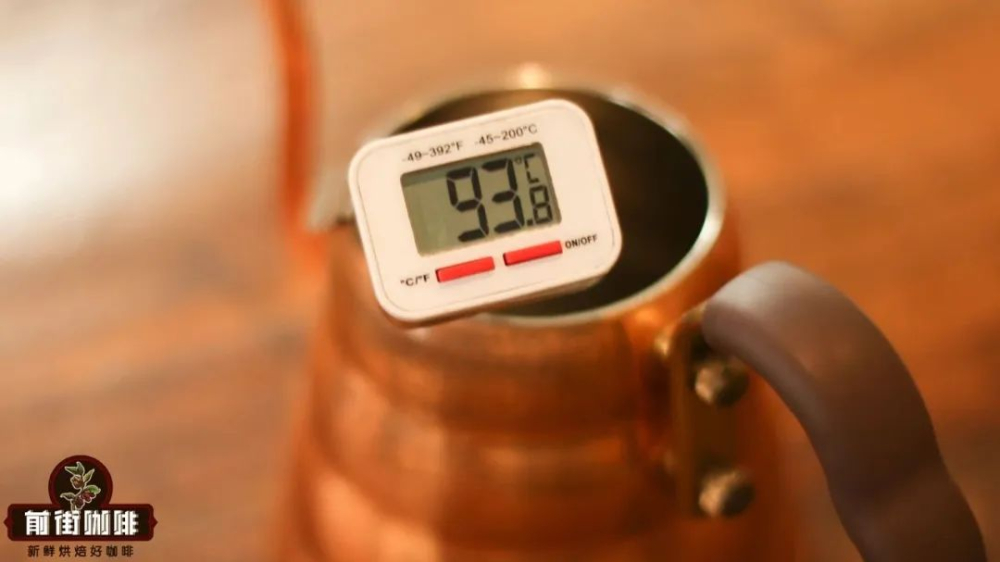
Is water temperature important for extraction? Front Street Coffee thinks it's important, but not that important. It's a tool for adjusting extraction speed; higher temperatures make it easier to dissolve substances, but too high can also bring out bitterness, so a safe range should be chosen. Generally, most coffee beans on the market are suitable for brewing with water at 86–93°C.
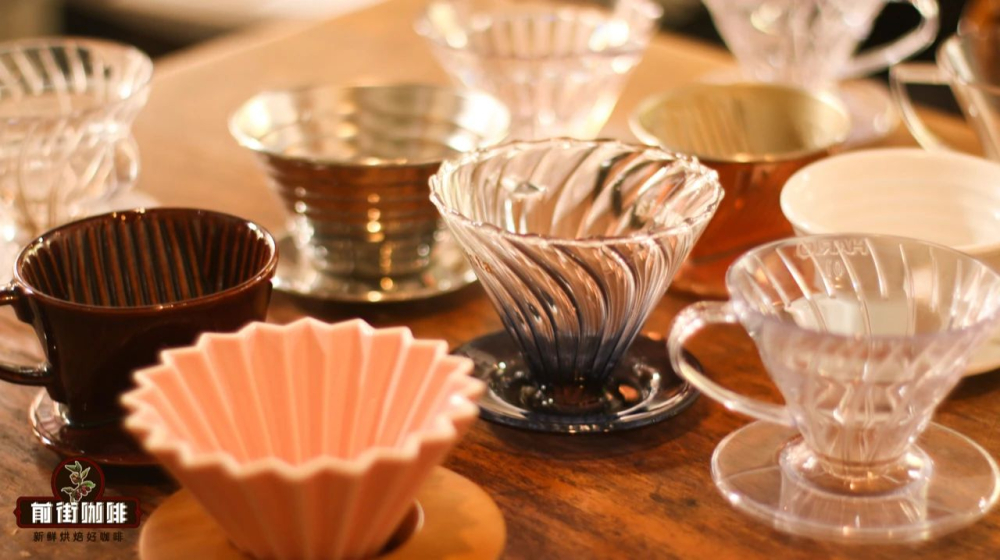
According to Front Street Coffee's production experience, medium-light roasted beans that are resistant to extraction can use 91–93°C, with recommendations like Front Street Coffee Huakui, Front Street Coffee Butterfly, and Front Street Coffee Yirgacheffe; dark roasted beans that are not resistant to extraction are suggested at 86–88°C, such as Front Street Coffee Queen's Estate and Front Street Coffee Golden Mandheling; coffees with both acidity and bitterness can directly use 90°C, with recommendations like Front Street Coffee Bird of Paradise and Front Street Coffee Strawberry Candy, which are medium roasted beans.
But precisely because water temperature is easy to control and its impact on taste is intuitive, it actually leads many into a misconception: thinking that a 1°C difference makes a big difference. For example, a customer bought Geisha coffee beans and brewed at the 91°C suggested by Front Street Coffee, felt the aroma was weak and bitterness strong, and concluded the water temperature was too high, but after lowering by 1°C and then 2°C, the taste remained the same. After communication, it was discovered that the real reason was too fine a grind.
Front Street Coffee once conducted a test, and the flavors of coffee brewed at 91°C and 93°C were very similar; although there were subtle differences in mouthfeel, they were almost indistinguishable without direct comparison. So as long as the temperature doesn't severely deviate from the suggested range above, when coffee shows obvious abnormalities, water temperature can basically be ruled out, and the problem is mostly with other parameters.
| Coffee-to-Water Ratio
The coffee-to-water ratio means using a certain amount of coffee grounds and pouring corresponding hot water in a fixed proportion. The more water poured, the more substances are extracted, the extraction yield rises, but the concentration decreases. So the essence of choosing a ratio is to control the extraction yield and concentration within a comfortable drinking range.
For example, Front Street Coffee's most commonly used 1:15, where 15 grams of grounds correspond to 250 grams of water poured. If you find the flavor too concentrated and the strength too high at this ratio, you can increase the water proportion, adjusting to 1:16 or 1:17, which means adding more water to make the taste more balanced while highlighting the aftertaste.
But if the coffee concentration is moderate, the mouthfeel is not uncomfortable, and only the aroma is not rich enough, Front Street Coffee does not recommend adjusting by changing the coffee-to-water ratio. Because once it deviates from the proper concentration, too much or too little water can easily cause under-extraction or over-extraction.
| Grind Size
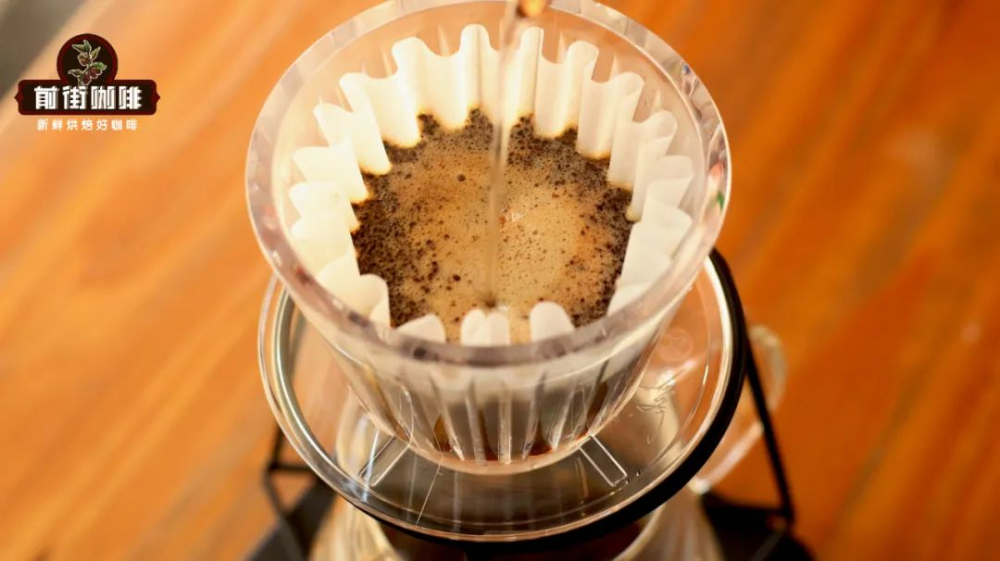
Grind size is both the number one challenge for countless beginners and a major study in extraction. Regardless of the brewing method, grind size is crucial. To make coffee taste right, you need to ensure the particle size is moderate and the grounds are relatively uniform, so that coffee can evenly release substances under the impact of hot water. The former requires finding the right setting, and the latter requires a grinder with excellent grinding quality.
For example, some beginners use analogy to judge coarseness, adjusting the grinder setting to the "fine sugar" level as Front Street Coffee says, but during brewing it clogs severely, and they think the setting is wrong, when in fact the grinding quality is too poor—the spent coffee bed after brewing looks like mud as in the picture below, and the time often exceeds 2.5 minutes. There are two solutions: either use a tool to sift out some extremely fine particles, or directly switch to a grinder with better grinding quality.
Another aspect is the particle size that people pay more attention to. Simply put, the finer the grind, the more easily the particles pile up on the filter paper, the greater the water resistance, the slower the flow, the longer the extraction time, and the stronger the coffee taste.
Because this parameter affects the total time, baristas usually judge whether the setting is appropriate by combining extraction time and taste. It's simple: if the time is less than 1 minute 40 seconds, and the taste is sharply sour and weak, the particles are too coarse; if the time exceeds 2 minutes 20 seconds, and it's bitter, astringent, heavy, and dull, it may be ground too fine.
| Pouring Technique
Pouring technique is a combination of details such as water distribution, flow rate, and pouring path. When the previous parameters are already within a reasonable range, the brewing technique can be seen as a means to maintain a dynamic balance in the coffee.
Whether you use a single-pour, three-stage, 4-6 method, or the more tricky tornado pouring, even extraction is the primary goal, that is, even water distribution. The simplest way to judge is to look at the spent coffee bed after brewing; for specifics, you can find answers in the article "The Complete Guide to Pour-Over Coffee Beds!" published by Front Street Coffee last week.
Compared to the previous visual parameters, pouring technique is more controlled by human factors and is actually the biggest uncertainty. If you are just starting out, Front Street Coffee recommends a more stable brewing method, such as the three-stage pour. As long as you master the water flow rate and circling, it can brew any coffee bean, making it the "all-purpose oil" of pour-over coffee.
Of course, pouring technique can also be adapted on the fly to help us achieve more thorough extraction.
For example, Front Street Coffee uses conventional parameters (15 grams of coffee grounds, 1:15 coffee-to-water ratio, 91°C, grind size with 80% passing through a sieve) combined with a three-stage pour (30ml, 95ml, 100ml) to brew Colombia's Big Belly, which can be purchased at Front Street Coffee's Taobao store or Front Street Coffee's Tmall flagship store.
But after pouring the second stage of water, the coffee liquid had already fully flowed into the server in less than 1 minute. To avoid under-extraction due to too short contact time between grounds and water, Front Street Coffee temporarily changed the pouring plan, splitting the remaining 100ml of hot water into 50ml + 50ml, pouring slowly in circles with a small flow, and the final time was 1 minute 55 seconds, with the coffee presenting a full-bodied juicy feel.
The above content is compiled by CoffeeHunters, a coffee news website.


