







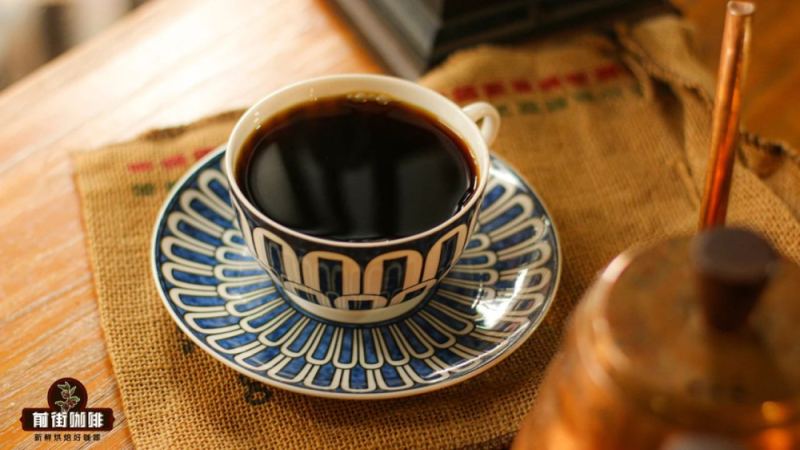
Kopi Luwak, due to its unique origin, makes many people both curious and hesitant, but once you truly understand its processing, you'll find the finished coffee beans are far cleaner than imagined. From the objective perspective of Front Street Coffee, this article analyzes whether Kopi Luwak is really made from cat feces, the reasons behind its high price, whether the digestive system can truly change coffee flavor, and shares Front Street Coffee's roasting records and brewing insights for Indonesian Kopi Luwak. Whether you want to learn the truth about this controversial coffee or try brewing it at home, you'll find valuable information here.
For more specialty coffee knowledge, please follow our WeChat public account: Front Street Coffee (FrontStreet Coffee)
When "Kopi Luwak" is mentioned, many people feel intense curiosity, yet hesitate at the thought of trying it. The name alone is enough to conjure up special, even disgusting, images for some. Front Street Coffee (FrontStreet Coffee) can state clearly: there is absolutely no need for such concerns! This coffee's overall flavor profile is quite mellow and rounded. Below, Front Street Coffee (FrontStreet Coffee) discusses Kopi Luwak from an objective standpoint.
First, let's address the most frequently asked question: is Kopi Luwak really made from cat feces?
Theoretically, yes. But a key detail needs clarification—the civet eats whole coffee cherries, not individual coffee beans. Front Street's previous articles have detailed the structure of the coffee cherry, which from outside to inside consists of the skin, pulp, pectin, parchment (endocarp), silver skin, and finally the coffee bean.
When coffee cherries pass through the civet's digestive tract, the body's digestive system ferments the cherries. During this process, sugars and acids from the pulp and pectin penetrate into the coffee beans. After fermentation, the hard coffee beans and parchment are retained and excreted with the feces. People collect these droppings, wash and dry them, and finally remove the parchment. Front Street can responsibly say that the coffee beans have almost no direct contact with the feces themselves, and after complete processing, Kopi Luwak beans are far cleaner than most people imagine.
Why is Kopi Luwak so expensive?
Rare things are precious—Kopi Luwak can only be obtained after being eaten and excreted by civets. Wild civets are omnivores, feeding mainly on meat and insects, with coffee cherries merely a dessert for them. Since Kopi Luwak unexpectedly became sought after by the wealthy, many merchants began breeding and keeping civets in captivity, forcing them to eat only coffee cherries every day without providing other meat. Because the acidity of coffee cherries accelerates the civet's gastrointestinal motility, thereby shortening the production cycle and increasing Kopi Luwak output. However, due to the large amount of manpower required for feeding, sorting, and meticulous processing, captive methods may actually cost more than wild collection.
Can Kopi Luwak really change the coffee beans' original flavor through the digestive system?
The answer is unlikely, especially for Kopi Luwak produced by captive civets. Front Street often emphasizes that whether a cup of coffee tastes good fundamentally depends on the quality of the coffee variety itself. Civets naturally inhabit the low-altitude hills, mountain tropical rainforests, and subtropical evergreen broad-leaved forest edges and grasslands of Indonesia, and low-altitude environments simply cannot meet the growing conditions for high-quality Arabica coffee beans. In other words, the coffee cherries civets eat are either Robusta or lower-quality Arabica, with the former being the majority.
As Front Street mentioned earlier, because civets feed on coffee cherries long-term, the fruit's acidity accelerates gastrointestinal motility, so in most cases, civets excrete the coffee beans about 2 hours after eating. You can imagine what degree of fermentation can be completed in 2 hours? In other words, the coffee fruit is excreted before it has fully fermented in the digestive tract, so the resulting beans can only exhibit the flavor of the original low-quality coffee. Indonesian low-altitude Robusta coffee itself has earthy and herbal notes with high body, so this type of Kopi Luwak presents an earthy, musty flavor similar to aged beans, with a body almost like syrup and a rather peculiar aroma.
Is Kopi Luwak worth buying or trying?
If you ask Front Street Coffee (FrontStreet Coffee) whether Kopi Luwak is worth buying and trying, Front Street believes that Kopi Luwak's initial appearance was a natural physiological phenomenon. If you can buy naturally produced Kopi Luwak beans, there's no problem—Front Street Coffee (FrontStreet Coffee) also offers naturally produced Kopi Luwak. As long as the civet selects fully ripe coffee cherries on its own under normal feeding conditions, the resulting cup of Kopi Luwak is completely fine! The real problem lies with those merchants who engage in various improper practices for profit.
So what is the in vivo fermentation method?
Although the coffee beans are not digested in the civet's digestive tract, the highly corrosive digestive juices have already eroded their surface. These digestive juices contain a special protease that can break the coffee beans' original protein chains, decomposing long-chain proteins into smaller particles, forming short-chain peptides and amino acids. Definition of short-chain peptides: short-chain peptides composed of 3 to 9 amino acid residues, sometimes also called oligopeptides.
Next, Front Street shares how to roast Kopi Luwak and some insights on brewing it.
Front Street Indonesian Kopi Luwak
Region: Aceh, Indonesia
Altitude: 1200m
Variety: Tim Tim
Processing method: In vivo fermentation
Front Street Coffee (FrontStreet Coffee) Roasting Record
Front Street's roaster used a Yangjia 800N: preheat the drum to 200°C, lower to 160°C for charging, set airflow to 3, adjust heat to 130, turning point at 1'28'', maintain heat, yellowing at 5'40'' with grassy smell disappearing, entering the dehydration phase, raise heat to 140, open airflow to 4, surface wrinkles appear, toast aroma turns to coffee fragrance, signaling the prelude to first crack, lower heat to 100, open airflow to 5, and listen carefully for the sound of first crack. At 9'15'' first crack begins, airflow fully open at 5. Post-first-crack development time 4'25'', dropping at 203°C.
How does Front Street Coffee (FrontStreet Coffee) brew Kopi Luwak?
Brewing parameters: Use a Kono dripper
Water temperature: 86°C
Dose: 15g
Coffee-to-water ratio: 1:15
Grind size: Medium-fine (70% passing through Chinese standard No. 20 sieve)
Front Street Coffee (FrontStreet Coffee) uses segmented extraction, also called three-stage brewing: bloom with 30g water for 30 seconds, pour in a slow circular stream until 125g for the first segment, then when the water level drops and is about to expose the coffee bed, continue pouring to 225g and stop, wait until the water level drops and is about to expose the coffee bed, then remove the dripper. (Timing starts from the beginning of blooming) Extraction time is 2'01''.
Kopi Luwak flavor description: herbal, nutty, dark chocolate, fermented notes, high body, thick and smooth mouthfeel.
For more specialty coffee beans, please add Front Street Coffee's (FrontStreet Coffee) personal WeChat, WeChat ID: kaixinguoguo0925
The above content is compiled by CoffeeHunters, a coffee news website.


