








Iced latte is one of the easiest milk coffees to master in espresso drinks. It seems to require only three steps—add ice, pour milk, pour coffee—but making it smooth and delicious still involves three aspects: ingredient selection, milk-to-coffee ratio, and operational details. This article focuses on these three points: first, it explains how coffee beans and milk affect the flavor direction; then, it provides the 1:6 ratio used by Front Street Coffee for iced latte and a reference for about a 300ml cup; finally, it supplements details easily overlooked during extraction and cup assembly. The article also recommends beans suitable for iced latte, such as Front Street Black Cocoa Blend and Front Street Strawberry Candy Espresso, for coffee enthusiasts' reference.

For more specialty coffee knowledge, please follow: Front Street Coffee (Frontsteet Coffee)
Espresso is a fundamental skill that baristas must master, and basically every coffee shop offers it. So-called espresso is a type of drink extended from espresso as the base. Today we are making the milk coffee with the lowest production threshold among them—iced latte.
On the surface, iced latte is just [add ice, pour milk, pour coffee], with very straightforward steps, but to truly make it delicious, you still need to think and understand the nuances.
First point: Choose suitable materials
Although the method of making iced latte is simple and it appears on almost every coffee bean menu, different shops produce different tastes. The core reason for this difference lies in the inconsistent milk and coffee beans used.
The flavor of coffee beans can directly influence the taste direction of iced latte. Most espresso blends give iced latte a heavy nutty, chocolatey tone, and the coffee flavor is also on the strong side. If you like this style, you can try Front Street Black Cocoa—an espresso bean recommended by many baristas. Additionally, Front Street Commercial Blend and Front Street Classic Blend are also worth considering;
A small portion of coffee beans are meant to highlight the sweetness and richness of milk in iced latte. For this type, you can choose Front Street Strawberry Candy Espresso Blend. It combines three origins: Costa Rica, Colombia, and Ethiopia, with aromas of roses, citrus, grapes, and dried blueberries.
When buying coffee beans, always pay close attention to freshness. After roasting, the beans contain a large amount of active carbon dioxide, which blocks air from entering and firmly "locks" in the aroma. However, over time, the gas gradually escapes along with the aroma; by about two months after roasting, espresso will lack crema, and the originally pleasant coffee aroma will be completely gone. The coffee beans sold by Front Street Coffee are all freshly roasted within 5 days, with 24-hour shipping support, so when you receive them, they are still at their peak flavor.
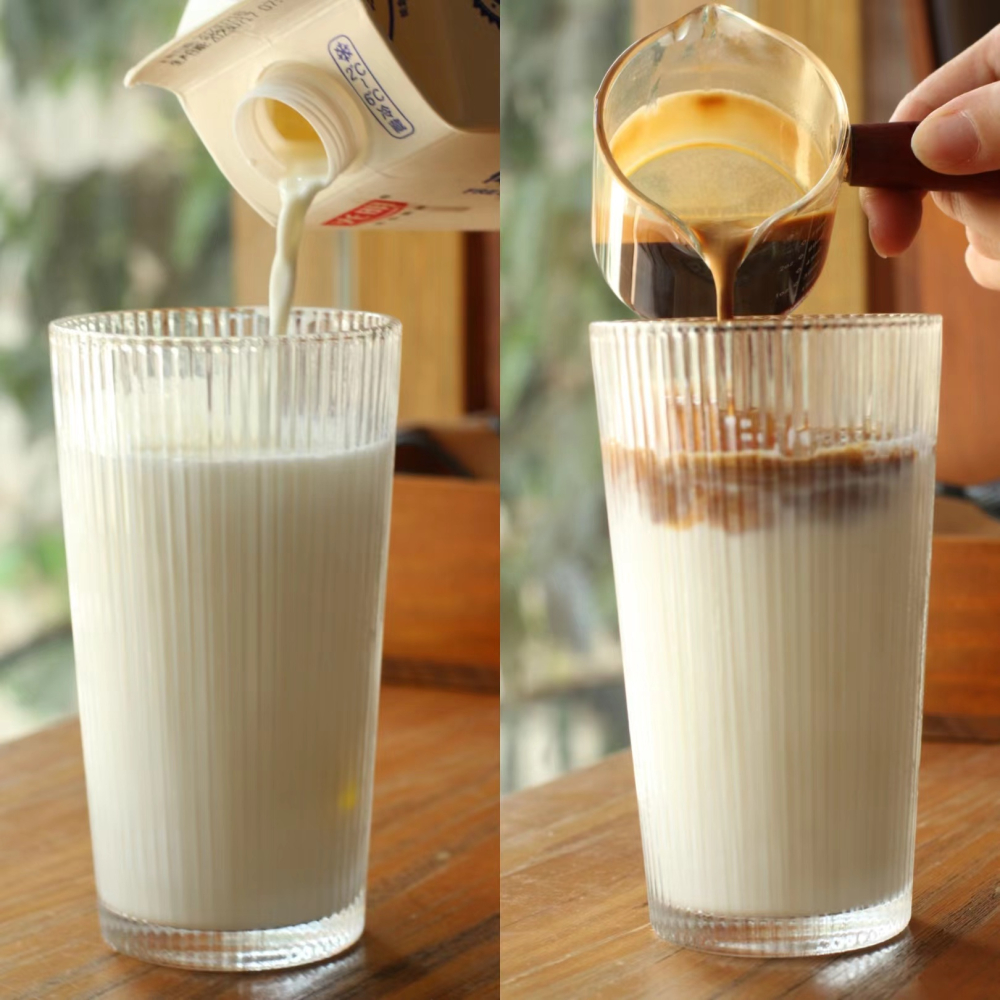
The selection of milk is equally important. For whole fresh milk alone, there are more than ten common types on the market. Some have a heavier milky taste and a thick mouthfeel, while others are as light as water. The standard for choosing milk is not to blindly pursue thickness and prominent milky flavor, but to see whether it pairs well with coffee. Too heavy a milky taste will suppress some of the coffee's flavor, while milk with an obvious watery feel will make the latte bland as water.
Second point: A reasonable milk-to-coffee ratio
Once you have selected good beans and good milk, can you make a delicious iced latte? The premise is still a reasonable ratio. Front Street's iced latte uses Sunflower Warm Sun Blend coffee beans with Vitasoy fresh milk, with an espresso-to-milk ratio of 1:6, that is, 40 grams of espresso liquid, corresponding to 240 grams of iced milk and 75 grams of ice cubes, finally served in a transparent glass cup with a capacity of about 300ml.
This ratio is only for everyone's reference, not the golden ratio for latte coffee. Front Street arrived at this set of parameters after repeated adjustments with the above materials, mainly based on real tasting feedback. So when making iced latte, you can also adjust the ratio appropriately: too much milk will cover the coffee flavor, too little milk will make it bitter, and too much ice will make it bland.
Third point: Operational details
Although the operation of iced latte is as simple and clear as [add ice, pour milk, pour coffee], there are actually a few small details to pay attention to. The most critical is the extraction of espresso—whether a latte tastes good depends on whether the espresso is extracted properly. Common espresso extraction problems such as channeling and incorrect extraction time will naturally also affect the taste of iced latte.
The process of making iced latte also emphasizes the word "fast." Here, fast means that the time ice and milk stay in the cup should be as short as possible, and the extracted espresso should be poured into the cup immediately.

This is also why a freshly made iced latte can show a gradient layer where milk and coffee overlap. If the ice soaks in the milk for too long, the ice cubes will melt, water will separate out at the top layer, and the whole cup of coffee will taste bland. Espresso is even more sensitive; when just extracted, it has very rich crema, but after 30 seconds, the crema noticeably decreases. Espresso lacking crema also finds it harder to float on the surface.
The above content is compiled by CoffeeHunters, a coffee news website.


