







Although Rwanda is a small landlocked country in Africa, it has gradually become a coffee origin that cannot be ignored in the specialty coffee world, thanks to its high altitude, volcanic soil, and Bourbon-lineage varieties. From the perspective of Front Street Coffee, this article reviews Rwanda coffee's colonial history, industry ups and downs, and contemporary revival, explains its growing environment, main varieties, and washed-processing characteristics in detail, and highlights the washed Red Bourbon from the Nyamasheke region selected by Front Street, presenting a clean flavor interwoven with berries, apple, and green tea.
To learn more about specialty coffee, welcome to follow: Front Street Coffee (Frontsteet Coffee)
In October 2020, McDonald's-owned McCafe announced a brand upgrade plan, claiming that it would invest 2.5 billion yuan in its coffee segment over the next three years. This news sparked extensive discussion within the coffee community. Among a series of upgrade actions, McCafe also adjusted its espresso blend formula, adding Rwandan coffee beans to the original blend of Colombia, Ethiopia, and Brazil. Rwanda accounted for about 25%, Brazil 55%, and Colombia and Ethiopia 10% each.
Rwanda coffee therefore came back into public view. Although the country is not large in area, Rwanda is not lacking in excellent-quality coffee, and in recent years it has appeared more and more often in various coffee shops. What exactly makes Rwanda coffee unique? This time, Front Street Coffee (FrontStreet Coffee) will share with Rwanda coffee as its theme.
Rwanda Coffee
Rwanda is located in central Africa and is a typical landlocked country, with almost all of its neighboring countries being major coffee-producing nations. In the early 20th century, Rwanda successively became a colony of Germany and Belgium, and coffee was first introduced by German missionaries.
During the colonial period, although coffee production rose sharply, factors such as labor exploitation, suppressed coffee purchase prices, and high export taxes led to less-than-ideal coffee bean quality. This was also the general situation of commercial coffee development at the time.
It was not until after Rwanda's independence, when the first official coffee organization OCIR was established, that coffee bean production gradually received attention. From the 1960s to the 1980s, Rwanda's coffee production continued to grow and reached a historical peak in 1986, until domestic political turmoil in the early 1990s (the Rwandan genocide) caused the coffee industry to fall into stagnation.
Today Rwanda has gradually regained its vitality. Whether in urban development, public security, or the friendliness of the people and the level of cleanliness, it can be called an "atypical" African country. Rwanda is currently widely recognized as the safest country in Africa. On the 2017 World's Safest Countries and Destinations list, Rwanda ranked ninth among global cities and was the only African country to enter the top ten.
Rwanda is a developing country, and its economy is mainly based on agriculture and animal husbandry. The agricultural and pastoral population accounts for 92% of the country. Coffee and tea are the main cash crops, and on average 1 in every 30 Rwandans works in coffee-related jobs. Due to the impact of the COVID-19 pandemic, Rwanda's coffee sales suffered a considerable blow. To help local coffee farmers get through the difficulties, on May 14, Alibaba livestreaming host Viya recommended Rwandan Gorilla's coffee beans and sold a year's worth of sales in one second.
Rwanda Coffee Growing Environment
As Front Street Coffee (FrontStreet Coffee) mentioned earlier, Rwanda is a landlocked country in Africa, bordered by Burundi to the south, Tanzania to the east, Uganda to the north, and the Congo to the northwest.
Rwanda is known as the "Land of a Thousand Hills." The country is full of layered mountains, including as many as 5 volcanoes. In addition to mountains, there are also 23 lakes and numerous rivers, making water resources very abundant.
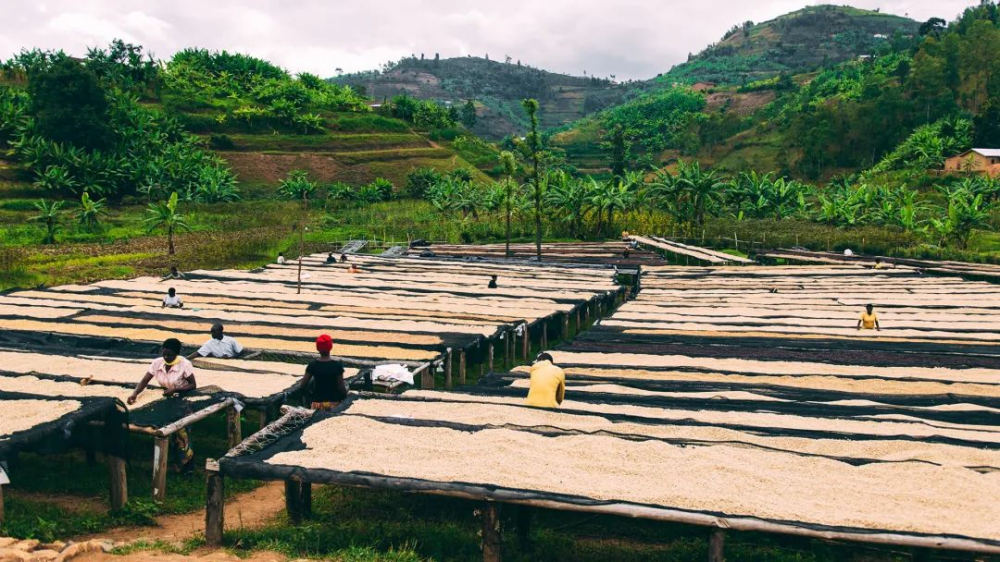
Rwanda has a temperate and tropical highland climate, with an average temperature of 24.6 to 27 degrees Celsius, lower than that of typical equatorial countries. Coffee is mostly grown in mountainous areas such as the west, where temperatures are lower and temperature differences are greater than in the low-lying eastern regions. For example, Lake Kivu in the north has an average altitude of 1,463 meters and an average daily temperature of about 22 degrees Celsius. Combined with fertile volcanic soil, it is very suitable for coffee cultivation.
Rwanda Coffee Varieties
Common coffee varieties in Rwanda include Bourbon, Caturra, and Catuai. Front Street Coffee (FrontStreet Coffee) believes that the flavor profiles of these three are relatively similar, all belonging to the Bourbon lineage, and are easily reminiscent of citrus and nuts.
Well-grown Bourbon coffee has outstanding sweetness. Caturra is a natural mutation of Bourbon and is characterized by higher yield than Bourbon and shorter spacing between plants. Catuai is even more productive and has stronger resistance to disease and wind and rain.
Rwanda Coffee Processing Methods
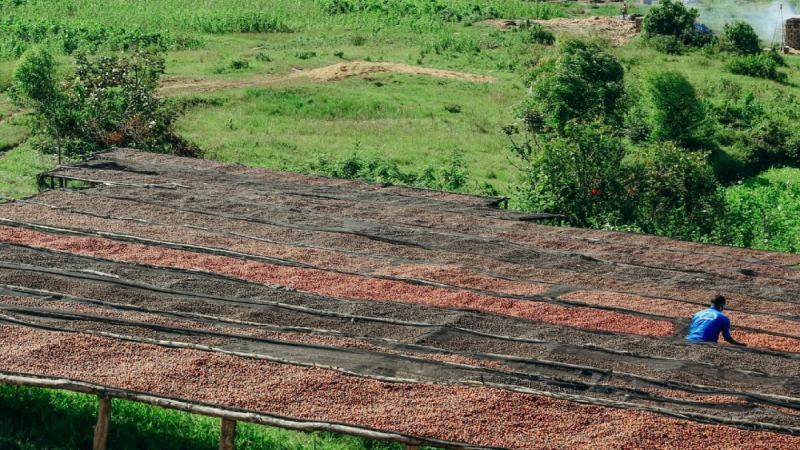
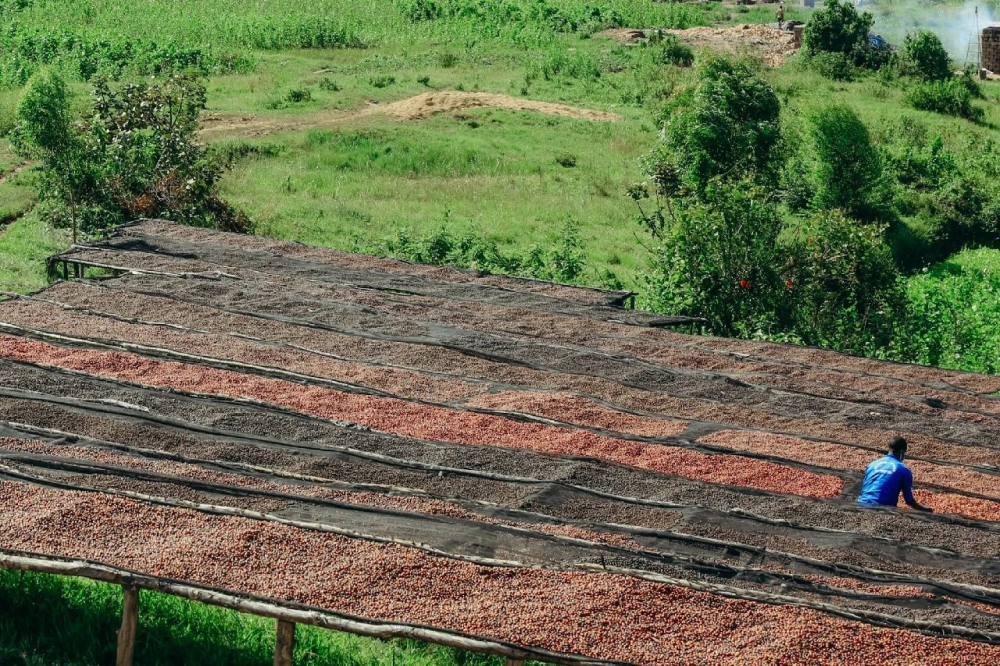
Rwanda coffee is mainly washed processed. In washed processing, the harvested coffee cherries are first floated to remove cherries with insufficient density, then the skin and pulp are removed, and the coffee beans with mucilage are left to ferment in a water tank. After fermentation is complete, the mucilage layer is washed off with clean water, and finally the coffee beans are dried to reduce moisture content to around 11% to 13%. Front Street Coffee (FrontStreet Coffee) believes that washed coffee has higher acidity, good cleanliness, and overall stable performance.
Rwanda Coffee
As Front Street previously introduced, high-quality Rwandan coffee mostly comes from the south and west, including the Huye mountainous area and Nyamagabe region in the south, as well as the Nyamasheke region by Lake Kivu in the west. These areas have higher altitudes and abundant rainfall, and the coffee produced there has better flavor performance. After multiple cupping sessions, Front Street finally selected the washed Red Bourbon from Nyamasheke in western Rwanda as a new member of Front Street's daily bean lineup. This bean is washed processed, of the Red Bourbon variety, and grown in Rwanda's superior Nyamasheke production area. It can be said to bring together Rwanda's most representative elements, so from it we can also taste the terroir flavor most characteristic of Rwanda.
Front Street Coffee (FrontStreet Coffee): Rwanda · Washed Red Bourbon Country: Rwanda Region: Nyamasheke Altitude: 1,500–1,700 meters Variety: Red Bourbon Processing Method: Washed
Flavor: berries, apple, green tea, apricot
To better showcase the flavor of the Rwandan production area, Front Street uses a medium-light roast profile and conducts cupping 8 hours after roasting is completed. During cupping, Front Street captured the fresh aroma of apple and green tea, as well as a faint floral note, from the dry fragrance of this bean, which was very refreshing. After hot water was poured in, aromas of berries and green tea could be smelled.
When the coffee entered the mouth, Front Street first felt the sweet acidity of berries, and then the acidity quickly faded, revealing clean sweet flavors such as apple and apricot. After swallowing, obvious green tea and apple freshness could also be captured in the aftertaste. The whole coffee was very balanced, with a clean and solid mouthfeel, and was very comfortable to drink.
The above content is compiled by CoffeeHunters, a coffee news website.


