







Where does Sidamo sit on Ethiopia's coffee belt?
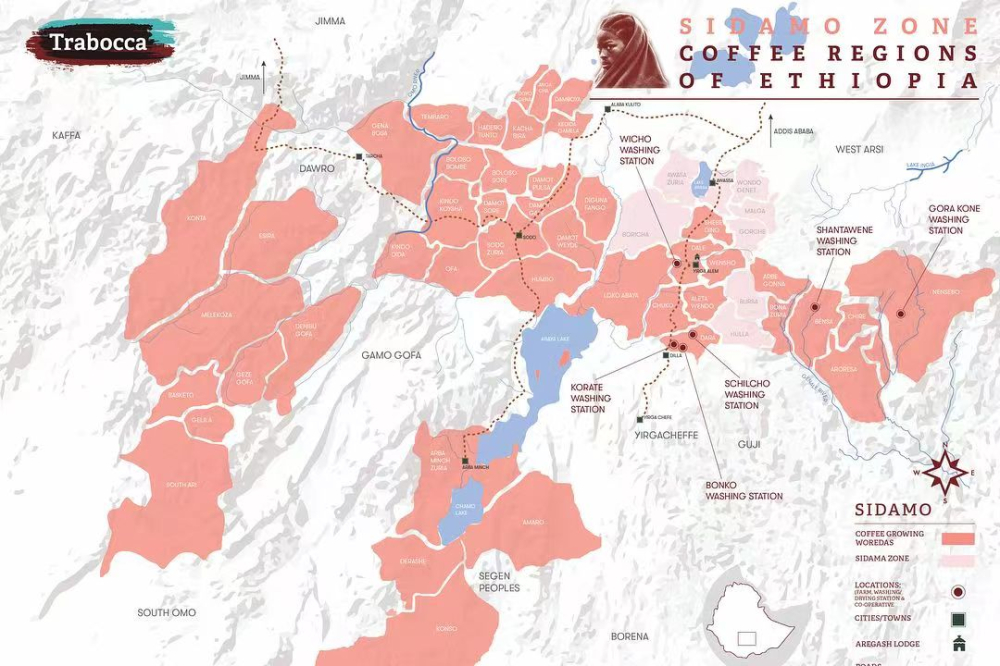
Sidamo lies in southern Ethiopia near the Kenyan border, spanning roughly 1,400 to 2,200 meters inside the well-known coffee belt. The region shares a country with Yirgacheffe but cups differently: Sidamo shows a rich, juicy body and abundant floral-fruity notes, with a thicker texture and more layered complexity than Yirgacheffe's citric acidity and jasmine aroma.
Guji Hambela Huakui rose to attention through the TOH competition, and local heirloom varieties plus the natural process explain much of its high sweetness and floral-fruity aroma. Volcanic soil across Sidamo supports this profile, and washed Sidamo green beans are light green, medium-to-small and elongated oval in shape.
This article systematically reviews the origin terroir, varieties, and processing methods of Ethiopian Sidamo and Huakui coffee. We compare the different cup performances of Sidamo and Yirgacheffe, trace the origin of Guji Hambela Huakui's championship in the TOH competition, and analyze the local heirloom concept and the advantages of the natural process. The article also includes information on popular single-origin products such as Front Street Coffee's Natural Huakui 5.0, explains the logic behind the Huakui X.0 year code, and presents the brand's fresh-roasting philosophy along with specific brewing recipes. From Sidamo's volcanic soil to the smooth mouthfeel of natural beans, the full text focuses on Huakui's high sweetness and floral-fruity aroma, connecting everything from Front Street's perspective to help enthusiasts appreciate it in depth.
Both from the African-producing region of Ethiopia, Sidamo and Yirgacheffe are coffee beans from the same country, yet their flavor profiles are vastly different. Yirgacheffe impresses with a striking citric acidity and jasmine aroma; by comparison, Sidamo offerings have a rich juicy body and abundant floral-fruity notes, with a thicker, more substantial texture and a more complex tasting layering than Yirgacheffe. The two styles are entirely different, each with its own unique charm.
You may be influenced by the impression of washed Yirgacheffe, but it is worth noting that Sidamo and Yirgacheffe are both among Ethiopia's top specialty coffee birthplaces. Yirgacheffe is famous for its washed beans, while Sidamo has risen to prominence with its natural Huakui, especially the Natural Huakui 5.0 released by Front Street, which is highly favored by enthusiasts.
Next, Front Street will take you through an in-depth discussion of the production overview of Sidamo coffee.
Like Yirgacheffe, Sidamo is also world-renowned. In many international coffee competitions, the name of this producing region frequently appears near the top of the honor roll. In recent COE and TOH green bean competitions, Sidamo has often been selected among the winners.
Located in southern Ethiopia near the Kenyan border, Sidamo spans an altitude of 1,400 to 2,200 meters and is a well-known specialty coffee belt. Washed Sidamo green beans have a light green color, are medium-to-small in size and elongated oval in shape, with plump flesh and overall excellent quality, a deep, sweet aroma, and a long-lasting finish, revealing a pristine, wild beauty. Front Street points out that the coffee flavors of this region are extremely rich, and influenced by diverse soils, microclimates, and a huge number of heirloom varieties, the coffee from each town has its own style and personality.
Information obtained by Front Street shows that between 2010 and 2012, this area continuously received outstanding scores of 92 to 94 from the professional U.S. review site CR, confirming the excellence of the region's green beans. Sidamo's flavors are diverse and varied, stemming from soil types, microclimates, and countless heirloom varieties, plus the interlaced terrain of mountains, highlands, plateaus, valleys, and plains within its borders. The local soil is fertile, well-drained volcanic rock soil, nearly two meters deep, with topsoil in dark brown or brownish-yellow. Its fertility relies on the cycling and replenishment of organic matter such as fallen branches and leaves. Unlike typical African beans, Sidamo displays bright fruit acidity, a smooth texture, and elegant floral and herbal aromas.
When mentioning Sidamo, one naturally thinks of Huakui coffee, whose benchmark is Natural Huakui. This bean comes from the Guji zone within Hambela, Sidamo. Guji was originally part of Sidamo and has been classified as an independent producing region by the Ethiopia Commodity Exchange (ECX) since 2010. It is located southeast of Yirgacheffe, with terrain covering steep peaks, deep valleys, and plains, highly complex and varied. The soil is fertile black soil (Vertisol), nearly two meters deep, with an average altitude above 1,800 meters. Distinctive geographical features such as significant day-night temperature differences create an ideal terroir for nurturing high-quality specialty beans.
What exactly is Huakui coffee called?
The bean variety of Huakui is originally named Hambela, and its Chinese name was given by a domestic green bean merchant. It grows in Hambela of Guji, Ethiopia's largest producing region, under the administration of Oromia State. To its west, it is separated from Yirgacheffe Kochore by mountains, with a 3,200-meter-high, 30-kilometer-wide plateau in between; to the east, south, and north it borders Guji's Shakiso, Uraga, and Kercha sub-regions, making it the highest-altitude coffee sub-region in Ethiopia.
Hambela currently has nearly 20 processing plants of different scales. In 2017, Ethiopian DW green bean merchant submitted coffee to the TOH (Taste Of Harvest) competition hosted by the African Coffee Association, where a natural batch from the Buku Abel plant won the Ethiopian TOH championship with intense strawberry and creamy aromas. This batch of green beans was introduced into China by Beijing trader Hongshun, and in the same year Li Jianfei used this bean to win runner-up in the China region of the World Brewers Cup. It stood out remarkably among many Geisha contenders and thus was named "Huakui." (Geisha in Japanese refers to a geisha; Huakui means the foremost geisha, highlighting its excellence.)
In other words, only natural beans produced and processed by Buku Abel can legitimately be named "Huakui." Its growing area is at an altitude above 2,000 meters, and surrounding tropical vegetation such as sugarcane and bananas provides natural shade for the coffee trees. This environment gives Huakui its sweet, balanced, smooth character, while the natural process adds even more sweetness and richness.
Exploring the variety of Huakui coffee beans
Consumers often wonder what exactly the "local heirloom" label on the Huakui 5.0 bag refers to. Front Street explains: as the birthplace of coffee, Ethiopia is extremely rich in germplasm resources, with known and unknown varieties gathered like a treasure trove. Many varieties have not yet been scientifically clarified, and the government implements information confidentiality for genetic safety, so they are collectively classified as local heirloom. Therefore, the Huakui 5.0 packaging is labeled this way.
Processing methods of Sidamo beans
Although it is often said that Yirgacheffe uses the washed process, its tradition is actually natural, and today more than 70% of Ethiopian beans follow the natural route. The Sidamo producing region also focuses on natural processing.
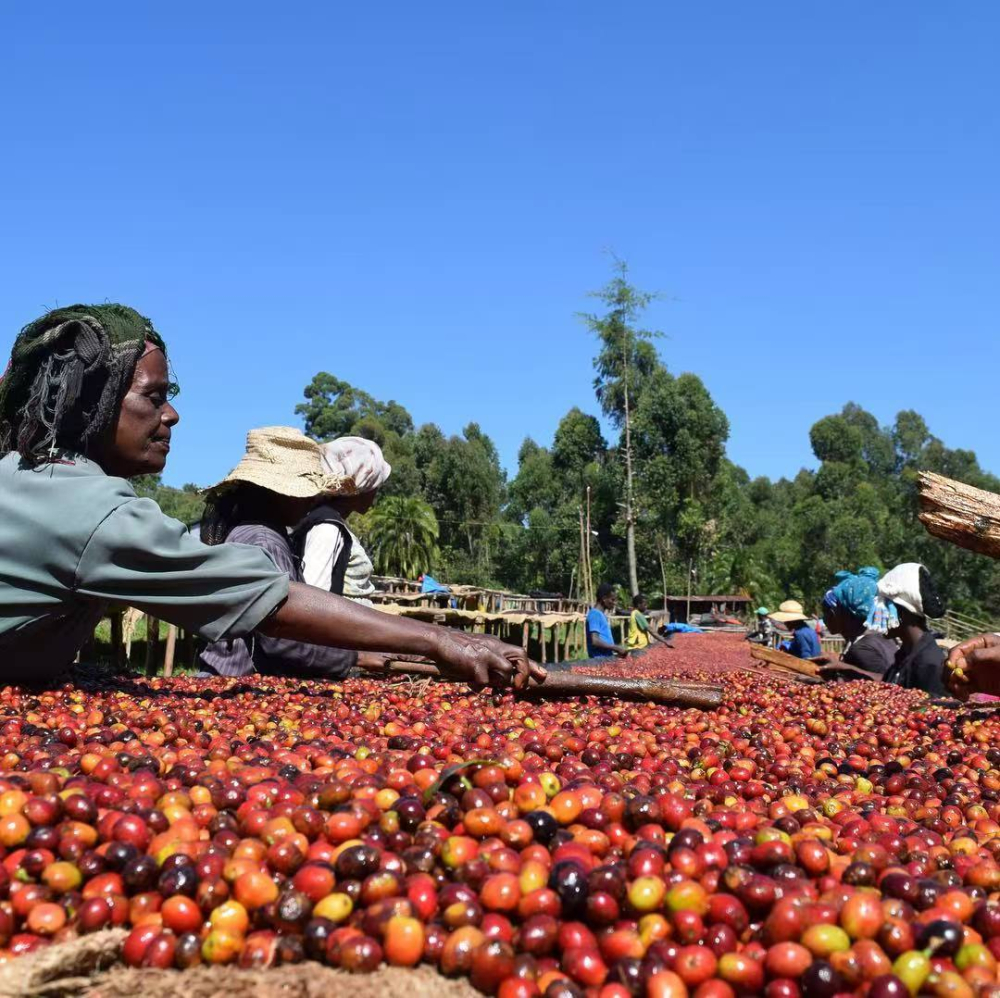
The natural method is the oldest and most classic technique, and its process is relatively simple: fresh cherries are directly sun-dried for several weeks until the moisture content reaches about 11%, then the skin and pulp are removed by machine, and the beans are stored for sale.
Sidamo green beans tend toward a grayish tone, with uneven bean size, acidity that is both firm and soft, moderate body, and a sweetness with a hint of spice; it belongs to the garden coffee of the southern Ethiopian highlands. Unlike ordinary African beans, it has bright fruit acidity, a smooth, supple texture, and delicate floral and herbal fragrance.
Natural Sidamo's flavor is close to floral, with a slight earthy note; the washed version reveals nutty and light cocoa aromas, and both enjoy a smooth mouthfeel and pleasant acidity and aroma. A light-to-medium roast suits single-origin brewing, while a medium-dark roast is suitable for blends or espresso bases. In addition, there is a question: why does Huakui have labels such as 3.0, 4.0, 5.0, and 6.0? The answer will be revealed below.
As an agricultural product, Huakui is affected by climate and yearly conditions, so its flavor varies slightly from year to year. Its X.0 number is arranged by year: 2.0 was released in 2018, 3.0 and 3.1 in 2019, 4.0 in 2020, 5.0 in 2021, and 6.0 in 2022, to distinguish beans from each year's harvest.
Front Street brewing guide:
To enjoy delicious coffee, Front Street emphasizes that bean freshness is key; only freshness can fully reveal the flavor layers. Front Street Coffee (FrontStreet Coffee) ships beans that have been roasted for less than five days, because the brand deeply understands the importance of freshness to flavor. Front Street's roasting creed is "freshly roasted good coffee," ensuring customers receive beans in their optimal tasting period. Resting the beans for about 4 to 7 days means customers can enjoy peak flavor as soon as they receive them.
Naturally, it is also fine if some customers ask Front Street to grind the beans for them, but Front Street kindly reminds: ground beans need no resting, and during transport the carbon dioxide pressure in the bag rounds out the flavor, so they can be brewed as soon as received. However, ground coffee oxidizes quickly and must be consumed as soon as possible, otherwise the aroma escapes and the flavor diminishes. Therefore, Front Street recommends buying whole beans and grinding fresh to capture the complete cup flavor.
Front Street Natural Huakui brewing recipe:
Using Front Street's light-roasted Yirgacheffe as a reference, the following were chosen: V60 dripper, 90°C water temperature, 1:15 coffee-to-water ratio, 15 grams of coffee, grind size (80% passing through a Chinese No. 20 standard sieve)
Perform staged extraction: bloom with twice the coffee weight in water, that is, 30 grams of water left to stand for 30 seconds; this helps the coffee release carbon dioxide and stabilizes subsequent extraction. Pour in a thin stream in circles up to 125 grams and pause, then continue to 225 grams and stop; after dripping is complete, remove the carafe, with the total time counted from the start of pouring being 2 minutes 00 seconds. Finally, swirl the coffee liquid to mix evenly and pour into a cup for tasting.
Sensory characteristics of Natural Huakui 5.0
Its floral and fruity aromas are prominent, interwoven with notes of citrus, passion fruit, strawberry, and oolong tea, and its sweetness is extremely high.
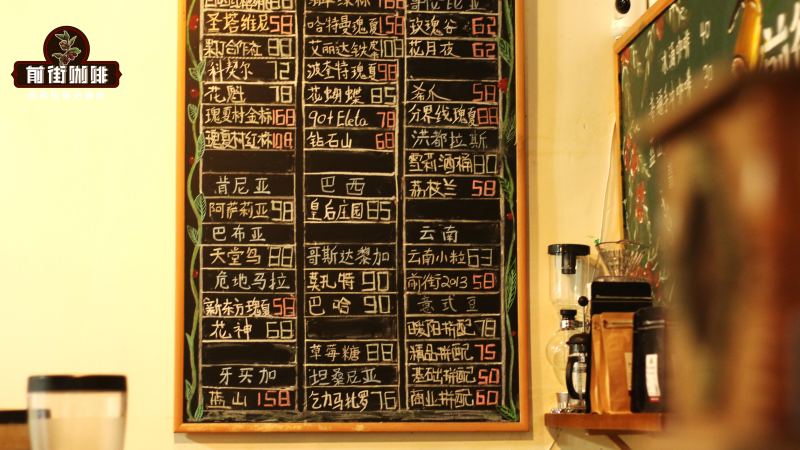
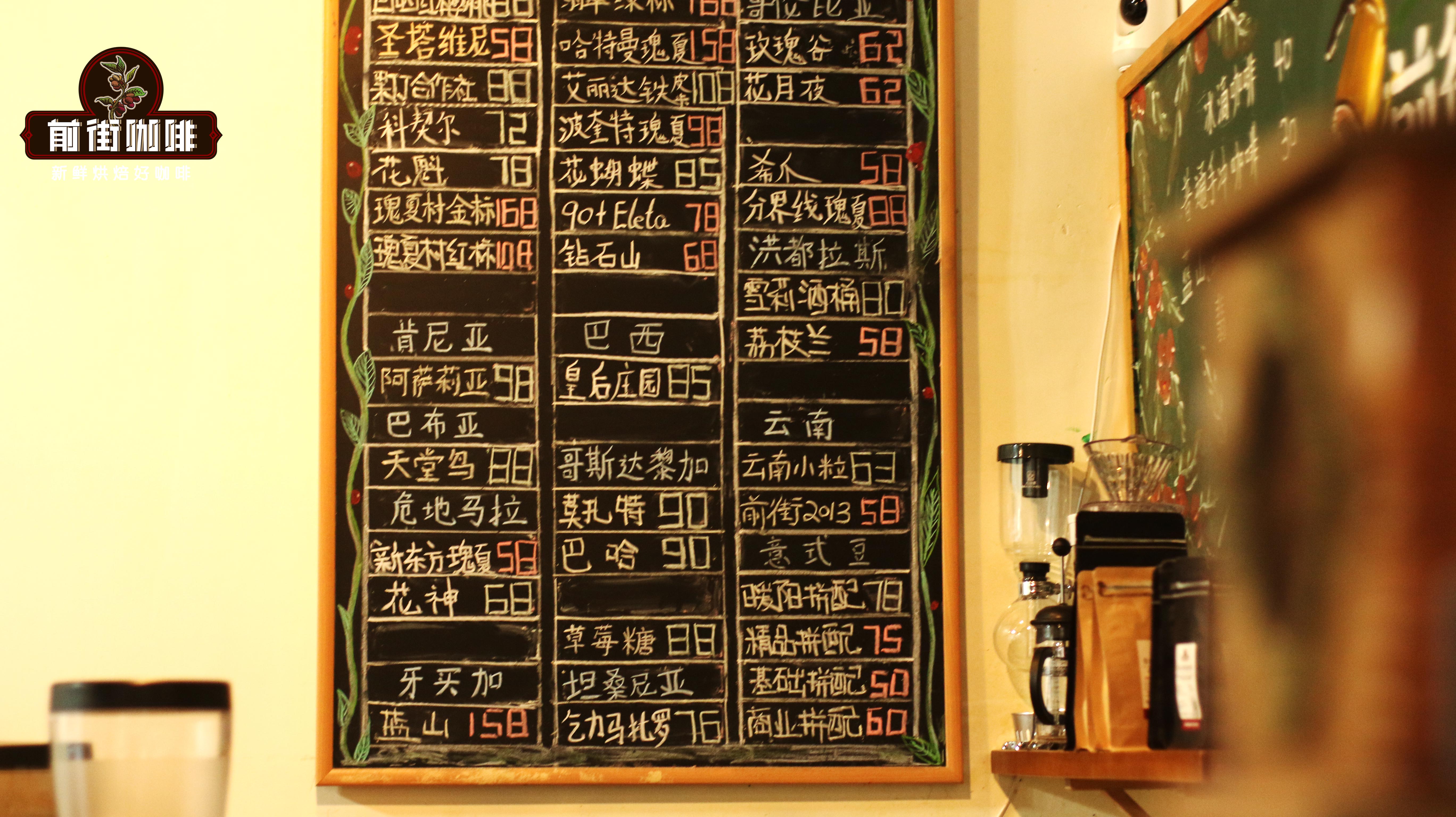
Front Street Coffee (FrontStreet Coffee) sells many Ethiopian single-origin coffees, focusing on Yirgacheffe and Sidamo. Washed Yirgacheffe is the shop's popular daily-drinker bean, the first choice for beginners and excellent value for money; Natural Huakui 5.0 is the best-selling single-origin coffee. In addition, Front Street Coffee (FrontStreet Coffee) also offers dozens of beans from producing regions in other countries, which is truly good news for coffee fans.
To obtain professional coffee knowledge and bean information, welcome to follow Coffee Workshop (WeChat ID: cafe_style)
To purchase specialty beans, you can add Front Street Coffee's (FrontStreet Coffee) private WeChat, account: qjcoffeex
The above content is compiled by CoffeeHunters, a coffee news website.


