







Yunnan is not only the hometown of Pu'er tea; today, coffee has also become an important calling card for this land. Yunnan coffee accounts for more than 95% of the national output, mainly distributed across production areas such as Baoshan, Pu'er, Lincang, and Dehong. This article will start from Yunnan's natural conditions and trace the variety evolution of small-seed coffee—from the old Typica to today's mainstay Catimor—introduce the washed processing method's procedures and flavor advantages, and provide the pour-over parameters and brewing steps recommended by Front Street Coffee. It also includes flavor descriptions of washed Yunnan small-seed and natural Typica to help you find a Yunnan coffee that suits your taste.
For more specialty coffee knowledge, please follow the WeChat official account: Front Street Coffee (FrontStreet Coffee)
Yunnan's Pu'er tea is world-famous, but many people don't know that coffee has long grown into another distinctive calling card of Yunnan. When it comes to coffee, many people's first reaction is that imported beans are better, but in fact the strength of domestic coffee can no longer be underestimated. Front Street believes: Yunnan is the province with the largest coffee production in China. Although its output is slightly lower compared with neighboring countries, its quality is by no means inferior. Yunnan coffee accounts for 95% of the country's total output and is the core producing area of Chinese coffee.
Coffee is an agricultural crop and is quite picky about its growing environment. Western and southern Yunnan lie between 15°N and the Tropic of Cancer, placing them right on the coffee belt suitable for growing coffee. Yunnan's altitude is usually between 1,500 and 2,200 meters. The terrain along the southwestern border is relatively gentle, with elevations mostly between 800 and 1,000 meters, and the landscape is mainly mountainous and sloping. The comfortable climate, large temperature difference between day and night, and small seasonal temperature variation together provide superior natural conditions for coffee cultivation in Yunnan.
Front Street believes that it is precisely this unique natural condition that shapes the flavor of Yunnan coffee—strong but not bitter, aromatic but not harsh, with a slight fruity note and a tea-like finish. Not all places are suitable for growing coffee. In its early years, Front Street also tried planting in Dazhen, Guangdong, but because its understanding of coffee-growing conditions was not deep enough at the time, after thorough research it later decided to establish its own coffee estate in Lincang, Yunnan—the Front Street Coffee (FrontStreet Coffee) estate.
Yunnan Coffee Producing Areas
The better-known coffee-producing areas in Yunnan mainly include: Baoshan, Pu'er, Lincang, and Dehong.
Yunnan Baoshan Coffee Producing Area
The Baoshan producing area is dominated by Yunnan small-seed coffee. As one of the three major producing areas of Yunnan small-seed coffee, Baoshan is a pioneer of small-seed coffee cultivation and processing in China, with a long planting history and rich cultivation experience dating back to the mid-1950s. According to Front Street's research, the oldest coffee trees are already more than 60 years old. Lujiangba in Baoshan, Yunnan, has a dry-hot valley climate unique in Yunnan and even across the country, making it very suitable for Arabica (small-seed coffee) growth. Lujiangba in Longyang District is located on the eastern slope of Gaoligong Mountain and on both banks of the Nujiang River, at longitude 98°44′–99°05′E and latitude 24°46′–25°33′N, with an altitude of 640–3,510 meters. Most small-seed coffee planting areas are at 800–1,200 meters, and a small portion has been planted up to about 1,400 meters. The raw material planting base has a subtropical monsoon climate, with an average annual temperature of 21.3°C, annual sunshine hours of 2,334.5 hours, annual rainfall of 721.51–100 mm, and basically no frost throughout the year. It is one of the world's famous best production areas for high-quality small-seed coffee. Tasting experts from the International Coffee Organization have rated Yunnan coffee in the same category as Colombian wet-processed small-seed coffee, making it among the highest-quality coffee in the world.
Yunnan Small-Seed Coffee Varieties
What we often call Yunnan coffee is also called Yunnan small-seed coffee, but what variety is it exactly? According to Front Street's understanding: Yunnan coffee beans the most famous is Yunnan small-seed. Yunnan small-seed was originally named because of Typica, since Typica is an Arabica small-seed variety. The oldest coffee variety in Yunnan is Typica. Later, when Nestlé entered Yunnan, because Typica had poor disease resistance and also to increase coffee bean yields, farmers were asked to cut down Typica coffee trees with good flavor and plant varieties with poorer flavor but better disease resistance and higher yield. The initial introduction was S288, which was resistant to leaf rust, and later the higher-yielding Catimor was introduced. In other words, the coffee trees currently planted in Yunnan are mainly the Catimor variety, and Yunnan small-seed coffee is Catimor variety coffee.
[Typica]
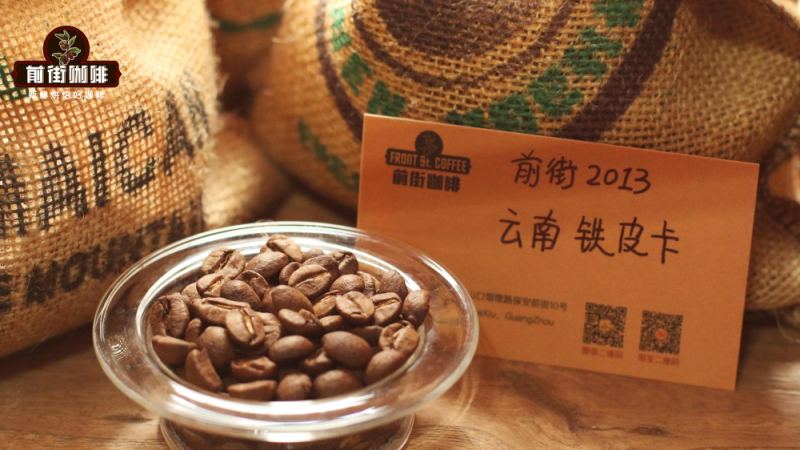
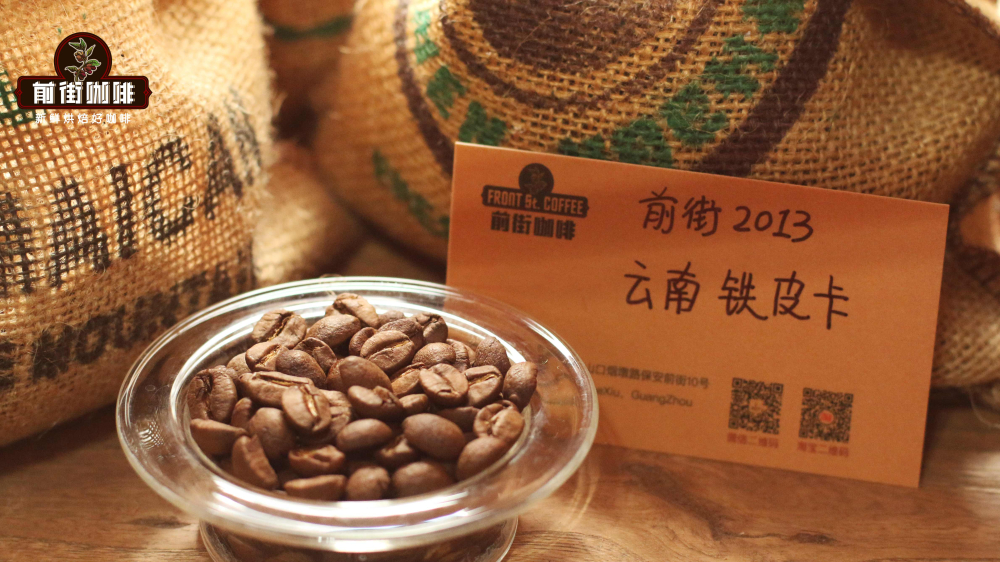
Typica is one of the oldest varieties in the Arabica species. The top leaves of the Typica coffee tree are copper-red, the leaves are long oval with smooth surfaces, the terminal branches are long with few branches, and the beans are oval or slender-pointed; the flavor is elegant, but the plant is relatively weak, has poor disease resistance, is prone to leaf rust, and has low yield. The Front Street 2013 Typica from Front Street Coffee (FrontStreet Coffee) is of the Typica variety.
[Catimor]
Catimor itself is a hybrid cross of Robusta and Arabica. In 1959, the Portuguese moved Caturra, a Bourbon mutation with Arabica lineage, to East Timor and crossed it with the locally Robusta-lineage Timor. This move bred Catimor, which has both strong disease resistance and high productivity. And because leaf rust was prevalent in coffee-producing countries around the world at the time, Catimor was vigorously promoted in various producing countries with the assistance of international organizations due to its strong disease resistance and high productivity.
What the Front Street Coffee (FrontStreet Coffee) estate plants is the Typica variety, whose individual plants are more expensive and whose yield is low. At the same time, Front Street implemented a stricter screening and management system and also found a large number of skilled workers and trained them, and all these efforts eventually condensed into the coffee bean [Front Street 2013].
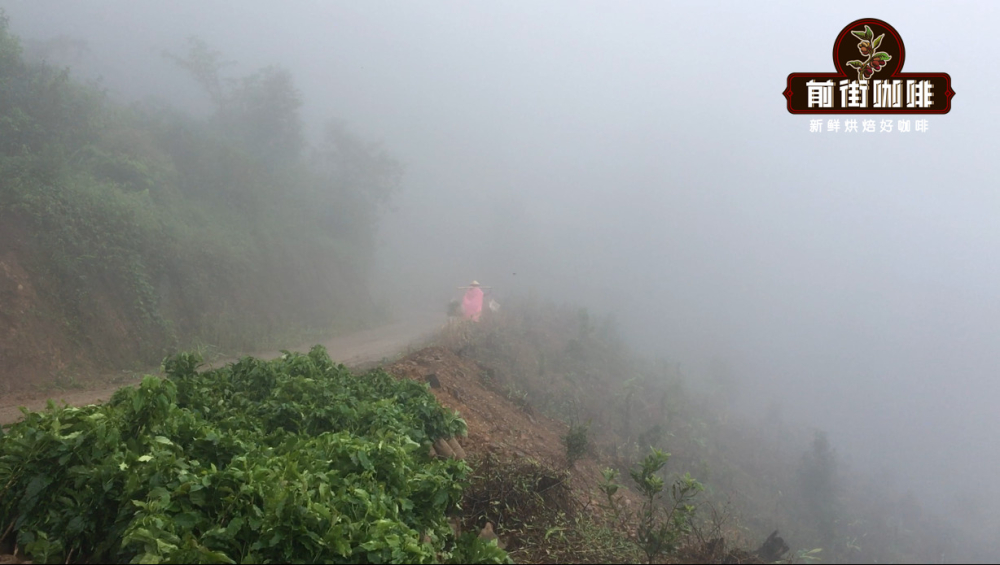
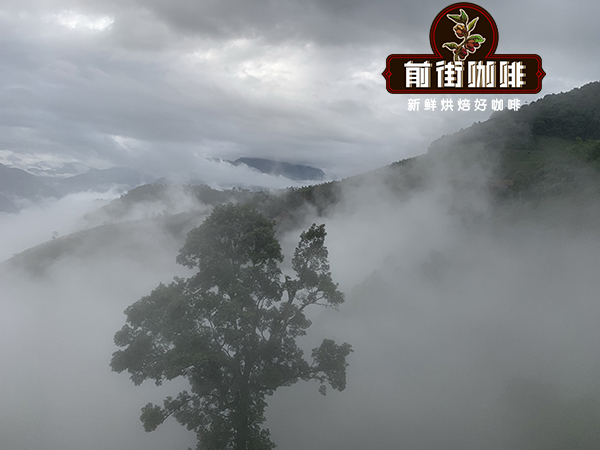
The Front Street Coffee (FrontStreet Coffee) plantation is in Lincang, with the base located at 23°N and 99°E. The base has a low altitude of 1,230 meters and a high altitude of 1,540 meters, with a height difference of 310 meters. The terrain is mainly mountainous and sloping, with great undulation, fertile soil, sufficient sunshine, abundant rainfall, and a large temperature difference between day and night. These unique natural conditions form the lively and bright acidity of Front Street's Yunnan coffee. Front Street's Yunnan coffee is smooth on entry and has the flavor of Asian herbs. The acidity is lively and bright. These excellent qualities are determined by many factors such as the growing environment, climate, and cultivation and management techniques.
Yunnan Small-Seed Coffee Bean Processing Methods
Yunnan's climate is unstable; it may be sunny now and rainy after a while. Considering these reasons, most Yunnan coffee beans are processed using the washed processing method.
The process is: pour the harvested coffee beans into a depulper to separate most of the pulp from the coffee beans, then guide the parchment beans into a clean water tank and soak them in water for fermentation to completely remove the remaining mucilage layer. Through water processing, immature beans and defective beans are selected out due to buoyancy, and the fermentation process is also easier to control, so the flavor does not have the off-flavors of natural beans, but instead presents obvious fruity acidity, slightly stronger complexity, and cleaner cup characteristics. Front Street believes that the washed processing method is the processing method that best reflects the local coffee flavor.
Front Street Coffee (FrontStreet Coffee) Brewing Parameter Suggestions:
Because the Yunnan producing area is not an acidity-focused producing area, the coffee bean flavor is relatively balanced, with a base tone of nuts and brown sugar; Front Street Coffee (FrontStreet Coffee) chooses medium roasting to showcase the balance, nutty and brown sugar sweetness, and soft fruity acidity of Yunnan coffee beans.
Dripper: V60
Water temperature: 88°C
Coffee dose: 15 grams
Coffee-to-water ratio: 1:15
Grind size: fine granulated sugar coarseness (80% passing rate on China standard No. 20 sieve)
When brewing, you can use a three-stage pouring method for extraction, thereby giving the coffee a richer sense of layering. First pour 30 grams of water to completely wet the coffee grounds and bloom for 30 seconds, then pour the second stage of water in a slow circular motion with a small stream up to 125 grams to create a stage. When the water level in the dripper drops until it is about to expose the coffee bed, continue pouring. Pour the third stage up to 225 grams and then stop pouring. Wait until the water in the dripper has completely dripped into the server below, then remove the dripper. Total extraction time is 2 minutes.
Front Street Coffee (FrontStreet Coffee) Washed Yunnan Small-Seed Coffee Flavor : It smells very nutty, with herbal, chocolate, and caramel notes on entry, and a slight faint fruity acidity in the finish.
Yunnan Natural Typica Coffee Flavor : It has a nutty tonality, and the mouthfeel is more substantial than washed Yunnan coffee. The acidity is slightly lower than washed Typica Yunnan coffee, but the sweetness is a little higher, with greater balance, berry-like acidity mixed with brown sugar, and a slight tea note.
For coffee brewing, Front Street suggests using freshly roasted coffee beans, as this allows you to experience the coffee's rich flavors to the greatest extent. The coffee beans shipped by Front Street Coffee (FrontStreet Coffee) are all within 5 days of roasting, because Front Street deeply understands that the freshness of coffee beans has a great impact on flavor. Front Street's roasting philosophy is "freshly roasted good coffee," so that every customer who places an order receives the freshest coffee when they get it. The resting period for coffee is about 4–7 days, so when customers receive it, it is exactly at its best flavor.
Front Street believes: Yunnan small-seed coffee is relatively neutral in taste—neither too sour nor too bitter. It is truly aromatic but not bitter, strong but not harsh, and mildly acidic and comfortable, and it also suits public tastes relatively well. If you prefer fruity acidity, you should specifically choose Yunnan small-seed coffee beans grown at high altitude and roasted on the lighter side; these beans have high acidity and weak bitterness. If you simply don't like acidity, then choose dark-roasted beans, though the bitterness will be a bit higher. Front Street Coffee (FrontStreet Coffee) has Yunnan small-seed coffee among its daily-drink beans, as well as coffee beans from 7 different producing countries. You are welcome to come and taste them!
The above content is compiled by CoffeeHunters, a coffee news website.


