







What Separates Yirgacheffe G1 Coffee Beans From Other Grades?
Yirgacheffe G1 is the top Ethiopian grade for the region's green beans, meaning the lot was screened and hand-sorted to leave almost no visible defects. That low defect count is what lets the Heirloom native variety express its white floral and lemon-citrus character cleanly, whether the beans went through washed or natural processing.
Grading in Ethiopia is driven by defect counts and cup quality rather than a single flavor style, so G1 tells you about preparation, not roast. Washed Yirgacheffe typically reads bright and tea-like, while natural lots from the same area push toward berry and dried fruit. The trees themselves sit in the Sidamo highlands at roughly 1,700 to 2,100 meters, one of the higher coffee-growing zones in the world.
Yirgacheffe is one of Ethiopia's most representative specialty coffee regions, known for its jasmine floral aroma and citrus-lemon acidity. This article provides a detailed analysis of the grading standards for Yirgacheffe G1 coffee beans, the differences between washed and natural processing, the characteristics of the Heirloom native variety, and brewing parameters. It also combines specific products such as Front Street washed Yirgacheffe, Front Street natural Red Cherry, and Front Street Gutingding Cooperative to help coffee enthusiasts go from beginner to advanced, gaining a comprehensive understanding of the flavor characteristics and purchasing considerations of authentic Yirgacheffe.
The name Yirgacheffe itself is highly recognizable, and with its outstanding flavor and relatively affordable price, many people choose it as their daily go-to coffee.
So, how much do you know about Yirgacheffe? Yirgacheffe green beans are considered one of the most distinctive coffee varieties in the world, with limited production and a relatively high price. They are produced in Ethiopia's Sidamo Province at an altitude of about 4,000 feet on the highlands, and are a model of African washed coffee, featuring a distinct citrus and lemon fruity aroma with jasmine-like floral notes. At a medium roast, the acidity is milder, while a dark roast releases intense aromas, making it suitable as a single-origin coffee.
Yirgacheffe itself is a small town in Ethiopia, located in Sidamo Province in the south of the country at an altitude of about 1,700 to 2,100 meters, while coffee trees are typically planted above 1,800 meters, making it one of the highest coffee-growing regions in the world. Yirgacheffe became the hallmark of Ethiopian specialty coffee because it displays highly recognizable white floral notes and lemon-citrus acidity. This area was originally wetlands, and in the local language "Yirga" means "to settle down," while "Cheffe" refers to "wetlands." In 2010, the Ethiopia Commodity Exchange separated the Yirgacheffe region from the Sidamo region, and today's Yirgacheffe region was thus named.
Because the coffee production methods and flavor expression here are so outstanding, Ethiopian coffee farmers take pride in their beans having Yirgacheffe flavor characteristics, and Yirgacheffe has thus become Africa's most renowned coffee region. However, when it comes to the most authentic Yirgacheffe flavor, it is still the high-quality beans produced in the town of Yirgacheffe itself. If you want to experience the characteristics of Ethiopian coffee, it is recommended to start with Front Street washed Yirgacheffe.
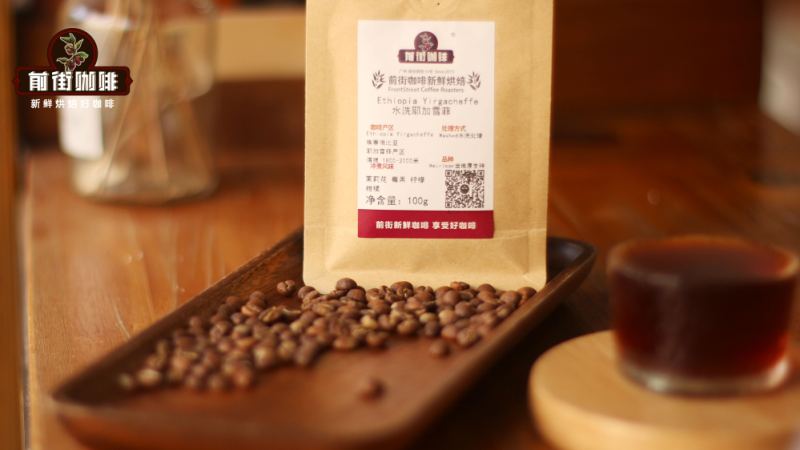
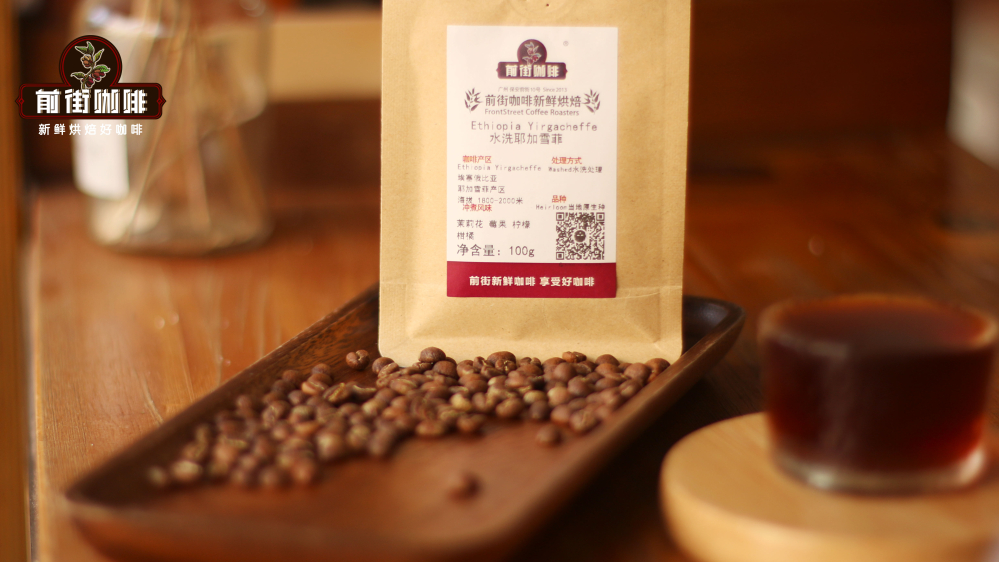
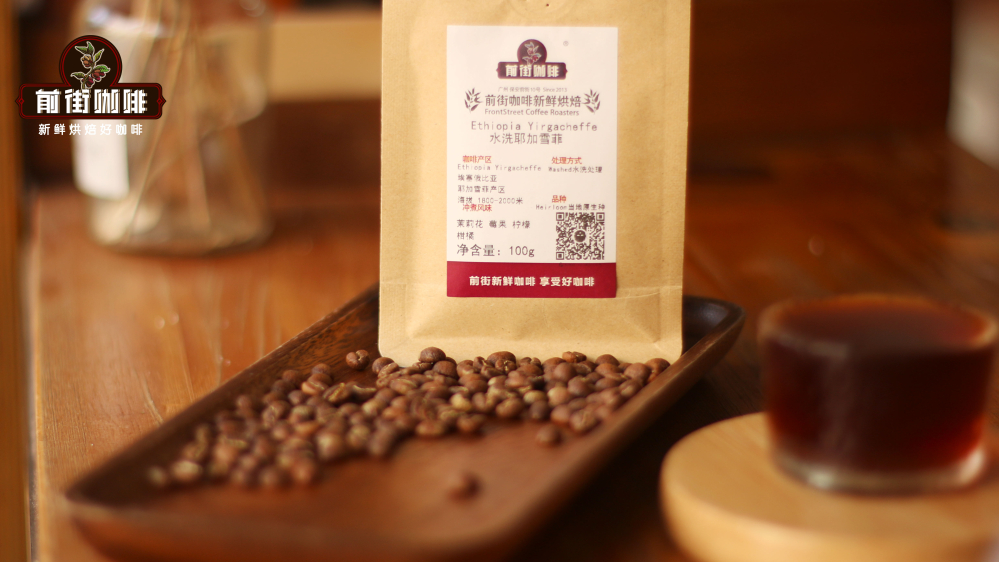
Front Street. Washed Yirgacheffe Coffee Beans
Region: Yirgacheffe Region
Altitude: 1900-2000m
Processing Method: Washed
Variety: Heirloom native variety
Flavor: Jasmine, Citrus, Berry
Recommended Reason: Taste the classic Yirgacheffe flavor at an affordable price, with a refreshing taste, suitable for pour-over, cold brew, drip bags, clever cup immersion, and other methods
Once you have some foundation and want to further explore more types of Yirgacheffe coffee, you can try different varieties. We recommend the Front Street washed Gutingding and Front Street natural Red Cherry, both also G1 grade.
Front Street. Natural Red Cherry Coffee Beans
Region: Yirgacheffe Region, Aricha Estate G1
Altitude: 1700-2200m
Processing Method: Natural
Variety: Heirloom native variety
Flavor: Berry
Jasmine
Lemon
Since 2009, Ethiopian coffee has established the ECX specialty coffee trading and grading system, first dividing green beans into two major categories by processing method, and Yirgacheffe was thus divided into natural processed and washed processed.
Then the specific grade is determined from two dimensions. In terms of defect rate, each export green bean lot is sampled at 300g; if there are no more than 3 defective beans, it is G1 grade, and if there are 4 to 12 defective beans, it is G2 grade. In terms of cupping score, G1 and G2 grade coffee beans are evaluated according to the SCAA cupping standard; 85 points or above is rated Q1, and 80 to 84.75 points is rated Q2. For example, the Gutingding Cooperative coffee beans on Front Street's bean list belong to G1 grade, are washed processed, and have elegant white floral notes and bright citrus acidity.
Front Street Yirgacheffe Gutingding Cooperative Coffee Beans Region: Yirgacheffe Gedeo Zone Producer: Gutingding Cooperative Altitude: 1900-2300m Variety: Local native variety (Heirloom) Processing Method: Washed
Grade: G1
Flavor: Citrus, Berry, Lemon, Cane Sugar, Green Tea
The Gutingding Cooperative has 300 cooperating smallholder farmers and is known for producing the highest quality coffee in Ethiopia. Its processing method continues the most traditional washing technique and is praised by many as "the last pure land of Yirgacheffe." Among the guests who come to Front Street for coffee, if they want a washed fruity coffee, the baristas at Front Street Coffee (FrontStreet Coffee) often first recommend the Gutingding Cooperative coffee on the bean shelf. The washed processed Gutingding Cooperative coffee does not have the heavy bitterness of traditional black coffee; its fresh and bright citrus, lemon acidity, and jasmine aroma make many coffee lovers fall in love with it at first sip.
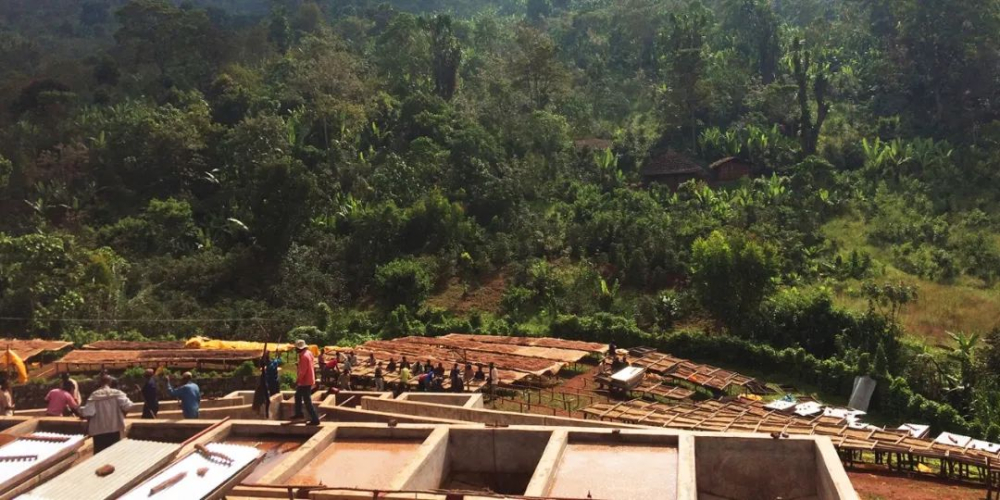
In traditional practice, farmers harvest coffee cherries and place them directly on patios or spread them on the ground, using sunlight to dry them, and once the coffee fruit's moisture content drops to about 12%, they can be hulled and bagged. Coffee beans processed this way are prone to earthy flavors, over-fermentation, and rotten fruit flavors. To improve the defective flavors caused by sun-drying, Ethiopia introduced washed processing technology from South America.
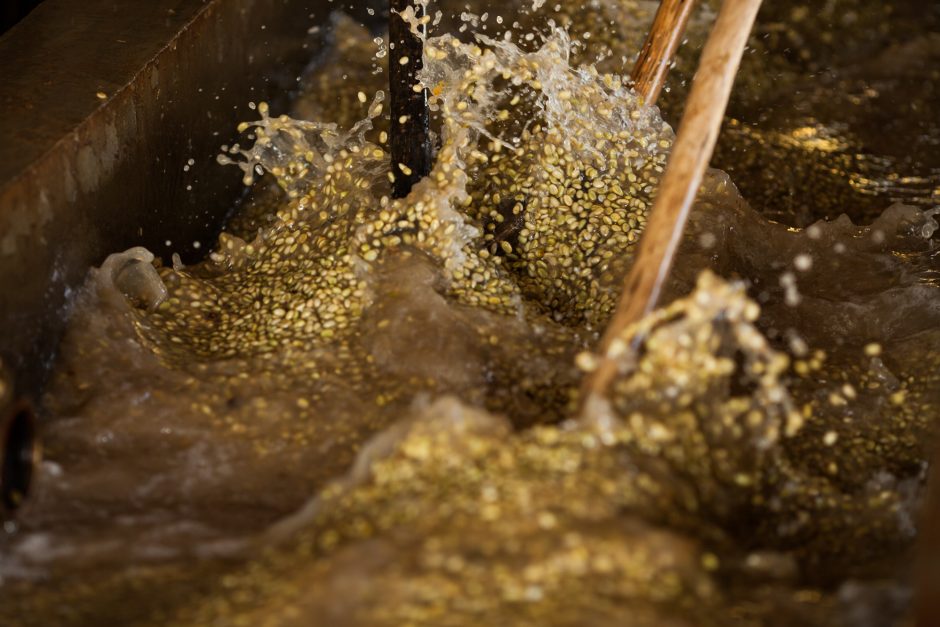
The washing process is as follows: pour the coffee cherries into a tank, first remove the floating unripe beans, then use a machine to remove the coffee skin, then place them into a clean tank to ferment, using the acidic substances produced by the green bean fermentation to make the pectin layer fall off, then rinse the surface of the parchment beans with clean running water, and finally dry them in sunlight to complete. There are multiple steps in the washing process that can remove defective beans, and in terms of flavor, it presents a cleaner acidity.
This washed Gutingding Cooperative coffee bean uses Ethiopia's most common Heirloom native variety. It is estimated that Ethiopia currently has about 10,000 to 15,000 heirloom varieties, most of which have not undergone formal genetic identification. Because Ethiopia's coffee varieties are numerous and complex, fully organizing and categorizing them is extremely difficult, and because various wild varieties need to be protected, the local government decided to harvest and process different coffee bean varieties together and uniformly name them "Ethiopia Heirloom." This is also why Ethiopian beans often are not as uniform as coffee beans from some regions, but instead show a state of "different sizes, varying plumpness."
In Front Street Coffee (FrontStreet Coffee) stores, Front Street usually uses the pour-over method to serve it, enjoying the coffee's aroma in the form of black coffee.
Most Ethiopian coffees have floral and fruity notes, and washed processed Yirgacheffe is no exception. In order to preserve more elegant acidity, a light roast is chosen for roasting. Yirgacheffe grows in a high-altitude environment, and Front Street recommends using a relatively high water temperature and medium-fine grind to extract, allowing the coffee to have rich acidity while avoiding over-extraction flavors. Front Street hopes to highlight more layers of floral and fruity aroma, so it uses a V60 dripper for brewing; the dripper's spiral rib design allows the coffee grounds to degas better, maximizing the activation of the volatilization and dissolution of aromatic and acidic substances.
Yirgacheffe brewing parameters:
Dripper: V60 Water Temperature: 92-93°C Dose: 15g Coffee-to-Water Ratio: 1:15 Grind Size: Fine granulated sugar size (sieve No. 20 to 78% pass-through)
For the first pour, add 30 grams of water and bloom for 30 seconds, then pour 95 grams (the scale shows about 125 grams), finishing in about 1 minute. When the water level drops to 2/3 of the coffee bed, pour the remaining 100 grams (the scale shows about 225 grams), finishing in about 1 minute 35 seconds. Dripping is completed at 2'10", remove the dripper, and extraction is complete.
The washed Front Street Gutingding Cooperative coffee gives a clear sense of floral aroma and honey sweetness on the first sip, with full lemon and citrus acidity, and after drinking, there is a lingering tea aroma in the mouth.
The above content is compiled by CoffeeHunters, a coffee news website.


