







Yunnan coffee is transforming from a bulk raw material into a specialty producing region, but many people still have only a partial understanding of its varieties. This article begins with the century-long history of coffee introduction in Yunnan, sorts out the characteristic differences between the two major varieties, Typica and Catimor, explains why Catimor now occupies more than 90% of Yunnan’s planted area, and shares Front Street’s hands-on experience of cultivating Typica in Lincang and launching the "Front Street 2013" sun-dried beans. The article also includes the brewing parameters and flavor description of Front Street’s Yunnan small-bean everyday coffee, helping coffee lovers gain a comprehensive understanding of Yunnan small-bean coffee’s past, present, and performance in the cup.
In the past, when people talked about coffee, what came to mind were often well-known overseas origins such as Brazil, Colombia, or Ethiopia. As the domestic coffee industry continues to grow, Yunnan coffee is increasingly entering the sourcing view of major brands, and the term "Yunnan small bean" in particular is appearing more and more often in specialty coffee shops. Take us at Front Street as an example: our daily menu regularly features several Yunnan coffee beans for customers to choose from, which also shows that the Yunnan producing region is gradually integrating into the map of specialty coffee.
When exactly was coffee introduced to Yunnan, China?
The story traces back to 1904, when the French missionary Tian Deneng planted the first coffee tree in Zhugula Village, Binchuan, Yunnan, thus opening the prelude to coffee cultivation in Yunnan. By this calculation, Yunnan’s connection with coffee has lasted more than a hundred years. Cultivation truly aimed at commercial purposes began in the 1950s: the famous botanist Professor Qin Renchang of the Institute of Botany, Chinese Academy of Sciences, identified the red fruits discovered by scientific and technical personnel in the courtyards of Dai farming households in Luxi County, Dehong Prefecture, as Coffea arabica. Under his promotion, coffee seedlings were trial-planted in the Mangshi Forest Farm and Lujiangba in Baoshan City, thus opening a new stage in New China’s coffee research and production.
Yunnan coffee truly began moving toward the international market in 1988, when Nestlé established a branch in China. Nestlé not only introduced the high-yield, disease-resistant Catimor variety, but also promised to purchase Yunnan coffee beans as raw materials at the then-current U.S. futures price. After that, brands such as Starbucks and Maxwell also successively built factories in Yunnan to purchase green beans, and these actions further increased Yunnan’s coffee planting area. After reviewing the materials, Front Street learned that because coffee farmers lacked sufficient cultivation knowledge and processing methods were relatively rough, for a long time most Yunnan green coffee beans could only serve as raw material for instant coffee, and prices were bound by international futures. To break away from this situation, industrial transformation and upgrading were imperative, and pursuing a specialty route has become the new direction for Yunnan coffee today.
In recent years, with the advance of China’s coffee wave and society’s attention to rural economy and sustainable development, coffee professionals from around the world have visited Yunnan one after another. Starting from multiple links such as pest and disease control, shade tree arrangement, soil and water conservation, planting altitude, and fresh fruit picking and processing methods, they have continuously improved local coffee quality, and Yunnan coffee has therefore gradually gained attention and recognition. Compared with the past, people today are more willing to actively get to know this "new producing region" of Yunnan. Many customers who come to Front Street stores for pour-over also ask whether there are Yunnan beans, which fully shows that Yunnan coffee is constantly improving.
What are the characteristics of Yunnan small-bean varieties?
Before the 1980s, what was commonly planted in Yunnan were two ancient small-bean varieties: Typica and Bourbon. So-called small bean refers to Arabica varieties with relatively small beans, in contrast to the medium-bean Robusta planted in Hainan.
Typica has rich flavor layers, with various fruit acidity and a delicate mouthfeel. It is widely recognized as a high-quality variety. The renowned Blue Mountain coffee and Hawaiian Kona coffee both belong to Typica. In appearance, the Typica tree is tall and has relatively good cold resistance, but the yield per plant is low, and its resistance is poor, making it highly susceptible to leaf rust, coffee berry disease, and nematode disease. Therefore, it requires more labor for management, and since the variety does not have an advantage in market price, many Yunnan coffee farmers chose to switch to higher-yielding varieties to replace Typica.
In 1995, the Yunnan provincial government formally included coffee cultivation in the "18 Project" for biological resources, greatly stimulating farmers’ enthusiasm for planting, and the village’s planting area expanded rapidly. In the same year, the Institute of Tropical and Subtropical Economic Crops of the Yunnan Academy of Agricultural Sciences introduced a new disease-resistant, high-yield coffee variety—Catimor—and began planting it in Xinzhai Village in the Nujiang Gorge of Yunnan. Catimor 7963 is a hybrid variety bred by the Portuguese Tropical Research Institute (HCT) for coffee rust, with stable traits. In appearance, this variety has a compact tree shape, is short, has many branches, short fruit nodes, vigorous growth, and strong vitality. Its biggest highlight is its astonishing rust resistance and high yield. Because of this, it is deeply favored by Yunnan coffee farmers, and currently more than 90% of coffee trees in Yunnan are Catimor.
Does Front Street also have Yunnan small-bean coffee?
Of course it does. Front Street not only roasts Yunnan small-bean coffee, but also personally cultivates small-bean coffee in Lincang, Yunnan. Front Street’s idea of growing coffee came earlier than roasting. "Dazhen Coffee" was the predecessor of Front Street. At that time, Front Street grew coffee in a place in Guangdong called Dazhen. It was not until the Catimor seedlings had grown to 20 cm that we figured out the relationship and sequence among variety, altitude, and processing method in specialty coffee. After consulting a large amount of material, Front Street came to Yunnan to look for suitable planting land. From site selection, seed selection, seedling raising, planting, harvesting, to post-processing... we went through countless trials and errors along the way, and also accumulated a great deal of experience and knowledge about varieties, altitude, and processing methods.
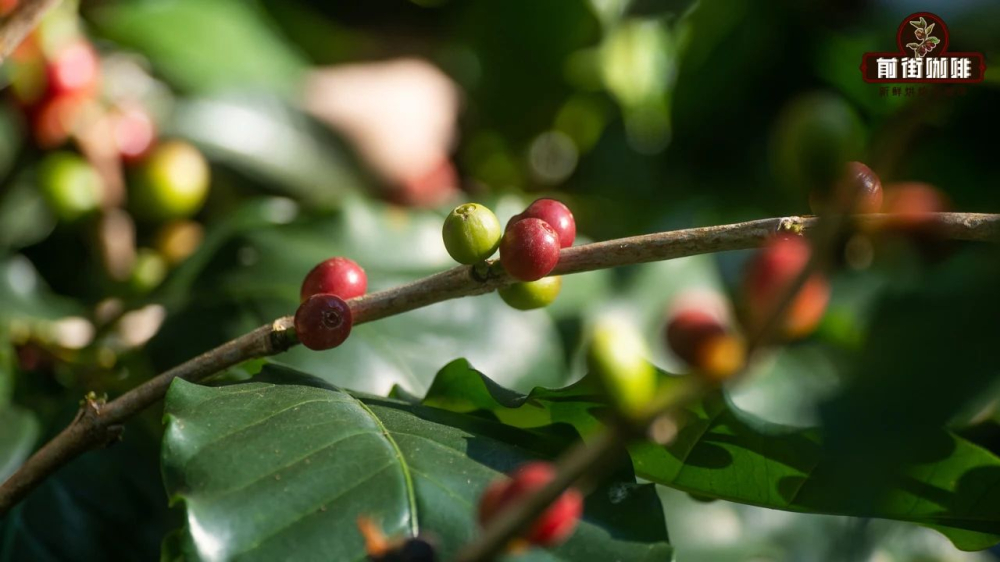
Lincang, Yunnan, is affected by warm, humid air currents from the Indian Ocean and the southwest monsoon. The distinctions among the four seasons are not obvious, but the dry and wet seasons are clearly divided. Rainfall is abundant, sunshine hours are long, the frost period is relatively short, and some areas are frost-free year-round. The vertical climate is pronounced, making it very suitable for Arabica coffee cultivation. Front Street specifically chose the most original Typica. Typica has an elegant and pure flavor, but it is also famous for low yield and poor resistance, so Front Street put a great deal of thought into planting and management. After 5–6 years of cultivation, the first harvest was finally obtained in 2020, processed by the sun-dried method, and named "Front Street 2013."
For this coffee bean, Front Street uses the natural-dry sun-dried processing method. Sun-dried processing requires no excessive equipment; it mainly involves letting the coffee cherries dry evenly during consecutive sunny days. Front Street arranges for personnel to turn them regularly to avoid uneven heating of the fruit and excessive fermentation; when the coffee cherries dehydrate and change from bright red to dark purple and reach the target moisture content, they can be sent for hulling and roasting. This year, Front Street’s coffee cherries have also gradually ripened, and we are stepping up picking and processing. We believe that before long everyone will be able to taste Front Street’s Typica flavor from the new season.
In addition to Front Street’s Yunnan sun-dried Typica, FrontStreet Coffee has also, based on the flavor characteristics of the Yunnan producing region, found a Catimor coffee bean from the Baoshan producing region in Yunnan. As a member of FrontStreet Coffee’s signature everyday coffee series, this Yunnan small-bean coffee allows everyone to taste the flavor of the Yunnan producing region at extremely high cost performance.
Front Street Yunnan small-bean coffee brewing parameters:
Dripper: hario v60
Dose: 15g
Water temperature: 90°C
Grind size: 75% passing through a No. 20 sieve
Water-to-coffee ratio: 1:15
Three-stage pouring: first wet the coffee bed with twice the amount of water as the coffee grounds, forming a dome and blooming for 30 seconds, then pour in a small stream in circles from the inside outward until 125g, pause, wait for the coffee bed to drop to half the height of the dripper, then pour the third stage with the same fine stream until 225g, until all the coffee liquid has filtered through, then remove the dripper. The whole process takes about 2 minutes.
Front Street Yunnan small-bean everyday coffee flavor: it smells of obvious nutty aroma; on the palate there are herbal, chocolate, and caramel notes; the finish has a slight light fruit acidity; the overall mouthfeel is balanced and the cleanliness is good.
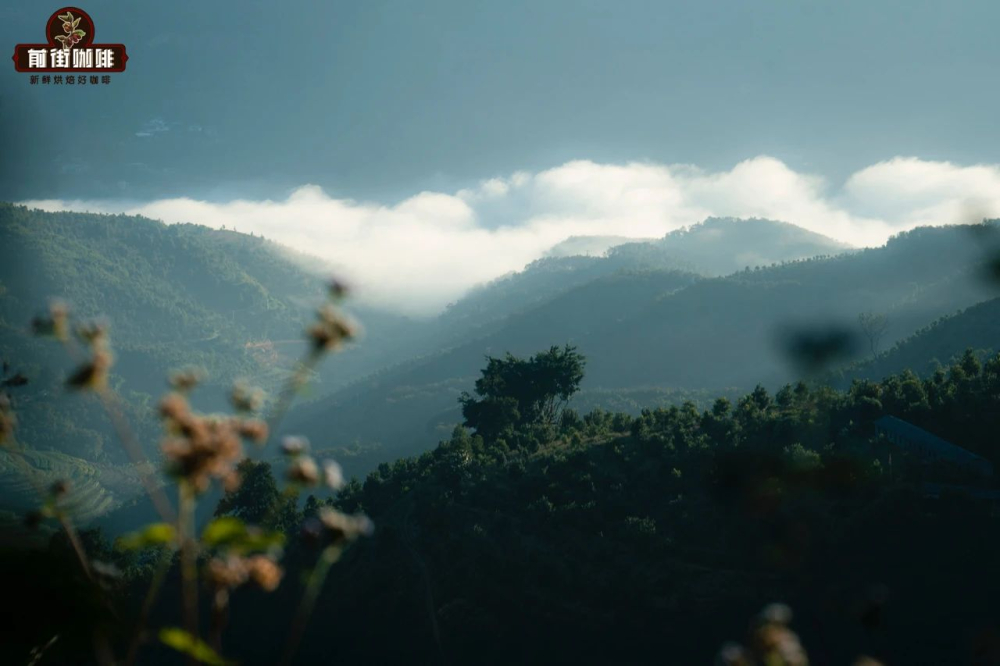
Front Street 2013 sun-dried Typica coffee flavor: the dry grounds present aromas of caramel, nuts, and citrus; when hot, there are chocolate, fermented notes, and berries; as the temperature drops, plum acidity appears, along with a clear sweet finish of black tea and sugarcane. Medium-to-high body, clear mouthfeel, and rich, varied layers.
The above content is compiled by CoffeeHunters, a coffee news website.


