







Many coffee lovers have had this experience: after finishing a cup of espresso or single-origin coffee, you take a sip of water, and the water tastes surprisingly sweet. Behind this phenomenon lie the working mechanisms of taste receptors, the taste contrast effect, and the physiological role of saliva secretion in the mouth. Starting from real feedback from customers at Front Street stores, this article systematically analyzes how coffee's sweet aftertaste forms, explains the distribution and function of taste buds on the tongue, and explores why coffee's bitterness actually makes the sweetness in the water that follows stand out. At the same time, the article will use specific products such as Front Street Strawberry Candy, Front Street Blackberry, Front Street Mozart, Front Street Sidra, and Front Street 2013 Yunnan Small-Molecule to help readers understand this interesting taste phenomenon more intuitively.
"Not~even~a~bit~of~exaggeration~if you don't believe me, try it yourself—after drinking coffee, the water really tastes so sweet!" This was the exclamation from a customer friend who visited a Front Street store yesterday. Front Street found it quite interesting, so we decided to talk about this topic today~
Sometimes, before tasting certain specific coffees (such as espresso or single-origin), we tend to take a sip of ice water first. The purpose is to use the ice water to clean the palate, so we can more accurately capture the flavor performance of this highly concentrated cup of coffee. It can be seen that this action is meant to enhance the sensory experience of drinking coffee. Drinking water again after finishing coffee can similarly have a comparable effect. As the customer at the beginning described, under coffee's "boost," water presents a quite obvious sweetness.
Even if this cup of water is the very same one just used to "rinse the mouth," we still feel that after drinking coffee, the water we taste is sweeter than before! So what exactly causes this?
Why does water taste sweeter after drinking coffee?
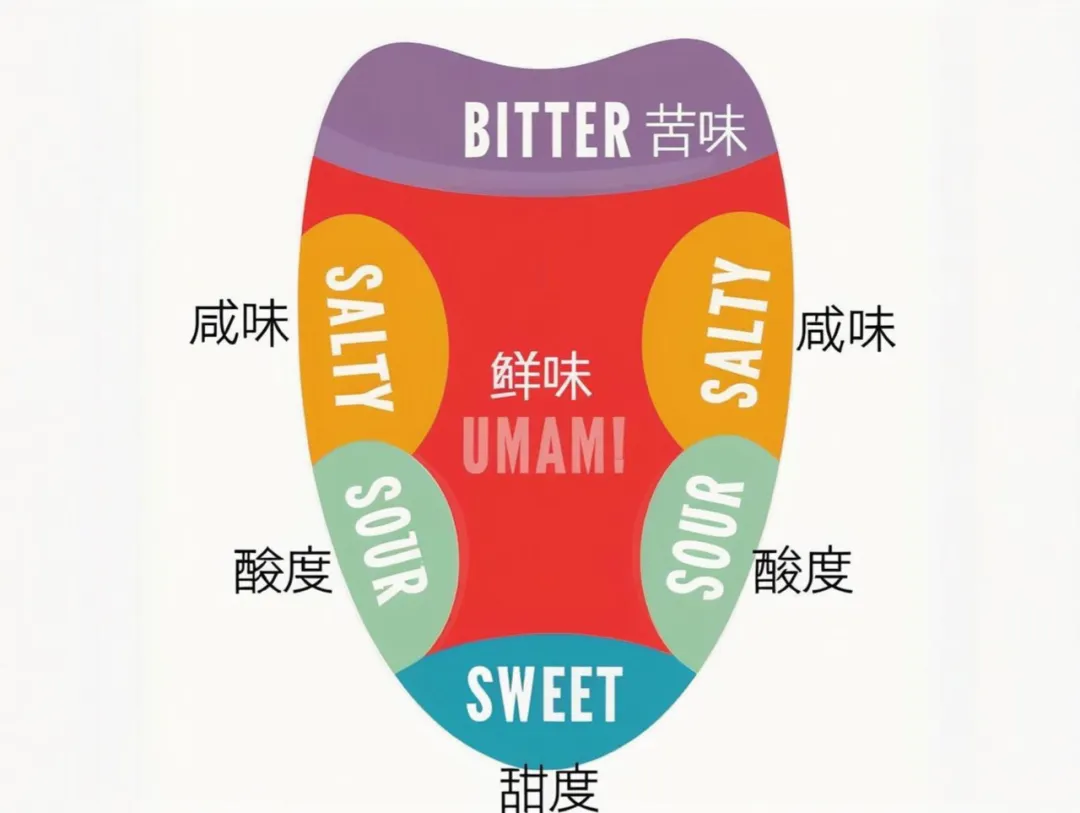
This has to start with one of our five senses—taste! Sour, sweet, bitter, salty, and umami are the five basic tastes that taste can identify. The main medium for perceiving these tastes is the taste buds distributed on the tongue. They are extremely tiny sensory organs composed of taste cells, also called "taste receptors."
When taste substances in food or drink come into contact with taste buds, the taste cells are activated by stimulation, and then transmit this taste information to the brain in the form of electrical signals, and we perceive the corresponding taste.
When you drink a cup of coffee with prominent sweetness, such as Front Street Strawberry Candy, Front Street Blackberry, Front Street Mozart, Front Street Sidra, or Front Street 2013 Yunnan Small-Molecule, the signal the taste buds send to the brain at this time is not bitter, very sweet.
And the reason water tastes sweeter after drinking coffee is mainly due to two factors! One is the "taste contrast effect" at work, and the other is the influence brought by "oral physiological action."
"Taste contrast effect" refers to the contrast produced between different tastes. When we taste one flavor and then perceive another, the former flavor interferes to some extent with the perception of the latter. This interference may either enhance or weaken it, and may even change the taste.
For example, first eat a highly sweet food, then eat a tasteless food. The latter itself contains no bitterness, but because sweetness inhibits the activity of bitter taste buds and reduces their sensitivity, the tasteless food instead takes on a slight bitterness.
"Oral physiological action" refers to when the salivary glands in the mouth are stimulated in some way, they accelerate saliva secretion! Saliva contains enzymes such as amylase, which can bind with certain components in food and drink, or break them down, thereby producing sweet-tasting substances.
Combining the above two points, we can understand that the reason water tastes sweeter after drinking coffee is precisely the result of these two working together (the same principle applies to sweet aftertaste)!
When we drink coffee, the coffee stimulates the mouth and promotes an increase in saliva secretion. Substances in saliva can break down certain components in coffee and produce sweet-tasting substances, so after finishing it, a sweet sensation gradually emerges; at the same time, coffee's bitter substances happen to form a sharp contrast with sweetness, so when sweetness subsequently appears, it seems even more prominent because of this contrast.
Therefore, under the combined influence of these two mechanisms, sensitivity to sweetness is enhanced after drinking coffee, and together with the increase in sweetness brought by saliva secretion, when you take another sip of water at this time, the water naturally presents a highly sweet sensation.
The above content is compiled by CoffeeHunters, a coffee news website.


