







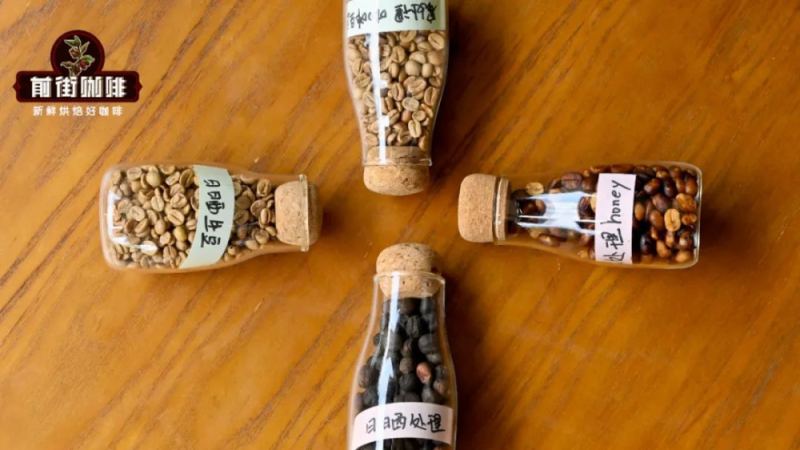
Sun-dried and honey processing are often labeled as "sweet," but the two actually emphasize different aspects in flavor expression and sources of sweetness. Starting from the processing methods, this article sorts out the differences between the fruity fermented aroma of sun-dried coffee and the full-bodied sweetness of honey processing, traces the rise of honey processing in Costa Rica, and analyzes the classification logic behind black honey, red honey, yellow honey, and the like. At the same time, the article will answer the common question of "which is sweeter, honey processing or sun-dried," explain how variety, altitude, ripeness, and processing method jointly affect coffee sweetness, and offer specific bean recommendations from the Front Street brand for friends who prefer different mouthfeels.
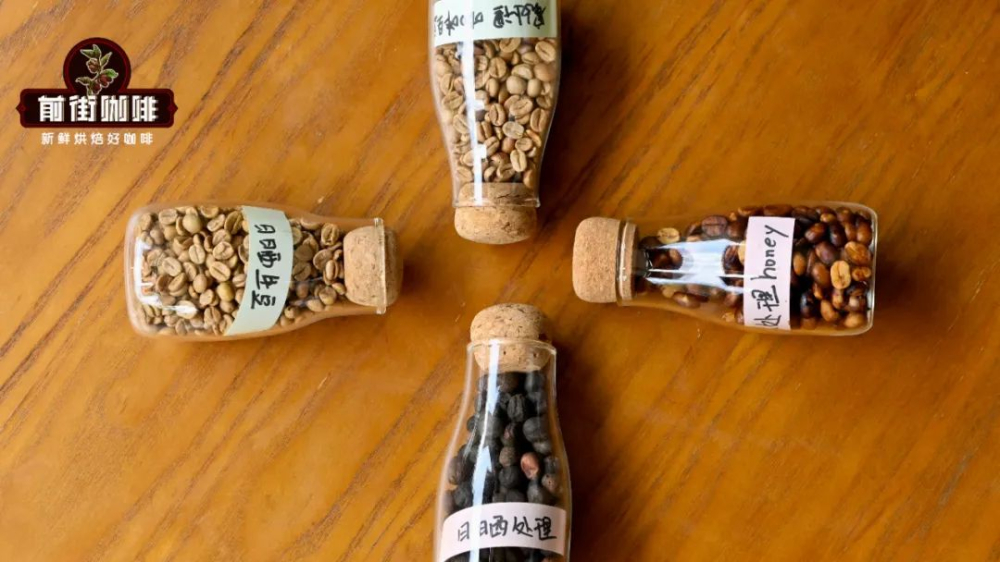
When it comes to coffee with prominent sweetness, many people, like Front Street, first think of the two processing methods: sun-dried and honey. Sun-dried beans usually stand out for the fermented aroma of ripe fruit, while honey processing tends to present a thicker sweetness in the mouth. These two post-harvest processing methods on the market seem to unanimously emphasize the word "sweet."
Why is sun-dried coffee so fascinating?
When Front Street first entered the industry, someone asked: "Among so many coffee beans, which one do you like most?" The answer at the time was without hesitation: sun-dried. Compared with other processing methods, the flavor descriptions of sun-dried coffee always include a long list of fruit names, from broad categories such as berries, citrus, apricot, and tropical fruits to specific varieties such as guava, mango, jackfruit, and peach, almost all-inclusive. Faced with such rich fruit imagery, who would not associate it with a sweet taste?

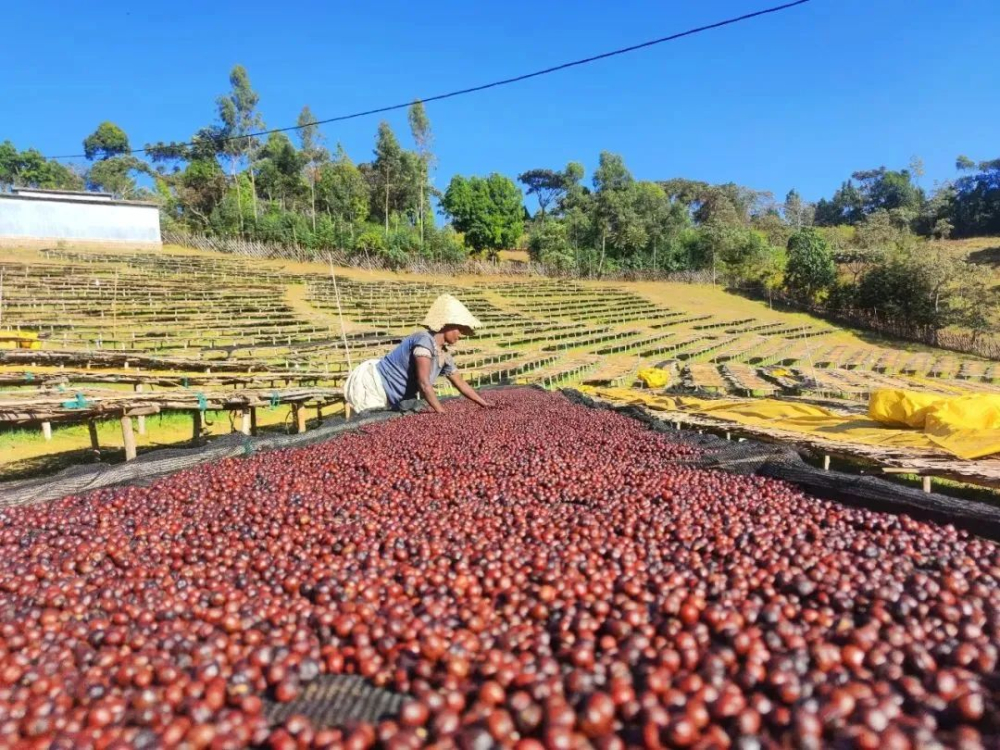
Sun-dried processing is called Dry Process, Natural, or Sun Dried in English, and its core practice is to place whole coffee cherries directly in the sun for open-air drying. Compared with other processing methods, the operational steps of sun-dried processing are much simpler. As long as the weather is clear and sunlight is abundant, whether on African-style drying racks or clean concrete patios, the cherries can be spread out to receive sunlight.
Because sun-dried processing involves the whole cherry in drying, its moisture content is far higher than that of fully washed beans with the skin and mucilage removed, so the drying cycle is also longer, usually twice that of washed coffee. For example, in Ethiopia's sun-rich producing regions, at least three weeks are needed to dry thoroughly before storage. In Central and South America, some estates with the means build dedicated wooden drying racks or shade-equipped drying sheds to allow the cherries to dry more slowly, thereby producing varying degrees of fermentation; this slow sun-drying often takes four to five weeks.
From a flavor perspective, because the skin, pulp, and pectin of sun-dried coffee all participate in drying, microorganisms generate more volatile compounds during fermentation, especially esters, and the entire process accumulates a certain fermented flavor. Therefore, the coffee easily displays an intense aroma similar to ripe tropical fruit, as well as a complex flavor profile where fermented notes intertwine with rounded sweetness.
What does the "honey" in honey processing refer to?
Honey processing is translated from the English Honey Process, also called Miel Process, and the "honey" in it comes precisely from Miel, which means honey in Spanish. This name first spread from Costa Rica, where locals customarily call the sticky gelatinous layer inside the fruit "Miel."
This processing method, which sounds sweet just from its name, originated from Brazil's Pulped Natural (semi-sun-dried / pulp sun-dried), and was initially invented to save production water. Regarding how honey processing rose in Costa Rica, Front Street found two key time points.
In the second half of the twentieth century, Costa Rica mainly produced washed coffee, and with pioneering coffee cherry depulping equipment and wet mills, it could be called a pioneer of modern washed technology.
Around 1997 to 2000, international coffee prices remained depressed for a long time. In order to obtain more income and sustain their livelihoods, many growers no longer sold coffee cherries directly to large processing stations, but instead sold their own products through self-production and self-marketing. Because of this, coffee farmers gained control over processing stations and naturally could conduct more experiments. It was against this background that the depulp-and-dry technique was introduced into production.
Honey processing first entered public view in 2006, when a coffee farmer named Juan Ramón Alvarado won first and second place with two honey-processed coffees in the Costa Rica GOLDEN HARVEST green bean competition organized by the SCAA. The following year, in the first Costa Rica CoE, three of the top five coffees were honey-processed.
By 2008, Costa Rica experienced a major earthquake, with severe power outages and water shortages in many places. To cope with the immediate difficulties, local coffee farmers began to adopt this "water-saving" technique. Although many people were initially resistant, believing that drying with pulp and pectin together could easily lead to uncontrollable fermentation, many farms not only obtained positive results after experimentation but also greatly reduced water consumption. Later, they even developed various honey processing methods that extend different flavor expressions by controlling the degree of pectin fermentation.
Why are there so many classifications of honey processing?
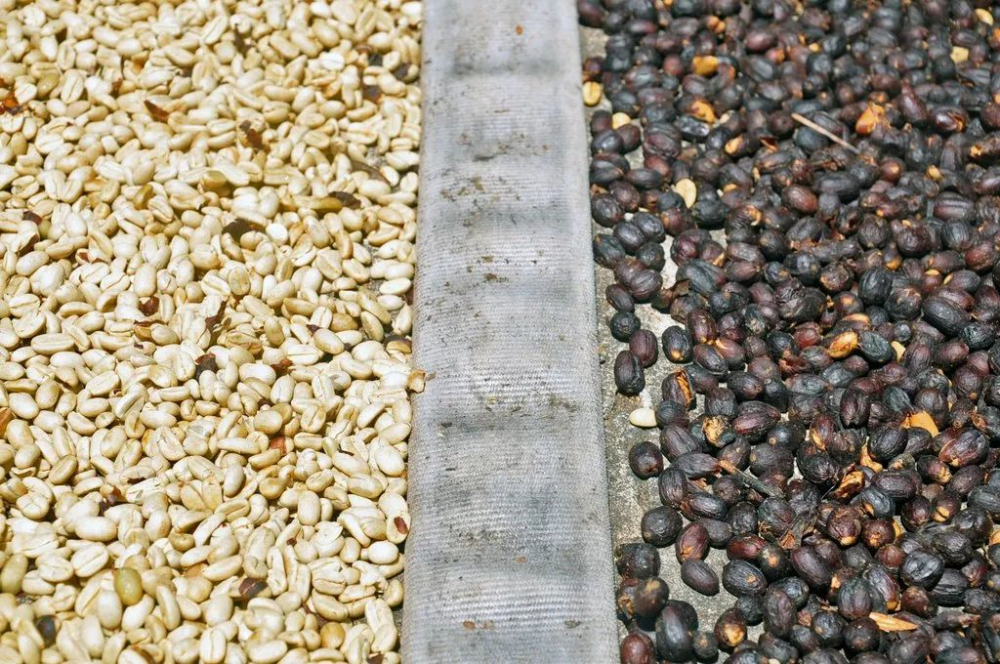
In terms of names, we often hear colored honey processes such as black honey, red honey, yellow honey, and white honey. This is because pectin contains a large amount of sugar. Green beans that retain only pectin oxidize when exposed to air, and the appearance of the beans gradually changes from the initial yellow-white to golden yellow. As time passes and fermentation continues, the beans may become dark red or even black-purple until drying is complete.
In theory, darker honey coffees such as black honey and red honey are closer to sun-dried coffee than lighter ones such as yellow honey and white honey, and their fermented character is more obvious. However, there is still no precise standard in the industry to define honey processing of different colors, and it mostly depends on the producer, so confusion in naming can occur. For example, the "red honey" produced by one producer may be called "yellow honey" by another.
The drying time of honey processing falls between sun-dried and washed, ranging from two to four weeks. Similarly, the flavor also often tends to fall between sun-dried and washed, with most leaning toward the aromatic profile of sun-dried. Black honey coffee, which retains the most pectin, often carries a sweetness reminiscent of ripe fruit and dried fruit, while also accompanied by solid bright acidity, a characteristic that traditional sun-dried coffee rarely possesses.
There are not many representative coffee beans of black honey processing, and Front Street Blackberry is one of them. It comes from a Costa Rican producing region, and because it is rich in fruity aromas, it is given a medium-light roast to highlight flavors of flowers, berries, grapes, and chocolate, with high sweetness, low acidity, and a lasting finish.
Between honey-processed and sun-dried coffee, which is sweeter?
Just as with fruit sweetness values, the sweetness level of coffee cherries is mainly affected by factors such as variety, cultivation management, altitude, and ripeness at harvest. For example, fully red cherries develop higher sweetness than unripe cherries, and high-altitude beans easily store richer sweet and aromatic substances.
The processing method does indeed determine how many sweet substances coffee beans retain and the degree of sugar conversion, but overall its influence is relatively small. The sweetness expression of coffee also depends on the flavor descriptions of taste and smell during drinking. Therefore, we cannot directly assert that honey processing is sweeter than sun-dried, or that sun-dried coffee is sweeter than honey processing.
The sweetness of coffee does not exist independently; our perception of sweetness mainly arises from the coordination of bitterness, acidity, and aroma. So if you like a rounded mouthfeel and a fuller-bodied sweetness, you can prioritize sun-dried coffee, with first choices being Front Street Sun-Dried Huakui, Front Street Sun-Dried Emerald Red Label, and Front Street Sun-Dried Queen's Estate;
If you like a light texture, sweetness with acidity, and a serene finish, you can try honey-processed beans and buy Front Street Strawberry Candy Geisha Blend, Front Street Blackberry, and Front Street Mozart.
The above content is compiled by CoffeeHunters, a coffee news website.


