







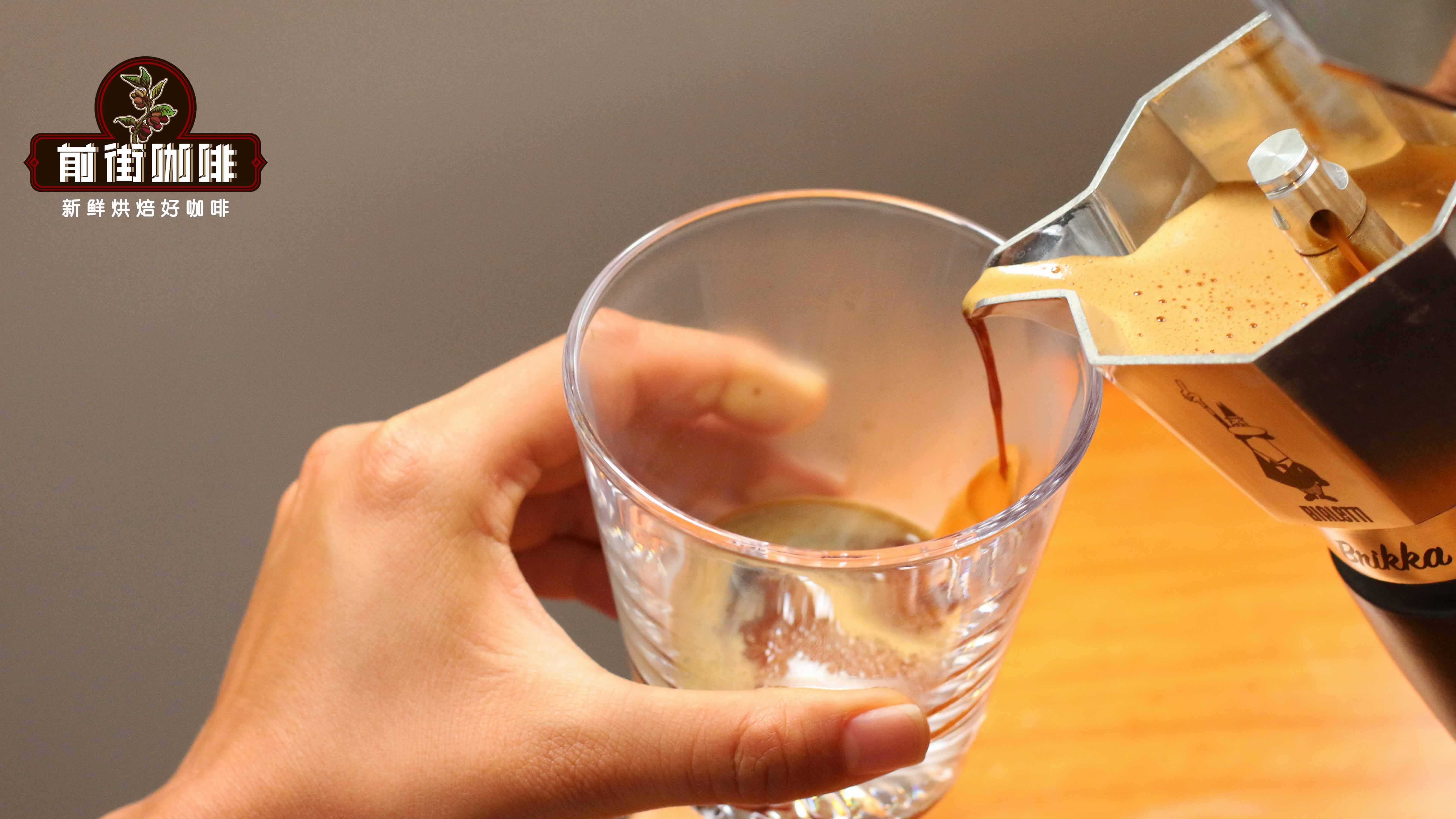
The moka pot, with its affordable price and simple operation, has become the top choice for many coffee lovers making espresso at home. Although the pressure it generates is not as high as that of a professional espresso machine, and the extracted coffee liquid is slightly lacking in viscosity, its advantage lies in the low equipment cost—a few hundred yuan can get you a good-quality moka pot. The moka pot consists of three parts: the lower chamber, the filter basket, and the upper chamber. When heated, the water in the lower chamber boils and produces steam pressure, pushing hot water through a thin metal tube, through the layer of coffee grounds, and finally into the upper chamber to form espresso. Drinking the coffee extracted directly from a moka pot is quite strong, harsh on the palate, and its aroma is not easily released, so the common practice is to dilute it with water or fresh milk to make a moka pot americano or moka pot latte. This article will explain the specific steps for making milk coffee with a moka pot, key points for choosing coffee beans, and precautions during the extraction process, helping you make a smooth and aromatic moka pot latte at home.
Among the many home coffee devices, the moka pot is the top choice for many enthusiasts to make espresso-style coffee. Its extraction pressure indeed cannot compare with a professional espresso machine, and the resulting coffee liquid will be somewhat less rich and full-bodied. However, in terms of cost-effectiveness, the moka pot has clear advantages—usually a few hundred yuan can buy a reliable set of equipment, far more affordable than espresso machines that often cost over a thousand yuan.
The structure of the moka pot is not complicated; it is mainly divided into three parts: the lower chamber that holds water, the filter basket in the middle that holds coffee grounds, and the upper chamber at the top that collects the coffee liquid. During heating, the water in the lower chamber boils and generates steam pressure. The hot water is pushed upward through a thin metal tube, forced through the layer of coffee grounds under pressure, and finally flows into the upper chamber, becoming a cup of rich coffee liquid.
Front Street needs to remind you here once again that the coffee liquid extracted directly from a moka pot is quite strong. If drunk directly, it is not only harsh on the palate but also difficult to fully perceive the aroma. Therefore, you can add water or fresh milk in a certain ratio to make it into a "moka pot americano" or "moka pot latte." This way, it will be smoother on the palate, and you can better appreciate the fresh aroma of the coffee beans themselves.
How to make milk coffee with a moka pot
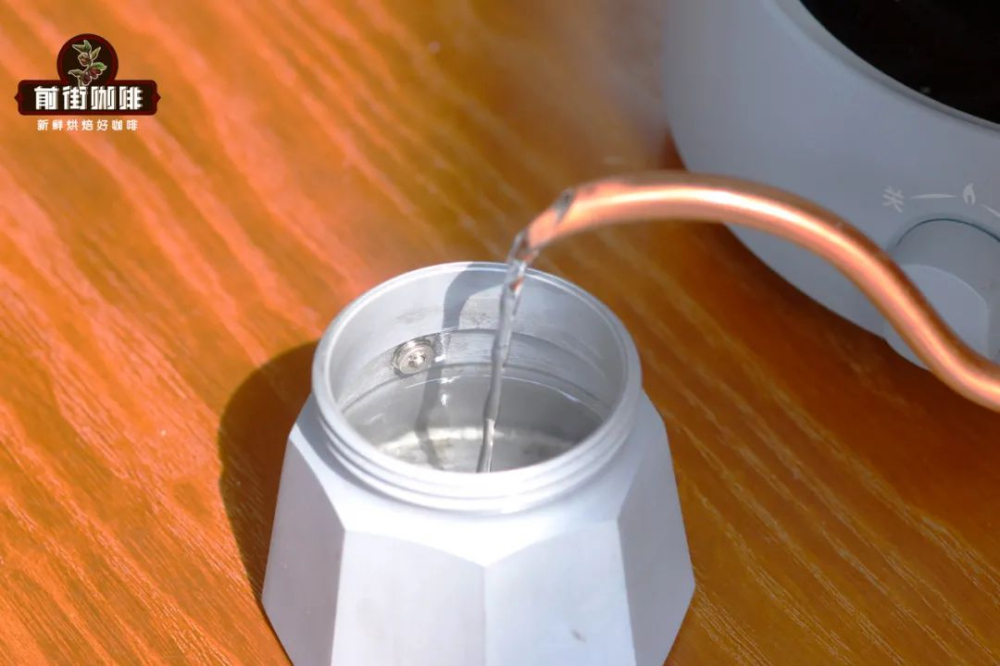
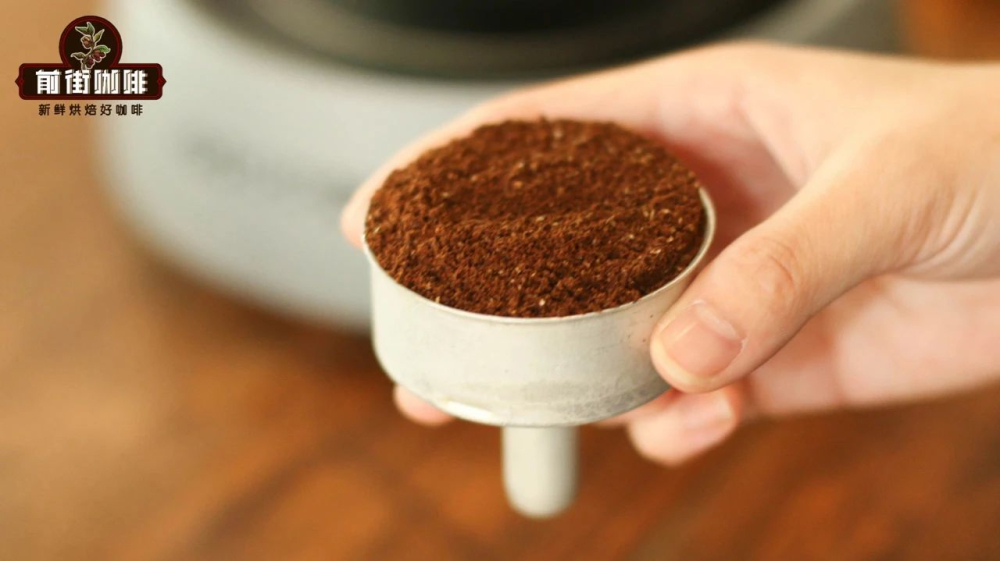
First, pour cold water into the lower chamber (hot water can easily scald your hands), then place the filter basket into the lower chamber. Use your hand to form a ring around the filter basket and add coffee grounds into it, filling until it forms a small mound slightly raised in the middle. Once the surrounding gaps in the filter basket are filled with grounds, directly place the upper chamber on top and tighten it.

Next, place the moka pot on an electric ceramic stove to heat (a gas stove also works). When you hear a "whooshing" sound, it means the coffee liquid has started to flow out upward. At this point, immediately turn off the heat and wait for the coffee liquid to continue surging up. Unlike pour-over or espresso, the moka pot does not require precise control of time and amount. As long as the liquid level reaches about 2/3 of the pot body, it indicates that extraction is complete, and the resulting coffee liquid is usually between 60 and 100 ml.
Freshly brewed moka pot coffee will have a layer of golden crema on the surface, but this crema dissipates quickly, so you should add milk promptly. Here, Front Street will use a French press to froth 200 ml of warm fresh milk into milk foam, then evenly mix the milk foam with the coffee liquid and do latte art. A cup of moka pot latte is then complete.
Overall, latte art has higher requirements for milk foam than for espresso. Coffee liquid with crema can make the surface more stable, making it easier to create relatively complex patterns; when there is insufficient crema, the stability of the surface decreases, and latte art techniques like etching become more difficult to achieve.
To highlight the coffee aroma, especially when making a moka pot latte, the espresso must be rich and full-bodied enough, so it is recommended to choose medium-dark roasted coffee beans. Beginners can try Front Street. Black Cocoa—an espresso blend recommended by many baristas. This Front Street Black Cocoa blend combines the creamy nutty aroma of Brazilian beans with the slight plum acidity of Yunnan small-batch beans. The extracted espresso has a natural cocoa flavor, making it especially suitable for drinking with milk. As storage time increases, the gases inside the beans dissipate significantly, making it difficult to extract a rich crema. Front Street only ships coffee beans freshly roasted within 5 days to ensure you can produce the richest crema.
In addition, coffee grounds can only be extracted once, and when using a moka pot, it is not easy to precisely control the weight of the coffee liquid—the actual extraction amount mainly relies on experience. Therefore, Front Street suggests that you must be careful and focused during operation, otherwise it is very easy to over-extract the coffee and make it bitter.
The above content is compiled by CoffeeHunters, a coffee news website.


