







Yirgacheffe is a representative producing region of Ethiopian specialty coffee, and its washed and natural processing methods shape two entirely different flavor directions. From the perspective of Front Street Coffee, this article systematically reviews Yirgacheffe's geographical background, the evolution of processing methods, and the specific differences between washed and natural in green bean appearance, silver skin residue, and mouthfeel. The article describes in detail the flavor characteristics of two representative coffees, Front Street Washed Gudingding and Front Street Natural Red Cherry, and explains how the natural processing method regained market recognition after being improved by Bagersh. Whether you are a beginner just getting into specialty coffee or an enthusiast who wants to understand how processing methods affect flavor, you can gain clear and practical reference from it.
In Ethiopia's specialty coffee landscape, Yirgacheffe and Sidamo occupy a pivotal position (Front Street Coffee often mentions these two regions because they are the most famous, but beyond them there are other specialty coffee regions equally worth attention). Front Street The reason Yirgacheffe is revered as specialty coffee is its light, transparent citrus and lemon acidity, along with its delicate and elegant floral and fruity aroma. It is precisely this highly recognizable flavor expression that has allowed Yirgacheffe to transcend being merely a place name and become synonymous with a classic coffee flavor profile.
Starting from processing methods, Yirgacheffe can be broadly divided into two categories: Front Street Natural Yirgacheffe and Front Street Washed Yirgacheffe . Today Front Street Coffee will discuss the differences between the two. Besides the visible appearance differences (naturally processed beans have less silver skin residue, while washed beans have more silver skin residue), at the flavor level, Front Street Washed Yirgacheffe presents the most typical flavor framework of Yirgacheffe, while Front Street Natural Yirgacheffe adds fermented notes and sweet aroma on top of that.
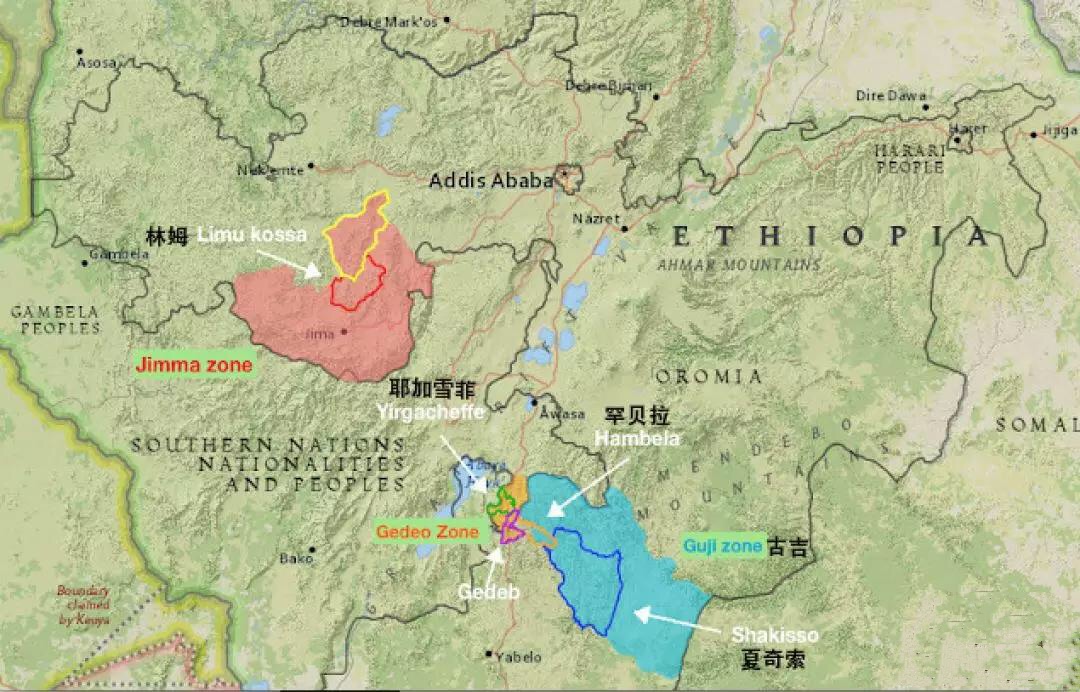
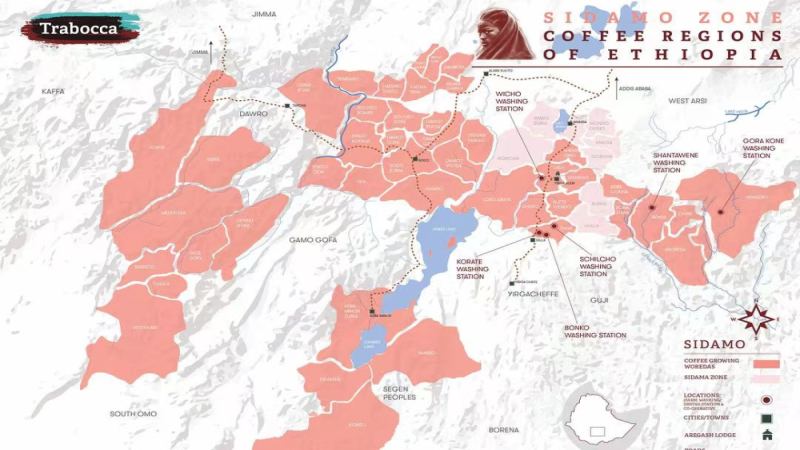
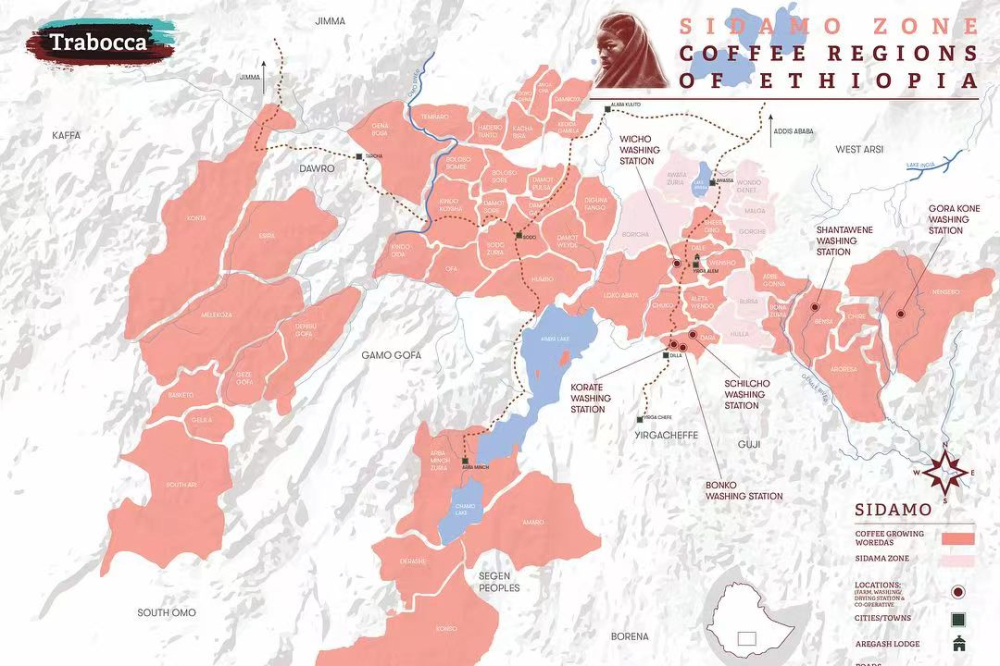
Yirgacheffe Coffee Producing Region Yirgacheffe has always been one of Ethiopia's pivotal coffee producing areas. It was originally under the jurisdiction of the Sidamo producing region, but later, because the flavor of its coffee beans was so unique, it was elevated to an independent producing region. It can be said that Yirgacheffe is both the name of a producing region and a term representing a specific type of flavor description. Yirgacheffe is a high-altitude producing region, at roughly 2,000 meters. The region has more than forty cooperatives, and coffee cultivation is mainly carried out through family operations. Under Yirgacheffe there are also many well-known micro-regions, such as Kochere, Misty Valley, and Gedeb. These micro-regions each have strong cooperatives, and the Yirgacheffe coffee beans they produce each have their own flavor personality.
Ethiopia has used the traditional natural processing method since ancient times, but after the washed method was introduced in 1972, over decades of development, the popularity of the washed method has far surpassed the natural method. Washed processing can effectively reduce the proportion of defects in coffee beans and also present a cleaner and brighter flavor. If you want to taste Washed Yirgacheffe G1, Front Street Gudingding is the first choice. It has delicate jasmine floral notes, yellow lemon, snow pear, and green tea flavors, with a refreshing entry, low bitterness, and a long finish, making it very friendly for beginners.
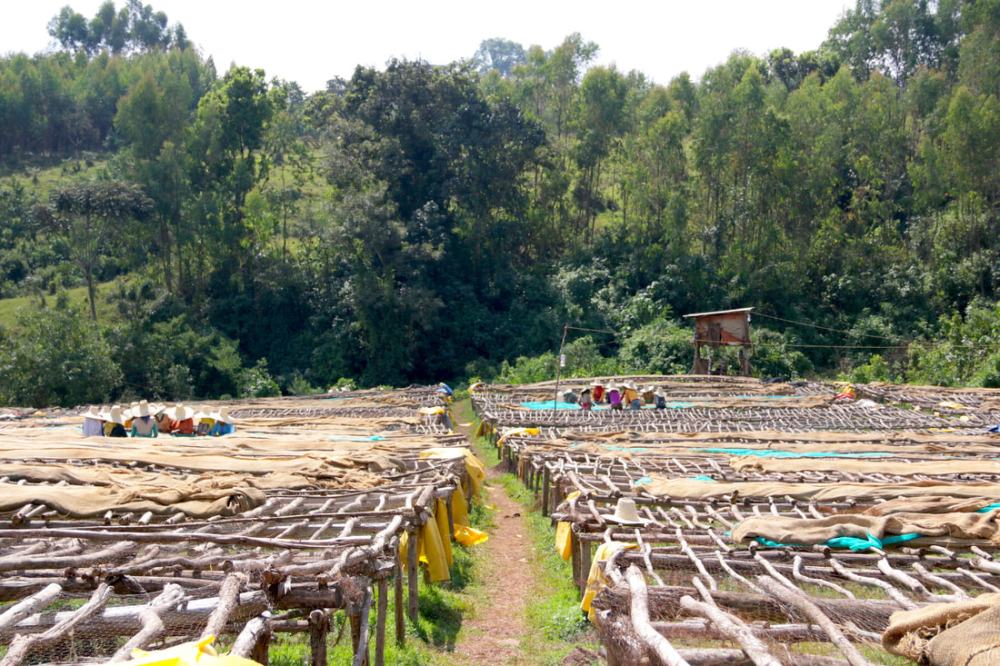
Nevertheless, some farm owners still have a special fondness for the natural processing method. Because coffee merchant Bagersh cherished the flavor of traditional natural beans and could not bear to see natural techniques gradually replaced by the washed method, he improved the natural processing method, both enhancing the flavor expression and reducing the defect rate, and launched several coffee beans in Misty Valley. The result was an instant hit, and Natural Yirgacheffe thus regained its market position. If you want to experience high-quality Natural Yirgacheffe, Front Street Red Cherry is worth trying. It fully retains the coffee cherry skin and pulp, allowing the beans to receive ample sunlight, thereby absorbing abundant tropical fruit aroma, and then through roasting and brewing showing layered flavors and a full, mellow mouthfeel.
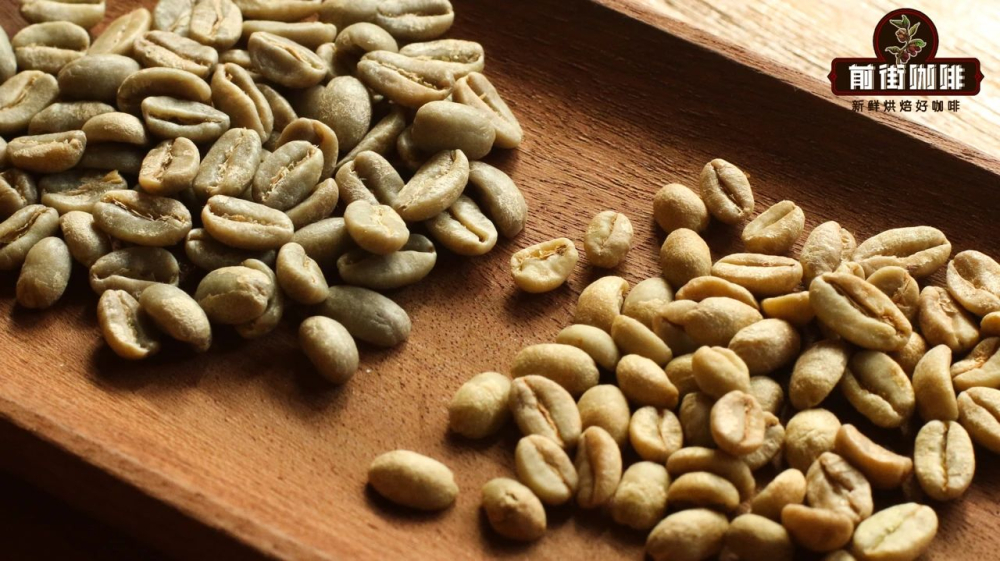
The most fundamental difference between the natural method and the washed method is: natural processing retains the flavor brought by the pulp, while washed processing removes the influence of the pulp. In terms of mouthfeel, this difference is obvious as soon as you drink it—washed is cleaner and more transparent, while natural appears richer in flavor. It is also easy to distinguish from a sensory perspective: at the green bean stage, washed beans are usually blue-green, while natural beans tend toward yellow-green. After roasting is completed, the silver skin of washed beans is clearly visible, while natural beans have almost no silver skin left, and the bean surface is also smoother.
Flavor comparison between Front Street Washed Yirgacheffe and Natural Yirgacheffe
[Front Street Natural Red Cherry Coffee] has a faint fermented wine aroma, a full and rich mouthfeel, presenting citrus aroma, honey sweetness, and cocoa flavors, with a long finish. [Front Street Washed Gudingding Coffee] has brighter and livelier acidity, mainly lemon acidity and citrus aroma, a fresh mouthfeel, and a slight black tea tea-like note in the latter part. Overall, both Front Street Natural Yirgacheffe and Front Street Washed Yirgacheffe have fruity acidity, with prominent juicy fruit character, and flavor directions similar to fruits such as lemon and citrus.
The above content is compiled by CoffeeHunters, a coffee news website.


