







What Are the Characteristics of Colombian Coffee Grades?
Colombia is a major Arabica exporter, and its green beans are graded around Excelso as the core export standard. Colombian coffee is generally described as soft rather than hard, with a milder taste and a clear fragrance, a difference tied to growing altitude and farm management compared with Brazil's hilly red-soil cultivation.
Excelso certification requires beans in 500 grams to reach 14 mesh or above, with no more than 5% falling between 12 and 14 mesh and at least 50% larger than 15 mesh. Beans must be free of insect damage, uniform in color, clean in flavor, at no more than 12.5% moisture, with defect deductions under 24 points.
Colombia, as a major global exporter of Arabica coffee, has a green bean grading system centered on Excelso as the core export standard, with strict regulations on bean size, defect scoring, moisture content, and more. This article starts from the soft, aromatic characteristics of Colombian coffee, explains in detail the FNC's defect scoring rules and Supremo grade requirements, while tracing the journey of the Geisha variety from the forests of Ethiopia to Hacienda La Esmeralda in Panama, and focuses on the Hanami Geisha blend coffee from Finca Montblanco in the Huila region. Front Street Coffee presents its layers of pink pepper, chamomile, mandarin, honey, and almond through a light roast, and the article includes complete brewing parameters and suggestions.
Global coffee can be classified into two major types: one typified by Brazil, which belongs to "hard" coffee with a heavy and intense mouthfeel; the other represented by Colombia, classified as "soft" coffee, with a milder taste but a clear fragrance. This difference mainly stems from growing altitude and cultivation methods—Brazil mostly grows coffee relatively extensively on hilly red soil, while Colombia chooses mountain black soil for meticulous management.
The grading of green coffee beans is based on various criteria, including defect proportion, bean size, altitude, and more. So what grading method does Colombia actually use?
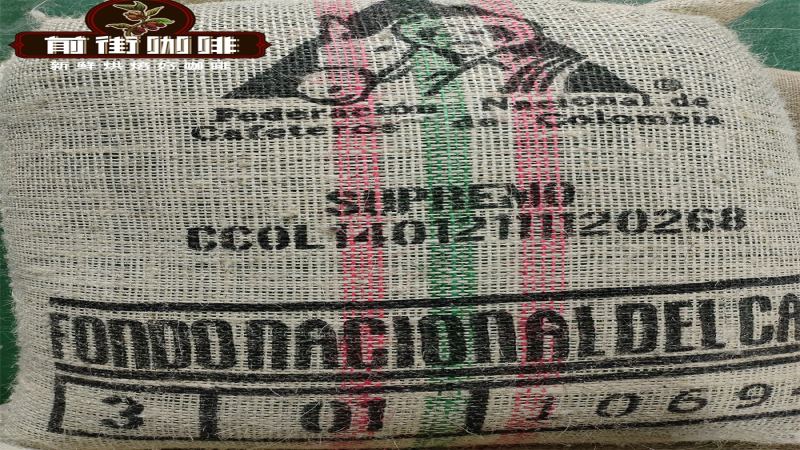
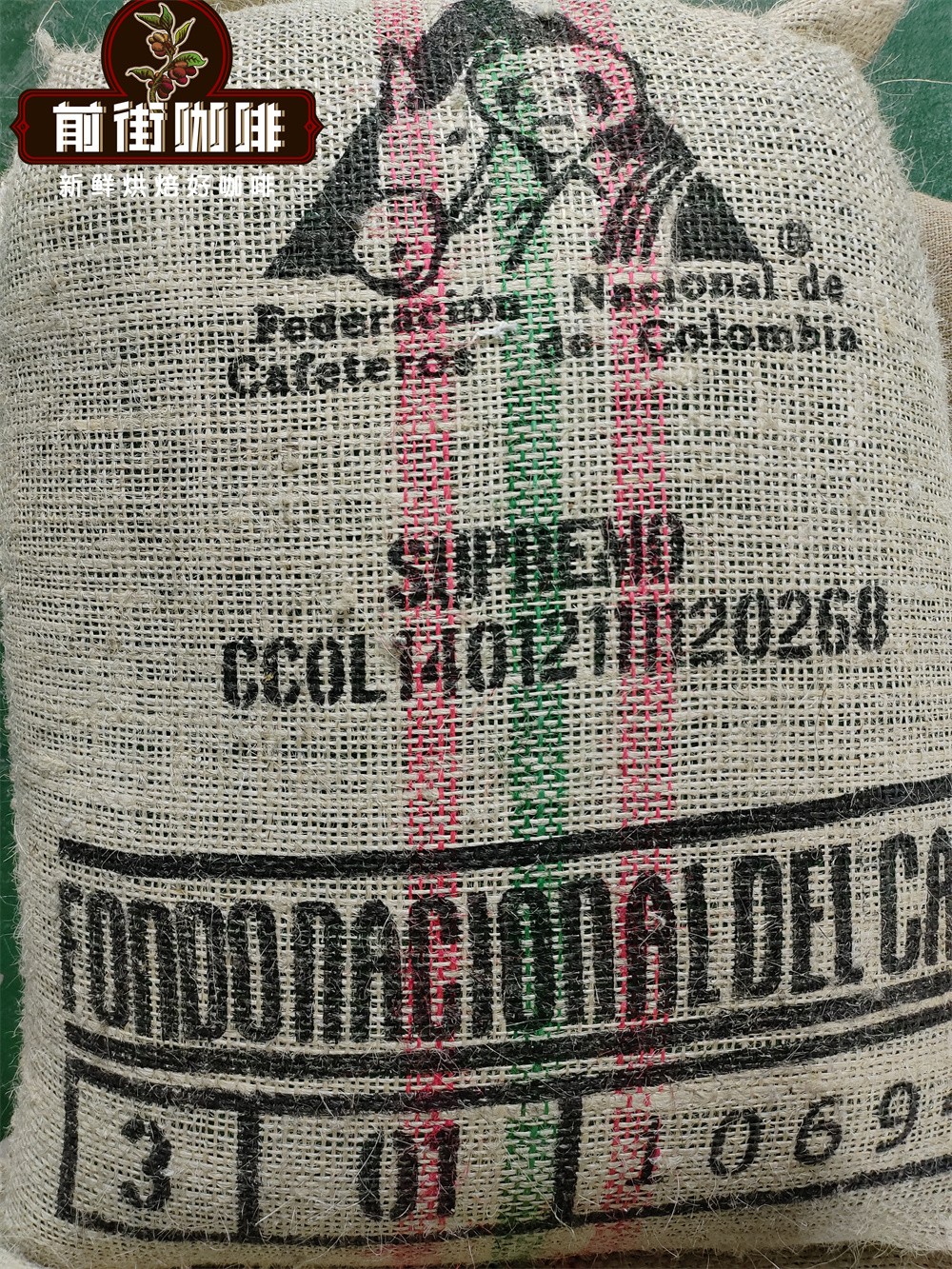
In some countries, grading information is printed directly on the packaging bag, and Colombia is one such case. All Colombian coffee beans exported to other countries must be marked with the Excelso grade on the bag. Excelso is the most widely promoted export standard grade by the National Federation of Coffee Growers of Colombia (FNC), and it also represents the best quality of the country's green bean exports. UGQ, EP, and Supremo all fall within the Excelso grade category.
To obtain Excelso grade certification, the size of beans in 500 grams of green coffee must reach 14 mesh or above, with no more than 5% of green beans allowed to fall between 12 mesh and 14 mesh, and overall at least 50% of the green beans must be larger than 15 mesh. In addition, it is required to be free of insect damage, uniform in color, free of off-odors, clean in flavor, with moisture content not exceeding 12.5%, and cumulative defect deductions not exceeding 24 points.
Defect classification standards
The National Coffee Committee of Colombia has clear regulations on green bean defects, dividing them into two categories and assessing grades by a scoring method. Taking the country's most commonly exported Supremo 12*60 (5%) as an example, in a 500-gram green bean sample, a maximum of 12 primary defect beans and a maximum of 60 secondary defect beans are allowed.
When Geisha coffee is mentioned, most people first think of Hacienda La Esmeralda in Panama, but Geisha from other producing countries also performs excellently. The Geisha coffees that Front Street has sourced include not only Panama but also Colombia, Costa Rica, and Ethiopia, each with its own terroir characteristics.
Geisha
The Geisha variety was discovered in 1931 in the Geisha forest of Ethiopia, and was subsequently sent to the Kenya Coffee Research Institute. In 1936 it was introduced to Uganda and Tanzania; in 1953 Costa Rica began introducing it, and in the 1960s it spread to Panama.
Geisha initially did not receive much attention in Panama, until around 2000, when the owner of Hacienda La Esmeralda noticed its flavor differences from other varieties—bright citrus acidity and delicate floral aromas. In 2004, this variety was submitted to the Best of Panama green bean competition (BOP), astonishing the judges and winning the championship. Afterwards, Panama's Geisha variety was introduced to other Central and South American countries, including Colombia.
Geisha is quite demanding regarding growing conditions, requiring high altitude, shade from clouds and mist, fertile soil, and sufficient accumulated heat. The average altitude is about 1,625 meters, the average annual temperature is 16°C to 25°C, and the average annual rainfall is about 3,500 millimeters.
Colombian coffee growing environment
Colombia is the world's third-largest coffee exporter, mainly producing Arabica coffee, and is also the country with the largest export volume of Arabica beans. The country is rich in products, with coffee, flowers, gold, and emeralds known as the "four treasures." Colombia is located in the northwest of the South American continent, bordering Panama in Central America.
The Huila Department is located at the junction of the Central and Eastern Cordilleras of the Andes, in southern Colombia. The Huila coffee-growing region is centered on the city of Pitalito, at an altitude of 1,750 to 1,950 meters, mostly under a smallholder farming model. Over the past decade, local smallholders have worked together, and after manual picking and careful processing, the cherries ultimately become specialty coffee that showcases the flavor of the Huila region. Front Street has cupped many beans from the Huila region, generally with nutty caramel aromas and soft berry-like sweet acidity.
Finca Montblanco Hanami Geisha Coffee
The Hanami Geisha blend coffee comes from Finca Montblanco in Colombia's renowned Huila region. The estate (Finca Montblanco) is located along the winding mountain road of Vereda La Tocora in Pitalito, operated by owner Rodrigo Sanchez Valencia, and coffee cultivation can be traced back to his grandfather's generation. The estate is located on a hilltop, covering about 18 hectares, with abundant water resources and complete washing and drying equipment, so most of the coffee it produces uses washed processing and its derived methods. This Hanami Geisha blend coffee from Front Street is precisely washed processed.
Coffee variety
This Geisha blend coffee bean that Front Street has sourced is a mixture of Geisha, Caturra, and Catuai. Perhaps some friends may ask: Is this considered single-origin coffee? Front Street explains: single-origin coffee refers to coffee beans from the same coffee-producing region or estate, not a single variety, so this Geisha blend bean still belongs to single-origin coffee.
The estate initially planted Caturra and Catuai. In 2016, the owner's team introduced the Geisha variety from Panama, had its first harvest in 2020, and entered mass production in 2021. Therefore, this bean can be called the first Geisha coffee that Finca Montblanco brought to market.
Front Street's approach to roasting Hanami Geisha blend coffee beans:
To highlight the characteristics and aroma of the Hanami Geisha blend beans, Front Street uses a light roast, which better brings out the bean's own qualities, while too dark a roast would lose the floral aroma and fruit acidity. Of course, the specifics still need to be adjusted according to the bean's characteristics and the roaster's understanding.
Front Street's brewing parameters for Hanami Geisha blend coffee:
Through cupping, Front Street found that Geisha coffee is richly layered, and recommends appropriately lowering the concentration during brewing to make each layer of flavor clearer. Recommended ratio: 1:15, water temperature 90 to 91°C, grind size medium-fine (80% passing through a Chinese standard No. 20 sieve).

Dripper: Hario V60
Water temperature: 91°C
Dose: 15 grams
Coffee-to-water ratio: 1:15
Grind size: 80% passing through a No. 20 sieve
Pour-over flavor: pink pepper, chamomile, mandarin, honey, almond.
Use a three-stage extraction, first blooming with twice the coffee dose in water, that is, 30 grams of water for a 30-second bloom. The purpose of blooming is to let the coffee grounds release internal carbon dioxide, making subsequent extraction more stable. Pour in a circular motion with a small stream until reaching 125 grams, then pause, continue pouring until 225 grams and stop, and after the water in the dripper has drained, remove it. Timing starts from the beginning of pouring, and the extraction time is 2 minutes 00 seconds.
Front Street's coffee brewing suggestions:
Front Street has always believed that coffee bean freshness has a huge impact on flavor, so all coffee beans shipped by Front Street Coffee (FrontStreet Coffee) are within 5 days after roasting. Front Street's roasting philosophy is "freshly roasted good coffee," so that every customer receives it in the best condition. The resting period is about 4 to 7 days, so when customers receive it, it is exactly at its flavor peak.
For friends who need ground coffee, Front Street reminds: after coffee beans are ground in advance, there is no need to rest them further; the pressure from carbon dioxide inside the packaging during transportation can also make the flavor rounder, and the ground coffee can be brewed immediately upon receipt. However, ground coffee needs to be used up as soon as possible, as it oxidizes quickly after contact with air and loses flavor quickly. Therefore, Front Street recommends buying whole beans and grinding fresh before brewing, so as to better taste the coffee's flavor.
For professional coffee knowledge exchange and more coffee bean information, please follow Coffee Workshop (WeChat public account cafe_style)
For more specialty coffee beans, please add the private WeChat of Front Street Coffee (FrontStreet Coffee), WeChat ID: qjcoffeex
The above content is compiled by CoffeeHunters, a coffee news website.


