







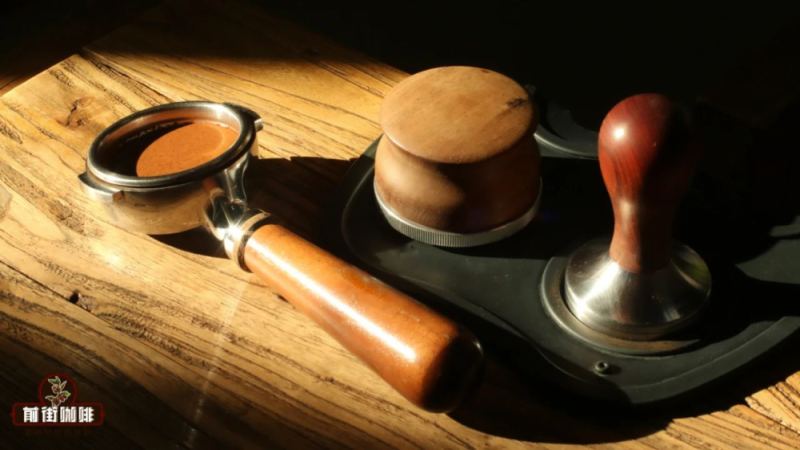
Coffee Knowledge: Why Distribution Tools and a Tamper Both Matter
A distribution tool levels the coffee bed and lowers the chance of channeling, but it does not compact the grounds. A tamper presses the loose bed into a firm cylindrical puck that can resist the pressurized water. Skip tamping, and the water flow hits a soft bed, cuts channels, and extracts unevenly, so the surface may look flat while the inside stays loose.
Tamping technique matters as much as the tool: keep the tamper level, apply steady pressure, and check that the puck sits even in the basket. If the first tamp is uneven, a second tamp is possible, though resetting the bed with the distribution tool first gives a cleaner result. Both steps serve different goals, and espresso coffee knowledge treats them as separate jobs.
When making espresso, a distribution tool and a tamper are two indispensable tools. Many people wonder: after distribution, the surface of the coffee bed is already level, so why do we still need to tamp? In fact, distribution and tamping each serve a different purpose. Distribution aims to spread the coffee grounds evenly and reduce channeling; tamping compacts the loose coffee bed to withstand the impact of high-pressure water flow. This article will take a deep dive into the differences and connections between the two, explain the correct technique for using a tamper, and answer common questions such as whether a second tamp is possible when the tamp is uneven, helping you make a evenly extracted espresso at home.
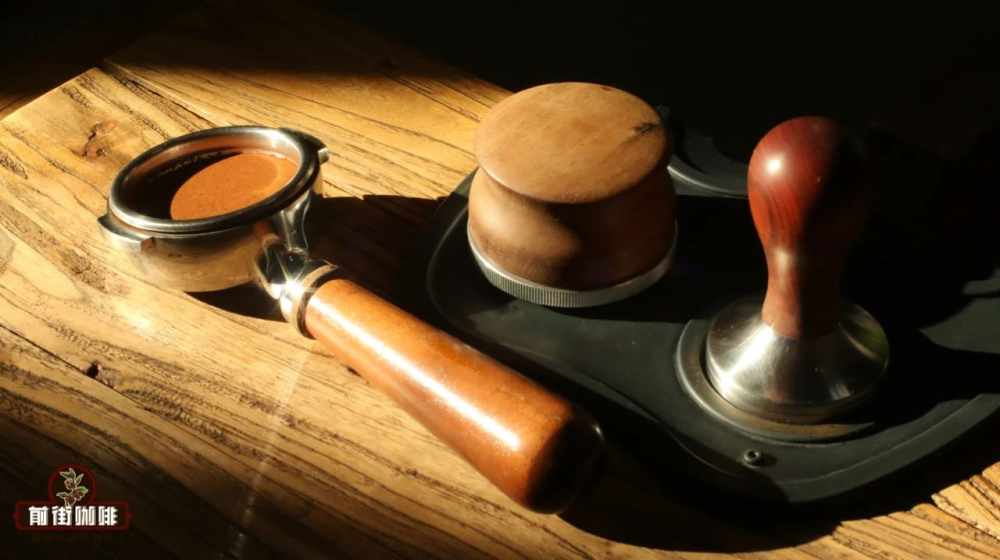
For more specialty coffee knowledge, please follow: Front Street Coffee (Frontsteet Coffee)
In the process of making espresso, the distribution tool and the tamper are the two most frequently used small tools. What exactly is the difference between them? In the early days, these two tools looked quite similar, but after actually using them, you will find: the distribution tool is responsible for spreading the coffee grounds evenly, while the tamper is responsible for compressing the coffee bed into a cylindrical puck, and sometimes the two are designed as one piece. As coffee equipment continues to evolve, more and more detailed designs have improved operating efficiency, and the functional differences between these two tools have become increasingly obvious.
"The distribution tool has already leveled the coffee bed, so why do we still need to tamp?" Although after distribution and tamping, the surface of the coffee bed looks level, these two steps pursue different goals.
The relationship between "distribution" and "tamping"
Indeed, with the help of a distribution tool, the surface of the coffee bed in the portafilter basket can be very level, but the inside of the coffee bed is still loose. Espresso machines use pressurized extraction, and the water flow will violently impact the coffee bed. If the coffee bed is not compacted, the impact of the water flow will create channeling in the coffee bed, ultimately leading to uneven coffee extraction.
The significance of distribution is to make the coffee grounds evenly distributed in the portafilter basket, thereby reducing the probability of channeling. Tamping is to compact the coffee grounds that have already been evenly distributed but are still loose, so that they can withstand the impact of the water flow and avoid creating more channeling. There is a saying: "If the upper beam is not straight, the lower beam will be crooked." The relationship between the two can be roughly understood as "if distribution is uneven, tamping will be crooked."
"Distribution" cannot be done carelessly!
The grind size used for espresso is usually very fine, and it is very easy to clump under static electricity or high humidity. If these clumped coffee grounds are not effectively broken up and evenly distributed, subsequent tamping can easily result in some parts of the coffee bed being dense and some parts being loose. During extraction, the water flow will naturally favor the loose areas due to inertia, causing the coffee grounds in the loose areas to be over-extracted while the coffee grounds in the dense areas are under-extracted, ultimately producing an espresso with uneven extraction.
The traditional distribution method is to move your fingers back and forth at the webbing between the thumb and index finger after pouring the coffee grounds into the portafilter basket, letting the coffee grounds fall into the gaps as much as possible to ensure that every corner of the basket is evenly filled. It should be noted that finger distribution must ensure that the hands are clean and completely dry, and the fingers should remain level when moving, and must not apply pressure to the coffee bed. This distribution method is prone to uneven distribution, and the effect of breaking up clumps is not ideal, so baristas need a lot of practice to master it.

Compared with traditional finger distribution, the distribution tool is more stable. No matter which type of distribution tool it is, it can make each distribution more even, making output efficiency and quality more efficient and stable, and it is also more hygienic.
When "tamping", your arm must be vertical!
In addition to compacting the coffee bed, the most critical thing about tamping is to level the surface of the coffee bed! If the surface of the coffee bed is uneven, the thickness of the coffee bed will become uneven. During extraction, the water flow will habitually flow toward the lower areas, ultimately causing the thick coffee bed to be under-extracted and the thin coffee bed to be over-extracted. Therefore, to achieve balanced tamping, you need to choose a tamper of the appropriate size when tamping, and keep your arm vertical and exert force downward during tamping.
The tamper is like a stamp, able to compact the coffee bed when it is level. When choosing a tamper, you must choose a size that matches the diameter of the portafilter basket! If it is too large, it naturally cannot be used; if it is too small, a ring of coffee grounds at the edge will not be pressed, ultimately causing uneven extraction.
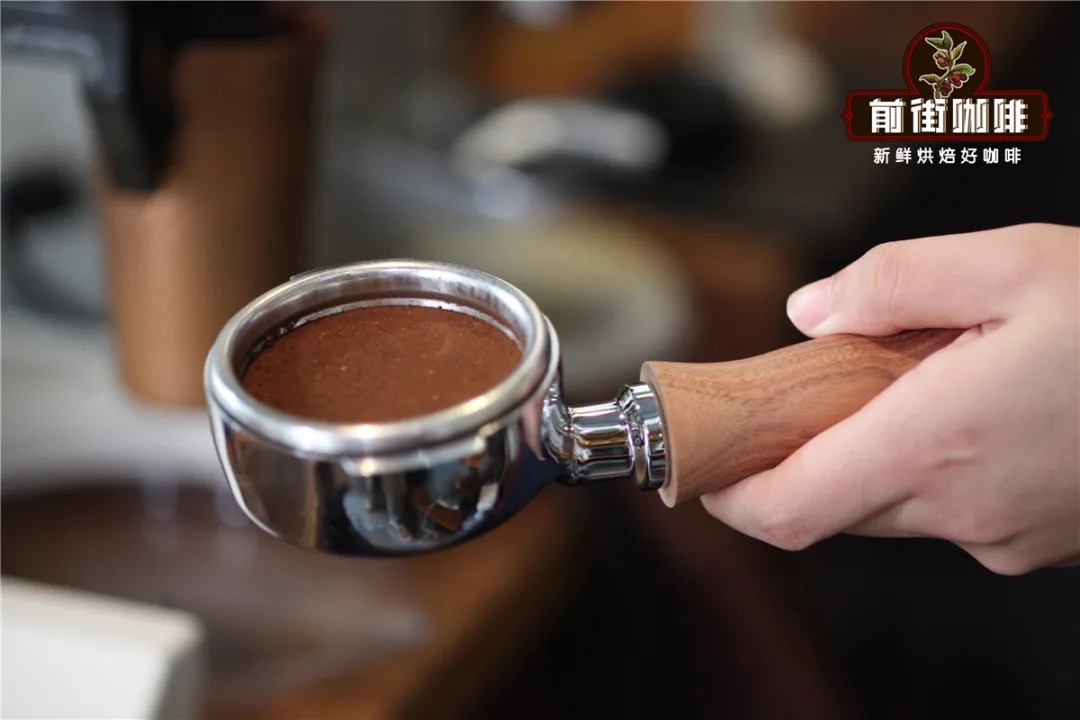
Before tamping, first place the portafilter basket level, hold the handle end of the tamper in the palm of your hand, with the webbing between the thumb and index finger facing down, and grip the tamper base with your thumb and index finger. When tamping, the line from the elbow, forearm, tamper, to the portafilter basket should form a straight line perpendicular to the horizontal plane, exert force vertically downward, and compact the coffee grounds in one go. You do not need to use excessive force when tamping, as long as the coffee grounds are evenly compacted. This is because no matter how much force is used in tamping, by the time the force reaches the bottom of the puck, there is almost no pressure left; as long as the tamp is balanced, the final extraction effect under 9 bar pressure is the same.
If after tamping there is an imbalance in height,
can a second tamp be performed?
If after tamping you find that the surface of the coffee bed is uneven, Front Street recommends breaking up the puck, refilling the basket, distributing again, and then tamping again. If you directly perform a second tamp to correct it, it will cause the coffee bed to split and create channeling.
The above content is compiled by CoffeeHunters, a coffee news website.


