







What Defines Washed Yirgacheffe Coffee?
Washed Yirgacheffe from Ethiopia's Gedeo region delivers a clean, transparent cup with pronounced floral and fruity notes. Natural-process versions keep the fruit mucilage, adding fermented sweetness and more intensity. The area is its own category in specialty coffee, and the nearby Wenago, Kochere and Gelena Abaya production areas are grouped with it because their flavors share common ground.
Ethiopia's coffee is classified by cultivation method into forest coffee, where wild trees grow among shade plants in the southwest, and garden coffee, grown by farmers and cooperatives. Washed lots are sorted under the ECX grading system, and G1 and G2 designations reflect that process. Roast curves, cupping comparisons and pour-over parameters help build a full picture of the region, though Ethiopia is not among the largest main coffee producers by volume.
Yirgacheffe is a jewel of the Gedeo region in southern Ethiopia, securing a prominent place in the global specialty coffee landscape with its unique floral and fruity profile. Front Street Coffee has found in its daily sourcing that washed Yirgacheffe and natural versions diverge significantly in flavor direction—washed processing delivers a clean, transparent cup, while natural processing, by retaining the fruit mucilage, adds a layer of fermented sweetness. This article will take washed Yirgacheffe as its main thread, systematically sorting out its regional background, Ethiopia's coffee cultivation system, the washed processing workflow, the ECX grading system, and combining Front Street washed Yirga G1 and G2 roast curves, cupping comparisons, and pour-over parameters to help coffee enthusiasts build a complete cognitive framework for this region.
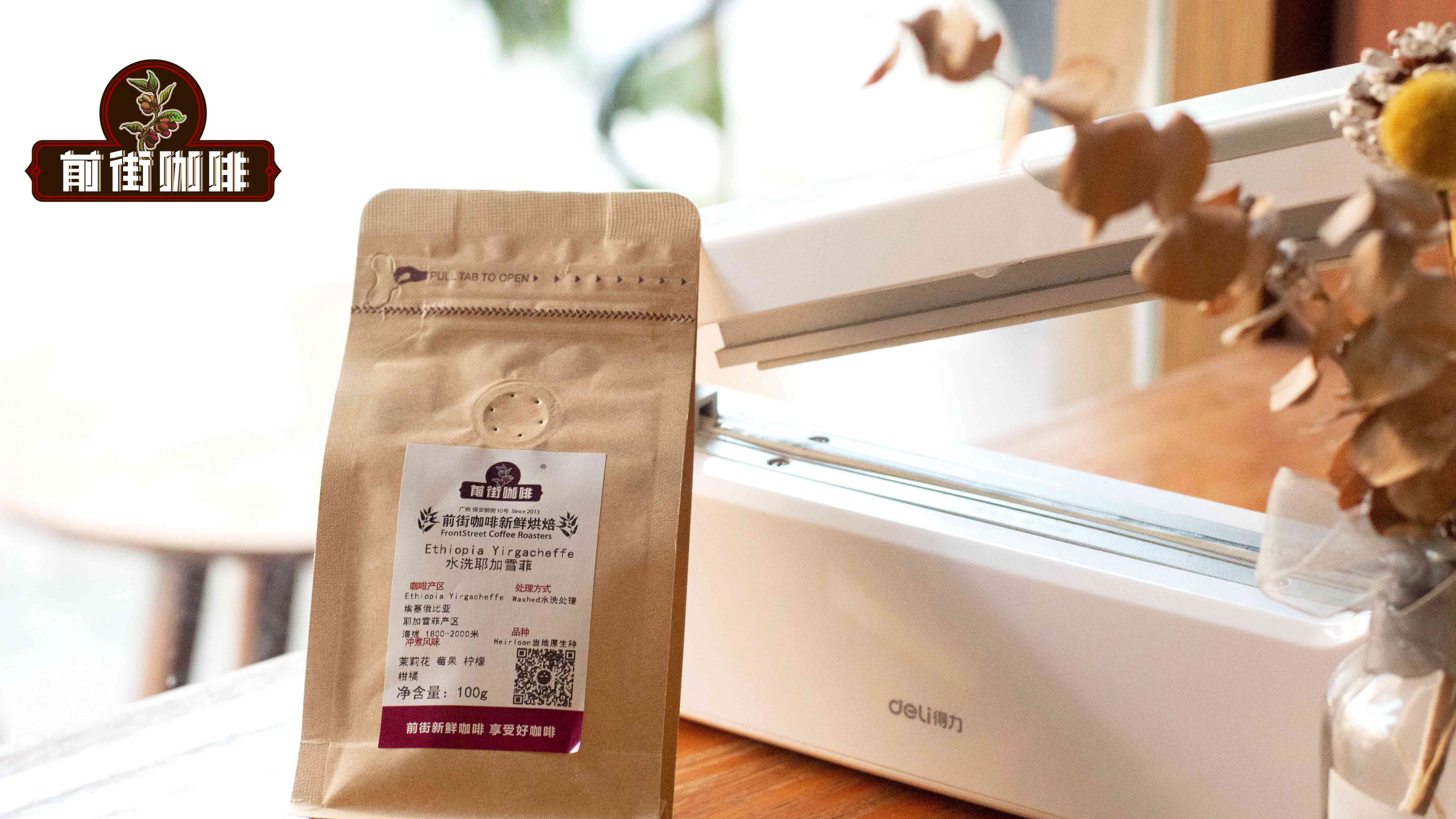
Front Street washed Yirgacheffe has a relatively fresh and clean taste, while Front Street natural Yirgacheffe, due to retaining the flavor of the fruit mucilage, offers a noticeably different taste experience—there's a fermented quality, and the sweetness and intensity are enhanced. Today Front Street will mainly discuss what specific flavor expressions washed Yirgacheffe exhibits.
Yirgacheffe Coffee Region
Yirgacheffe is located in the Gedeo region of southern Ethiopia. Because the coffee produced in Yirgacheffe has a unique style and is widely loved, it stands as its own category in product classification and holds a place in the global specialty coffee market. Yirgacheffe itself is a small town, and nearby there are three small production areas—Wenago, Kochere, and Gelena Abaya. Because the coffee flavors produced there share considerable commonality with Yirgacheffe, these small production areas are also classified within the Yirgacheffe region. Originally, the coffee trees of Yirgacheffe were planted by European monks, and later this was taken over by farmers or cooperatives.
Ethiopia's Coffee Production Systems Ethiopian coffee can be divided into three categories based on cultivation method:
Forest Coffee: These wild coffee trees mostly grow in southwestern Ethiopia, usually surrounded by numerous shade-providing plants, and the coffee trees themselves are mixed varieties. Their reproductive capacity and yield are inferior to other artificially selected high-yield varieties.
Garden Coffee: These coffee trees are usually planted around human and livestock dwellings, with fewer natural shade providers, and the management of such shade trees is more active—for example, frequent pruning to prevent the coffee trees from being overly shaded. Many producers apply fertilizer. Most Ethiopian coffee falls into this category, including the Yirgacheffe representatives—Front Street. Gotiti, Front Street Red Cherry, as well as natural bean representatives—Front Street Hual魁, Front Street Alo Village Coffee, and so on.
Large Farm Coffee: This type of coffee comes from densely planted large-scale farmland. Standardized farming methods are adopted, including pruning, mulching with decomposed soil, fertilizer application, and selection of high disease-resistance varieties, which ensures both quality and higher efficiency. The most representative example is Gesha Village Estate. Front Street Gesha Village Estate includes the highest grade Front Street. Gesha Village Gold Label, the second grade Front Street. Gesha Village Red Label, and the Gesha blend Front Street. Chaka.
Washed Processing Method Traditionally, Yirgacheffe coffee used the oldest natural processing method, but because early natural coffee beans were mostly spread flat on the ground to dry, they inevitably picked up earthy and dusty off-flavors, and combined with a lack of proper sorting, natural beans were generally of mediocre quality. In 1972, Ethiopia introduced washed processing technology from Central and South America to improve coffee quality, making Yirgacheffe coffee's jasmine fragrance and citrus-lemon freshness clearer and more transparent, leaping to become one of the representatives of the world's specialty coffee.
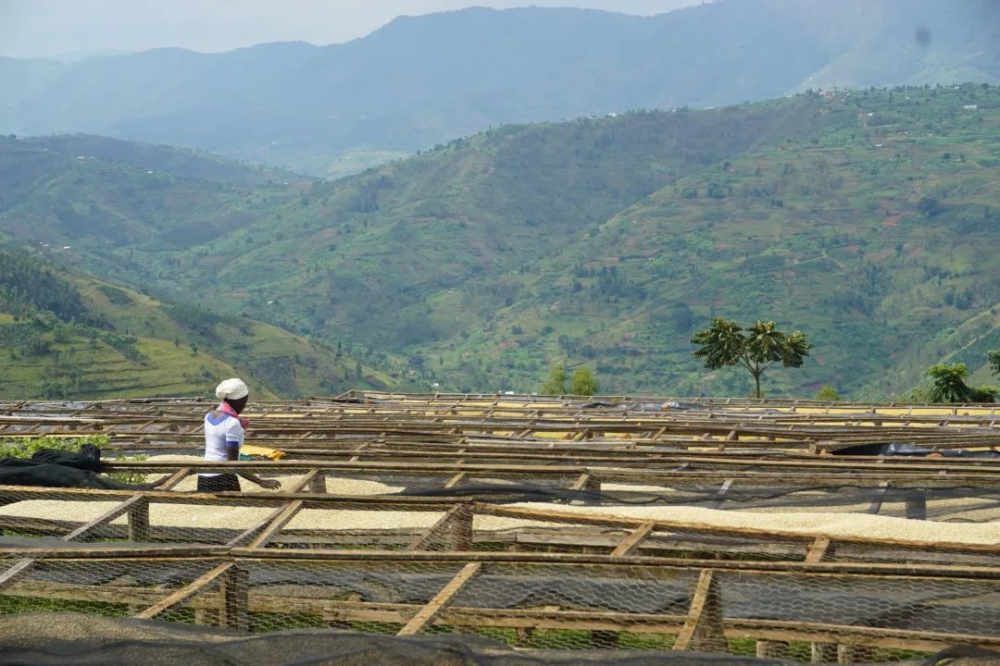
Compared to the natural method, the washed method better controls coffee bean quality, mainly because washing the coffee slows down the "fermentation" process. Also, because it requires large amounts of water, countries generally lacking water resources rarely see washed processing. Front Street takes into consideration that washed processing better showcases the cleanliness and purity of coffee flavor presentation. Therefore, when analyzing the specific flavors of a coffee region, Front Street uses that region's washed beans as a reference. If a customer has never had Yirgacheffe, Front Street will also prioritize recommending a washed Front Street Yirgacheffe coffee, which helps form an understanding of the region's flavor profile. Afterward, when trying natural, honey-processed, and other processing methods of Yirgacheffe, there will be a direction for comparison.
[Washed Processing Method Workflow]
1. Bean Selection: Place harvested fruit into large water tanks. Ripe fruit will sink, while underripe or overripe fruit will float on the surface.
2. Removal of Pulp: Use machinery to remove the skin and pulp, leaving only coffee beans covered in mucilage. The washing process is about cleaning off this layer of mucilage.
3. Fermentation: The mucilage has strong adhesion and is not easy to remove. It must be placed in tanks for about 18-36 hours, using microbial fermentation to break down the mucilage.
4. Washing: Place the fermented beans into water tanks and rinse back and forth, using the friction between the beans and the water flow to wash the coffee beans clean.
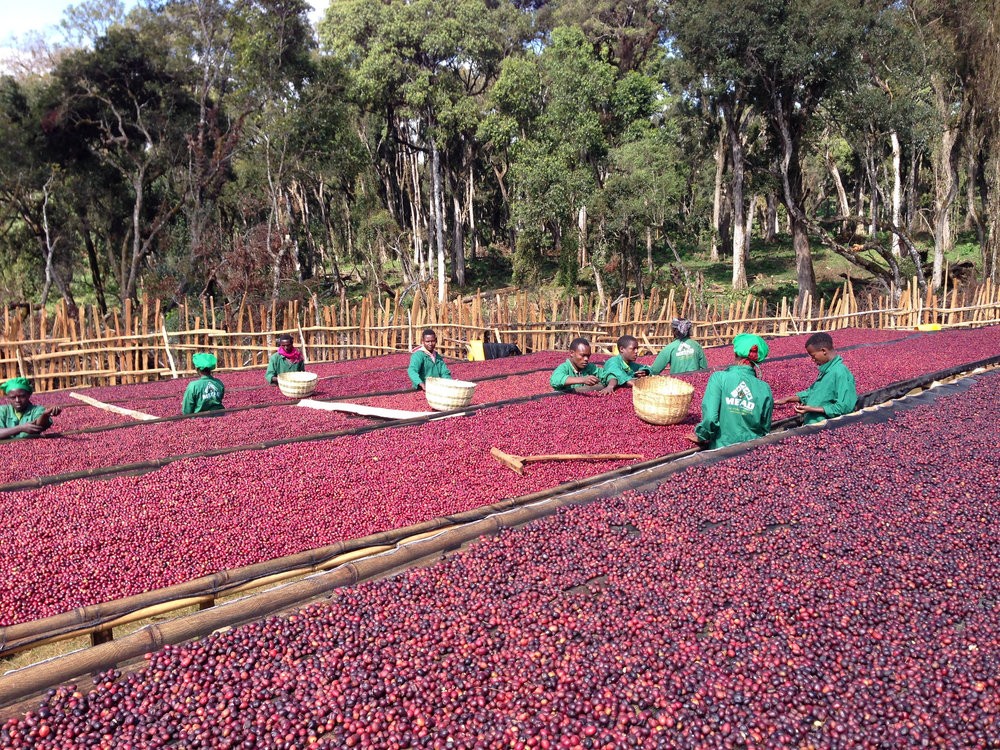
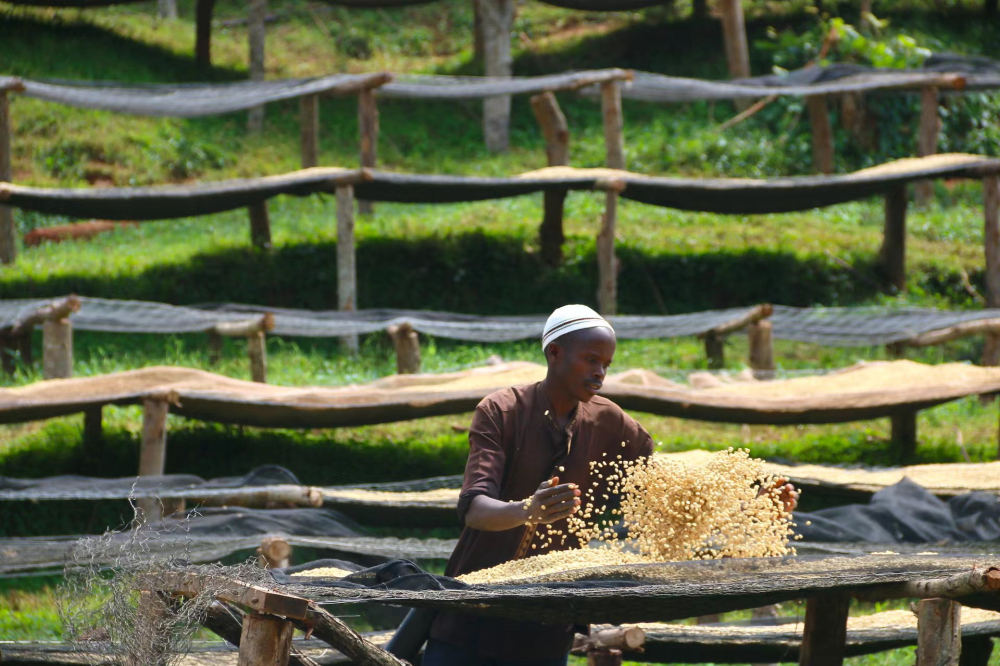
5. Drying: After washing, the coffee beans have a moisture content of 50% and must be dried to bring the moisture content down to 12%, otherwise excessive moisture will lead to mold and spoilage. The best method is sun drying—although it takes 1-3 weeks, the flavor is excellent. Some places use machine drying, which greatly shortens processing time, but the flavor is relatively inferior to sun-dried coffee beans.
6. Hulling: After drying is complete, the coffee beans are stored in warehouses for a week (to stabilize moisture content), then sent to the factory for hulling to remove the parchment layer.
7. Sorting and Grading: Remove defective beans and ensure better quality, then hand over to exporters to sell around the world.
Yirgacheffe Region Coffee Beans Grading The Yirgacheffe coffee variety is a local heirloom, small-beaned, relatively round in appearance, with very small bean size, mostly between 14-15 screen sizes. The ECX (Ethiopian Commodity Exchange, established in 2012) grading system for Ethiopian coffee beans is divided into two aspects, combining physical attribute characteristics and cupping flavor characteristics for scoring to determine the grade. The specific ECX grading and scoring standards are as follows: 1. Scoring definition for washed processing method ① Physical characteristics account for 40%: defect count (20%), appearance size (10%), color (5%), odor (5%) ② Cupping quality accounts for 60%: cleanliness (15%), acidity (15%), body (15%), flavor characteristics (15%) 2. Scoring definition for natural processing method ① Physical characteristics account for 40%: defect count (30%), odor (10%) ② Cupping quality accounts for 60%: cleanliness (15%), acidity (15%), body (15%), flavor characteristics (15%)
3. Overall Summary ① All coffee is first classified by processing method: natural, washed; ② Each is scored according to physical characteristics and basic cupping quality into 9 grades from G1-G9; ③ Among these, G1-G3 are re-cupped according to SCAA standards for a more detailed assessment of their flavor attributes, and those G1 and G2 scoring no less than 85 points are rated as Q1 grade; ④ Those G1, G2, and G3 scoring between 80 and 85 are rated as Q2 grade, and all G1, G2, and G3 scoring below 80 are rated as G3 grade; ⑤ Q1 and Q2 are classified as Specialty Grade for export. G4-G9 remain unchanged in their original grades and are classified together with G3 as Commercial Grade for export. Whether washed or natural processed coffee beans, export green beans with no more than 3 defective beans per 300g are graded G1, and export green beans with 4-12 defective beans per 300g are graded G2.
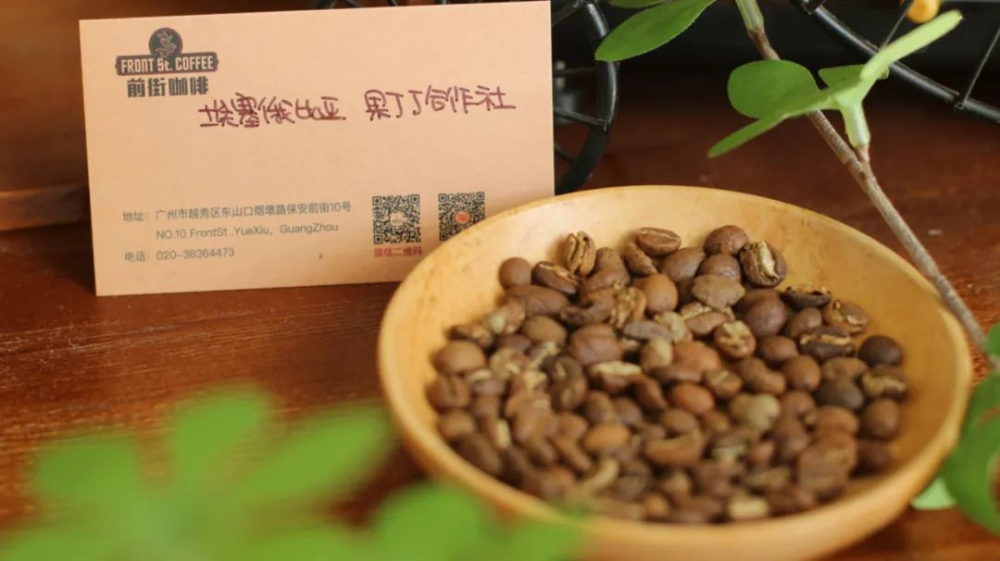
Also washed Yirgacheffe coffee beans , what's the difference between G1 and G2 ? The Front Street Yirgacheffe coffee beans currently selected are all G1 grade, but comparisons have also been made with G2 Yirgacheffe. Still using washed Yirgacheffe as an example, let's look at the differences in appearance and flavor between G1 and G2 grades. Through comparing green beans, Front Street found that Front Street washed Yirga G1 green beans appear relatively uniform overall with a lower defect rate, while Front Street washed Yirga G2 green beans show obvious unevenness in size and a higher defect rate.
[Front Street Coffee Roasting Recommendations] Front Street's overall roasting philosophy is that Yirgacheffe coffee's most iconic flavor is its delicate acidity and rich floral-fruity aroma. To maximize this flavor, a light roast is used.
1. Front Street Washed Yirgacheffe G1
Charge at 200°C drum temperature, heat 150, damper set to 3; turning point at 1'46", when drum temperature reaches 140°C open damper to 4, heat unchanged; when drum temperature reaches 151°C the bean surface turns yellow, the grassy smell completely disappears, entering the dehydration phase, heat reduced to 120. At 7'37", ugly wrinkles and dark patches appear on the bean surface, the toasted bread smell clearly turns to coffee aroma, which can be defined as the prelude to first crack. At this point, listen carefully for the sound of first crack. First crack begins at 8'35", damper opened to 5, development after first crack 2'00", dropped at 193.5°C.
2. Front Street Washed Yirgacheffe G2
Charge at 200°C drum temperature, heat 150, damper set to 3; turning point at 1'47", when drum temperature reaches 132°C open damper to 4, heat unchanged; when drum temperature reaches 147°C the bean surface turns yellow, the grassy smell completely disappears, entering the dehydration phase, heat reduced to 140. At 8'00", ugly wrinkles and dark patches appear on the bean surface, the toasted bread smell clearly turns to coffee aroma, which can be defined as the prelude to first crack. At this point, listen carefully for the sound of first crack. First crack begins at 9'08", damper opened to 5, development after first crack 2'00", dropped at 195°C.
[Front Street Coffee Cupping Report] 1. Front Street Washed Yirgacheffe G1 Dry aroma: jasmine, ginger lily Wet aroma: lemon, citrus On the palate: citrus, lemon, pomelo, plum, Tieguanyin
2. Front Street Washed Yirgacheffe G2 Dry aroma: jasmine, citrus Wet aroma: lemon, citrus On the palate: lemon, citrus, tea-like
[Front Street Coffee Pour-Over Recommendations] To fully extract Yirgacheffe's fruity acidity, Front Street uses a higher water temperature and a finer grind for extraction. But to avoid over-extraction caused by high temperature, a faster-flow dripper is used, such as the V60. The V60 dripper has a 60-degree cone shape; the conical angle allows coffee grounds to concentrate together, and when pouring, the water flow automatically converges toward the center of the dripper, ensuring sufficient contact time between water and coffee grounds to extract a suitable coffee liquid. Additionally, the ribs on the inner wall of the V60 dripper extend in a clockwise spiral from the bottom to the top, leaving enough space between the filter paper and the dripper for good water flow. Combined with the large hole at the bottom, the flow rate is relatively faster than many other drippers.
Front Street Coffee's specific brewing parameters are: V60 dripper, water temperature 90°C, water-to-coffee ratio 1:15, coffee dose 15g, grind size (80% passing through China standard No. 20 sieve)
Regarding grind size, Front Street would like to remind that even though they are all Yirgacheffe coffee, because of different grades, Front Street still sieves each bean once to determine their respective grind sizes. Front Street's brewing method: First rinse the filter paper and preheat the dripper and coffee pot. Use 30g of water for a 30-second bloom, then pour in a small circular stream until 125g for a pulse, and when the water level is about to expose the coffee bed, continue pouring to 225g and stop. When the water level is about to expose the coffee bed again, remove the dripper. (Timing starts from the beginning of the bloom) Extraction time is 2'05".
[Front Street Washed Yirgacheffe G1] It smells of jasmine, lemon freshness, and caramel sweetness. On the palate, there's soft citrus acidity and creamy aroma. Mid-palate reveals lemon acidity, with sugarcane sweetness returning, and an oolong tea finish.
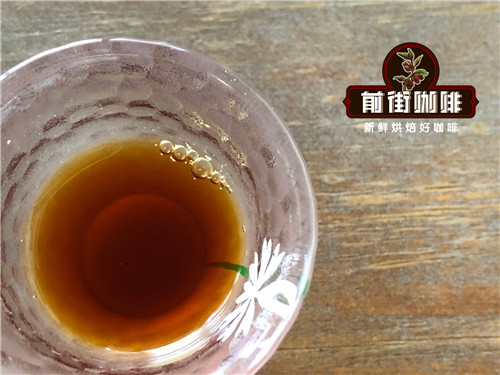
[Front Street Washed Yirgacheffe G2] It smells of jasmine and citrus acidity. On the palate, there's lemon, grapefruit acidity, and a black tea sensation. The finish carries a slight cocoa flavor with caramel sweetness returning.
The above content is compiled by CoffeeHunters, a coffee news website.


