







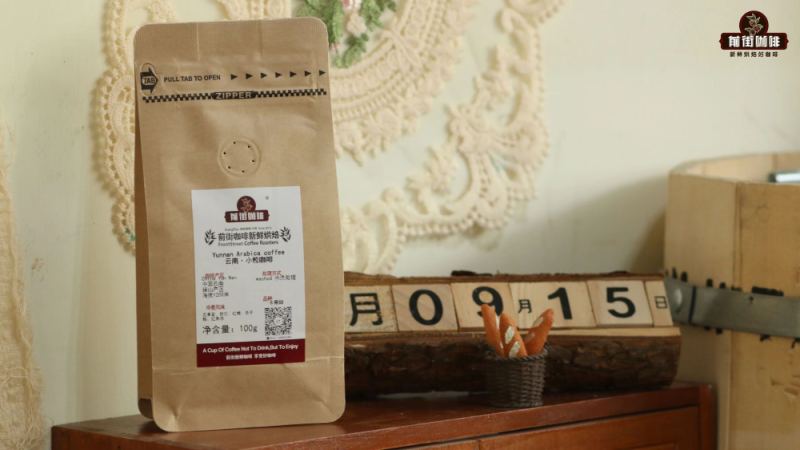
In recent years, Yunnan small-bean coffee has appeared frequently in the domestic coffee market, becoming the daily go-to choice for many coffee lovers thanks to its affordable price and steadily rising quality. This article begins with the variety history of Yunnan coffee, traces how Catimor went from a commercial bean to a specialty representative, and takes a deep look at the cleanliness and balance that washed processing gives Yunnan beans. At the same time, we combine two high-value Yunnan beans from the Front Street brand to share specific flavor performance and pour-over extraction suggestions, giving you a full understanding of this rich aroma from China itself.
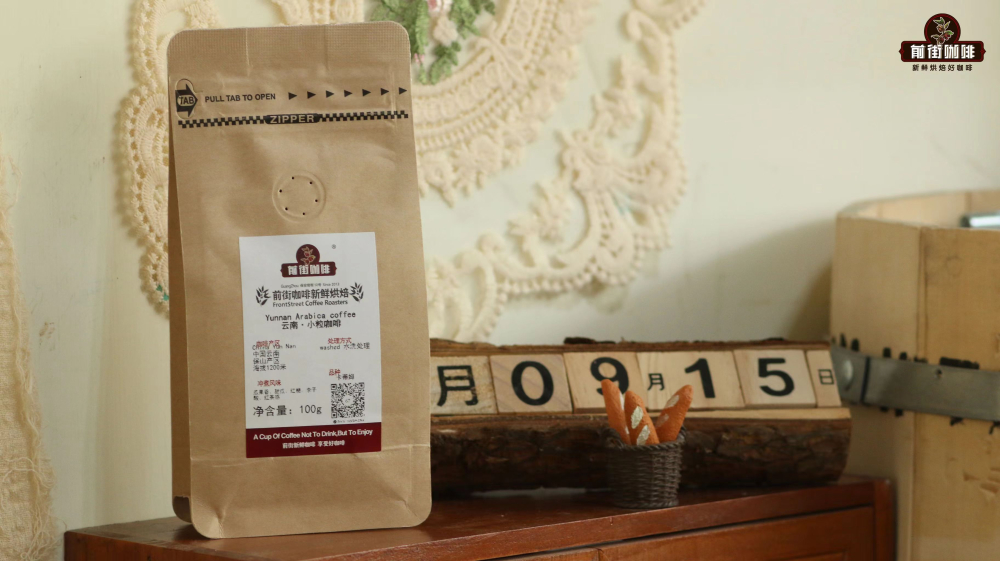
In recent years, walking into cafés, Yunnan small-bean coffee has appeared on menus more and more often, and this locally produced coffee bean is being recognized and accepted by more consumers.
High-value Yunnan coffee recommendation one: Front Street Yunnan Small Bean
Region: Baoshan, Yunnan, China Altitude: 1200m Variety: Catimor Processing method: Washed
Flavor: nutty aroma, herbal, chocolate, caramel, with a faint fruity acidity in the finish.
Recommended because: you can taste the flavor of Yunnan's coffee-growing region, at an affordable price, and it can be used for pour-over, moka pot, and drip coffee machines
High-value Yunnan coffee recommendation two: Front Street 2013 Sun-Dried Typica
Region: Lincang, Yunnan, China
Estate: Front Street Zuangyang Altitude: 1300m Variety: Typica Processing method: Sun-dried
Flavor: With berry-like acidity, nutty notes, brown sugar sweetness, and a tea-like finish.
Recommended because: you can taste the authentic Yunnan small-bean flavor, high value, suitable for pour-over and cold brew.
What is "small bean" coffee?
Yunnan small-bean coffee belongs botanically to the Arabica species (coffea arabica L.). In the 1950s, the main varieties grown in the Baoshan region included Typica, Bourbon, and S288. Among them, Typica has the longest history and a clean, elegant flavor, but its drawbacks are also obvious—its yield per unit is relatively low, and its resistance to disease is poor, so the plants are prone to infection and even death. To change this situation, Yunnan introduced Catimor, a variety that can be planted at high density and has strong disease resistance, and it gradually became the coffee variety with the largest planted area in Yunnan. Therefore, what we usually call "Yunnan small bean" in most cases actually refers to Catimor coffee beans produced in Yunnan.
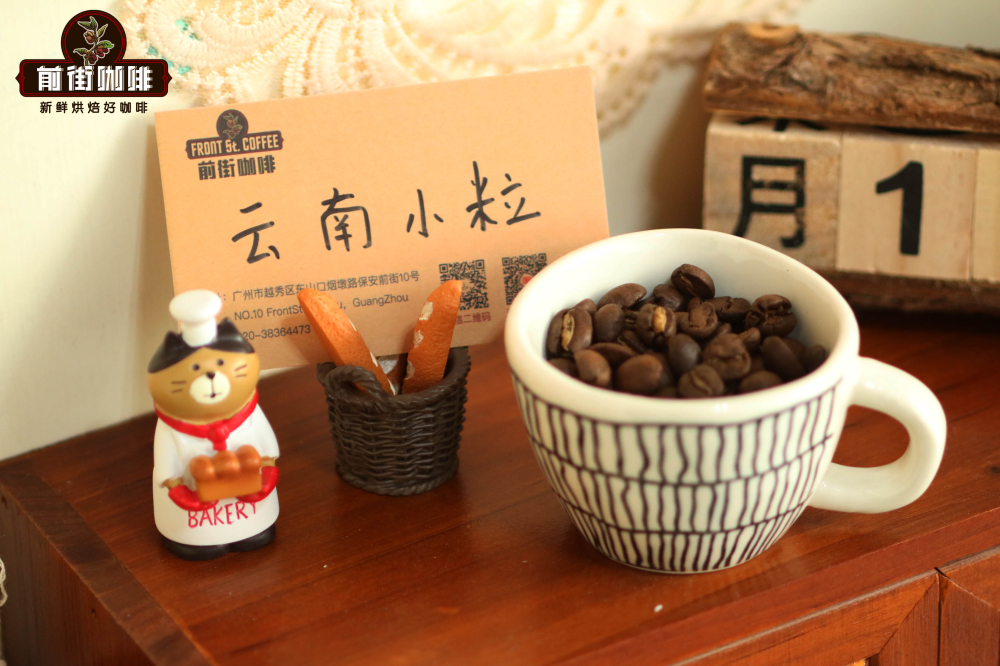
In 1959, Portuguese researchers bred a small-stature coffee plant that could resist pests and diseases, was suitable for growing at low altitudes, and had considerable yield—in other words, Catimor was developed as a "commercial bean" from the very beginning. Although Catimor achieved commercial success, its cupping performance has often been criticized, with obvious defects in flavor. For this reason, Catimor was long undervalued, and some producers were even unwilling to put the name Catimor on the packaging.
So where exactly do these shortcomings of Catimor come from?
Catimor is the offspring of a cross between Caturra and Timor. Caturra is a natural mutation of Bourbon and has an excellent reputation, appearing frequently in various specialty coffee competitions; for example, among Front Street's own roasted coffee beans, dozens are made with Caturra. Timor, on the other hand, is the product of a natural cross between Robusta and Arabica, first discovered in the early 1900s on the island of Timor in Southeast Asia. Robusta's flavor has never been favored, dominated by heavy bitterness and a strong mouthfeel, but it has extremely strong disease resistance, tolerates cold and heat, and has high yield. Catimor therefore inherited these traits—high survival rate, high fruiting rate, and a short maturation cycle—making it naturally more popular with coffee farmers and growers.
In the past, Yunnan coffee farmers lacked mature accumulated experience in coffee cultivation, often planting Catimor on lower-altitude plots, and combined with rough processing methods, the resulting coffee quality was mediocre, with most of it purchased and used to make instant coffee. With the spread of domestic specialty coffee culture, more and more coffee professionals and researchers have gone deep into Yunnan's production areas and continuously improved coffee quality in areas ranging from pest and disease control, shade tree planting, soil and water conservation, and altitude selection to fresh fruit picking and processing techniques. Today, Yunnan Catimor coffee produced through specialized procedures can already show satisfying aroma and cleanliness.
What does washed Yunnan small-bean coffee taste like?
Before launching its Yunnan coffee daily bean, Front Street went through repeated cupping comparisons and finally selected washed Catimor from the Baoshan region as the representative of Yunnan coffee, releasing it in a 100-gram small package so that more people would have the chance to taste "the flavor of Yunnan." In this Yunnan daily bean, Front Street sensed a relatively balanced mouthfeel, with nutty notes and a bit of plum-like fruitiness, as well as brown-sugar-like sweetness, with an overall mild expression.
Washed processing steps: use a machine to remove the skin and pulp from the harvested coffee cherries, place the depulped coffee beans into a fermentation tank for fermentation, use fermentation to break down the mucilage layer, then repeatedly wash the fermented coffee beans with clean water to remove the broken-down mucilage, and finally dry the coffee beans for 1–2 weeks. Washed Yunnan coffee not only reduces the defect rate and makes the quality of the produced coffee more stable, but also gives it higher cleanliness, so the cup can better convey the most original flavor of Yunnan coffee. This is also why Front Street gave priority to the washed batch when launching its "face of Yunnan representative" daily bean.
Front Street's pour-over suggestions
Dripper: hario v60
Dose: 15g
Water temperature: 90°C
Grind size: 75% passing through a No. 20 sieve
Water-to-coffee ratio: 1:15
Grind size and water temperature: precisely because Yunnan coffee's flavor profile is balanced and moderate, water that is too hot and grinding that is too fine can easily lead to over-extraction, releasing too many bitter large-molecule flavor compounds, while water that is too cool and grinding that is too coarse instead leads to under-extraction and coffee that easily tastes bland. So Front Street chooses medium water temperature and grind size, extracting with 90°C hot water, with the coffee grounds at a coarseness of 70% passing through the Chinese standard No. 20 sieve, or EK43s setting 10.5 in-store.
Three-stage pouring: wet the coffee bed with water at twice the weight of the coffee grounds, let it bloom for 30s to form a dome, then pour in a thin stream in circles from the inside out until reaching 125g, pause, wait until the coffee bed drops to half the height of the dripper, then continue pouring the third stage with the same thin stream until 225g, and once all the coffee liquid has filtered through, remove the dripper; the time is about 2 minutes.
The above content is compiled by CoffeeHunters, a coffee news website.


