







Yirgacheffe, as Ethiopia's most iconic specialty coffee region, has long been familiar to coffee lovers for its washed and natural processing. Honey processing, however, has injected new flavor possibilities into this classic region. This article takes the red cherry honey-processed Yirgacheffe produced by the Hafursa Cooperative as an example, reviewing its flavor profile, regional geography, and cooperative background, analyzing the principles and grading of honey processing, and providing Front Street Coffee's complete brewing parameters and flavor description, helping readers gain a comprehensive understanding of this coffee bean that combines cleanliness with layers of sweetness.
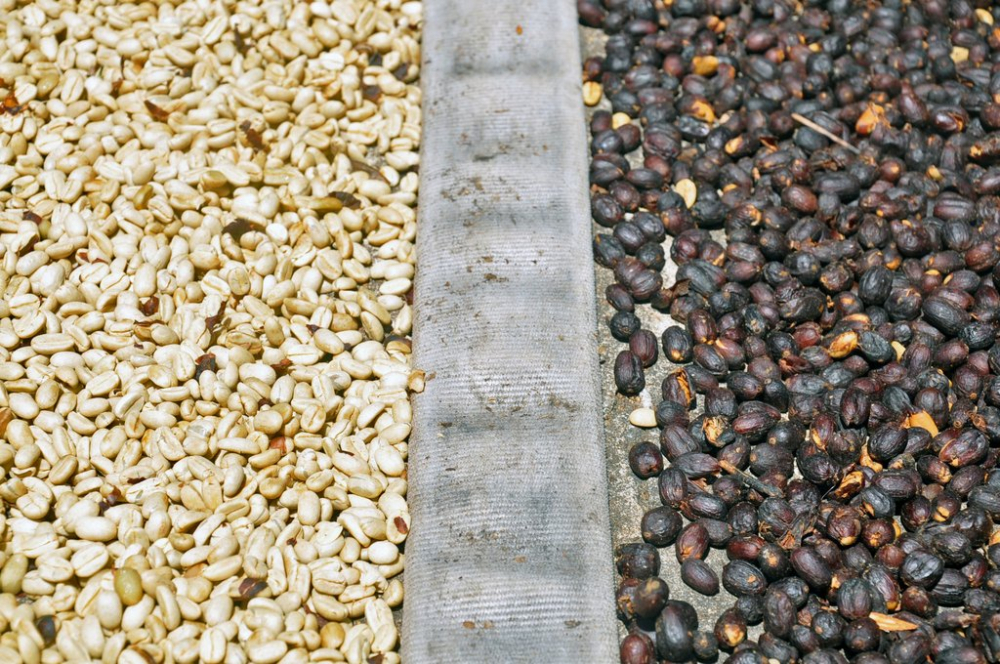
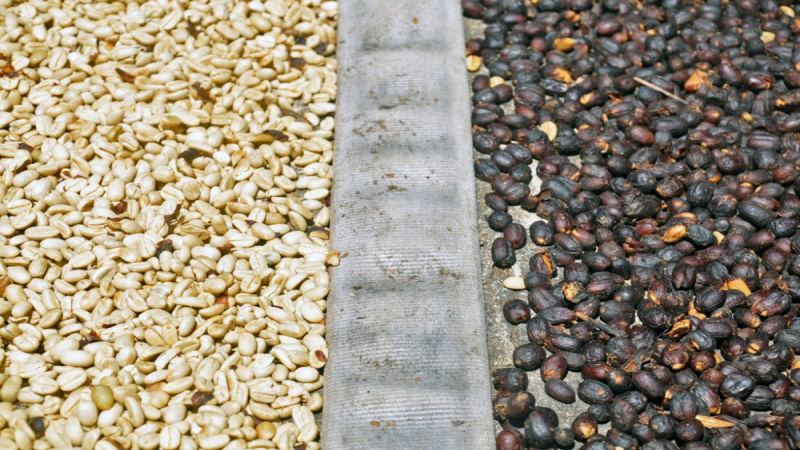
Enthusiasts just beginning to explore Yirgacheffe tasting are often recommended to start with Front Street washed Gedingding and Front Street natural Red Cherry. These two beans happen to present two completely different processing logics: the former removes the skin and pectin before drying, resulting in a cup profile that tends toward clean and transparent; the latter keeps the whole fruit intact for drying, allowing the beans to absorb more abundant fruit aromas and ultimately presenting a fuller body. Front Street washed Gedingding delivers a refreshing, bright tonality interwoven with jasmine, citrus, green tea, grapefruit, and snow pear; Front Street natural Red Cherry reveals rich layers of berries, peach, sweet orange, and black tea, with a round mouthfeel and a lingering finish.
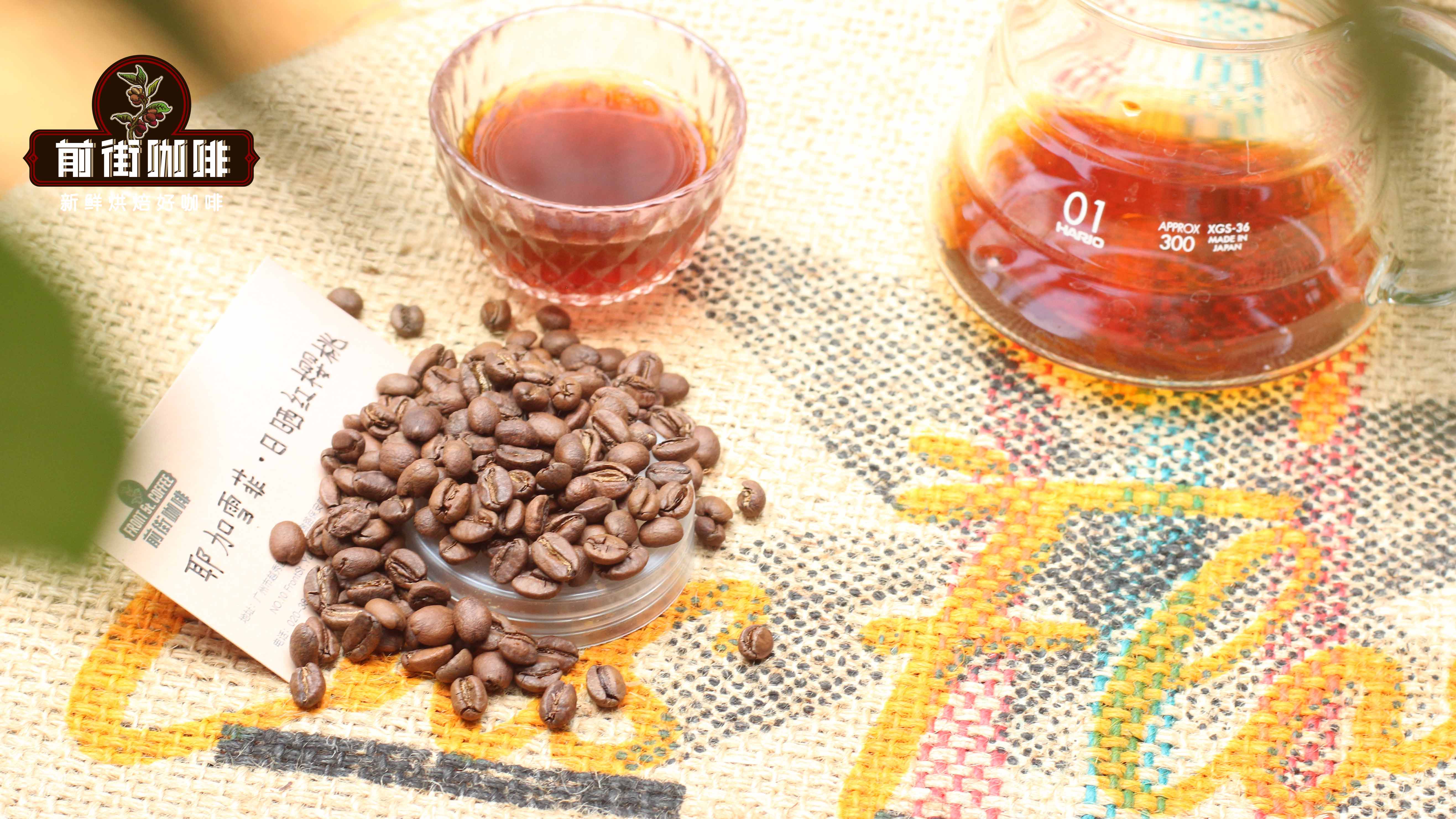
For drinkers accustomed to traditionally washed or natural Yirgacheffe, Front Street honey-processed Yirgacheffe is a fresh taste experience. This bean comes from the Hafursa Cooperative, and after repeated testing, its taste presents quite an excellent sense of layering—with a citrus-like sweet acidity, full and soft yet clean and crisp. The entry is smooth, and in the aftertaste emerges a caramel-like sweetness, accompanied by an almond-like aroma, making the overall performance pleasantly surprising.
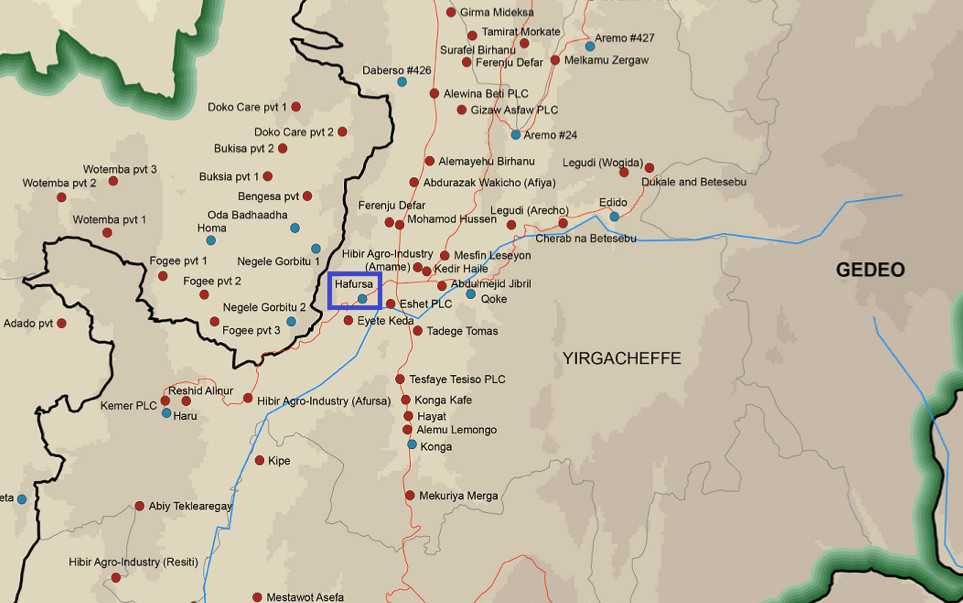
"Hafursa" was originally the name of a village in Ethiopia, belonging to the smallest unit among the local four-level administrative divisions. This village is actually right next to the west side of the bustling downtown area of Yirgacheffe town; walking out along the road on the west side of town, one quickly arrives at Hafursa village. The Hafursa Cooperative was established in 1975 and can be considered a pioneer in Ethiopia's first wave of the cooperative movement. The coffee cherries at the cooperative's processing plant mainly come from two areas: first, the hillside area of Hafursa village on the west side of the processing plant, with an altitude extending from 1,850 meters to about 2,100 meters; second, the hillside on the south side of the processing plant adjacent to Konga village, with an altitude between 1,870 meters and 2,000 meters. These two coffee gardens are both quite superior in altitude and slope orientation, and this is precisely the fundamental reason the cooperative can produce high-quality green coffee beans.
The Hafursa Cooperative joined the Yirgacheffe Coffee Farmers Cooperative Union (YCFCU) in 2013 and simultaneously obtained both "organic" and "fair trade" certifications. The cooperative works hand in hand with local smallholder farmers, adopting shade-growing methods, interplanting coffee with crops such as bananas, relying entirely on manual operations and organic fertilizers, and using natural means to prevent pests and diseases, thereby maintaining ecological balance and making the coffee's flavor purer. Also in 2013, Hafursa received a high score of 95 points from Coffee Review, with its flavor described as richly layered, smooth in mouthfeel, honey-like in sweetness, accompanied by citrus aromas, with a smooth and soft acidity, a full aftertaste, and a slight hint of almond and caramel.
What exactly is honey processing?
This Front Street Yirgacheffe Hafursa Red Cherry adopts the honey processing method. So-called honey processing refers to the bean-processing technique in which coffee beans are sun-dried while retaining the mucilage. After the outer fruit pulp of the coffee fruit is removed, a sticky gel-like substance remains on the surface. The traditional washed method uses clean water to rinse off this layer of pectin, but some high-altitude production areas, limited by water resource conditions, gave rise to this practice of drying directly with the pectin still on. Depending on the thickness of pectin removed, the drying duration (or spreading thickness), and the frequency of turning during drying, honey processing can be further subdivided into categories such as black honey, red honey, orange honey, yellow honey, and white honey. This processing method, while retaining the clean characteristics of the washed method—though its brightness is not as high as washed processing—adds sweetness and a caramel-like mouthfeel to the coffee.
Yirgacheffe Hafursa Cherry Red
FrontStreet Coffee Ethiopia Yirgacheffe Hafursa Red Cherry
Region: Yirgacheffe Hafursa
Variety: Local heirloom
Processing: Honey processing
Altitude: 1940M
Grade: G1
Front Street Yirgacheffe Hafursa Brewing Parameters Coffee grounds: 15 grams Ratio: 1:15 Water temperature: 90 degrees Celsius Grind size: BG # 6sf Dripper: Hario v60 #01 dripper
Front Street Yirgacheffe Hafursa Brewing Process: First pour 30 grams of water for a 30-second bloom, second pour 95 grams of water (electronic scale shows 125 grams), completed in about 1 minute, third pour 100 grams of water (electronic scale shows 225 grams), completed in about 1 minute 40 seconds
Extraction time: 2 minutes 10 seconds, remove the dripper to complete brewing
Flavor description: Citrus, almond, honey, caramel
The above content is compiled by CoffeeHunters, a coffee news website.


