







What Water Temperature Brews Geisha Coffee Well?
Geisha coffee, once listed by Forbes among the world's ten most expensive coffees, shows its cleanest cup when brewed with water at 91 to 92°C. Front Street Coffee uses a V60 dripper at a 1:16 coffee-to-water ratio with a three-stage pour, then serves the cup warm rather than hot so the berry and floral notes stay clear.
Panama's Hacienda La Esmeralda, in Boquete, produces Red Label and Green Label Geisha from individual plots, and the farm holds Rainforest Alliance certification. Because flavor shifts with plot, terroir, and region, the same brewing recipe can taste different across lots. The article gives complete parameters for recreating the in-store cup at home.
Geisha coffee is celebrated as one of the world's ten most expensive coffees, known for its clean mouthfeel and delicate berry and floral aromas. This article focuses on the drinking temperature and brewing water temperature for Geisha coffee, offering a detailed introduction to the flavor characteristics and price references of Panama Hacienda La Esmeralda's Red Label, Green Label, and Boquete region Geisha. At the same time, Front Street Coffee shares the complete brewing parameters and three-stage extraction steps for Geisha served in-store, including key data such as the V60 dripper, 91-92°C water temperature, and a 1:16 coffee-to-water ratio, helping coffee enthusiasts recreate Geisha's rich floral aromas and complex fruit notes at home.
For more specialty coffee knowledge, please follow our WeChat official account: Front Street Coffee
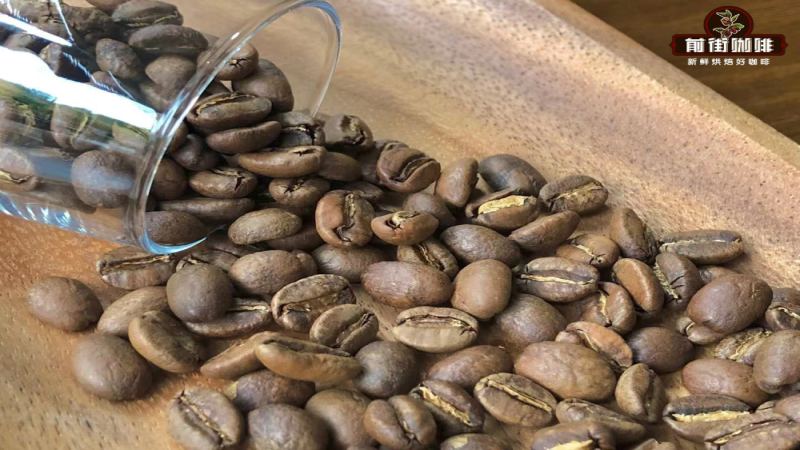
Panama Geisha coffee was once named by Forbes as one of the world's ten most expensive coffees, and from the moment it rose to fame, it has always been regarded as a benchmark for high-quality coffee. It is highly praised for several reasons: its production is inherently scarce, and strict standards are enforced from harvesting to processing; its cup profile is clean and transparent, with delicate berry and floral notes that perfectly align with current consumer preferences; more importantly, the emergence of Geisha overturned the long-held assumption that coffee could only be dark-roasted and could only pursue a rich, bold intensity.
However, as Geisha rose to fame overnight, other regions and estates in Panama, and even high-altitude areas across Central and South America (such as Costa Rica and Colombia), successively began cultivating the Geisha variety. So today, enjoying a cup of Geisha coffee is no longer a difficult feat.
Yet coffee is ultimately an agricultural product, and its flavor changes with differences in terroir, climate, and region. Even when grown within the same sub-estate of Panama's Hacienda La Esmeralda, Geisha from different individual plots can still differ in flavor to a certain extent.
Hacienda La Esmeralda is located in Boquete, a specialty coffee-producing region in Panama. The coffee grown in this area consists mainly of Typica, Bourbon, Catuai, and Geisha. Through careful stewardship of the natural environment and special care, it has obtained Rainforest Alliance certification. Although Hacienda La Esmeralda is world-renowned for the Geisha variety, its exceptional estate environment and green bean processing techniques have also made the estate's coffee beans widely loved.
Hacienda La Esmeralda is mainly divided into three plots: Jaramillo, Canas Verdes, and El Velo. Each plot is further subdivided into smaller lots. In order to stabilize the quality of Geisha produced each year and to let more people discover high-quality Geisha, Hacienda La Esmeralda currently divides Geisha sales into two grades: "Esmeralda Special" and "Private Collection," which are the well-known Red Label and Green Label.
The Esmeralda Special series (Red Label) is the highest-quality Geisha coffee bean sold by Hacienda La Esmeralda, grown at clearly defined plots at 1,600-1,800 meters above sea level, with each lot required to score over 90 points in cupping. This series usually comes from the two sub-estates of Jaramillo and Canas Verdes.
Front Street Coffee's new-season Hacienda La Esmeralda Red Label coffee beans are sourced from the Mario lot of the Jaramillo sub-estate, a naturally processed Geisha grown at 1,700 meters above sea level. Through cupping and brewing confirmation, this coffee bean's flavor profile is: ripe strawberry, rose, black tea, grapefruit's sweet-and-sour fruit tea, with a berry sweetness in the finish and a lasting sweet aftertaste.
Since it is not an auction lot, Front Street Coffee's Esmeralda Red Label Geisha roasted beans are priced at 350 yuan/100g, and a cup at the physical store costs only 75 yuan. (Brewed with 15g of coffee grounds.)
The Private Collection series (Green Label) focuses on showcasing the signature flavor of Hacienda La Esmeralda's high-altitude Geisha coffee, without emphasizing specific detailed plots as the Red Label does. This series is a blend of lots produced from various detailed plots. (Roughly understood as Red Label without plot separation.)
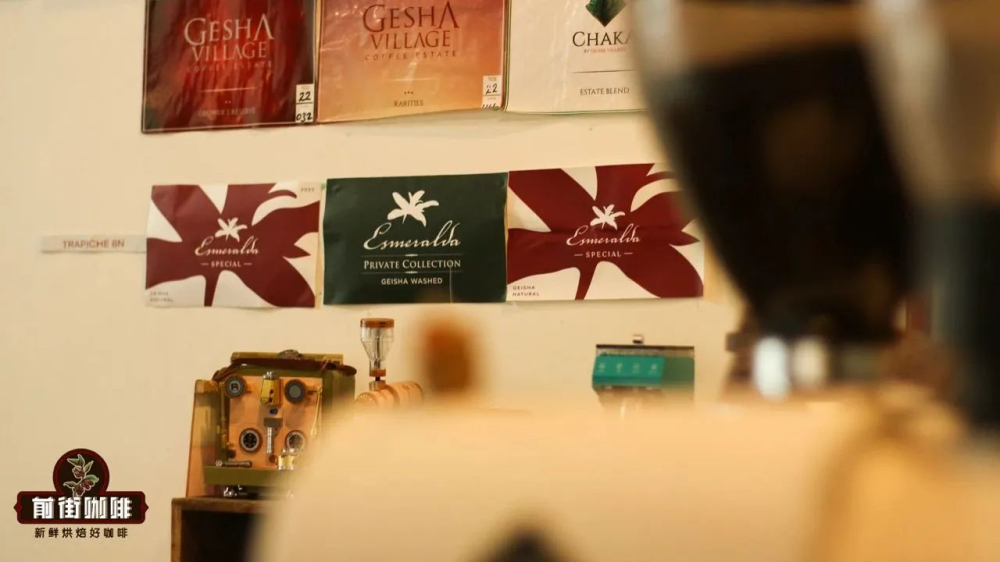
Front Street Coffee's new-season Hacienda La Esmeralda Green Label coffee beans use washed Geisha from three sub-estates, grown at 1,600-1,800 meters above sea level. Through cupping and brewing confirmation, this coffee bean's flavor profile is: the fresh fragrance of white flowers such as jasmine and ginger lily, clean acidity like sweet orange and lemon, honeyed sweetness, and a Tieguanyin tea-like sweet aftertaste. Front Street Coffee's Esmeralda Green Label Geisha roasted beans are priced at 168 yuan/100g, and a cup at the physical store costs only 60 yuan. (Brewed with 15g of coffee grounds.)
In addition to Hacienda La Esmeralda's Geisha coffee beans, Front Street Coffee has also listed a washed Geisha coffee bean from the Boquete region, grown at 1,600 meters above sea level. Through cupping and brewing confirmation, this coffee bean's flavor profile is: citrus fruit acidity, white floral notes, honey sweetness, and a green tea-like sweet aftertaste.
Although many origins cultivate Geisha, each producing region has its own unique terroir, and different terroirs create distinct coffee flavors, which is why Geisha displays its own flavor characteristics in each place. Front Street believes that Geisha's flavor becoming so popular is inseparable from Boquete's exceptional environment.
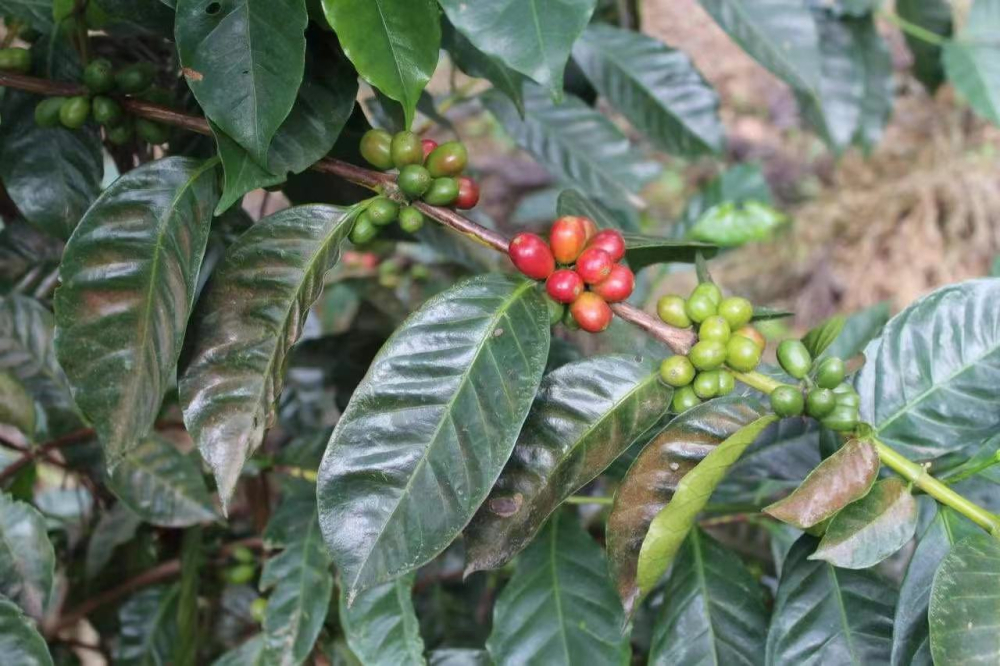
Panama's coffee cultivation is concentrated in the western highlands: Boquete, Volcan, and Renacimiento, among which the Boquete valley and the Volcan region around the Baru volcano are the most well-known. Both areas are located in Chiriqui Province, entirely within the center of the coffee belt, with fertile volcanic soil and ancient forests. The Boquete producing region is a town in Chiriqui Province, located on the eastern side of the Baru volcano at an altitude of about 1,000-2,000 meters, facing the warm, humid Caribbean monsoon, with the Atlantic cold current behind it, and steep, high mountains. Among these, "Volcan Baru National Park" is an ecological conservation area with rich biodiversity, possessing seven microclimates, plus being shrouded in mist year-round with abundant rainfall, creating excellent local growing conditions. Thanks to this exceptional terroir, the coffee absorbs various essences and transforms them into elegant floral and fruity notes with layered, varied acidity.
Front Street Coffee's Boquete region Geisha roasted beans are priced at 98 yuan/100g, and a cup at the physical store costs only 30 yuan. (Brewed with 15g of coffee grounds.)
But if you want to enjoy Geisha freely at home while experiencing this coffee variety's unique flavor, Front Street would recommend buying roasted coffee beans and grinding and brewing them fresh at home. At Front Street, there are many choices for the Geisha variety alone. Here, Front Street has selected two of the most popular options — the naturally processed Esmeralda Red Label Geisha coffee and the naturally processed Geisha Village Red Label Geisha coffee — and will use the parameters of daily in-store production to explain Front Street's extraction approach!
The flavor description of every Front Street coffee is based on freshly roasted beans. If the coffee beans have been stored for more than a month, the aroma may have already partially dissipated, making it difficult to reproduce in brewing. Front Street also deeply understands the importance of freshness, so it ensures that only coffee beans freshly roasted within 5 days are shipped, allowing everyone to enjoy the fullest flavor window upon receipt.
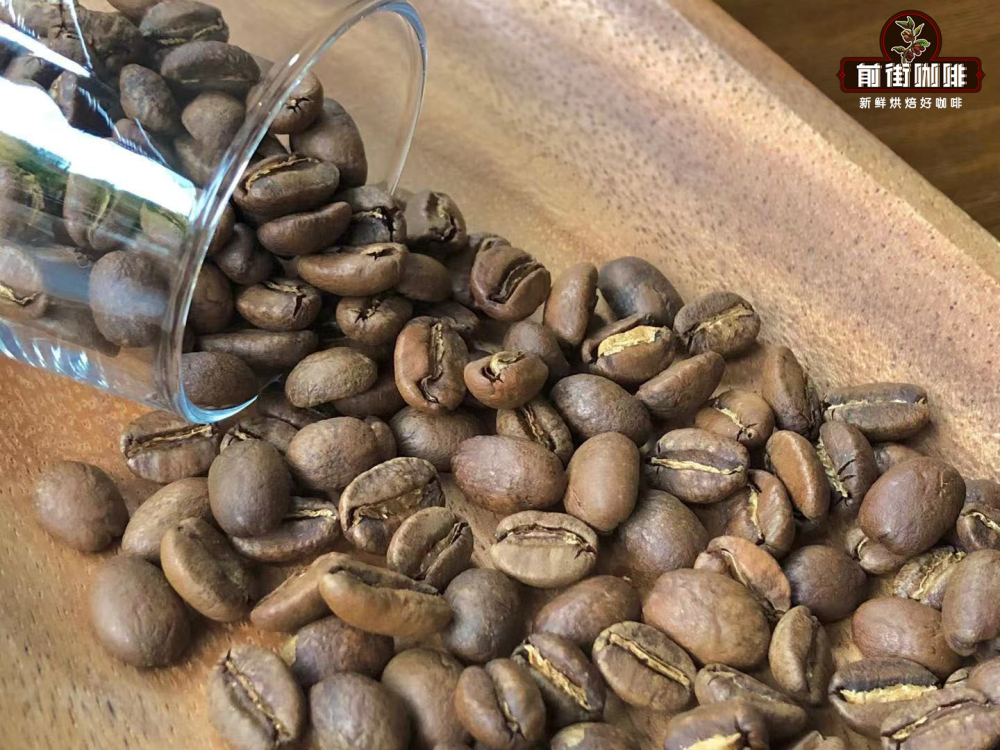
Geisha coffee's flavor is renowned worldwide for its rich floral aromas and complex fruit notes. Front Street's roasters want to preserve more of Geisha's high-quality acidity, so they choose a medium-light roast (with slight adjustments made for different lots). This roast level does not significantly alter the high hardness of high-altitude beans, so brewing requires a somewhat higher extraction rate to present a fuller flavor layering. Here, a relatively high water temperature and a finer grind size are used to draw out more aromatic compounds. In addition, Front Street wants Geisha coffee's flavor expression to be clearer, so it widens the coffee-to-water ratio a bit, using 1:16.
To increase Geisha coffee's extraction rate, avoid over-extraction, and at the same time highlight the sweet-and-sour flavor layers, Front Street Coffee's baristas use the V60 dripper. The V60 dripper's body has ribs connecting the top and bottom and a large central hole that speeds up the flow of water, while the spiral-shaped vent groove design lengthens the water flow path, increasing the contact time between coffee grounds and hot water. Each stream of water converges along the grooves toward the center of the dripper, concentrating the pressure on the coffee grounds and extracting coffee with richer layering.
Below, Front Street demonstrates the brewing steps for the in-store Esmeralda Red Label naturally processed Geisha. You can use it as a reference and compare it with your own brewing approach.
The pour-over parameters for Red Label Geisha coffee are: Dripper: V60, Water temperature: 91-92°C, Coffee dose: 15g, Coffee-to-water ratio: 1:16, Grind size: fine granulated sugar (80% passing a No. 20 sieve)
Three-stage extraction: First, pour 15 grams of coffee grounds into the dripper and tare the weight. For the first stage, pour 30g of water for a 30-second bloom, starting the timer at the same time. Use a small stream, starting from the center and spiraling outward, making sure to saturate the entire coffee bed.
For the second stage, use a slightly larger stream to pour 120g of water, with the aim of lifting the entire coffee bed. The water column should be poured vertically and evenly. At this point the scale shows 150g, and the pour is completed at around 55 seconds.
When the liquid level drops to the halfway point, begin the third stage using a small stream in a small spiral to pour 90 grams, trying to control the stream so it does not spiral too widely, which could easily disturb the coffee bed and cause under-extraction. The total water poured is 240 grams, and the drip completion time is about 2 minutes 10 seconds. After removing the dripper, swirl the coffee liquid in the server to mix it evenly, and it is ready to taste.
The above content is compiled by CoffeeHunters, a coffee news website.


