







Mandheling is one of the most recognizable coffees in Asia, and its name does not come from a producing region or variety, but from a historical mishearing. From the perspective of Front Street Coffee, this article sorts through the growing geography of Sumatra, Indonesia, the origin and flavor characteristics of Mandheling, deeply analyzes how the wet-hulling process shapes its unique low-acid, thick mouthfeel, and introduces one by one the origin information and flavor performance of four wet-hulled Mandhelings in Front Street’s shop—PWN Golden Mandheling, Lintong Mandheling, Tiger Mandheling, and Aged Mandheling—and finally provides a brewing plan with unified parameters and a cupping comparison, offering coffee lovers a complete framework for understanding Mandheling.
For more specialty coffee knowledge, please follow the WeChat public account: FrontStreet Coffee
If one were to choose the most representative coffee in Asia, Indonesia’s Mandheling would be almost impossible to avoid. This coffee bean is basically produced only on the island of Sumatra, which is closely related to Indonesia’s special geographical conditions. Below, FrontStreet Coffee will guide everyone to understand how the flavor of Indonesian Sumatra coffee is actually formed, and what noteworthy characteristics it has.
The growing background of Indonesia’s coffee-producing regions
Coffee lovers familiar with geography should know that Indonesia is the country with the largest number of islands in the world. According to FrontStreet Coffee, coffee cultivation in Indonesia can be traced back to the 18th century, when Dutch colonists introduced Arabica varieties locally. After gradual development since then, Indonesia is now one of the world’s top five coffee-producing countries, with major producing regions distributed across three islands: Sumatra, Java, and Sulawesi. Robusta accounts for 90% of total production.
The northern part of Sumatra has a relatively high altitude, so Arabica varieties are grown there. Mandheling is often called “Sumatra coffee.” What is produced in North Sumatra is mostly Gayo, mainly the Ateng variety; the area around Lake Tawar at the northern tip can be called Aceh coffee or Tawar Lake coffee; Lintong in South Sumatra and the area around Lake Toba can be called Mandheling, and the Lintong area is the Mandheling producing region.
Aceh Province, where Lake Tawar is located, and North Sumatra, where Lake Toba is located (Lintong is in this province), are two major Arabica producing regions. Lake Toba is located in the central part of North Sumatra Province. In 1888, Dutch colonists moved “Java Mandheling” north to the Lake Toba area, creating the modern legend of Mandheling.
The Gayo Mountains are located in the Aceh producing region of northern Sumatra Province, and most local coffee farmers are native farmers. The term “Gayo” comes from a tribe in the Aceh region of Indonesia. This region has ideal growing conditions, a long history and culture, and unique flavors. Coffee there is widely grown organically, without chemical fertilizers, and it is considered a green coffee-producing region in the world. Therefore, Gayo coffee is also often called green coffee or Gayo organic coffee.
Why is Sumatra coffee bean also called Mandheling?
People who often drink specialty coffee should notice that coffee beans are usually named after producing regions, place names, or varieties, but the name Mandheling does not belong to any of these categories. It is actually a mistransliteration of the Indonesian Mandailing people.
The story began when Japanese soldiers returned to Japan after the colonial period in Indonesia and could not forget the delicious local coffee. Through trade friends, they asked local people to help collect high-quality coffee beans, among which was this Mandheling. The Japanese loved this coffee bean very much and asked its name. Because the commercial source was inconvenient to disclose, the local person casually said “Mandheling.” The Japanese then had Indonesian coffee traders ship 15 tons to Japan, and unexpectedly it became very popular in Japan. The name Mandheling spread just like that.
The flavor characteristics of Mandheling coffee
As FrontStreet Coffee said above, Mandheling coffee beans are produced on the island of Sumatra in Indonesia, Asia, and are also called “Sumatra coffee.” Mandheling is a premium coffee bean grown in highland mountainous areas at an altitude of 750-1500 meters. It belongs to Indonesia’s scarce Arabica coffee beans, and among them, the first-grade Mandheling produced in Takengon and Sidikalang is the best in quality. Sumatra’s mysterious and unique natural environment gives Mandheling a rich aroma, full body, and strong taste, with a slight chocolate and syrup note.
At the same time, Mandheling coffee beans are relatively large and hard in bean quality, and defects are very likely to appear during cultivation. After harvesting, strict manual sorting is required; otherwise, quality can easily become uneven. In addition, different roasting degrees also directly affect the coffee’s taste, which makes it a single-origin coffee with considerable controversy. The appearance of Mandheling coffee beans can be described as the ugliest among coffee beans, and this is also caused by its unique wet-hulling process.
In addition, because Mandheling coffee beans themselves do not have much acidity, after being kept warm for a long time or made into iced coffee, they will not develop an unpleasant sour and astringent taste. After roasting, the coffee beans are relatively large, and the green beans are brown or dark green, with a special caramel-like fragrance and a mellow, rich taste. Most general coffee lovers prefer to drink it as a single origin, but it is also an indispensable variety in coffee blends.
What exactly is Indonesia’s wet-hulling process?
As FrontStreet Coffee mentioned above, the flavor characteristics of Indonesian Mandheling are also related to its unique coffee processing method. Indonesia’s wet-hulling method is also called Wet Hulling, and in the local language it is also called Giling Basah. It is a traditional Indonesian coffee processing method. The cupping flavor of Indonesia’s wet-hulling method is completely different from that of the wet process (washed) method.
According to FrontStreet Coffee, the tradition of using the wet-hulling method in Indonesia begins with the local weather. Indonesia’s humidity is between 70-90% all year round, with constant typhoons, and in some areas annual rainfall can even reach as much as 2,000 mm.
Geographically speaking, under tropical climate conditions, coffee generally takes an average of 2-3 weeks to dry. But in Indonesia’s humid climate, drying coffee becomes a major problem. Coffee drying must take longer, and during this period the coffee still maintains relatively high moisture, so bacteria can more easily penetrate the green coffee beans. In the ordinary washed process, the drying process is carried out with parchment still on, thereby protecting the green beans from external damage to a certain extent. However, if the wet-hulling method is used, the parchment is removed for the final drying step. Sunlight directly hits the surface of the green beans, causing the green coffee beans to dry quickly, 2-3 times faster than the washed process.
From this one can also see the wisdom of the local people. However, the wet-hulling method also has a drawback: it makes the coffee beans very ugly, which is what people now often call “goat hoof beans.” This kind of coffee bean is formed because when the wet-hulling method removes the parchment, the coffee’s moisture content is still as high as 20-24%, whereas in general processing methods the coffee is hulled only after the moisture content drops to 10-12%. In a “semi-dry” state, the parchment may adhere to the surface of the green beans, and removing the parchment is more difficult than when “fully dry,” so the hulling process requires greater friction.
On the other hand, however, the “semi-dry” green coffee beans are very fragile at this time, far less hard than “fully dry” green beans, so the beans are more easily crushed and injured, forming small gaps. This is what we often call horse hoof or goat hoof beans (locally called kuku kambing).
According to FrontStreet Coffee, Mr. Han Huaizong once described the flavor characteristics of wet-hulled coffee beans in a book as follows: “This is also a rare processing method in the world, and by accident it created Mandheling’s unique low-acid, thick, and stuffy-aroma flavor.”
Through years of cupping different wet-hulled Indonesian coffee beans, Front Street believes that Mandheling coffee has relatively low acidity, a thick mouthfeel, and unique flavors such as herbal spices, but its drawback is also that quality is relatively unstable. Of course, unstable quality cannot be entirely attributed to the wet-hulling method; in most cases it may be caused by the relatively lower quality of some green coffee beans.
Furthermore, the reason the wet-hulling method is widely used locally in Indonesia is also that Dutch colonists first introduced coffee to Indonesia in the 17th century. These colonists pursued greater and faster economic returns, and wet-hulling greatly shortened the time spent on the farm and also greatly reduced labor costs. This coincided with the mentality of investors seeking quick profits and lower costs. This is also one reason that promoted the wet-hulling process.
For example, of the five Mandheling coffee beans introduced in FrontStreet Coffee’s shop, four are made using the wet-hulling process. Next, FrontStreet Coffee will separately introduce the flavor and variety characteristics of the following four wet-hulled Mandheling coffee beans!
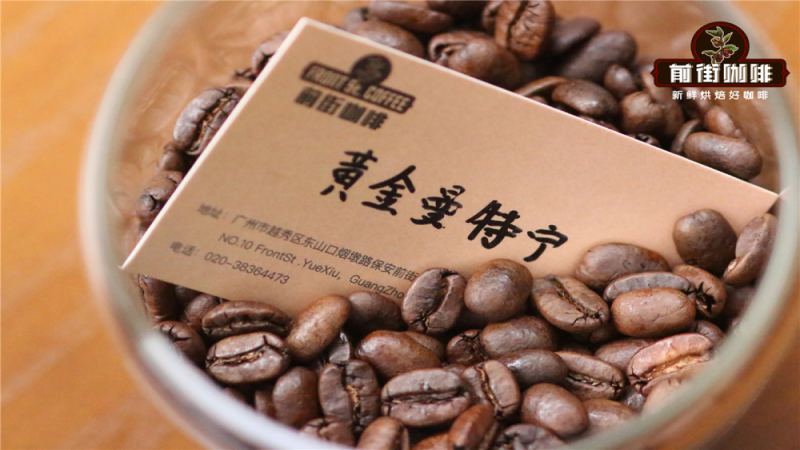
FrontStreet Coffee PWN Golden Mandheling coffee beans
Country: Indonesia
Region: Sumatra, Aceh, Gayo Mountain
Altitude: 1100-1600m
Variety: Ateng
Processing method: Wet-hulled
Flavor: Baked toast, nuts, pine wood, caramel, herbs
When it comes to “Golden Mandheling,” one must start with PWN. This abbreviation is often mixed together with the name Mandheling coffee; it is actually the abbreviation of a company, Pwani Coffee Company.
This company is a very famous local coffee purchasing company in Indonesia, mainly purchasing Mandheling coffee. Almost all of Indonesia’s best producing regions have been bought up by it, so most of the beans coming from PWN are also unique specialty beans. Golden Mandheling is a product produced by this company. After the green beans are purchased, they undergo multiple rounds of manual hand sorting to select plump, defect-free beans. In the end, only these excellent beans, screened layer by layer as if through a talent contest, can be classified as Golden Mandheling.
However, PWN has registered Golden Mandheling as a trademark, which means that from then on only Golden Mandheling produced by PWN can be considered true Golden Mandheling. Many beans on the market that are not from PWN but bear the Golden Mandheling name should actually be called specialty Mandheling. Therefore, Golden Mandheling is merely a product named by the company.
FrontStreet Coffee Indonesian Lintong Mandheling coffee beans
Country: Indonesia
Region: Sumatra (Lintong)
Altitude: 1100-1600m
Variety: Typica, Caturra
Processing method: Wet-hulled
Flavor: Baked toast, nuts, caramel, pine wood, herbs
Lintong Mandheling is produced in the Lintong mountain area of north-central Sumatra, near Lake Toba. FrontStreet Coffee’s entry-level daily-drinker Indonesian Mandheling from this producing region comes from here. Lintong Mandheling also uses the unique wet-hulling method, creating its characteristics of low acidity and high body.
FrontStreet Coffee Indonesian Tiger Mandheling coffee beans
Country: Indonesia
Region: Sumatra
Altitude: 1500m
Variety: Caturra, Typica, Sidikalong
Processing method: Wet-hulled
Flavor: Cream, dark chocolate, nuts, balanced taste
Only Mandheling of screen size 17 or above with a defect rate below 4% can be called Tiger Mandheling. Because the main varieties of Tiger Mandheling are Caturra and Typica. Caturra has a citrus and lemon acidity in taste, while Typica has a long-lasting sweet aftertaste, making Tiger Mandheling relatively even in mouthfeel and high in cleanliness.
The Tiger Mandheling selected by FrontStreet Coffee is produced in Indonesia, Sumatra. Tiger Mandheling is produced at Tiger Estate, so it is also called “Mandheling Tiger” or “Sumatran Tiger Mandheling.” The northern part of Sumatra has relatively high terrain. Aceh Province, where Lake Tawar is located, and North Sumatra, where Lake Toba sits, are the main Arabica coffee producing regions. The requirement for Mandheling Tiger is that the flavor has an aroma like traditional Chinese herbal medicine, and only Mandheling of screen size 17 or above with a defect rate below 4% can be called Tiger Mandheling.
FrontStreet Coffee Indonesian Aged Mandheling coffee beans
Country: Indonesia
Region: Sumatra
Altitude: 1500m
Variety: Caturra, Catuai
Processing method: Wet-hulled
Flavor: Ripe Pu'er, caramel, herbs, chocolate, relatively low acidity.
Aged coffee beans do not mean leaving green coffee beans for a long time; this cannot be done, because green coffee beans will also spoil if left for too long. They change from fresh green to white, then to yellow, becoming bland and tasteless, and may even grow insects. Like aged alcoholic beverages, green beans must undergo proper processing and long-term storage before they can be called true [Aged Coffee].
The so-called Aged bean means: allowing green beans to naturally age by extending storage time (usually 2-3 years). These changes include weakened acidity, changed color, and thickened bean texture. The storage environment must be cool and ventilated. Moreover, because the storage environment is darker and the time is longer, aged coffee can hardly escape complex flavors resembling mustiness or the so-called burlap or leather notes.
Coffee beans that are stored correctly will have their taste and appearance changed, for example, weakened acidity, dark color and lack of moisture, thicker mouthfeel and better body, sweetness with honey fragrance, and some defects originally belonging to the green beans also becoming less obvious. At the same time, storage of aged beans generally does not occur in producing regions or estates, but is a commercial behavior of green bean distributors or brokerage companies.
The above are the flavor characteristics of the four Mandheling coffee beans in FrontStreet Coffee’s shop. Next, FrontStreet Coffee will share some of FrontStreet Coffee’s cupping flavor comparisons of these four Indonesian Mandhelings.
FrontStreet Coffee brewing sharing
When FrontStreet Coffee brews Mandheling coffee beans, to ensure fairness, the brewing parameters for the wet-hulled process are kept as uniform as possible.
Brewing parameters for four wet-hulled Mandhelings: Kono dripper, 1:15 coffee-to-water ratio, 15g coffee dose, 88℃ water temperature, grind size (70-75% passing through a No. 20 standard sieve).
Brewing method: staged extraction.
Use 30g of water for a 30-second bloom, pour in a small stream in circles until 125g for the stage break, and when the water level is about to expose the coffee bed, continue pouring until 225g and stop. When the water level is about to expose the coffee bed again, remove the dripper. (Start timing from the beginning of the bloom.) The V60 dripper extraction time is 2'00", while the Kono dripper takes slightly longer, at 2'10".
Flavor description:
Golden Mandheling: Layered and varied, mellow and clean, highly balanced, with rich nut and caramel aroma, a chocolate note, and a lasting finish. Lintong Mandheling: Herbal medicinal notes on entry, dark chocolate, caramel, sweet aftertaste. Tiger Mandheling: Pine wood and spice aromas, a relatively balanced mouthfeel, with obvious cream, dark chocolate, and nut flavors. Aged Mandheling: Aromas of wood, malt, and caramel rush forward. In taste, it lacks the wildness of traditional Mandheling and has more mellowness and refinement, with a sense of mature steadiness. Acidity is relatively low, and on entry there are flavors of ripe Pu'er, caramel, herbs, and chocolate, with abundant sweetness.
For more specialty coffee beans, please add the private WeChat of FrontStreet Coffee, WeChat ID: kaixinguoguo0925
The above content is compiled by CoffeeHunters, a coffee news website.


