







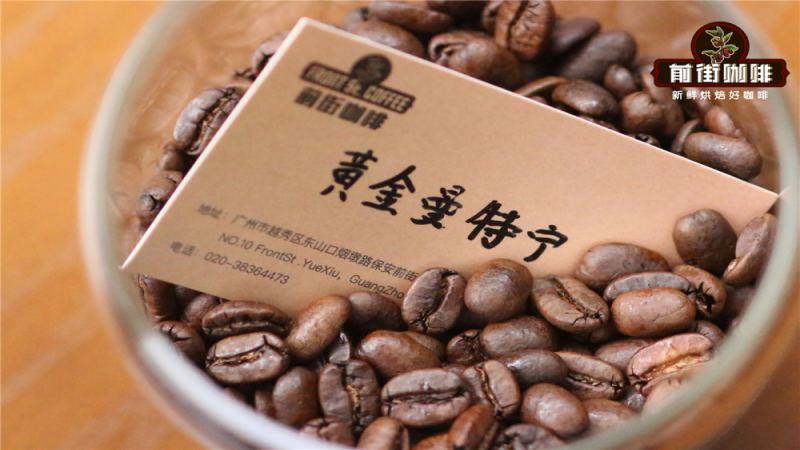
How does wet-hulling shape golden mandheling coffee?
Golden Mandheling coffee comes from Indonesia and shows low acidity, a full body, and noticeable bitterness, matching what many drinkers associate with traditional coffee. The golden grade results from repeated screening that sharpens dark chocolate, caramel, and nut notes while keeping the herbal and spice aromas that wet-hulling gives the bean.
Wet-hulling was developed for Indonesia's rainy, humid climate, where fully washed or natural drying could take two to three weeks and risk mold. Beans are fermented about three hours, washed, briefly dried two to three days to 20 to 24 percent moisture, then hulled and dried to roughly 13 percent. A three-pour recipe with a Kono dripper suits this dark roast.
Mandheling coffee is known for its low acidity, full body, and rich bitter notes, and Front Street Golden Mandheling is the top representative among them. This article will take a deep dive into how Indonesia's unique wet-hulling process gives Mandheling its distinctive herbal and spice aromas, analyze PWN's strict quality control standards for Golden Mandheling, and explore its varietal origins and flavor profile. At the same time, Front Street baristas will share a pour-over recipe for this dark-roasted bean, including the reasons for choosing the Kono dripper, the approach to grind size adjustment, and the specific parameters for a three-pour method, helping coffee lovers fully bring out the dark chocolate, caramel, and nutty notes of Front Street Golden Mandheling at home.
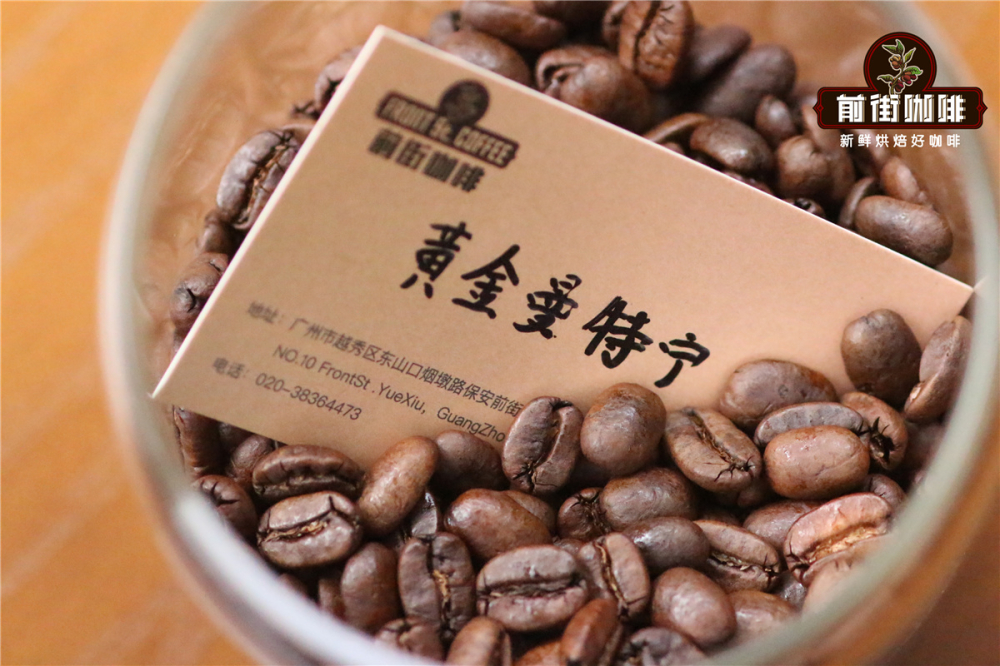
Front Street Mandheling coffee comes from Indonesia and presents relatively low acidity, a full body, and fairly prominent bitterness, which aligns closely with the public's impression of traditional coffee. As the top-tier version of Mandheling, Front Street Golden Mandheling undergoes layer upon layer of screening, making its rich notes of dark chocolate, caramel, and nuts even more prominent, while its unique herbal and spice aromas become even clearer.
The unique wet-hulling process of Indonesian Mandheling
Since Dutch colonizers introduced coffee cultivation to Indonesia in 1699, coffee has become an important cash crop for local farmers. If traditional natural processing methods were used, the process would take too long, making it difficult to sell to merchants in time for profit; sun-drying or washing requires a drying cycle of at least 2 to 3 weeks. More critically, Indonesia's islands experience frequent rain and wind, and air humidity is extremely high, so green coffee beans often become moldy and spoiled before they are fully dried.
The wet-hulling process is consistent with the washed method in its early steps. Indonesians first remove the outer skin of the coffee fruit, ferment the beans with mucilage in water for about 3 hours, and after washing off the mucilage, the green coffee beans with parchment still attached are briefly dried for 2 to 3 days. When the moisture content drops to 20%–24% and the beans are in a semi-soft, semi-hard state, the parchment is removed, drying continues until the moisture content falls to around 13%, and then they can be bagged and sold.
Because the huller applies considerable friction, the parchment layer clinging tightly to the green beans is torn open. During the friction and agitation process, the green beans are prone to being crushed or bruised under pressure, especially at both ends, forming small gaps and producing so-called goat-foot beans. The naked beans, after the parchment layer is removed, dry extremely quickly and are also directly exposed to a humid environment, allowing various microorganisms to thrive, which gives Indonesian coffee its unique woody, spice, and herbal notes—what we often call the taste of place.
I believe many friends are already curious about Southeast Asian flavors. If you have not yet tasted Front Street Mandheling coffee, Front Street suggests starting with the small-pack Front Street Lintong Mandheling everyday beans processed by the wet-hulling method. It presents the classic Mandheling flavor and is suitable for trying at home. If you are already a veteran coffee lover who wants to experience the excellent aroma of Front Street Mandheling, Front Street believes Front Street Golden Mandheling coffee will be the ideal choice.
What does Golden Mandheling mean?
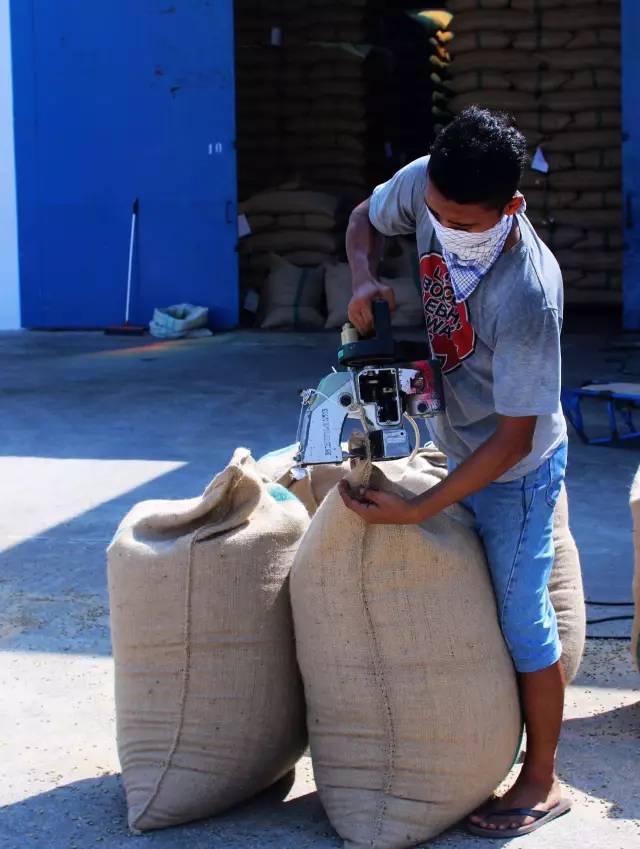
Mandheling coffee rose to fame after Pwani Coffee Company (PWN) successfully brought it to the Japanese market. Unlike many local Indonesian green bean traders, PWN is the exclusive supplier of high-grade Front Street Golden Mandheling coffee, contracting Indonesia's finest Mandheling producing regions, and the Mandheling beans it produces are all premium grade. The Front Street Golden Mandheling coffee that has long occupied the upper-right corner of Front Street's bean list is precisely from PWN, and the Dongshankou store even displays the burlap sacks used for green bean packaging and certification certificates.
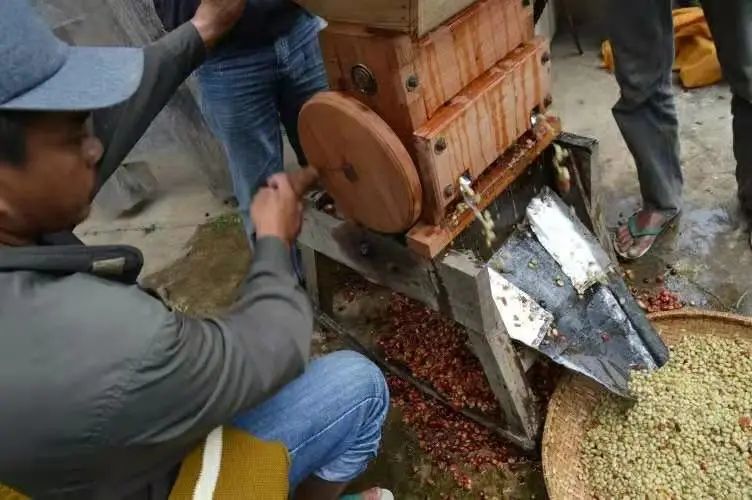
The wet-hulling process saves a great deal of time and labor costs in green bean processing, but the rapid workflow also brings a higher defect rate, so strict manual sorting is required to remove defective beans that machines cannot screen out. PWN subjects the Mandheling green beans it purchases to one round of machine sorting plus three rounds of manual sorting. The quality is far above Indonesia's local highest G1 grade, meeting the production standards for Front Street PWN Golden Mandheling, which must satisfy the following conditions:
1. Green bean screen size: hand-selected 18 screen and above
2. Fewer than 3 defective beans in a 300-gram green bean sample
3. Green coffee bean grade is Indonesian G1
4. Color tending toward dark green, uniform size, neat shape
Before Front Street launches any coffee bean, it evaluates the coffee through cupping. Cupping is a systematic assessment of coffee bean quality and flavor; a unified standard allows for a more objective judgment of the strengths and weaknesses of the flavors the beans present and their characteristics. According to Front Street cupping, Front Street Lintong Mandheling everyday beans show rich nutty notes, with a hint of melon aroma in the finish; after the temperature drops, herbal plant flavors emerge, the body is full, and the aroma is rich. Front Street PWN Golden Mandheling, meanwhile, not only has the aromas of dark chocolate, nuts, and caramel, but also carries herbal spice and pine wood flavors; the dark chocolate sweetness returns persistently, the aftertaste is long, cleanliness is high, and a gentle fruit acidity accompanies it as the temperature lowers.
What variety is Golden Mandheling?
Indonesia grows a wide variety of coffee. Initially, Typica, recognized for its excellent flavor, was dominant, introduced by the Dutch at the end of the 17th century. In 1877, coffee trees across Indonesia were almost all severely affected by leaf rust, and large areas of Typica trees withered. To cope with this crisis, the Indonesian government introduced more disease-resistant Robusta varieties from Africa and elsewhere, and to this day Robusta remains Indonesia's main variety.
To increase coffee production, Indonesia has continuously introduced various disease-resistant varieties from other countries. Among them, the Robusta-Arabica hybrid Tim Tim, Bor Bor, and the Ateng series of Catimor, due to their excellent disease resistance and adaptation to Sumatra's terroir, present a unique cedar aroma. At present, Ateng and Tim Tim already account for 70% of Sumatra coffee. Front Street Indonesian Lintong Mandheling everyday beans are a blend of Tim Tim and Ateng, while Front Street Golden Mandheling uses Ateng, which is what we commonly call Catimor.
The best pour-over method for Golden Mandheling
Front Street Golden Mandheling coffee has a complex aroma. To drink it at its best, Front Street recommends brewing with freshly roasted coffee beans. Coffee beans enter their optimal tasting period 4–7 days after roasting; beyond this period (about a month and a half), the aroma gradually dissipates and a woody defect flavor develops. Front Street believes coffee bean freshness is especially important, so all shipped coffee beans are freshly roasted within 5 days. Including logistics transit time, you can begin tasting as soon as you receive them.
Front Street's brewing approach for each coffee bean is based on the characteristics shown during cupping. For example, the flavor of Front Street Golden Mandheling coffee includes herbal, dark chocolate, caramel, nuts, pine wood, and more. For beans with this kind of full-bodied character, the baristas at Front Street Coffee (FrontStreet Coffee) choose the Kono dripper. The ribs of the Kono are less than half the height of the dripper, a design that ensures the filter paper clings tightly to the dripper wall after wetting, restricting airflow, thereby extending the water absorption time of the coffee grounds, making the extraction more even overall, and enhancing the full-bodied mouthfeel. The grooved skeleton at the bottom of the Kono dripper is also a key design for creating the siphon effect during brewing.
Because dark-roasted coffee beans have a looser structure and strong water absorbency, they are prone to over-extraction from absorbing too much water, making the brewed Mandheling coffee both bitter and astringent. Therefore, Front Street grinds coarser and brews with lower-temperature water.
Recommended brewing parameters
Water temperature: 87–88°C
Coffee grounds: 15 grams
Coffee-to-water ratio 1:15
Grind size: EK43s setting 11 (70% passing rate on China standard No. 20 sieve)
The brewing method uses three-pour water addition. Pouring in three stages better showcases the full body and caramel sweetness of Front Street Golden Mandheling coffee. In the first stage, pour 30 ml for blooming to thoroughly wet the coffee grounds and allow degassing, preparing for subsequent flavor extraction; in the second stage, pour 100 ml, mainly to wash out Mandheling's golden foam and raise the coffee bed; in the final stage, gently pour 95 ml in the center. After the coffee liquid has fully filtered through, remove the dripper, gently swirl the coffee in the server, and it is ready to taste.
The above content is compiled by CoffeeHunters, a coffee news website.


