







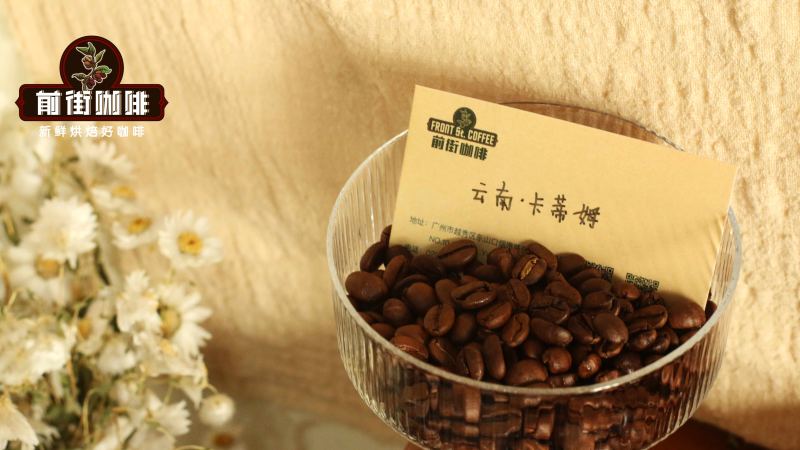
How do Yunnan coffee seed varieties differ in the cup?
Yunnan arabica coffee is planted mainly with two varieties, Typica and Catimor, and they behave differently from farm to cup. Typica, brought to Yunnan by French missionary Tian De'neng in 1904, is grown for producing-region flavor, while Catimor is more widely planted for its yield and disease resistance. The choice of coffee seed shapes body, acidity and aroma.
The difference shows up in growing conditions as well. Typica is lower yielding and slower to mature, so farms that plant this type of coffee seeds often accept higher cost to keep origin character in the cup. Catimor covers more acreage and carries rust resistance. Understanding each variety helps explain why Yunnan beans taste the way they do.
Yunnan coffee has risen prominently in the domestic specialty coffee market in recent years, frequently appearing at various competitions and exhibitions, and the movie "Coffee or Tea?" pushed it into the public eye. However, the path to specialty-grade Yunnan coffee has not been achieved overnight. This article systematically examines the differences between the two representative varieties of Yunnan arabica coffee—Typica and Catimor—from planting history, variety characteristics, producing region conditions, to brewing flavor. Front Street Coffee rooted itself in Yunnan eight years ago and insists on planting Typica to establish the flavor of the producing region. This article combines its planting experience and roasting data to give you an in-depth understanding of the authentic taste of Yunnan coffee.
From a raw material origin for instant coffee to a dark horse in the specialty coffee field, what kind of transformation has Yunnan coffee undergone? In recent years, Yunnan coffee beans have frequently appeared in domestic coffee competitions and exhibitions, and the movie "Coffee or Tea?" has also made more ordinary consumers begin to pay attention to the coffee from this land. It can be said that the industry status of Yunnan coffee is steadily rising. In fact, more than ten years ago, many coffee professionals were already quietly promoting the development of specialty coffee in Yunnan. Although Front Street was not among the earliest to get involved, it also went deep into Yunnan eight years ago to carry out specialty coffee planting and research. Front Street noticed that there are not many people truly willing to change from the source and turn Yunnan beans into specialty coffee; more people choose shortcuts, such as using special processing methods to make the flavor of Yunnan coffee beans stand out. However, after special processing, can Yunnan coffee beans still retain the flavor of the producing region itself? The answer is no. Front Street chose to invest more time and energy in planting Typica in Yunnan, known as "Lin Daiyu," precisely to establish the producing region flavor of Yunnan coffee, so that people who taste Yunnan coffee in the future can recognize: "This is the taste of Yunnan coffee."
The history of planting arabica coffee in Yunnan can be traced back to 1904. At that time, French missionary Tian De'neng brought Typica coffee seeds from Vietnam and successfully planted them in Zhugula Village, Binchuan County, which is regarded as the starting point of Yunnan coffee. This type of coffee is generally called small-seed coffee, commonly known in China as Yunnan arabica coffee.
Small-seed coffee actually refers to arabica coffee beans. Because the beans are relatively small, they are also called small-fruit coffee. Robusta is called medium-fruit coffee, while Liberica belongs to large-fruit coffee. What is grown in Yunnan is precisely arabica, hence the name Yunnan arabica coffee. At Front Street Coffee, you can see two kinds of Yunnan coffee beans: one is Huaguoshan coffee of the Typica variety, and the other is Catimor arabica coffee. Both beans can be classified within the scope of arabica coffee, but because Typica's floral and fruity aroma and fruit acidity are softer and richer, Front Street deliberately uses "Huaguoshan" to distinguish the two varieties.
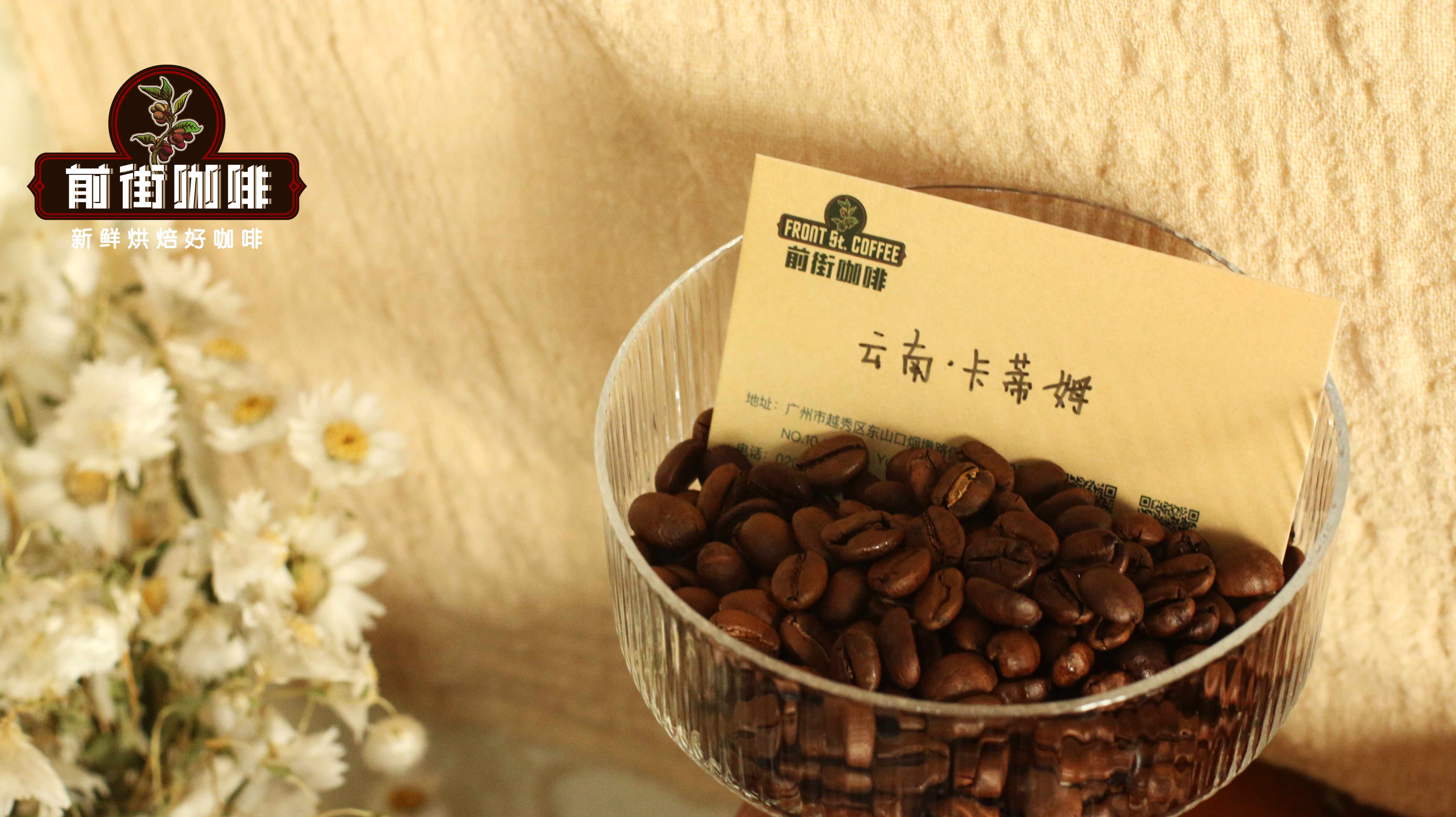
Yunnan Planting Varieties
In the past, Yunnan arabica coffee was mainly Catimor. Catimor is a hybrid of arabica and robusta. Robusta has good resistance to leaf rust and rich oils, with high yield and easy cultivation. After hybridizing with Typica in arabica, Catimor obtained about 25% robusta genes, which not only improved resistance to leaf rust but also retained rich oils, while also inheriting part of the rich flavor of the Typica heirloom variety. Therefore, most estates in Yunnan began to plant Catimor on a large scale.
The Typica variety only began to be planted on a small scale in recent years. Because Typica has weak disease resistance and is susceptible to leaf rust, its growth status must be monitored at all times, and every leaf must be carefully cared for, so Front Street jokingly calls Typica like "Lin Daiyu." Typica has low yield, and coffee farmers who plant Catimor are unwilling to switch to Typica when their income is not guaranteed, and planting Typica requires a large investment of time and energy. Front Street believes that this is precisely the main reason why Yunnan coffee beans are still difficult to sell at high prices even with the support of special processing methods. Since there are not many people willing to do this, Front Street Coffee has seized the opportunity in recent years, led by example, and begun planting the Typica variety.
Where are the good places for coffee planting in Yunnan?
The planting areas are mainly distributed in Lincang, Baoshan, Simao, Xishuangbanna, Dehong, and other places. Baoshan has an average annual temperature of 21.5°C, with a maximum of 40.4°C, and basically no frost throughout the year, making it recognized as the best arabica coffee producing area. The arabica coffee cultivated here is famous at home and abroad for being strong but not bitter, fragrant but not harsh, small and uniform in bean size, mellow and rich with fruity notes. Tasting experts from the International Coffee Organization rated Yunnan coffee in the same category as Colombian wet-processed arabica coffee, belonging to coffee of good quality in the world. The area where Front Street Coffee plants Typica is located at the border between Baoshan and Myanmar.
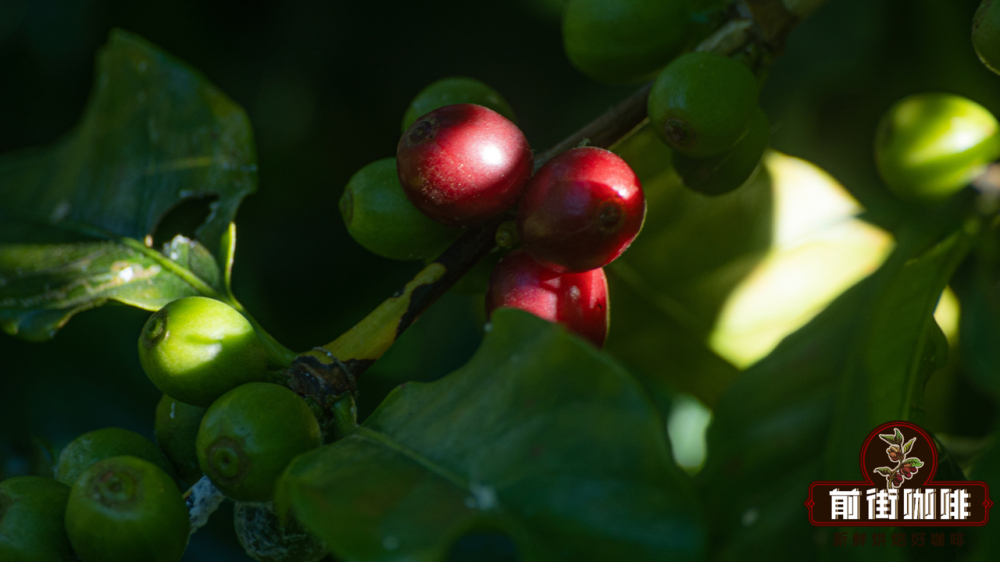
Baoshan has an average annual temperature of 21.5°C, with a maximum of 40.4°C, and basically no frost throughout the year, making it recognized as the best arabica coffee producing area. The arabica coffee cultivated here is famous at home and abroad for being strong but not bitter, fragrant but not harsh, small and uniform in bean size, mellow and rich, and with fruity notes. Yunnan Baoshan arabica coffee has a long planting history, and Baoshan arabica coffee can be said to be a national geographical indication product.
Front Street Coffee — Yunnan Catimor Arabica Coffee
Producing Region: Baoshan, Yunnan
Altitude: 1200 meters
Variety: Catimor
Processing Method: Washed Processing
Brewing Flavor: Melon and fruit aroma, sweet melon, brown sugar, plum acidity, black tea sensation
Front Street Coffee roaster uses Yangjia 800N (300g roasting capacity): charge at 190°C, power 120, damper opened to 3; turning point at 1'40", when the temperature reaches 145°C open the damper to 4, power unchanged; when the temperature reaches 166°C the bean surface turns yellow, the grassy smell completely disappears, entering the dehydration stage; when the temperature reaches 188°C, adjust the power to 60°C, damper to 5; at 8'37", wrinkles and dark spots appear on the bean surface, and the toasted bread smell clearly turns into coffee aroma, which can be defined as the prelude to first crack, at this time you must listen clearly for the sound of the first crack; at 9'00" first crack begins, damper unchanged, develop for 3 minutes after first crack, drop at 198°C.
Front Street Coffee — Front Street 2013 Typica Coffee Beans
Producing Region: Baoshan, Yunnan
Altitude: 1200 meters
Variety: Typica
Processing Method: Washed Processing
Brewing Flavor: Obvious roasted nuts, soft acidity, overall balanced and rich, solid dark chocolate aroma, slight orange peel.
Front Street Coffee roaster Yangjia 800N (300g roasting capacity): charge at 200°C, damper opened to 3, after 1 minute adjust power to 160°C, turning point at 1'32", roast until 5'40" turning yellow, temperature 149°C, grassy smell completely disappears, dehydration completed, power unchanged, damper changed to 4; at the 6th minute, power adjusted to 140, at the 7th minute, power adjusted again to 120, at the 8th minute, wrinkles and dark spots appear on the bean surface, and the toasted bread smell clearly turns into coffee aroma, which can be defined as the prelude to first crack, at this time you must listen clearly for the sound of the first crack; at 8'37" first crack begins, power adjusted to 90, damper fully opened to 5, at the 9th minute reduce power to 20°C, first crack develops for 2'00", drop at 196°C.
Front Street Coffee Brewing Suggestions
Dripper: kono
Dose: 15g coffee
Water Temperature: 88°C
Grind Size: 80% passing through No. 20 standard sieve
Water-to-Coffee Ratio: 1:15
Front Street segmented brewing method: use 30g water for blooming for 30 seconds, pour in a small stream in a circular motion until 125g for the segment, when the water level drops and is about to expose the coffee bed continue pouring until 225g and stop pouring, wait until the water level drops and is about to expose the coffee bed then remove the dripper, (start timing from the beginning of blooming) extraction time is 2'00".
Professional coffee knowledge exchange For more coffee bean information please follow Coffee Workshop (WeChat public account cafe_style) For more specialty coffee beans please add private WeChat Front Street Coffee, WeChat ID: kaixinguoguo0925
The above content is compiled by CoffeeHunters, a coffee news website.


