







What defines an arabica coffee bean?
An arabica coffee bean belongs to the species that dominates both commercial and specialty coffee, accounting for roughly 30 percent of global production. The remaining 70 percent is mostly Robusta, used largely for instant coffee. Arabica grows across South America, Central America, East Africa, Asia, and parts of China, and it traces back to the highlands of southern Ethiopia.
Starbucks labels its bags simply as Arabica because beans from different regions still fall under that one species. Sumatra beans sold under the Mandheling name illustrate this: they come from Indonesia and are processed with wet-hulling, then roasted medium-dark. The main variety branches, including Typica and Caturra, explain why the same species tastes so different by origin.
Friends who drink Starbucks regularly may have noticed that the ingredient listed on its coffee bean packaging is uniformly Arabica. Why are coffee beans from different regions and with different flavors all classified as Arabica? What varieties does Arabica actually encompass, and why has it become the mainstream of specialty coffee? From the perspective of Front Street Coffee, this article systematically sorts out the definition, global distribution, and variety branches of Arabica, and provides an in-depth interpretation of Starbucks Indonesia Sumatra coffee beans—that is, the past and present of Mandheling. The content covers the meaning of the Sumatra tiger logo, the origin and processing method of Tiger Mandheling, the characteristics of the two major varieties Typica and Caturra, as well as Front Street roasters' medium-dark roasting approach and brewing parameter suggestions for Mandheling, helping coffee enthusiasts fully understand the flavor logic of this full-bodied coffee.
Fellow coffee lovers may have long noticed that the coffee beans sold in Starbucks stores all list Arabica as the ingredient on their packaging. So what exactly does Arabica refer to? These beans clearly come from different countries and have different flavors, so why is the ingredient labeling so uniform? Next, let us follow Front Street Coffee (FrontStreet Coffee) to uncover the mystery of Arabica.
What exactly are Arabica beans?
In fact, the vast majority of coffee beans we encounter on the market belong to the branch varieties under the broad category of Arabica. Among the three native coffee species—Arabica, Robusta, and Liberica—Arabica has the most outstanding flavor performance, and is therefore widely adopted by the coffee industry as the main variety, accounting for about 30% of global coffee production. (The remaining 70% is basically Robusta, mainly used for instant coffee production)
Arabica coffee beans occupy a core position in both the global commercial coffee and specialty coffee sectors. Its cultivation areas are spread across South America (except Argentina and parts of Brazil), many countries in Central America, Africa (mainly East African countries such as Kenya and Ethiopia), Asia (Yemen, India, and parts of Papua New Guinea), as well as Yunnan and Taiwan in China.
The place of origin of Arabica beans can be traced back to the highlands of southern Ethiopia. This plant usually grows at altitudes of 1,000 to 2,000 meters and has relatively high requirements for high altitude, climate, and soil conditions.
Among total global coffee beans, the Arabica species accounts for about 65% to 80%. Its outstanding flavor and aroma make it the only native species that can be drunk directly on its own. However, Arabica has relatively weak resistance to drought, frost, and pests and diseases, especially when facing coffee's greatest enemy—leaf rust—making it more vulnerable, so producing countries are actively improving varieties.
For this reason, the branch varieties under Arabica are extremely rich, with more than 100 documented. Each branch variety has its own characteristics: some excel in flavor, some are strong in disease and pest resistance, and some are notable for yield.
Although Starbucks coffee beans come from different countries and producing regions, they essentially all belong to the Arabica family. Due to differences in climate, terroir, and varieties in the growing regions, these beans ultimately present different coffee flavors.
Where do Starbucks Indonesia Sumatra coffee beans come from?
Sumatra coffee beans are actually Mandheling coffee beans. Sumatra is the largest island in Indonesia and the sixth largest island in the world, located in the northwest of Indonesia. Affected by its geographical location, Sumatra has the country's earliest harvest season, lasting from November to March of the following year.
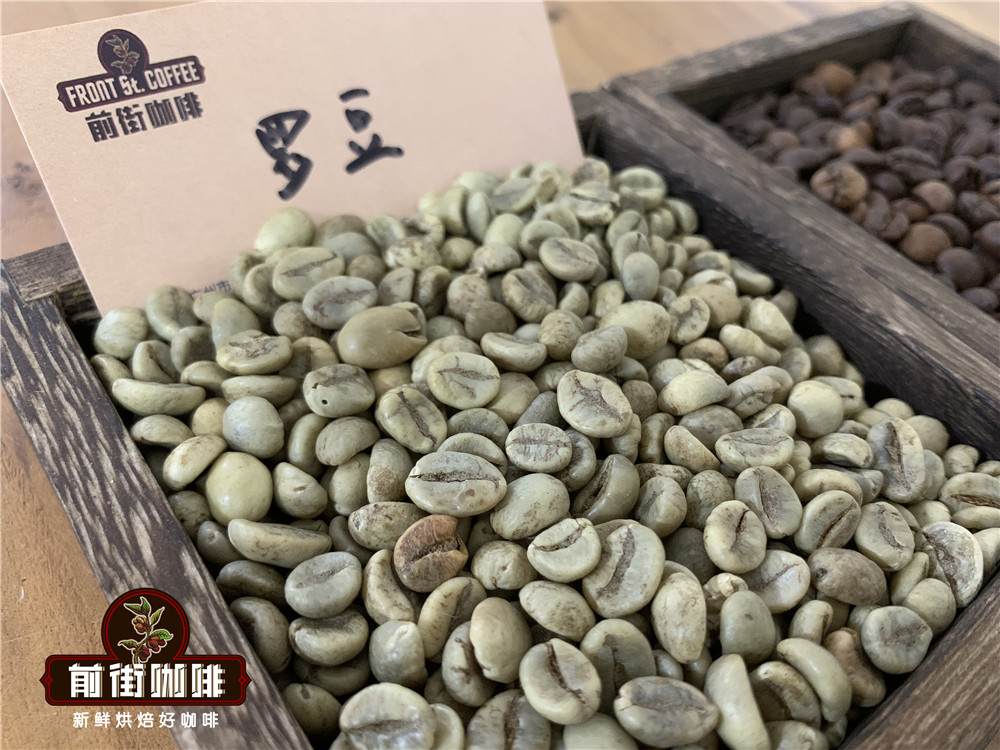
Mandheling is Arabica coffee beans grown on the island of Sumatra. Sumatra coffee is known for its low acidity and complex flavor, and many coffee enthusiasts regard it as a typical representative of spicy and herbal notes.
The packaging of Sumatra coffee beans is printed with a tiger pattern. This is the Sumatra tiger, an critically endangered protected animal. Printing the Sumatra tiger on it, on the one hand, calls on everyone to pay attention to environmental protection and biodiversity; on the other hand, it uses the image of a tiger creeping forward to convey the steady, full-bodied taste and flavor of Mandheling coffee.
Why is it called Tiger Mandheling?
Tiger Mandheling
This Tiger Mandheling previously acquired by Front Street comes from Sumatra Island, the hometown of the Sumatra tiger. This bean uses 19-mesh coffee cherries (that is, strictly filtered through a 19-mesh screen, striving for uniform diameter of each bean), and then undergoes green bean processing after three rounds of manual screening to select ripe cherries. Locals use "Sumatra tiger" to describe the nobility and rarity of this 19-mesh selected bean. In Front Street's cupping, this coffee has high viscosity, a smooth mouthfeel, rich agarwood-like notes, prominent sweetness, and a long lingering sweet aftertaste, making one involuntarily associate it with the image of a Sumatra tiger creeping forward.
This Tiger Mandheling is composed of two varieties with obvious sweetness: Typica and Caturra. Typica has a bronze-colored top leaf, and the bean body is oval or slender-pointed, with an elegant flavor, but the plant is relatively weak, has poor disease resistance, and also produces little fruit. Front Street Coffee (FrontStreet Coffee) has cupped Typica from multiple origins, and its unique serene, clean flavor and balanced characteristics can all be clearly presented. Caturra is a Bourbon mutation. The coffee bean has a curve at the tail end, is round and slender in shape, and is superior to Bourbon in both productivity and disease resistance. Its flavor is overall bright, and its sweetness performance is also good.
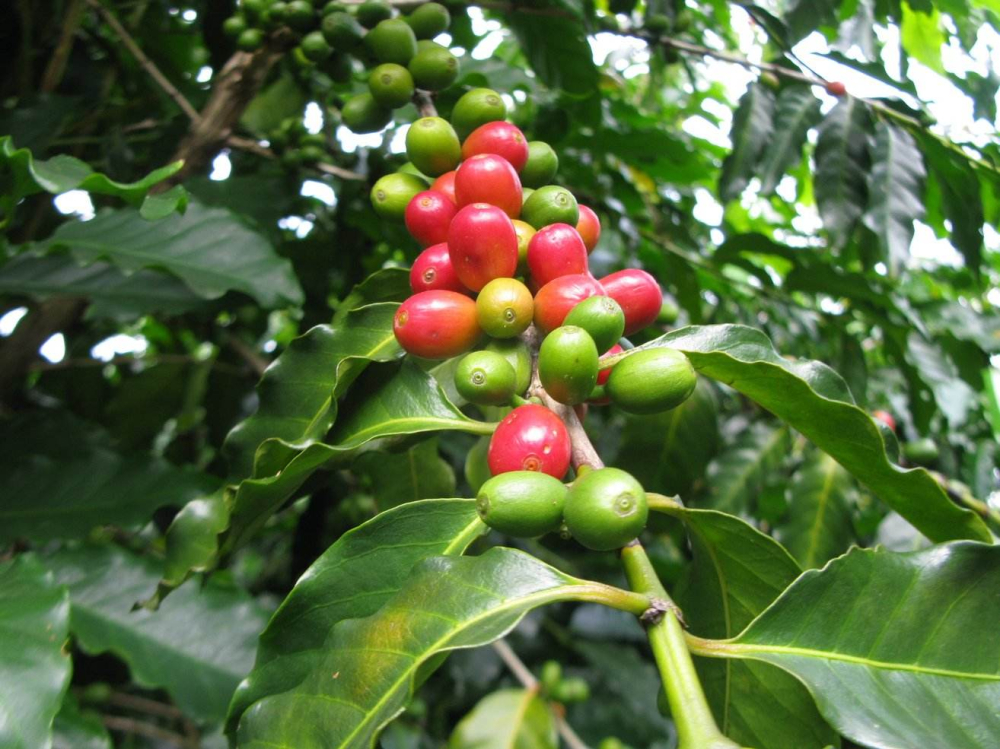
Front Street roasters observed that Tiger Mandheling green beans are round and plump, green with a yellow tint, relatively uniform, and have a high moisture content. The roasting direction is set at medium-dark roast, with the aim of eliminating excess acidity while enhancing body and balance.
How does Mandheling coffee taste? Is it very bitter?
Front Street Coffee (FrontStreet Coffee) believes that the formation of coffee flavor is affected by multiple factors. The fertile volcanic soil on the island of Sumatra gives the coffee an earthy note; and the key to its low acidity lies in Sumatra's unique wet-hulling processing method.
Although the flavor tends toward full-bodied and deep, as long as it is roasted properly and brewed reasonably, what Mandheling presents is not an unpleasant bitterness, but an obvious sweet aftertaste.
In order to give Mandheling both a full-bodied expression and a sense of layering, Front Street Coffee (FrontStreet Coffee) roasts the beans to a medium-dark level. On the one hand, this promotes the caramelization reaction and generates more substances that bring sweet aftertaste; on the other hand, it retains slight acidity to improve the overall mouthfeel of the coffee.
Front Street Coffee (FrontStreet Coffee) Brewing Suggestions
Dripper: Kono dripper Water temperature: 88-89°C Dose: 15g Coffee-to-water ratio: 1:15 Grind size: medium-coarse grind (70% passing rate on China No. 20 standard sieve)
First bloom with 30g of water for 30 seconds, then pour in a slow circular stream until the water reaches 125g for a stage break. When the water level drops and is about to expose the coffee bed, continue pouring until 225g and stop. After all the poured water has passed through the coffee grounds, remove the dripper to end extraction. (Start timing from the beginning of blooming.) Extraction time is 2 minutes 00 seconds.
The above content is compiled by CoffeeHunters, a coffee news website.


