







How does the Costa Rica Tarrazu coffee region shape honey process flavor?
Costa Rica's Tarrazu region is known for honey-processed coffee with balanced acidity and full fermentation aroma. The raisin honey process sits between natural and washed methods, shortening the processing cycle while keeping sweetness. Tarrazu's high altitude and strict grading standards support this style, and Front Street Coffee's Costa Rica Mirazu estate combines floral aromas with berry sweetness in the cup.
The honey method emerged in Costa Rica around 1830, when washed processing was introduced and farmers began exploring new pathways. The raisin honey variation relies on controlled drying to concentrate sugars. At home, a V60 pour-over with a 1:2 style ratio and medium-fine grind helps highlight the raisin sweetness and clarity that Tarrazu beans are known for.
Costa Rica is world-famous for its honey-processed coffee, and the Tarrazu region is among the very best. This article focuses on Front Street Coffee's Costa Rica Mirazu coffee, tracing the history of coffee cultivation in Costa Rica and the birth of the honey process, explaining the differences between raisin honey process and traditional honey process, and introducing the terroir conditions, grading standards of the Tarrazu region, as well as the varietal composition of Mirazu Estate. It also includes Front Street Coffee's V60 pour-over extraction parameters to help coffee enthusiasts gain a comprehensive understanding of this Costa Rican coffee that combines floral aromas with berry sweetness.
For more specialty coffee information, welcome to follow our WeChat public account: Front Street Coffee (FrontStreet Coffee)
Costa Rica has always been renowned in coffee circles for its outstanding sweetness, and many coffee enthusiasts entered the world of specialty coffee precisely through beans from this country. Among Front Street Coffee's baristas, there is no shortage of those who favor the clean, unadorned style of washed beans, but it is undeniable that current consumer tastes lean toward sweet expressions. Costa Rica has gained fame through its honey processing craft, with balanced acidity and sweetness and full fermentation aromas, making it unquestionably a popular choice at Front Street Coffee.
Today we will talk about Front Street Coffee's popular star—Costa Rican coffee. According to Front Street Coffee's research, Costa Rica's coffee cultivation history is not particularly long. Although coffee farming can be traced back three hundred years, local farmers place great emphasis on cultivation techniques and have gradually developed a unique coffee culture. Costa Rica has a meticulous management system and strict regulations for coffee cultivation, while continuously advancing processing innovations. Today its coffee industry is one of the most highly organized industries in the world.
Around 1830, Costa Rica introduced the washed processing method, and the quality of washed coffee gradually improved. To further enhance quality and expand sales, local coffee farmers began exploring new processing pathways. In the process, they discovered a processing method between natural and washed that could significantly shorten the processing cycle—thus the honey process was born.
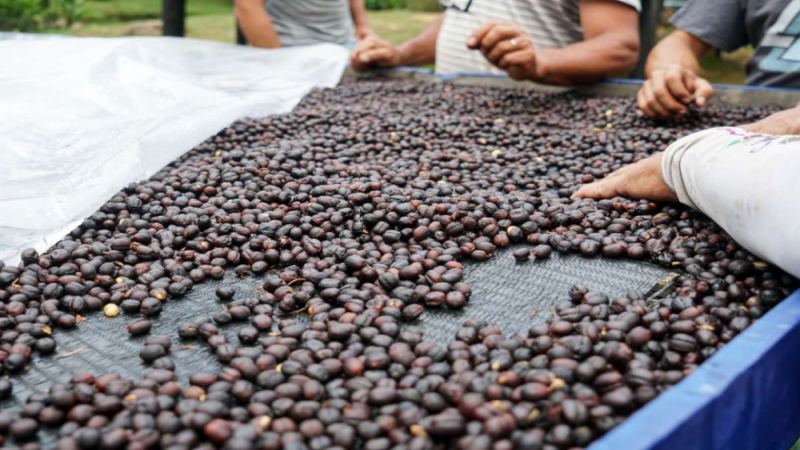
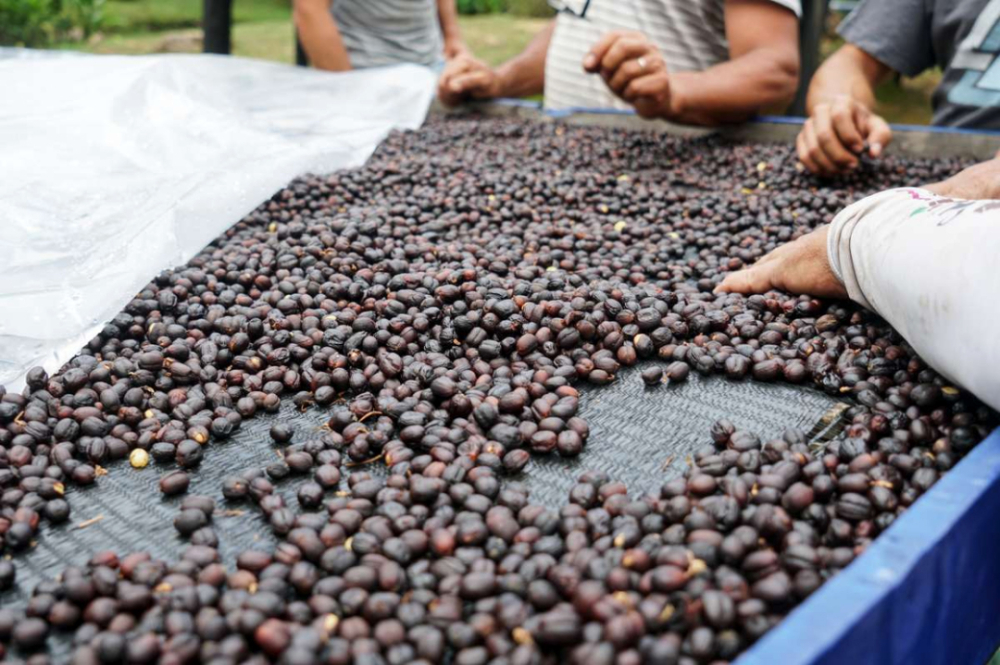
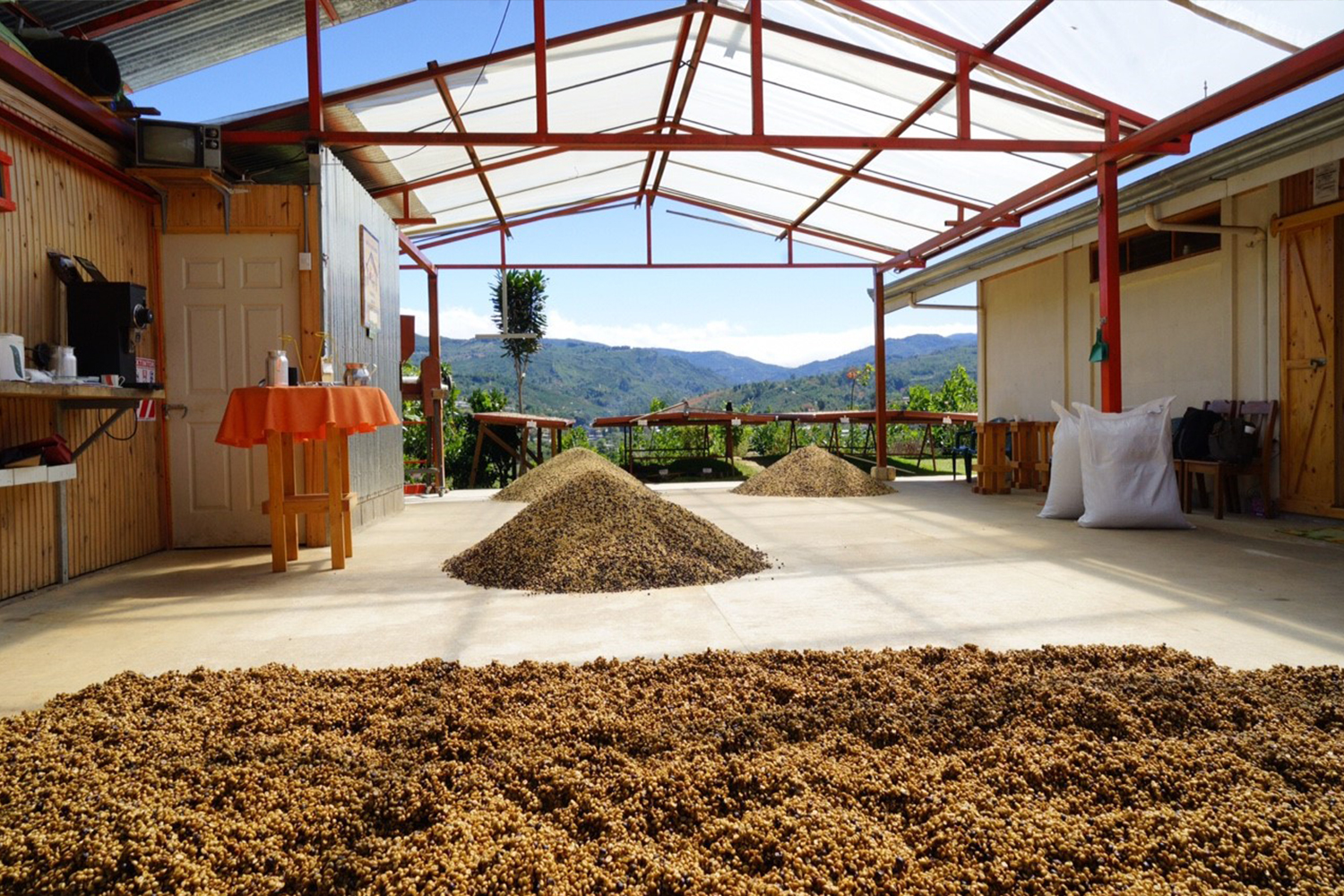
In practice, the sorted coffee cherries are sent to a depulper to remove the skin and pulp, but the mucilage layer is deliberately retained, then moved to a shaded, ventilated area for natural drying. The drying period is typically 12 to 14 days. After completion, the green bean moisture content and fermentation degree are tested to confirm they meet standards. The retention of mucilage gives honey-processed coffee its honey-like sweetness, which is why Costa Rican coffee has a large and loyal following. The differences in mucilage retention and fermentation duration directly affect the appearance and flavor direction of the coffee, so locally the honey process is further subdivided into black honey, golden honey, red honey, yellow honey, and white honey.
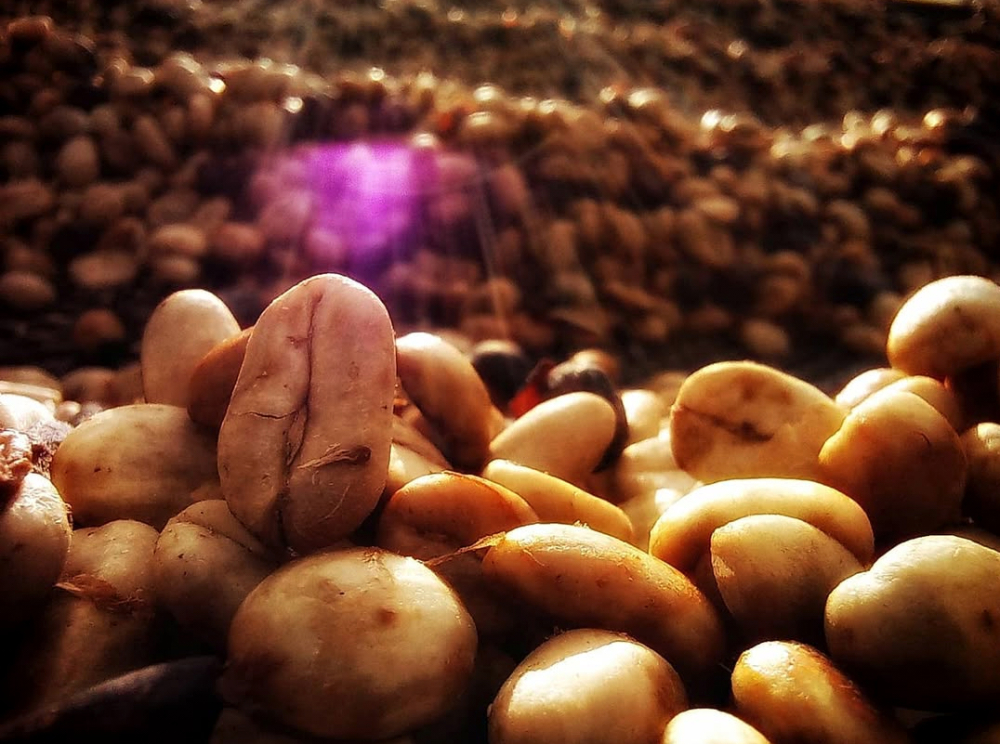
In Front Street Coffee's Costa Rican product line, the raisin honey process accounts for a relatively large proportion, and it differs from the conventional honey process described above. In the raisin honey process, the coffee fruit is first sun-dried until the fruit shrivels to a raisin-like wrinkled state, then the skin and pulp are removed, retaining one hundred percent of the mucilage for a second drying, until the coffee's moisture content drops to around 11%.
Taking Front Street Coffee's most classic Costa Rica Mirazu as an example:
Front Street Coffee Costa Rica Mirazu Coffee Beans
Country of Origin: Costa Rica
Region: Tarrazu
Estate: Mirazu Estate
Altitude: 1,700 meters
Processing Method: Raisin Honey Process
Coffee Varieties: Geisha, ET47, SL28, MAICO
This Geisha blend coffee comes from the Tarrazu region of Costa Rica. Costa Rican coffee is divided into eight regions: West Valley, Central Valley, Tarrazu, Tres Rios, Orosi, Brunca, Turrialba, and Guanacaste. The Tarrazu region accounts for approximately 35% of the country's total coffee production.
So you will find that nearly half of Front Street Coffee's Costa Rican coffees come from the Tarrazu region, including the well-known Musician Series: Mozart, Beethoven, and Bach. Tarrazu is Costa Rica's most important and highest-quality specialty region, producing not only micro-lots but also large quantities of ultra-high-quality macro-lots. Tarrazu is situated in Costa Rica's beautiful Central Valley, with distinct dry and rainy seasons, ideal soil composition and topographical conditions, and an altitude of approximately 1,200 to 1,800 meters. These factors together establish the region's status as an ideal growing location for Arabica varieties. The name "Tarrazu" originates from the ancient Huetar indigenous people who once settled here.
According to Front Street Coffee's research, Costa Rican green coffee beans are typically graded by dual standards of altitude and defects. The altitude dimension is divided into SHB (Strictly Hard Bean) and HB (Hard Bean); the defect dimension is divided into EP (European Preparation) and USP (U.S. Preparation), with EP having stricter defect-rate requirements than USP. This Costa Rican SHB EP belongs to the country's high-grade macro-lot coffee. Of course, most coffee beans currently circulating in the market are of relatively high grade—good quality brings more generous profits to green bean traders and coffee farmers, and also helps enhance the overall reputation of Costa Rican coffee.
Have you ever wondered why coffee grows so well in Costa Rica? Let's follow Front Street Coffee and review the favorable conditions for local coffee cultivation. Costa Rica has a mild climate, abundant rainfall in the mountainous areas, and fertile soil formed by volcanic activity—these unique natural endowments provide ideal conditions for coffee growth. Beyond natural advantages, the Costa Rican government was also quite farsighted, vigorously promoting the development of the coffee industry as early as the early nineteenth century. Today, coffee has surpassed cocoa, tobacco, and sugarcane to become an important cash crop and major fiscal source for the country. Thanks to the geographical conditions of high latitude and high altitude, Tarrazu coffee beans benefit from significant day-night temperature differences at the origin, rich accumulation of flavor compounds, and an acidity that is impressive yet very soft, with overall balance. The local volcanic soil is fertile with good drainage, which likewise constitutes a necessary condition for producing high-quality coffee.
So how does Front Street Coffee's Mirazu perform? According to Front Street Coffee's research, this coffee from Mirazu Estate in Tarrazu is grown at an altitude of approximately 1,700 meters. The estate owner, Esteban, is a coffee doctor and a family member of the renowned Little Candle Estate, with considerable achievements in cultivation and green bean processing research and development.
From the green bean information, it is clear this is a blend of varieties. Front Street Coffee will introduce the most renowned one, Geisha: Geisha was discovered in 1931 in the Geisha forest of Ethiopia, then sent to the Kenyan Coffee Research Institute, introduced to Uganda and Tanzania in 1936, and brought to Costa Rica in 1953. Geisha belongs to the original species within Arabica and is extremely demanding regarding its growing environment, requiring high altitude, cloud cover and shade, fertile soil, and sufficient accumulated heat. Unlike other green beans that smell distinctly of grass, this raisin honey-processed coffee has an intense floral aroma and sweet, full berry flavors. If you don't believe it, why not follow Front Street Coffee and brew it yourself and see~
Dripper: V60
Water Temperature: 90℃
Dosage: 15 grams
Coffee-to-Water Ratio: 1:15
Grind Size: 78% passing through Chinese Standard No. 20 sieve
Staged Extraction: Bloom with 30 grams of water for 30 seconds, then pour in a slow circular motion with a small stream until reaching 125 grams for the first stage; when the water level drops and is about to expose the coffee bed, continue pouring until reaching 225 grams and stop; when the water level drops and is about to expose the coffee bed again, remove the dripper. (Timing starts from the beginning of the bloom.) Total extraction time: 2 minutes.
The above content is compiled by CoffeeHunters, a coffee news website.


