







The specialty coffee market has long been dominated by Arabica varieties, but in recent years hybrid varieties such as Catimor have gradually emerged. From the perspective of Front Street Coffee, this article systematically sorts out the differences between Arabica and Robusta, reviews the history of the Catimor variety's birth due to the leaf rust crisis, and analyzes its performance in disease resistance, yield, and cupping flavor. The article also specifically introduces the origin information and brewing flavors of three beans: Front Street Sun-Dried Catimor, Yunnan Small-Bean Coffee, and Golden Mandheling, helping coffee enthusiasts fully understand the current status and acceptance of the Catimor variety.
For more specialty coffee knowledge, please follow the WeChat public account: Front Street Coffee (FrontStreet Coffee)
Most friends familiar with specialty coffee know that the specialty coffee beans currently on the market basically all belong to the Arabica species. In earlier years, many cafes also used "100% pure Arabica" as a selling point to attract customers. However, some new varieties have now emerged on the coffee market. They are not pure Arabica, but products of hybridization with Robusta. For example, Indonesia's PWN Golden Mandheling has made adjustments, no longer using the old Typica, and instead using Catimor coffee cherries for production. Next, Front Street will walk everyone through the background of the Catimor variety.
What Is Arabica Coffee
First, it is necessary to clarify the definition of Arabica coffee. Arabica coffee beans currently perform best in flavor worldwide. They have high requirements for growing altitude and must grow in high-altitude areas, which is how they can present excellent acidity and floral aromas.
As Front Street mentioned above, the specialty coffee market currently in circulation is basically all Arabica coffee beans. The reason is that Arabica can show different flavors under different producing regions and different microclimates, with rich layers of taste, making it very suitable for specialty coffee.
Moreover, many well-known varieties have derived from Arabica. For example, Typica, mentioned above by Front Street, is the oldest variety in the Arabica lineage. After Typica, there are also common coffee varieties such as Bourbon, Caturra, Catuai, and Pacas. However, Arabica is relatively delicate, prone to pest and disease attacks, and has low yields. Therefore, many coffee agronomists began researching hybrid varieties, hoping to improve the yield and disease resistance of Arabica coffee trees. Robusta varieties have quite high disease resistance and yield, so they were chosen to hybridize with Arabica, and Catimor is one of the most representative results of these research efforts.
Why Robusta Coffee Beans Are Not Used for Specialty Coffee
At this point, some coffee fans will certainly ask Front Street: Robusta has high yield and strong disease resistance, so why not use it for specialty coffee? The reason is that Robusta's caffeine content is twice that of Arabica, its flavor is more bitter, and it easily develops undesirable flavors. Cupping results are often unsatisfactory, so it is not suitable for specialty coffee. However, in espresso, it can be used as a blended bean with Arabica, making espresso's mouthfeel richer and thicker. This is also why Robusta is often used to make espresso blends or instant coffee.
The Emergence of the Catimor Variety
The birth of the Catimor variety must begin with leaf rust. Leaf rust can be called a terminal disease for coffee trees, with no cure. According to Front Street's understanding, leaf rust first appeared in 1861 in the coffee-producing region around Lake Victoria in East Africa. In 1867, it ravaged Sri Lanka, leading to the destruction of the local coffee industry. It then spread rapidly to many places in Southeast Asia, and eventually affected coffee-producing regions throughout southern, central, and western Africa.
Because of this, Catimor came into being. In 1959, Portugal's Coffee Leaf Rust Research Center CIFC developed this variety. The research direction was disease resistance, high yield, and at the same time maintaining good flavor. They selected Timor variety coffee trees derived from Robusta and crossed them with Caturra variety coffee trees derived from Arabica. The resulting new variety was named Catimor. Catimor did not disappoint. It inherited Timor's Robusta genes, so it could better resist coffee berry disease and coffee leaf rust, and had stronger pest and disease resistance overall, but precisely because of this, its performance in the cup is often criticized.
In addition, according to Front Street's understanding, Catimor fruit ripens quickly and has high yield, and it has sufficient requirements for fertilizer supply and shade conditions. At the same time, Catimor's high yield corresponds to a relatively short commercial lifespan, averaging only ten years. Through Front Street's cupping, it was found that Catimor grown at low altitude shows no obvious advantage or disadvantage in the cup compared with other commercial varieties; however, Catimor grown above 1,200 meters is clearly inferior in cup flavor to other Arabica-derived varieties.
It began to be promoted in Brazil in the 1970s and 1980s. With its characteristics of disease resistance and high yield, it gained a place among coffee varieties in Central and South America. The recurring coffee leaf rust crises in Central and South America also helped promote the application of Catimor.
The above is the relevant information about Catimor compiled by Front Street. Next, Front Street will introduce several coffee beans of the Catimor variety.
Front Street Sun-Dried Catimor Coffee Beans
Country: China Region: Baoshan, Yunnan Altitude: 1450-1550m Variety: Catimor Processing method: Red Cherry Sun-Dried Processing Flavor: Caramel, cocoa, ripe Pu'er, herbs, dried fruit, steady fruit acidity
Front Street Coffee (FrontStreet Coffee) Yunnan Small-Bean Coffee Beans
Country: China Region: Baoshan, Yunnan Altitude: 1200m Variety: Catimor Processing method: Washed Processing Flavor: Herbs, nutty aroma, chocolate, caramel
Front Street Coffee (FrontStreet Coffee) Golden Mandheling Coffee Beans
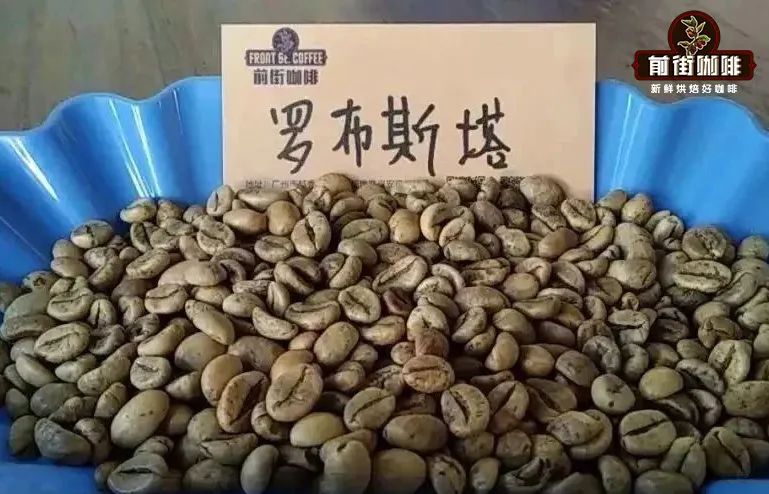
Country: Indonesia Region: Sumatra, Aceh, Gayo Mountain Altitude: 1100-1600m Variety: Catimor Processing method: Wet-Hulled Method Flavor: Baked toast, nuts, pine wood, caramel, herbs
As Front Street said above, the producing regions currently using the most Catimor coffee beans are concentrated in Asia, and the latest batch of coffee beans from the well-known Indonesian PWN Golden Mandheling indeed uses the Catimor variety. This is enough to show that Catimor is becoming better and better through continuous improvement and is gradually being accepted by coffee fans. This also breaks the fixed notion that only 100% pure Arabica coffee beans count as good coffee.
The above content is compiled by CoffeeHunters, a coffee news website.


