








What makes Panama Geisha coffee beans from Boquete so distinctive?
Panama Geisha coffee beans trace back to an unnamed variety found in Ethiopia's Geisha forest, later sent to Kenya for selection and introduced to Uganda and Tanzania in 1936. In 1970 the plants reached Boquete, Panama, as windbreaks at Hacienda La Esmeralda. A 2004 Panama competition win brought global attention to the variety's floral aroma and bright acidity.
Panama's coffee grading system sorts beans by altitude, and Hacienda La Esmeralda adds an internal red, green, and blue label system. For pour-over, a medium-fine grind and a ratio near 1:15 help preserve the ginger lily and citrus notes. Cupping notes from Front Street highlight ripe fruit, black tea, and a lasting sweet finish across these lots.
Geisha coffee is hailed as the super aristocrat of the specialty coffee world. From an unnamed variety in the forests of Ethiopia to the champion bean of Panama's Hacienda La Esmeralda, it has conquered countless coffee lovers with its elegantly floral aroma. In this article, Front Street Coffee will take you through the varietal origins and rise to fame of Geisha, analyze why Panama's Boquete region can produce such refined flavors, sort out Panama's altitude-based coffee grading system as well as Hacienda La Esmeralda's internal red, green, and blue label system, and share Front Street's cupping notes on several Panama Geishas along with pour-over parameter recommendations, so you can fully understand this coffee bean that captivates you from the very first sip.
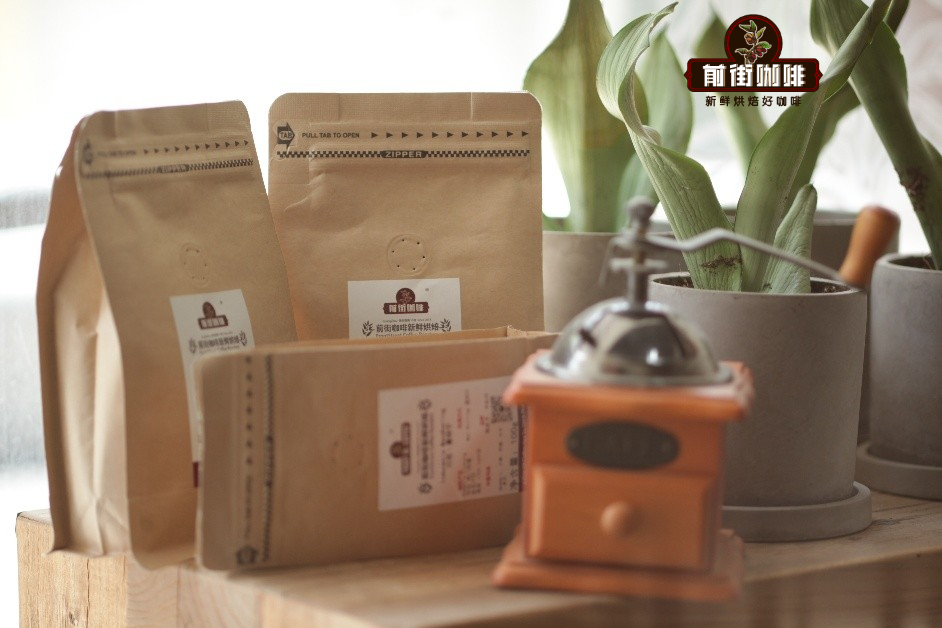
When it comes to Geisha coffee beans, what comes to mind first? Is it that striking floral aroma, or the resounding name of Panama's Hacienda La Esmeralda? Today Geisha is unquestionably a top-tier variety in the coffee world. From obscurity to household fame, how exactly has it won over more and more palates? And what legendary stories lie behind it? In this article, Front Street Coffee will talk about this coffee bean that is hard to forget once you have tried it.
The "bean life journey" of the Geisha coffee variety
Geisha was first discovered in the Geisha forest of Ethiopia. Because of its low yield, it was sent as breeding material to the Coffee Research Institute in Kenya for selection. After cultivation, Uganda and Tanzania introduced these "domesticated" Geisha plants in 1936. However, the yield remained scarce, and its cup performance was unremarkable, so farmers naturally lacked enthusiasm for planting it. In 1953, Costa Rica introduced Geisha for cultivation and found that this variety had extremely strong wind resistance, so in 1970 it was brought to the windbreak forest of Hacienda La Esmeralda in Boquete, Panama, and planted there to shelter other coffee varieties from the wind.
The turning point came in 2003, when the son of Hacienda La Esmeralda's owner was sorting green beans and was drawn by a captivating floral fragrance. Following the aroma, he found the Geisha from the windbreak forest and began separating it out on its own. In 2004, this lot was sent to compete in the BOP green bean competition (Best of Panama), and it won first place in one stroke. Geisha coffee has since formally entered the public eye. After gaining fame, Geisha was introduced for cultivation around the world. Better-known origins include Ethiopia, Guatemala, Honduras, El Salvador, Bolivia, and Colombia, among others.
Why can the Geisha coffee variety remain at the forefront of the specialty coffee world?
With the advancement of the third wave of specialty coffee, people are paying more and more attention to coffee's flavor layers, and roasting trends have gradually shifted from dark roasting to light roasting. With light roasting, Geisha's flavor layers are especially clear, capable of displaying rich floral notes, refined fruit acidity, and a tea-like sweet aftertaste. Outstanding quality naturally comes at a high price. In addition, Geisha is extremely demanding about its growing environment, and harvesting difficulty and costs remain high, while yields are very limited, so its price has always stayed high.
Is Geisha coffee from anywhere equally refined in flavor?
Although Geisha's flavor is refined, this elegance is not available just anywhere; it depends heavily on a specific growing environment. Geisha is quite particular about growing conditions, requiring high altitude, cloud cover or abundant shade trees, and fertile soil. The reason Hacienda La Esmeralda's Geisha is so enchanting is, first, that the estate has a high altitude (1400-1800 meters) with a large temperature difference between day and night, allowing the coffee beans more time to accumulate flavor compounds; second, that the Boquete region where the estate is located has fertile soil and rich, varied microclimates.
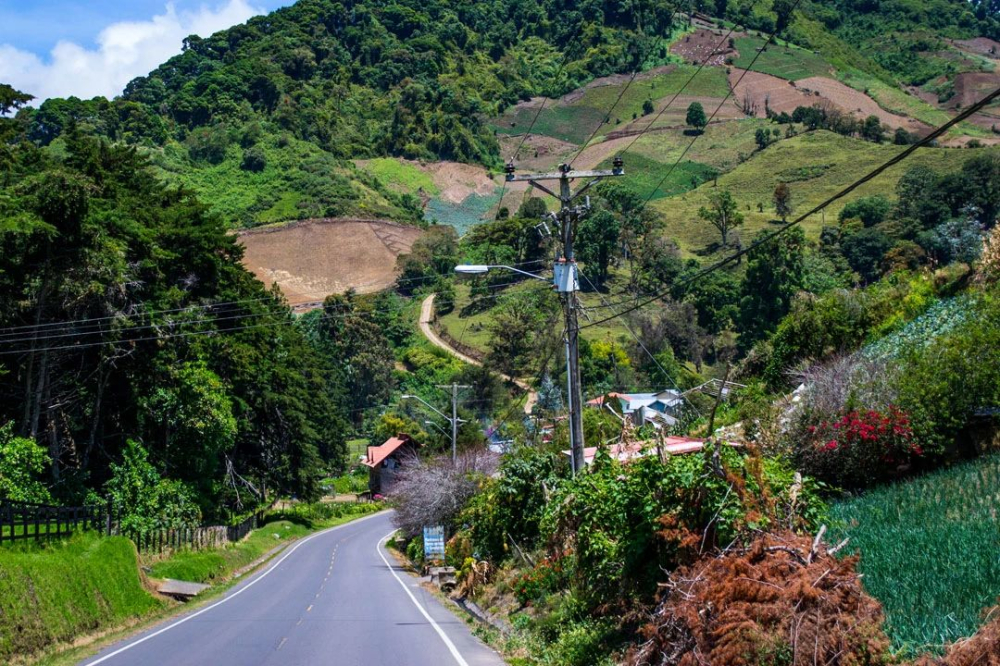
Panama's Boquete region
The coffee-growing altitude in the Boquete region ranges from 1400 to 1900 meters. It is a town under Chiriqui Province, located near the border between Panama and Costa Rica and adjacent to the famous Baru Volcano. The scenery is beautiful, the soil is fertile and deep, and both the climate and soil conditions are very suitable for producing high-quality coffee. The Boquete region is also home to many excellent estates. In addition to Hacienda La Esmeralda, there are also Elida Estate, Kotowa Duncan Estate, and others, which likewise produce high-quality specialty coffee.
This is due not only to the mild climate conditions of Panama's Boquete area and the fertile volcanic ash soil brought by Baru Volcano, but also to an important factor: the variable microclimates of this highland. Panama's east-to-west topography causes cold air currents to converge between 1200 and 2000 meters along the central mountain range. The mountain mist, rain, and changeable winds create multiple microclimates in the Boquete area, where temperature and rainfall are both very suitable for plant growth. As a result, the coffee trees here grow in ideal conditions.
Panama coffee grading
Green coffee beans are graded for export. The ultimate goal is to obtain the best cupping quality and determine coffee prices accordingly. However, worldwide there is no unified grading and classification system —each producing country has its own grading and classification standards . Grading is usually based on indicators such as altitude, bean size, and number of defective beans. Panama coffee is usually graded by the hardness of the green beans. Coffee beans grown at high altitude mature more slowly than those at low altitude, thus absorbing more nutrients and presenting more prominent flavors. So how is it graded by altitude? Front Street Coffee will tell you directly with the table below:
Not only that, in fact Panama's Hacienda La Esmeralda Geisha also has a very mature internal grading system.
Blue Label Geisha (Geisha 1500)
Grown at an altitude of 1400-1500 meters, Blue Label Geisha is a blend of Geisha coffee beans from three different major blocks of Hacienda La Esmeralda: Jaramillo, Velo, and Canas Verdes. In 2020, Blue Label Geisha added a natural processing method, but it is worth mentioning that in 2021 Hacienda La Esmeralda canceled the Blue Label Geisha grade for unknown reasons.
Green Label Geisha (Private Collection)
Green Label Geisha is composed of micro-lots from Hacienda La Esmeralda, grown in all three major blocks and using a model that blends different blocks. It possesses the classic aromas of Geisha coffee: floral, fruity, and high citric acidity, bright and light.
Red Label Geisha (Selection)
This is a group of high-altitude Geishas, grown at 1600 to 1800 meters, with cupping scores above 90 points. The coffee in this lot mainly comes from the Jaramillo and Canas Verdes blocks, including natural and washed processed coffee, with characteristics such as jasmine, fruit, and bergamot. Red Label Geisha is further divided into auction Geisha and non-auction Geisha.
Flavor performance of Panama Geisha coffee beans
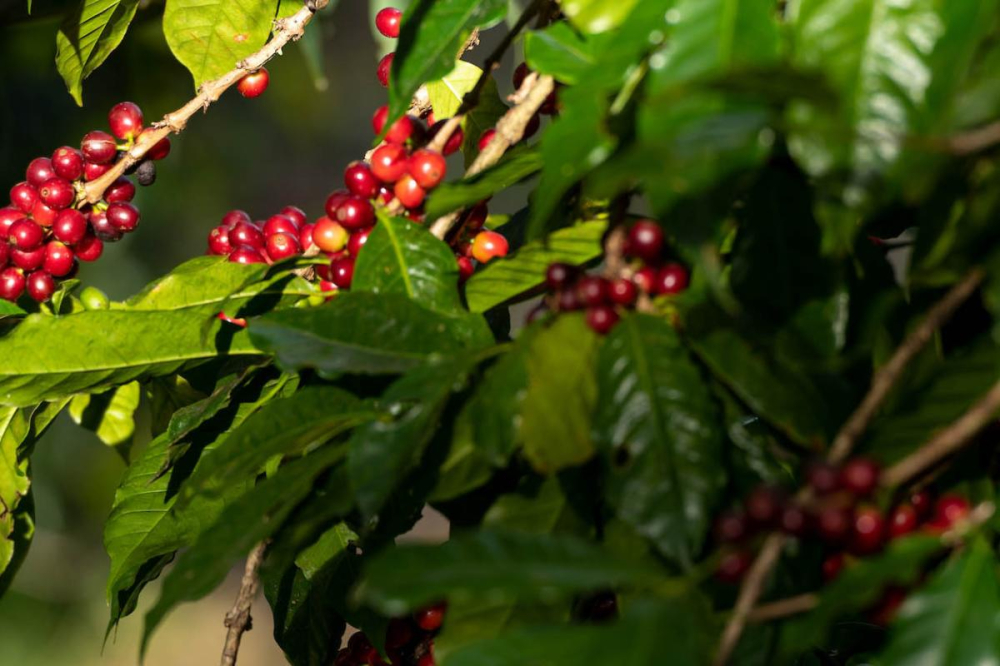
Front Street Coffee (FrontStreet Coffee) has cupped and compared many Geisha coffee beans grown in different regions of Panama. They all show outstanding floral notes, and Geisha coffee's mouthfeel presents the bright acidity of citrus fruit, the sweetness of honey, a tea-like sweet aftertaste, and an almond finish. Of course, as the growing altitude rises, Geisha coffee's flavor also becomes more delicate and clearer.
How to brew Panama Geisha coffee beans?
Front Street recommends drip brewing, that is, pour-over coffee. If you want a rich sense of layers, you can brew with a V60 dripper, while if you want a fuller coffee flavor, you can brew with a cake dripper. Front Street's daily brewing mostly uses the V60 dripper because its 60-degree angle design and spiral rib design allow you to fully extract the essence of Geisha coffee by controlling the water flow and the number of pours, while the large outlet design avoids over-extraction.
Through cupping, Front Street has learned that Panama Geisha coffee beans have very rich layers, so it is recommended to slightly lower the coffee concentration when brewing, so that the layers of Geisha coffee flavor are clearer. The recommended brewing ratio is 1:15.5-1:16, brewed at 90-91 degrees Celsius, and the recommended grind size is medium-fine (77% passing rate on the Chinese standard No. 20 sieve).
Front Street recommends a three-stage pour: first pour 30 grams of water for a 30-second bloom. Then pour in a small stream in circles until 125 grams for the first stage. When the water level drops and is about to expose the coffee bed, continue pouring until 225 grams and stop. When the water level drops and is about to expose the coffee bed, remove the dripper. The extraction time is about 2 minutes (timed from the start of the bloom).
Professional coffee knowledge exchange More coffee bean information Please follow Coffee Workshop (WeChat public account cafe_style )
For more specialty coffee beans, please add the private WeChat of Front Street Coffee (FrontStreet Coffee), WeChat ID: kaixinguoguo0925
The above content is compiled by CoffeeHunters, a coffee news website.


