







How should you adjust the grind for coffee american style?
Espresso grind setting is judged by flow rate and taste rather than by eye. Espresso grounds are finer than fine salt, and a change of just 0.1 on the grinder can shift a shot from over-extracted to under-extracted. Start with a 1:2 coffee-to-liquid ratio, then tighten or loosen the grind until the shot runs evenly and tastes balanced.
Front Street Coffee's grinder starts at a setting of 2.0, and daily production experience suggests small adjustments of about 0.1 at a time. If water passes too slowly and the cup turns bitter, coarsen the grind; if the shot runs fast and tastes thin, go finer. This method works for any coffee american style, including espresso served diluted with hot water.
Grind size has an enormous impact on espresso extraction, especially for espresso. Compared with pour-over, espresso grounds are as fine as powdered sugar, and even a slight deviation in the setting can cause the flow rate to be too fast or too slow, pushing the flavor toward either blandness or burnt bitterness. This article focuses on how to determine a suitable grind range, how to fine-tune the setting based on flow rate and flavor, and how to flexibly apply extraction formulas, helping coffee lovers consistently make delicious espresso at home. It also draws on Front Street Coffee's daily production experience to offer specific adjustment increments and judgment criteria, and recommends Front Street Classic Espresso Blend beans suited for recreating café flavors.
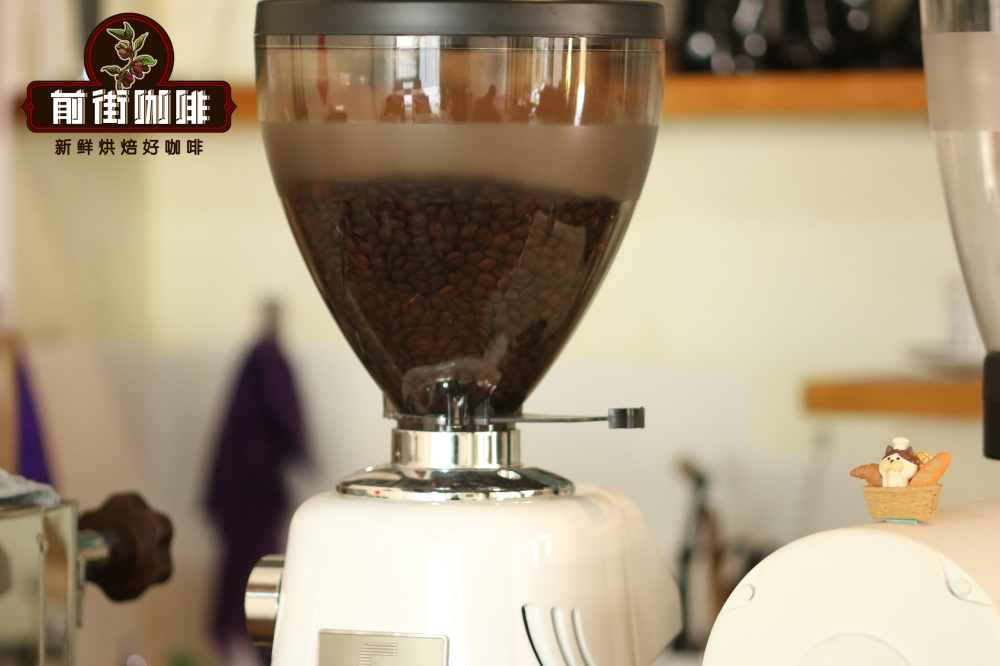
When making coffee, grind size is an unavoidable key variable. If the coarseness is not chosen correctly, or if the ground particles vary in size, extraction can easily end up under- or over-extracted. Compared with methods like pour-over and cold brew, espresso requires much finer grounds, and adjustments must be more precise to keep the espresso's flavor within the ideal range.
How fine are espresso grounds, exactly?
For pour-over coarseness, Front Street habitually uses a Chinese No. 20 standard sieve to help judge, checking how much coffee powder passes through the fixed mesh aperture to calibrate the grind. But espresso is a pressurized, short-duration extraction, where everything is amplified—good flavors and flaws alike—so the demands on grinding are especially strict. Its grounds are finer than fine salt, and the naked eye simply cannot distinguish the coarseness or uniformity, making sieve testing impractical.
If the grounds are slightly too fine, water passes through the coffee bed more slowly, easily causing over-extraction; conversely, if the grounds are slightly too coarse, water passes through more easily, leading to under-extraction. And such a big difference might come down to just 0.1 of a setting. Therefore, in practice, we judge whether the coarseness is right by observing the espresso's flow rate and tasting the flavor.
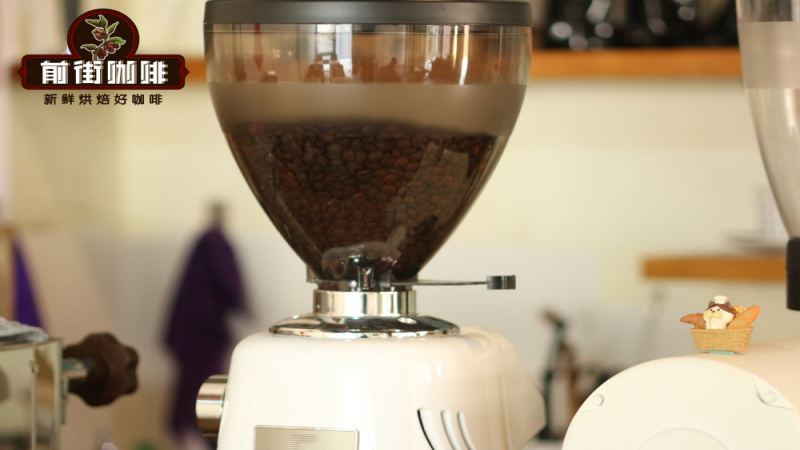
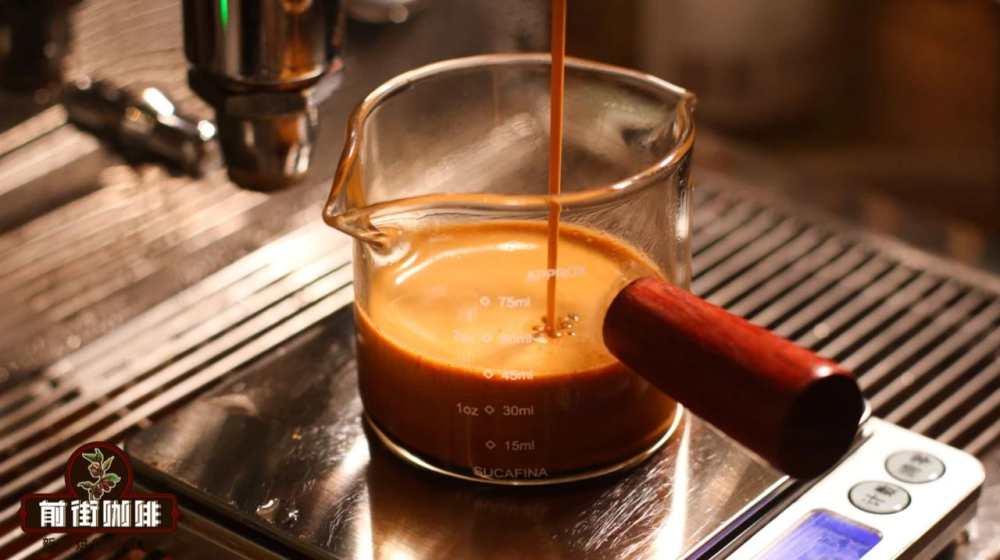
At this point, you can start by extracting with common espresso parameters. Front Street suggests a coffee-to-liquid ratio of 1:2, meaning 1 gram of coffee yields about 2 grams of liquid. The starting setting on Front Street's grinder is 2.0, and the resulting grounds look like powdered sugar to the naked eye. Using 20 grams of coffee to extract a double espresso and getting 40 milliliters of liquid in 20 to 30 seconds means the grind is roughly fine, and you can move on to fine-tuning. But if it takes less than 20 seconds, the flow rate is too fast, and you need to lower the setting to make the grounds finer; if it exceeds 30 seconds, the flow rate is too slow, and you need to raise the setting to make the grounds coarser.
How do you first establish a suitable grind range?
When you get a bag of unfamiliar beans and want to brew something tasty, the first thing is to figure out roughly where the grind setting should be. If the grinder hasn't been used yet and you're not sure which setting is right, you can first grind a small amount of beans at different settings to test. When the coffee powder feels like flour—soft and smooth with no grittiness—it's about right.
A fast flow rate means water passes through the coffee grounds too quickly, and the flavor tends to be weak or sour, so you need to grind finer. Adjusting the setting relies heavily on accumulated daily experience: if you're within 5 seconds of the target time, you can move 0.2 increments at a time; if you're further off, be bolder and adjust 0.5 to 1 increment at once. Even if you go from too long to too short, this helps you lock in a rough range and then narrow it down gradually. By the same logic, too slow a flow rate means the grounds are too fine, water struggles to penetrate the bed, and the flavor easily turns bitter, so you need to grind coarser.
How do you find the exact grind setting?
Applying the formula earlier is just to quickly find a usable grind range; it doesn't mean the resulting espresso will necessarily taste good. Ultimately, you still need to combine the beans' own characteristics with the actual flavor to judge whether the extraction is on point.
If the espresso tastes distinctly burnt-bitter but the strength is still moderate, it may be that the extraction time is too long and bitter compounds have been released excessively—you can grind slightly coarser. If the crema on the surface is pale in color and looks thin, it may be that the tail end of the extraction has gone on too long; you can reduce the liquid weight, meaning extract less, and it's suggested to raise the coffee-to-liquid ratio to between 1:1.5 and 1:1.7. If the espresso has a rich flavor but a short finish, you can extract a bit more, trying to push the ratio to 1:2.5.
In the end, the extraction formula is just a reference. If you're rigidly bound by it, it actually becomes hard to dial in good flavor, and you end up constantly adjusting the grind and wasting beans for nothing. 1:2 isn't necessarily the golden ratio for a given bean—sometimes 1:1.7 tastes better, sometimes 1:2.5 is what's right. Nor does the time have to be locked at 25 to 30 seconds; 36 seconds or 24 seconds might be when this bean performs best. Front Street is a café with daily production, and parameter adjustments rely more on accumulated experience. If you're making only a few cups at home and find it hard to judge, Front Street suggests recording the parameters and flavor each time and summarizing the relationship between extraction parameters and taste, so adjustments become faster and unnecessary waste is reduced.
Choosing the right coffee beans
Actually, in making espresso, besides dialing in all the parameters, Front Street believes choosing the right beans is equally important, because they are the fundamental factor determining whether the coffee tastes good.
If you want to make café-style espresso at home, we recommend trying Front Street Classic Espresso Blend coffee. This blend is composed of beans from three origins—Brazil, Indonesia, and Vietnam—combining the caramel sweetness of American coffees with the wild character of Asian coffees. To maximize the rich aroma and to make it easy for everyone to extract a rich, dense crema, Front Street Coffee uses a deep roast. Whether you add water to make an Americano or add milk to make a latte, it's a great fit, and you can order it from the Front Street Taobao store or the Front Street Tmall flagship store.
The above content is compiled by CoffeeHunters, a coffee news website.


