







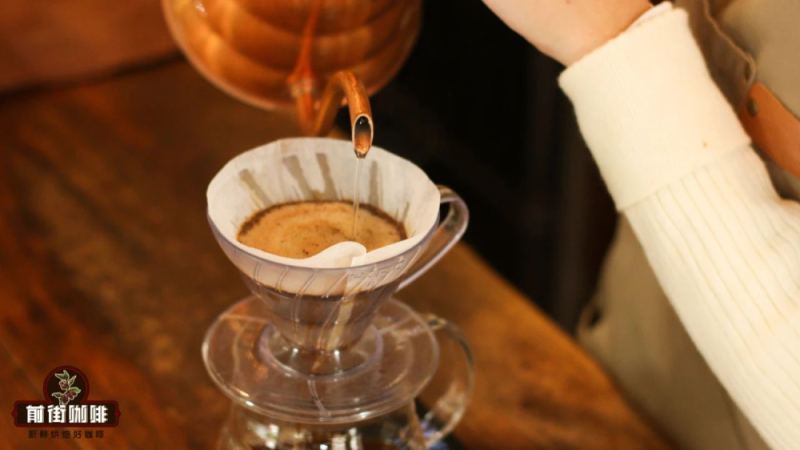
Many coffee enthusiasts often wonder: why does coffee brewed with the same V60 dripper taste bland? Front Street Coffee systematically sorts out the key points of V60 brewing from six dimensions: coffee bean freshness, grind size, coffee-to-water ratio, water temperature, pouring technique, and time. The article first analyzes how the 60-degree cone angle, spiral ribs, and large hole of the Hario V60 dripper work together to affect flow rate and extraction, then breaks down the mechanism by which each parameter affects flavor one by one, and finally takes Ethiopian Yirgacheffe Gutingding as an example to provide a reusable three-stage brewing method and flavor description, helping readers find the direction for adjustment.
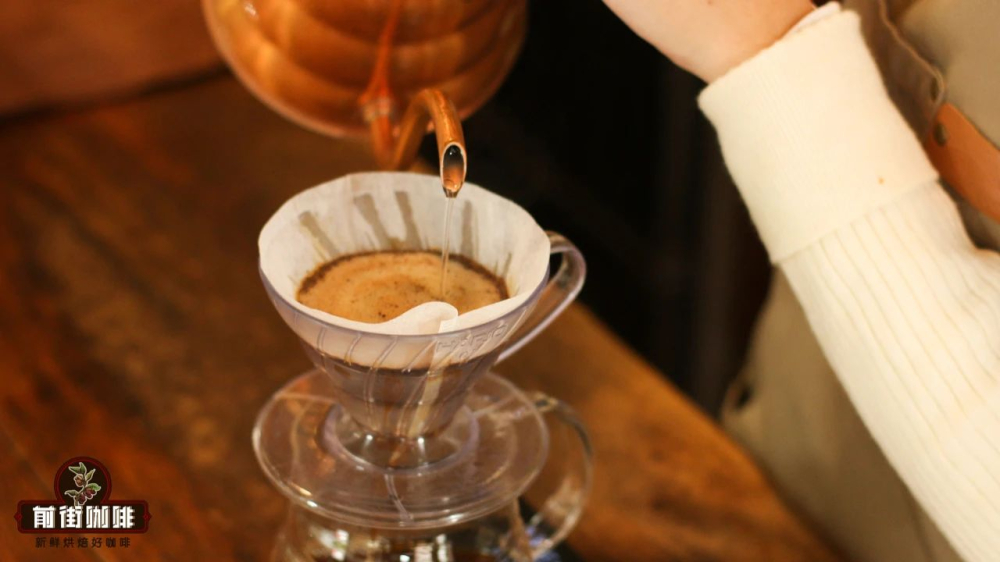
For more specialty coffee knowledge sharing, please follow: Front Street Coffee
Front Street Coffee often encounters customers asking: "I also use a V60, why does the coffee I brew have no taste?" Faced with such doubts, Front Street's baristas usually troubleshoot the reasons one by one from the aspects of bean freshness, grind size, coffee-to-water ratio, water temperature, pouring technique, and total extraction time. This time, Front Street Coffee has organized V60 brewing-related knowledge into an article to discuss it with everyone.
V60 Dripper
The V60 dripper launched by the Japanese company Hario has almost become a classic tool that nearly every pour-over beginner owns. The name V60 comes from the 60-degree angle used in its conical structure, and the naming method is quite straightforward. Hario determined the value of 60 degrees after repeated testing, with the aim of allowing coffee grounds to gather together in a concentrated way. When pouring, the water flow also converges toward the center of the dripper, thereby ensuring sufficient contact time between water and coffee grounds and ultimately extracting the ideal coffee liquid.
The Principle of the V60 Dripper
The V60 dripper also has another notable structural feature—the spiral ribs on the inner wall of the cup, spiraling from the bottom all the way to the rim. These ribs are responsible for guiding flow, creating gaps between the filter paper and the cup wall, allowing water to pass through more smoothly. The flow rate is therefore relatively fast, and among many drippers it belongs to the category with faster drainage. In addition, the ribs of the V60 run clockwise. If you pour in a circular motion along the pattern, the water flow will be smoother; conversely, pouring counterclockwise will slow the flow rate. The large-diameter outlet hole at the bottom of the cup is also designed to speed up the passage of water.
After understanding the characteristics of the V60 dripper, let us then break down item by item the freshness, grind size, coffee-to-water ratio, brewing water temperature, brewing technique, and brewing time mentioned earlier.
Coffee Bean Freshness
The freshness of coffee has a huge impact on the quality of the final cup. If roasted coffee beans are stored for too long, their aroma and flavor will gradually be lost. Front Street believes that the best tasting period for freshly roasted beans is within 30 days; after more than 30 days, aromatic molecules decrease as carbon dioxide is released. If it has been more than two months since the roast date, the brewed coffee is very likely to be unremarkable and bland.
Grind Size
The finer the grind, the easier it is for coffee grounds to accumulate at the bottom of the filter paper, increasing the resistance to water flow, slowing the flow rate, prolonging the extraction time, and raising the extraction yield. The final cup will be stronger, and may even bring out miscellaneous flavors such as woody notes;
The coarser the grind, the larger the gaps in the coffee bed, the less coffee powder the hot water can contact, the weaker the resistance, the faster the dripping speed, and the lower the extraction yield, so the flavor will also be lighter.
Front Street Coffee's recommendation is: for medium-light roasted beans, use a grind size like fine granulated sugar (EK43s grinder setting 9–10); for medium-dark roasted beans, use a coarse granulated sugar size (EK43s grinder setting 10–11).
Coffee-to-Water Ratio
Based on the SCA Golden Cup extraction theory, the following lists the taste differences corresponding to different coffee-to-water ratios in pour-over coffee:
[Strong taste] 1:10–1:11, which is 1:12.5–1:13.5 under the Golden Cup standard
[Moderate taste] 1:12–1:13, which is 1:14.5–1:15.5 under the Golden Cup standard
[Light and fresh] 1:14–1:16, which is 1:16.5–1:18.5 under the Golden Cup standard
When the ratio of coffee bean grams to brewing water volume falls within the range of 1:14.5–1:15.5, it is easiest to hit the golden range of 18%–22% extraction yield and 1.15%–1.35% concentration. This is also the reason why Front Street Coffee always recommends brewing at 1:15.
Brewing Water Temperature
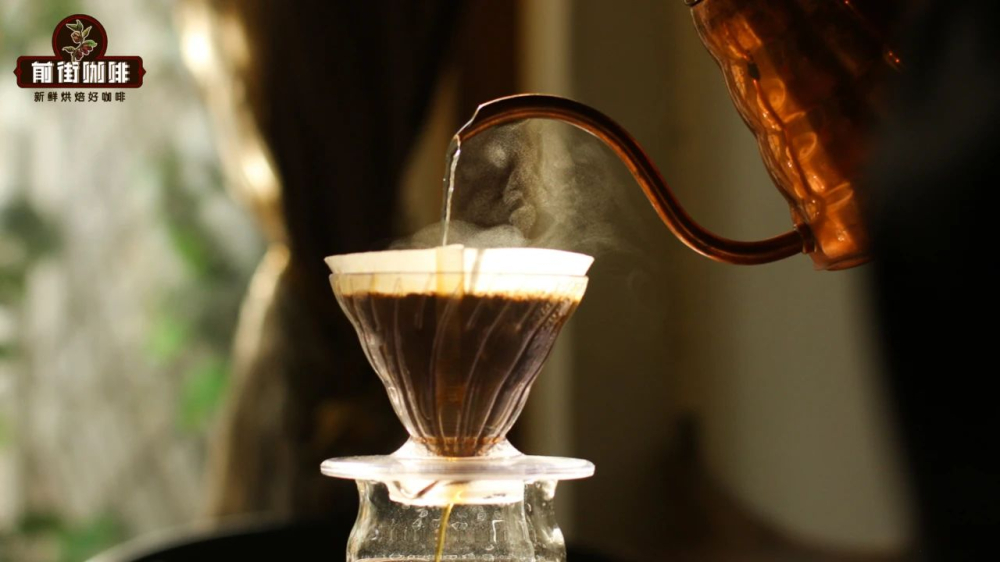
Front Street Coffee recommends: use a water temperature of 90–91°C for medium-light roasted beans, and 88–89°C for medium-dark roasted beans.
Without changing the grind size, if the brewed coffee tastes bitter and scorched-astringent, you can lower the water temperature to correct it; conversely, if you feel the taste is thin, it means a large amount of flavor substances remain in the coffee grounds, and at this time you may try increasing the water temperature.
Suitable water temperature combined with good extraction presents a positive and pleasant aroma and flavor—rich acidity with a sweet-and-sour sensation like plum or stone fruit, excellent overall cleanliness, clarity, and transparency, clear flavor identification, delicate and vivid acidity, reminiscent of fruit and even wine, with a quite lasting finish in the mouth that is memorable.
Brewing Technique
When brewing with the V60 dripper, Front Street Coffee usually uses three-stage pouring. Here, Front Street Kenya Little Tomato is used as an example for demonstration.
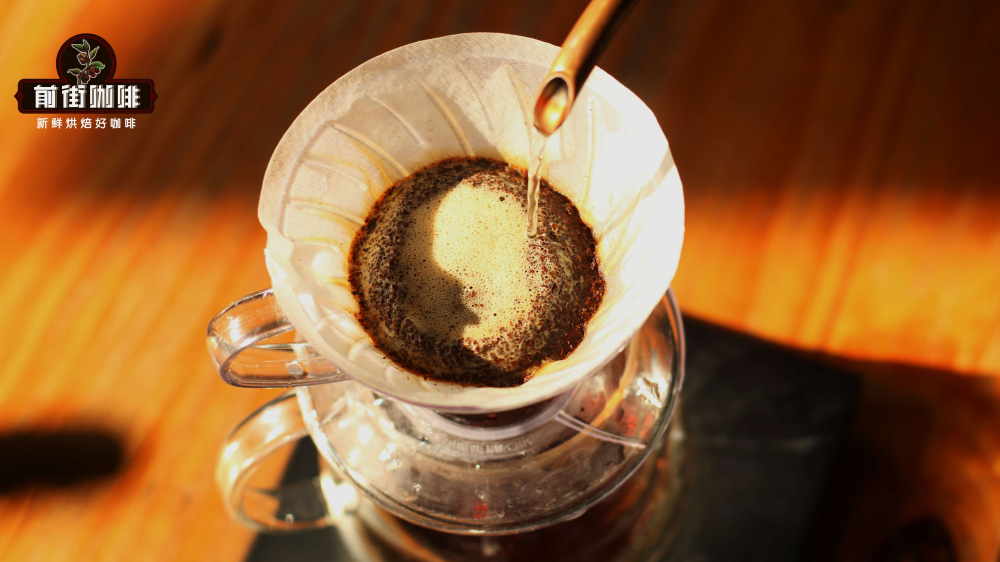
In the first stage, blooming, pour in water at twice the weight of the coffee grounds, that is, 30g of water, and bloom for 30 seconds. The so-called blooming means that after the coffee grounds come into contact with water and are saturated, the coffee cells begin to release molecules. After wetting the coffee grounds, pause pouring. Wait until the carbon dioxide is completely released and the coffee bed no longer expands before continuing to add water. Only in this way can a better extraction effect be achieved.
The second and third stages of extraction refer to the process in which soluble substances in the coffee cells dissolve into the hot water. A coffee bean is 70% cellulose that does not dissolve in water, and the remaining 30% consists of soluble flavor molecules that, after contact with water, are released in order according to molecular size. The first to dissolve are small-molecule substances, including acidity and aroma, such as floral notes and citrus acidity; next are medium-molecule sweetness, such as juicy sweetness, honey sweetness, and brown sugar sweetness; only at the end come large-molecule bitter and roasted notes. This is the reason why coffee has layers of variation.
Brewing Time
During extraction, the aroma and taste in the early stage are intense and the concentration is relatively high. The later the stage, the lighter the taste and aroma. At the same time, the amount of water poured will also affect the extraction time. If the amount of water poured is large, the water will flow straight down noisily, and the extraction time will naturally be compressed. Front Street is used to making a cup of coffee with 15g of grounds. At a coffee-to-water ratio of 1:15, the brewing time is controlled within 2 minutes to 2 minutes 30 seconds, which makes it less likely to over-extract or under-extract.
Below, Front Street uses Front Street Gutingding from Ethiopian Yirgacheffe to see the flavor performance brewed with the V60 dripper.
Region: Yirgacheffe Gedeo Zone
Altitude: 1900-2300m
Variety: Heirloom
Processing Method: Washed
Grade: G1
Front Street Coffee Brewing Parameters
Water temperature: 90–91°C
Grind size: EK43s setting 10 (fine granulated sugar size)
Coffee-to-water ratio: 1:15
Front Street brewing technique: In the first stage, pour 30g of water and bloom for 30 seconds, then pour 95g (the electronic scale shows about 125g), finishing the pour in about 1 minute; when the water level drops to 2/3 of the coffee bed, pour the remaining 100g (the electronic scale shows about 225g), finishing the pour in about 1 minute 40 seconds. Dripping ends at 1 minute 55 seconds to 2 minutes. Remove the dripper, and extraction is complete.
Brewing flavor: The entry is a bright citrus-like acidity, accompanied by the full mouthfeel of berry juice, with a clear oolong tea note.
The above content is compiled by CoffeeHunters, a coffee news website.


