








How does C. arabica relate to Catimor, and why does Yunnan grow it?
Catimor is a coffee variety bred in Portugal in 1959 as a cross between the Timor Hybrid, which resists coffee leaf rust through its Robusta lineage, and Caturra. The goal was high yield, strong disease resistance and a short stature suited to dense planting. It was first introduced to Brazil in 1970 and spread quickly through Latin America, and it has been rooted in Yunnan for a long time.
The variety has clear drawbacks and does not suit high altitudes, but between roughly 700 and 1000 meters it performs at its best, which is why it is mostly planted at low to medium altitudes. Early widely used types include CR-95, released around 1995, along with Catimor 129 and Catimor F6. Its room for improvement remains substantial, and quality continues to rise.
The Catimor variety has been rooted in Yunnan for a long time. Although it has quite a few shortcomings and is not suitable for cultivation at high altitudes, its potential for improvement is considerable, and its quality today continues to rise. Front Street has always believed that rather than dwelling on its drawbacks, it is better to uncover its strengths and make good use of them. This article will begin with the breeding history of Catimor, trace its global spread, cultivation characteristics, and cupping performance, and extend to Yunnan coffee's achievements in recent years and its future direction. It also includes Front Street Golden Mandheling's brewing parameters and an introduction to some Catimor subspecies.
Catimor has taken root in Yunnan for quite a long time. Although this variety has many defects and is completely unsuitable for planting at high altitudes, its room for improvement remains substantial, and its performance has already been getting better and better. Front Street believes that the key lies in how to discover more of its strengths and put them to use. Today, let us walk you through Catimor coffee in detail.
Catimor was bred in Portugal in 1959 by researchers who were trying to find an ideal combination of high yield, strong disease resistance, and a short stature (for higher-density planting). This variety is a cross between the Timor Hybrid (which can resist coffee leaf rust because of its Robusta genetic lineage) and Caturra, belonging to a group of pure-line cultivars derived from crosses between Hibrido de Timors and Caturra, and it began to be distributed and promoted starting in the 1980s. It is known for high yield and resistance to coffee leaf rust and coffee berry disease (CBD). One of the earliest widely used Catimor varieties was CR (Costa Rica) 95, released around 1995. Other varieties include Catimor 129 and Catimor F6.
Catimor was first introduced to Brazil in 1970, and not long afterward, driven by experts looking for high-yield, high-production coffee varieties, the plant spread rapidly throughout Latin America. At high altitudes and extremely low altitudes, the plant tends to grow poorly. But between about 700 and 1000 meters, it is at its best. Because it is mostly planted at low to medium altitudes, coffee berry borer and other pests and diseases are more prone to occur, which has plunged many farmers growing Catimor into great difficulty. In addition, Catimor coffee also has an obvious problem of a relatively short lifespan; in Indonesia, for example, the average lifespan of a Catimor tree is only a short 10 years.
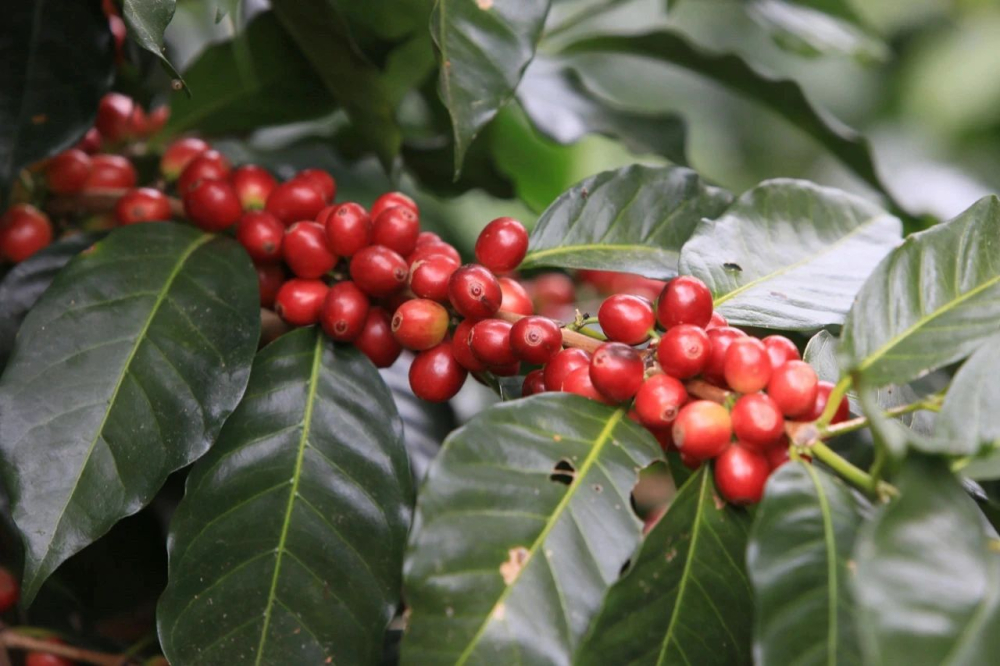
The Catimor tree is short, can be planted at higher density, and its fruit ripens quickly. With proper management, it can ensure relatively high yields. Its branches are similar to those of C. canephora plants, and the young leaves have a distinct reddish-brown color when they first emerge. One of the main difficulties in cultivating Catimor may be the inputs required to maintain yield (fertilization and shade), which demands extremely close monitoring and is costly.
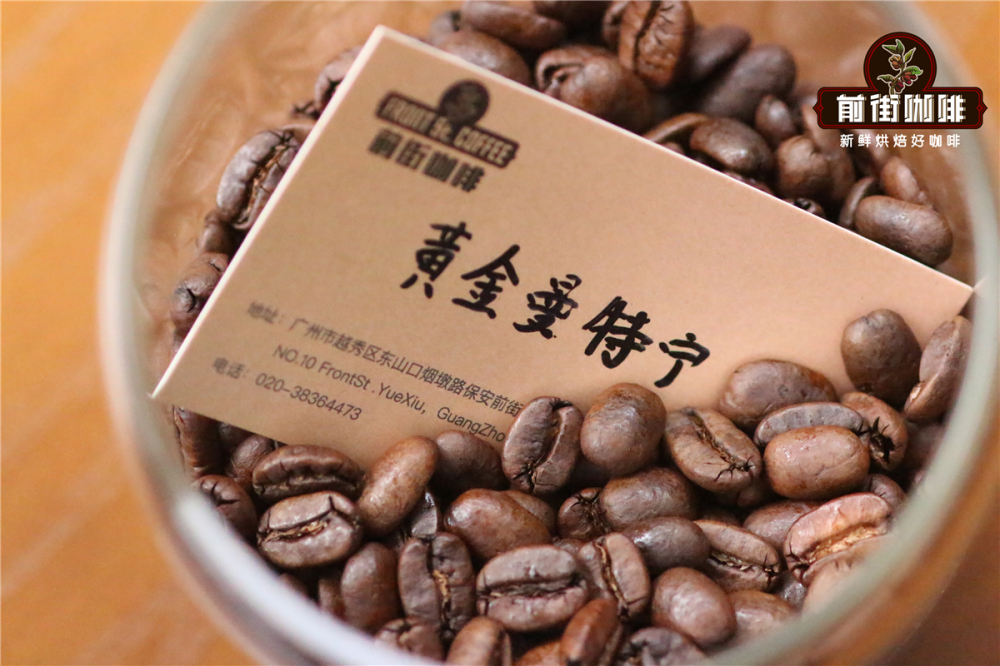
Today, Catimor is very common in Indonesia and Vietnam. After the coffee leaf rust crisis in Central America, it also became increasingly widespread at high altitudes in countries such as Mexico and Peru. One of the most frequently mentioned issues about Catimor is cup quality. At low altitudes, the sensory differences between this variety and other C. arabica varieties are often small or even nonexistent. However, when the plant is grown above 1200 meters, the flavor changes. In this case, many people say they prefer Caturra, Bourbon, and Catuai. Still, Front Street has indeed encountered Catimor that we really like, such as the Front Street Golden Mandheling coffee from Indonesia.
Friends who know Front Street should know that the coffee variety of the new-season Golden Mandheling is "Ateng," which sounds like a very unfamiliar coffee variety. In fact, it is just that Indonesia has different local names for coffee varieties. For example, what Indonesia calls timtim is what we call "Timor." And Ateng is the local Indonesian name for Catimor.
FrontStreet Coffee brewing suggestion Dripper: Kono dripper Water temperature: 86°C Dose: 15 grams Coffee-to-water ratio: 1:15 Grind size: medium-fine grind (70% passing through a No. 20 sieve)
Pulse pouring
Use 30 grams of water for a 30-second bloom, then pour in a small stream in circles until 125 grams for the pulse, and when the water level drops and is about to expose the coffee bed, continue pouring until 225 grams and stop. When the water level drops and is about to expose the coffee bed, remove the dripper. (Start timing at the beginning of the bloom.) The extraction time is 2'00".
Fine herbal notes, with caramel sweetness very prominent, and the fruity acidity is relatively steady and elegant. The sweetness is rich, with a mellow, wild spice character. Therefore, Front Street believes that carefully tended and properly processed Catimor can display very good characteristics.
An introduction to some subspecies of Catimor coffee beans is as follows:
Catimor T-8667 — a rather short plant that produces very large berries and seeds. Catimor T-5269 — a vigorous plant that adapts well to growing altitudes between 600-900 meters, with annual rainfall exceeding 3000 millimeters. Catimor T-5175 — a high-yielding and robust plant, mostly grown at higher altitudes. At the beginning, we mentioned that Catimor coffee has taken root in Yunnan. Now let's follow Front Street to learn about the specific situation of Yunnan coffee, including exactly what proud achievements it has made!
In recent years, Yunnan coffee beans have made great progress. Two existing achievements are that it was selected for China's specialty coffee, including being chosen as the "National Portrait" at the 2018 Specialty Coffee Association trade show in the United States, and that the first Specialty Coffee Association event was held in Pu'er, Yunnan (China). Overall, Yunnan's Catimor coffee has a relatively strong vinous note, high sweetness, and a balance between classic citric acidity and a rich creamy texture. Yunnan's latitude means that nighttime temperatures at higher altitudes are much lower, which gives the beans a sweeter quality. This is because lower temperatures bring a slower growth cycle, thereby extending the beans' development time. A longer maturation period brings additional sweetness.
Yunnan coffee benefits from a unique geographical environment and climatic conditions, forming a distinctive style that is rich but not bitter, aromatic but not harsh, and slightly fruity. Coffee quality depends on multiple factors such as growing environment, climate, and cultivation management techniques. Its best growing environment is low latitude, high altitude, ample rainfall, and suitable sunlight, but other regions in this same belt, such as Hawaii in the United States and Saudi Arabia, either have too low an altitude or are deserts with little rain. Only Yunnan's Simao, located in this same belt, happens to possess all the suitable conditions, thus creating the unique mellow flavor of Yunnan coffee. The often-mentioned cup quality issue of Catimor coffee is actually very simple when you think about it carefully.
Catimor was developed as an ultimate "commercial" coffee. Front Street believes there are no bad varieties, only varieties planted in bad spaces, or coffee processed in bad ways. In recent years, Yunnan has improved coffee quality and increased coffee bean yields through a series of technology introductions and improvements, creating training opportunities for farmers, and various other measures. The Yunnan International Coffee Exchange, as a service platform and trading platform for the coffee industry, will work through deep cooperation with SCAJ to jointly promote the development of the coffee industry. The future of Yunnan coffee needs government support, and even more, it needs coffee farmers and coffee enterprises to work hand in hand, step by step, so as to achieve coffee with a unique Yunnan flavor, a specialty coffee bean that can represent China, and a place in the world's specialty coffee community. This path of development is very long and takes time.
Professional coffee knowledge exchange More coffee bean information Please follow Coffee Workshop (WeChat public account cafe_style )
For more specialty coffee beans, please add the private WeChat of FrontStreet Coffee. WeChat ID: kaixinguoguo0925
The above content is compiled by CoffeeHunters, a coffee news website.


