







On the coffee map of Africa, Ethiopia, Kenya, and Rwanda are often mentioned, while Tanzania also holds an important place, known as one of Africa's coffee big three, and once dubbed the "coffee gentleman" by Europeans. This article will outline Tanzania's geographical and climatic conditions, explain how coffee was introduced and developed into a cash crop, focus on the advantages of altitude, soil, and water sources in the Kilimanjaro producing region, analyze the characteristics of the Typica variety, and the washed processing flow. At the end, it includes the producing region, altitude, variety, processing method, and brewing parameters of FrontStreet Coffee's Kilimanjaro coffee beans for coffee enthusiasts' reference.
There are quite a few well-known coffee-producing countries on the African continent, including Ethiopia, Kenya, and Rwanda, but there are also some origins equally worth attention. Tanzania is one of them; it is known alongside two other African countries as Africa's coffee big three, and Europeans once gave it the elegant nickname "coffee gentleman."
Tanzania
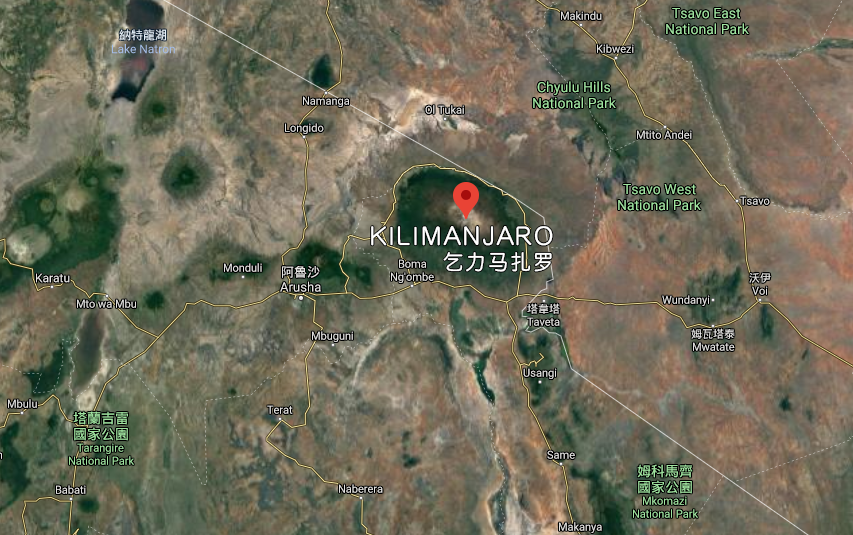
Tanzania is located in East Africa, south of the equator, a country that has both a coastline and inland territory. To its east lies the Indian Ocean, and it also borders eight countries including Kenya and Uganda. The national terrain shows a pattern of high in the northwest and low in the southeast, overall like a staircase. The East African Rift Valley splits into eastern and western branches from Lake Malawi, running north-south through the country; in the northeast, the main peak of Mount Kilimanjaro, Kibo Peak, at 5,895 meters above sea level, is the highest peak in Africa.
The eastern coastal and inland lowland areas of the country have a tropical savanna climate, while the western inland plateau has a tropical mountain climate. The annual average temperature ranges from 21°C to 26°C. Coffee trees are mainly distributed in the Kilimanjaro and southern regions. Mount Kilimanjaro is an extinct volcano with a relatively high altitude, which gives Tanzanian coffee a full body, moderate acidity, and rich aroma. Compared with neighboring Kenya, its acidity is less bright and appears softer, but its sweetness is more prominent, and its red-wine-like flavor is more intense.
Coffee Development
In the historical records of coffee, coffee was introduced to Tanzania from Ethiopia in the 16th century, and by the German colonial period, coffee had become an economic crop in the country. Currently, the varieties grown in Tanzania include Typica, Bourbon, Kent, and disease- and disaster-resistant varieties independently developed by the country.
In 1925, the first cooperative union (KNRA) was established, and its producers enjoyed considerable freedom and could sell coffee directly to London. In 2001, the Tanzanian Coffee Research Institute (TaCRI) was established and put into operation. This is a non-profit organization with the goal of revitalizing Tanzania's coffee industry and enhancing its international visibility.
Mount Kilimanjaro
In Tanzania, coffee is mainly grown on Mount Kilimanjaro and in the southern region, of which 85% comes from small farms. Mount Kilimanjaro is snow-capped year-round and is the highest mountain on the African continent. The coffee-growing belt is located between 1,050 and 2,500 meters above sea level. Sufficiently high altitude, volcanic soil, and pure snowmelt water sources constitute the most suitable conditions for growing coffee. The harvest period in the Kilimanjaro producing region is from July to December each year, and the main varieties grown are Bourbon, Typica, and Kent.
Typica
Typica is one of the most important Arabica varieties in world coffee genetics. This variety has relatively tall plants, low yield, and is susceptible to major diseases, but its quality is excellent, and it is suitable for growing in high-altitude areas; the higher the altitude, the better the quality. Because Typica has low yield and is highly susceptible to the main coffee diseases, it has gradually been replaced by other varieties in most parts of the Americas, but it is still grown in Peru, the Dominican Republic, and Jamaica; Jamaica Blue Mountain is its masterpiece.
Washed Processing
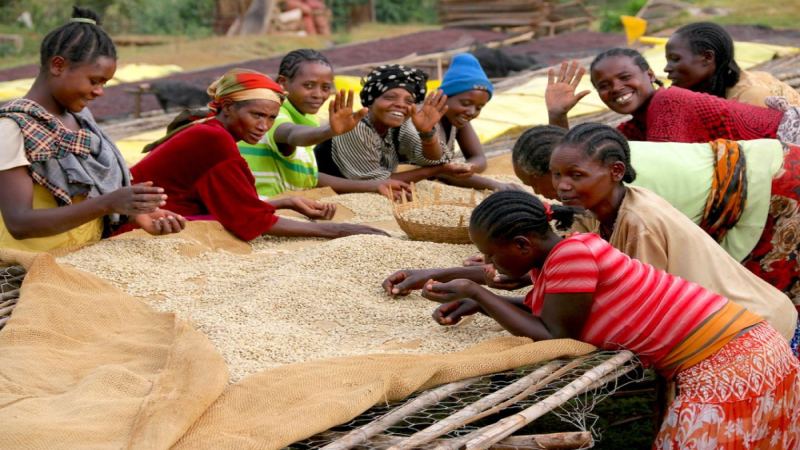
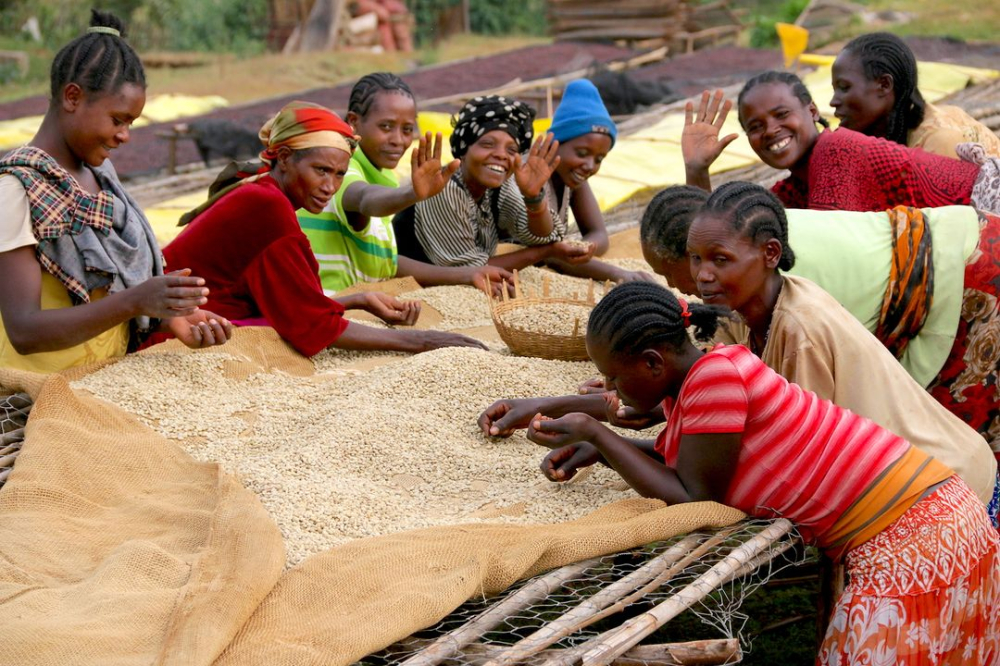
Because most are grown on small farms, coffee farmers send the harvested coffee cherries to nearby processing plants. The coffee farmers first pour the picked coffee cherries into a large water tank for flotation, then use a pulping machine to remove the outer skin and pulp of the coffee fruit; at this point, the coffee beans still have a slippery layer of mucilage attached.
Place the coffee beans with mucilage into a fermentation tank for 16 to 36 hours; during this process, microorganisms break down the mucilage. After fermentation is complete, use plenty of clean water to rinse off the residual mucilage on the coffee beans. Finally, dry the washed coffee beans. The washed processing method has both soft and intense acidity, with body that can be light or heavy, and sweetness with spice.
FrontStreet Coffee Tanzania Kilimanjaro Coffee Beans Producing Region: Kilimanjaro Producing Region Altitude: 1,300-2,000 meters Variety: Typica Processing Method: Washed
Flavor: Citrus, Honey, Berries, Nuts, Tea-like
FrontStreet Coffee naturally would not miss Tanzanian coffee beans either. This coffee bean from the Kilimanjaro producing region uses washed processing. FrontStreet will use a V60 , a 1:15 ratio, and 92°C water temperature for brewing. On the palate, there will be gentle acidity, with flavors of citrus, berries, honey, and nuts, a soft tea-like mouthfeel, and overall balance.
The above content is compiled by CoffeeHunters, a coffee news website.


