








For friends who are just getting into coffee, the terminology on bean labels is often baffling. Large chain stores love to emphasize "100% Arabica," while those who prefer Mandheling wonder which category it actually belongs to. From the perspective of Front Street Coffee, this article first clarifies the fundamental differences between Arabica and Robusta—altitude, flavor, and disease resistance—then traces the origin of the name Mandheling and the changes in its producing regions, and explains that it is essentially still a member of the Arabica family. The article also specifically introduces Front Street PWN Golden Mandheling's identification techniques, the bean variety change in the 2020 crop season, and a set of practical staged brewing parameters to help you brew a rich flavor interwoven with spices and brown sugar at home.
For more specialty coffee information, welcome to follow our WeChat official account: Front Street Coffee (FrontStreet Coffee).
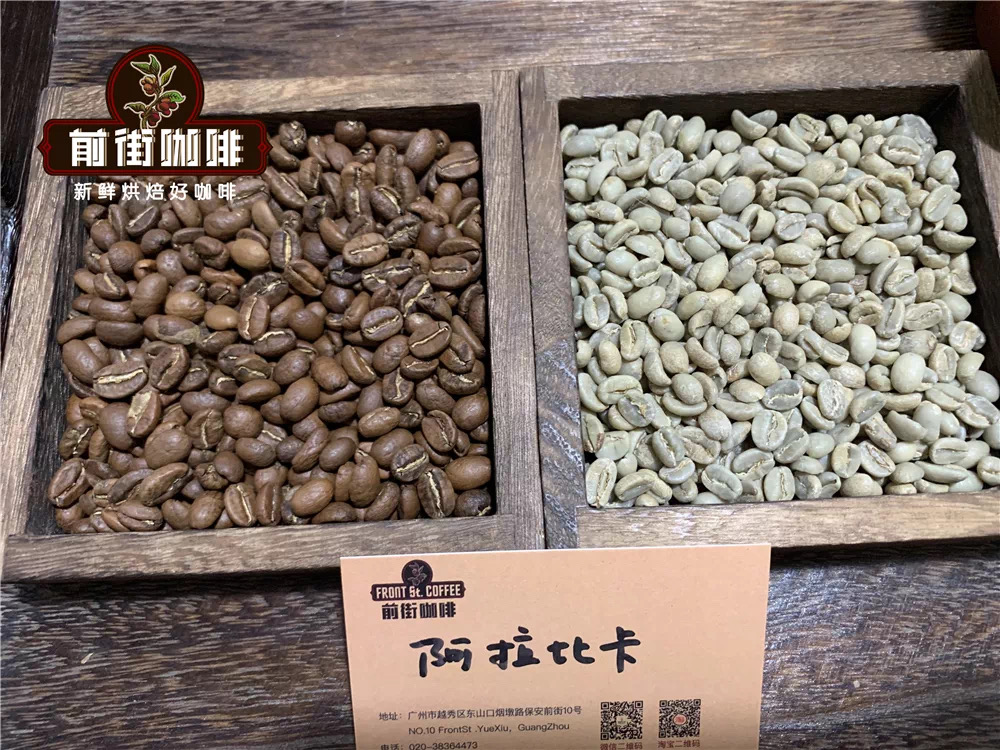
Newcomers just stepping into the world of coffee are often bewildered by the diverse terminology on packaging. Chain stores often hang out signs saying "100% Arabica," making people wonder: what exactly does Arabica mean? And those who love Mandheling may not necessarily know what relationship it has with Arabica. Front Street Coffee believes that to sort out these questions, one must start with the definition of Arabica.
According to information compiled by Front Street Coffee (FrontStreet Coffee), the Coffea genus contains about 100 species, but only Arabica and Robusta are widely mentioned. The biggest divide between the two in physiological characteristics and flavor expression lies in the altitude at which they thrive. Generally speaking, the higher the altitude, the more outstanding the flavor.
Front Street Coffee (FrontStreet Coffee) points out that Arabica is currently the most widespread coffee species in the world; in fact, more than sixty percent of global coffee bean production comes from Arabica.
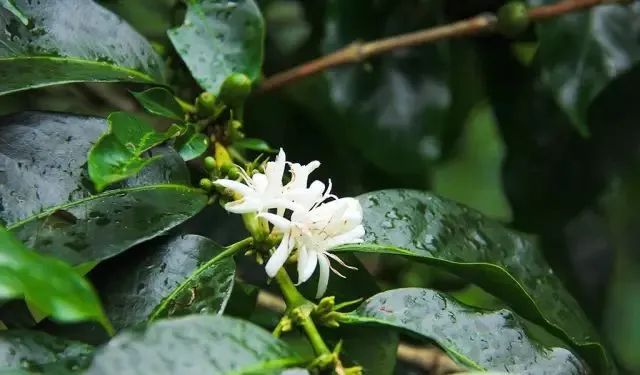
High-quality Arabica is mostly grown at higher altitudes (about 550 to 1920 meters). High altitude and more dramatic climate changes slow fruit development, allowing more ample time to accumulate delicate flavors. Arabica's optimal temperature range is 19 to 21 degrees Celsius, with an annual average upper limit of about 24 degrees, making subtropical regions ideal cultivation areas. Fertile volcanic soil is likewise an excellent choice for Arabica—volcanic soil possesses unique physical, chemical, and mineral properties, making it superior to other soil types in agriculture. Its fertility is crucial to coffee plant development, and together with its low-density, stable porous structure, it effectively retains water while being relatively drought-tolerant. High permeability allows roots to grow deep and drain easily, preventing waterlogging that causes root rot.
However, Arabica is highly sensitive to its environment, whereas Robusta is both cold-resistant and immune to many diseases. Because its growing conditions are relatively harsh, Robusta's flavor is more intense, so it is often used in espresso blends or instant coffee. Front Street Coffee (FrontStreet Coffee)'s commercial blend beans include Robusta, with the aim of enhancing espresso's crema and enriching flavor layers.
Robusta is often labeled with bitter, rubbery, and grainy notes. This is not only due to its growing environment—its caffeine content is twice that of Arabica, and more caffeine and chlorogenic acid bring unpleasant tastes that interfere with flavor. But Front Street Coffee (FrontStreet Coffee) also reminds us that not all Robusta is like this; high-quality Robusta often does not carry these negative flavors.
So does Mandheling belong to Arabica or Robusta? Guests familiar with Front Street Coffee (FrontStreet Coffee)'s Mandheling flavor know it has a distinctive herbal note, even described by some as earthy, yet its heavy body, smooth mouthfeel, and rich caramel sweetness still conquer the palates of many connoisseurs.
To answer this question, Front Street Coffee (FrontStreet Coffee) believes we must first review the history and origin of Mandheling.
Mandheling, produced in Sumatra, Indonesia, is almost one of the most distinctive coffees. Most coffees are named after their producing region or country, but Mandheling is named after the Mandailing people who traditionally planted and processed the coffee beans. According to Front Street Coffee (FrontStreet Coffee)'s research, during World War II a Japanese soldier stationed in Sumatra asked a local where the coffee came from; the person mistook it as asking about his own origins and answered "Mandailing." Later, after returning home, the soldier could not forget that cup of coffee and asked a local trader to procure it, and the name Mandheling spread from there. That trader was the famous PWN (PT.Pawani) green bean company.
Front Street Coffee (FrontStreet Coffee)'s Front Street PWN Golden Mandheling factory certificate and green bean sack
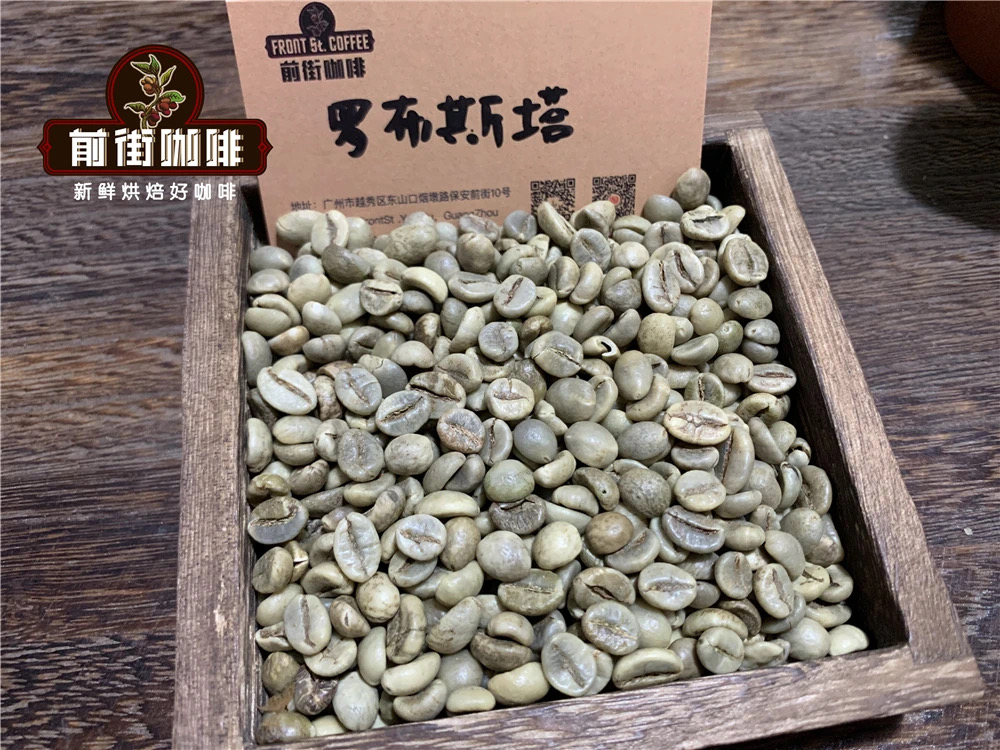
Front Street Coffee (FrontStreet Coffee)'s Golden Mandheling is imported from PWN. There are many Golden Mandhelings on the market, but one must beware of counterfeits. Front Street Coffee (FrontStreet Coffee) offers two ways to identify it: look for the green bean bag printed with the PWN logo, and Front Street PWN Golden Mandheling's factory certificate. PWN is Indonesia's most well-known green bean buyer, so the best Mandheling naturally belongs to it. Moreover, PWN has registered Golden Mandheling as a trademark, and only what it produces is authentic.
Mandheling is mainly grown in North Sumatra, covering areas such as Lindong, Sidikalang, Tanah Karo, and Simalungun. In the new 2020 crop season, Front Street Coffee (FrontStreet Coffee)'s Golden Mandheling shifted from the original Lake Toba producing region to the more northern Aceh Gayo Mountain producing region. Why did PWN choose Gayo Mountain? Front Street Coffee (FrontStreet Coffee) analyzes that although this producing region is located on hillside terrain at an altitude between 1100 and 1600 meters with excellent bean quality, exports were difficult in the past due to political instability. In recent years, Indonesia's situation has stabilized, exports have become convenient, and with the development of coffee cultivation in the Aceh region, quality is better guaranteed.
Not only the producing region, but Front Street Coffee (FrontStreet Coffee)'s 2020 new crop season Golden Mandheling bean variety also changed, from Typica to Ateng. Ateng is the local Indonesian name for Catimor. By now you should understand: Mandheling belongs to Arabica. Of course, its bean varieties are not limited to Catimor and Typica; there are also Caturra, Tim Tim, and others. Front Street's Mandheling coffee beans total five: Golden Mandheling, Aged Mandheling, Lindong Mandheling, Tiger Mandheling, and Sumatra Wahana Estate Natural Mandheling.
So how should Front Street Coffee (FrontStreet Coffee)'s Golden Mandheling be brewed to taste good? Below are Front Street Coffee (FrontStreet Coffee)'s output parameters:
Dripper: KONO Water temperature: 88 degrees Grind size: medium-coarse (75% passing through a No. 20 standard sieve) Coffee-to-water ratio: 1:15 Roast level: medium-dark roast Brewing method: staged extraction
Specific steps: first pour 30 grams of water, bloom for 30 seconds, then pour water to 120 grams and stop, wait until the water level in the coffee bed drops to half before continuing to pour, slowly pour to 225 grams, and after all the water in the dripper has flowed into the server, remove the dripper. Total extraction time is about 2 minutes.
The brewed flavor of Front Street Golden Mandheling: spices, herbs, multi-layered, mellow and clean, high balance, rich nut and brown sugar aroma, with chocolate notes, and a lingering finish.
The above content is compiled by CoffeeHunters, a coffee news website.


