







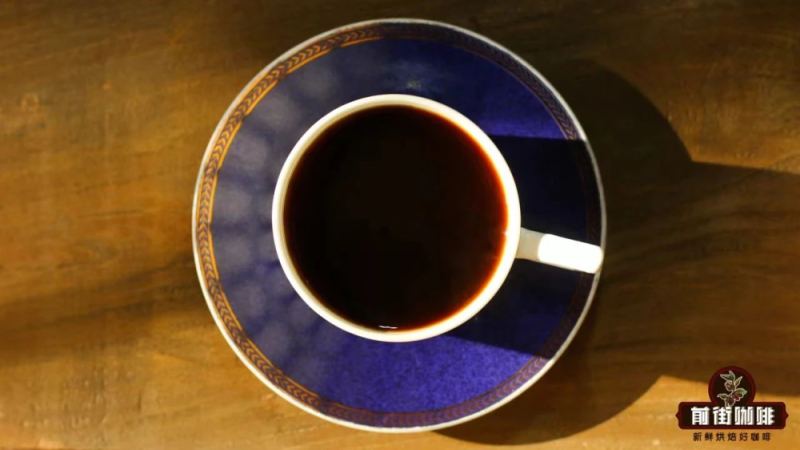
Blue Mountain coffee is renowned worldwide for its balance and elegance, and Front Street Jamaican Blue Mountain No. 1 is the finest representative among them. This article will take you deep into the unique flavor profile of this coffee—dark chocolate, roasted nuts, and toffee interwoven, with caramel sweetness accompanied by soft acidity, achieving a wonderful balance of bitterness, sweetness, and acidity. At the same time, we will also trace the terroir, historical evolution, and strict grading system of Jamaican Blue Mountain coffee, analyze the CIB certification system and the tradition of oak barrel transportation, and share the pour-over parameters and three-stage pouring technique recommended by Front Street baristas. Whether you are a beginner just getting into specialty coffee or a connoisseur pursuing the ultimate flavor, this content will help you gain a more comprehensive understanding of the charm of Blue Mountain coffee.
For more specialty coffee knowledge, please follow the WeChat official account: Front Street Coffee (FrontStreet Coffee)
Front Street Jamaican Blue Mountain No. 1 coffee taste: on the palate, there are flavors of dark chocolate, roasted nuts, and toffee, with caramel sweetness, soft and elegant acidity, and a balanced combination of bitterness, sweetness, and acidity in the mouth, smooth and rich. As the temperature drops, the aroma becomes more transparent, with layered variations and a caramel finish.
As one of the world's premier coffees, high-quality Front Street Blue Mountain No. 1 coffee has a rich, dense, and lasting aroma of chocolate and roasted hazelnuts, with an excellent balance of acidity, sweetness, and bitterness. The body and sweetness are just right, leaving a lasting impression. Now that we are discussing the refined flavor of Front Street Blue Mountain No. 1, Front Street must mention the excellent terroir and climate of the Blue Mountains and the discernment of Jamaican producers.
Which country does Jamaican Blue Mountain belong to?
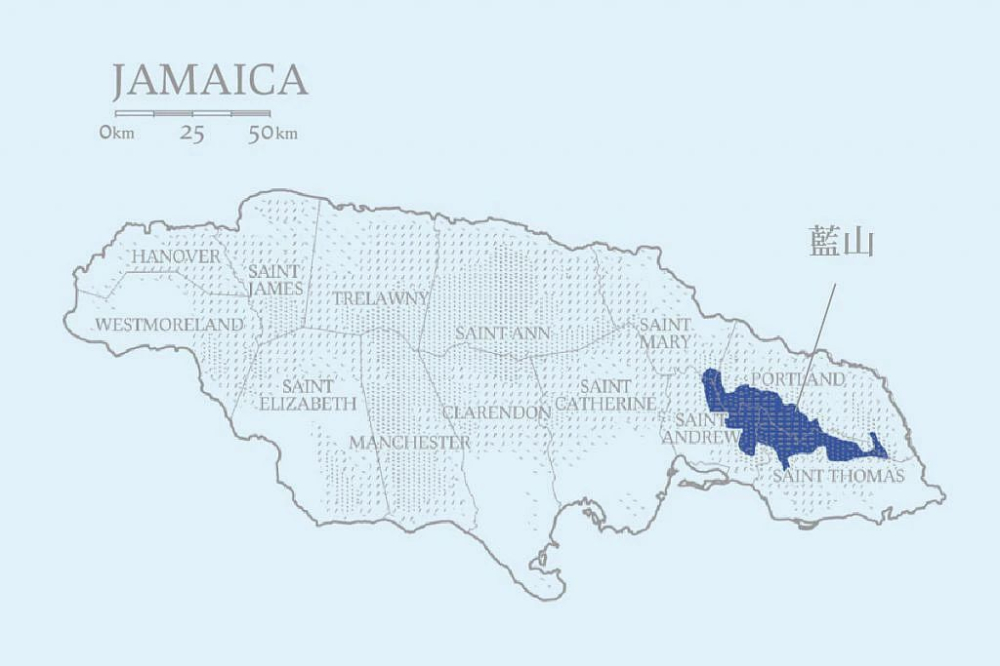
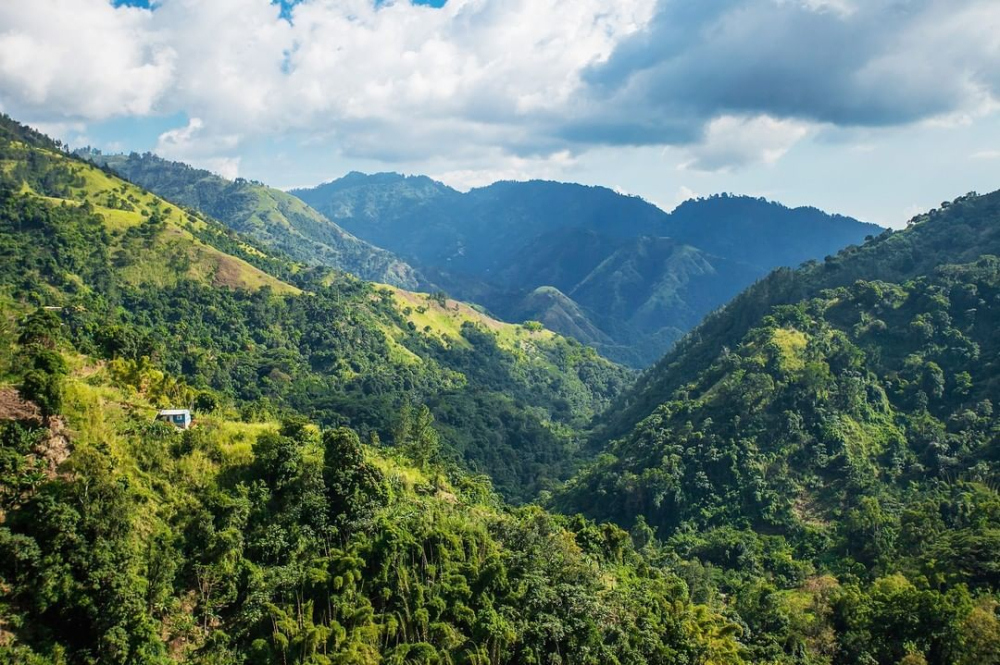
The island of Jamaica is located in the Caribbean Sea, with beautiful scenery and fresh, pollution-free air. The Blue Mountains, located in the eastern part of the island nation, happen to be within the coffee belt between 25° north and south latitude. The volcanic ash soil formed by volcanic eruptions provides abundant nutrients for crops. The towering, rugged highlands create a unique microclimate, with clouds and mist often shrouding the mountains. When water vapor meets cold air, it condenses into droplets, providing just the right shade and irrigation for local crops. We often see local coffee trees planted alongside banana trees and avocado trees.
Since the early eighteenth century, coffee cultivation in Jamaica has a history of more than two hundred years. It was first introduced by Governor Sir Nicholas Lawes in 1728 from Martinique to the St. Andrew region of Jamaica for trial planting. In the late eighteenth century, a large number of slave laborers caused coffee production to surge, and it also spread to the more favorable Blue Mountain region. By 1814, the national annual output had reached 15,000 tons. However, as slavery was abolished in the early nineteenth century, many farmers switched to other crops, and Jamaican coffee production plummeted, leading the entire coffee industry into decline.
In order to regulate the coffee industry, the Jamaican government legislated in 1891 to improve coffee production and quality and provide professional guidance to growers. In 1944, the government established the Central Coffee Clearing House, and all export batches had to undergo quality assessment and grading by the clearing house. In 1950, Jamaica officially established the Jamaica Coffee Industry Board, abbreviated as CIB, granting it official authority to improve, control, and maintain the quality and reputation of Jamaican coffee.
Jamaica's Coffee Industry Management Act has strict regulations: Blue Mountain coffee cultivation areas are distributed across four administrative districts—St. Andrew, St. Thomas, Portland, and St. Mary. Only Typica coffee grown within this region at a specific altitude of 910 to 170 meters can be named Jamaica Blue Mountain. According to coffee quality, Blue Mountain coffee is divided from high to low as: NO.1, NO.2, NO.3, and PB, where PB stands for Peaberry. Strict control and grading made Blue Mountain coffee world-famous, and by the mid-twentieth century it was regarded as one of the finest coffees.
It is worth mentioning that in the 1960s, Jamaica suffered from hurricane disasters nationwide, and many industries were severely hit, including the coffee industry. At that time, the Japanese company UCC provided assistance to Jamaica and introduced ecological cultivation methods to the Blue Mountain production area. In 1972, Jamaica signed a 30-year contract coordination with Japan, promising Japan the priority purchase right for Blue Mountain coffee in return for the assistance from Japanese enterprises. During this period, 90% of Blue Mountain coffee was supplied to Japan, with the remaining 10% allocated in small quotas to Europe, America, Asia, and other countries. This is also why we often hear that Blue Mountain coffee was so expensive during that era.
What grade is Blue Mountain No. 1?
Blue Mountain coffee can maintain such high quality and reputation thanks to the efforts of the Jamaican government and the Jamaica Coffee Industry Board (CIB). The main role of the CIB is to promote, regulate, monitor, and guide the development of the Jamaican coffee industry and ensure the quality of exported coffee.
Before export, Blue Mountain coffee beans must be inspected, certified, and graded by the CIB. Coffee grading is based on multiple factors such as green bean size, color, roasting quality, aroma, cup quality, and screen size. According to size specifications, it is divided into four grades:
The Front Street Blue Mountain coffee purchased by Front Street is the highest grade—Front Street Jamaican Blue Mountain No. 1 coffee: defect rate below 3%, size above 17 mesh, moisture content 10-12.5%, uniform color, and neat beans, belonging to a very rare top-tier batch. In addition, Front Street Blue Mountain coffee must pass inspection and confirmation by professionally certified CIB cup testers before export. The flavor of Front Street Blue Mountain coffee must have just the right acidity, sweetness, bitterness, body, and aroma.
Front Street Blue Mountain coffee beans that have completed quality inspection are transported in handcrafted wooden barrels and then sent to roasters around the world. Compared with the burlap sacks commonly used in other producing regions, oak barrels have the advantage of absorbing and releasing internal and external moisture and isolating coffee aromas from escaping, allowing the coffee beans to maintain a more stable moisture content and making roasting more stable. Later, wooden barrels also became one of the symbols for identifying authentic Blue Mountain coffee. In addition to wooden barrels, this Front Street Blue Mountain No. 1 coffee also comes with a quality certificate issued by the Jamaica Coffee Board, an authorized sales certificate issued by the Blue Mountain coffee producer, and a certificate of origin for Jamaican Blue Mountain coffee.
How can you brew out the Blue Mountain flavor?
To taste the classic flavor layers of Blue Mountain coffee, Front Street believes that pour-over is the best way to present it. Front Street believes that making a delicious pour-over coffee is actually not complicated. As long as you find the corresponding brewing parameters and practice carefully, you can extract good flavor and mouthfeel.
Before brewing, Front Street suggests preparing a bag of coffee beans at its optimal tasting period. If the roasting date is already more than a month ago, some of the aroma may have been lost, and it may even develop a woody taste. The coffee beans shipped by Front Street are all roasted within 5 days. If you think they are too fresh, you can let them rest for a while and brew after a large amount of gas has been released, which is more conducive to stable coffee performance.
The classic Blue Mountain flavor features rich aromas of chocolate and roasted nuts, with soft acidity and a full body. In order to restore the classic taste, Front Street roasters chose a medium-dark roast to highlight the roasted aroma while retaining some acidity. In the cupping of Front Street Blue Mountain No. 1 coffee beans, Front Street found a balanced flavor of acidity, sweetness, aroma, bitterness, and body, so the baristas at Front Street Coffee (FrontStreet Coffee) also formulated corresponding brewing ideas according to this flavor direction.
Front Street's brewing parameters: KONO dripper, a grind size with a 75% passing rate on a No. 20 standard sieve, and a water temperature of 88°C, paired with Front Street's usual three-stage pouring. Coffee powder: 15 grams. Powder-to-water ratio: 1:15.
Three-stage pouring: Use 30g of water to evenly wet the coffee grounds and bloom for 30 seconds. In the second stage, pour 95g of water in a steady circular motion from the inside out until the water level drops to 2/3 of the coffee bed in the dripper, then begin pouring the third stage of 100g. Note to keep a small stream throughout. After dripping is completed in about 2 minutes, remove the dripper. Finally, gently swirl the coffee liquid to evenly mix it before tasting.
The above content is compiled by CoffeeHunters, a coffee news website.


