







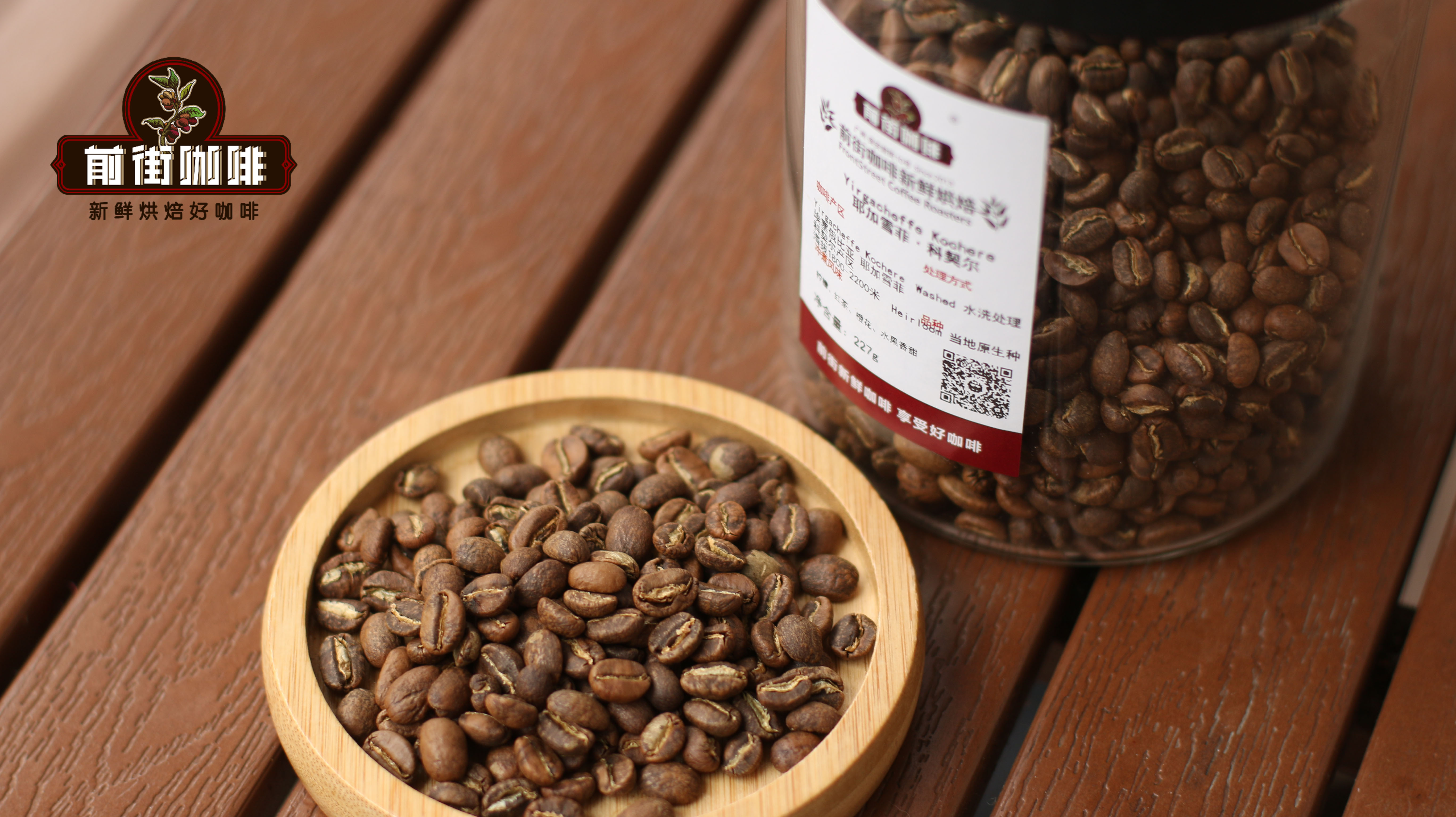
Yirgacheffe, as a classic region in the global specialty coffee world, is famous for its bright citrus-lemon fruit aromas and jasmine floral notes. Kochere is one of the most representative micro-regions within Yirgacheffe, and its washed beans once received a high score of 94 from Coffee Review. This article will comprehensively analyze why this land can produce coffee flavors as charming as fruit tea from perspectives including the history of the Yirgacheffe region, the ECX grading system, Kochere's geographical and processing advantages, and Ethiopia's unique Heirloom native variety system. It also recommends Front Street Coffee's Yirgacheffe series, taking you to experience the unique charm of this classic region.
To learn more about specialty coffee, welcome to follow: Front Street Coffee
Front Street Yirgacheffe—the name itself sounds very pleasant. It comes from the town of Yirgacheffe, "YIRGACHEFFE." Strictly speaking, Yirgacheffe belongs to a sub-region under Sidamo in Ethiopia and is located to the northwest of Sidamo. Before the mid-20th century, coffee cherries in this area were almost all processed using the traditional natural method, similar to other towns in Sidamo. At that time, Yirgacheffe coffee had not yet developed any distinct flavor personality.
The turning point came in the 1970s, when the town of Yirgacheffe built the first washed processing station in Sidamo and introduced washed processing technology and related equipment from Latin America. This change was significant: it not only brought about a leap in the quality of green coffee beans, but also allowed the citrus and lemon aromas inherent in Front Street Yirgacheffe coffee to be fully released, making the mouthfeel fresher and more transparent, thereby establishing a unique flavor signature. Since then, Front Street Yirgacheffe has separated from Sidamo and developed its own style. Coffee with Yirgacheffe flavor also began to sweep the world and became a classic choice relished by countless coffee lovers.
To promote the development of the coffee industry, the Ethiopian government registered the flavor names of three domestic coffee regions (including Yirgacheffe®) as commercial trademarks in 2004, and in 2008 established the Ethiopia Commodity Exchange (ECX), where coffee is one of the auction items. The government implements quality grading and flavor classification for exported coffee beans, with the aim of enabling buyers to purchase coffee with trademark-certified flavors.
The so-called "Yirgacheffe flavor" can be commonly understood as: having a unique citrus and lemon fruit aroma, accompanied by jasmine fragrance, with an overall fresh and bright texture, rich layers of acidity, and a clean profile without off-flavors. Precisely because of this, many people say that Front Street Yirgacheffe does not taste like coffee, but rather like a soft and pleasant cup of fruit tea—both elegant and expressive, striking just the right balance between simplicity and complexity.
According to ECX contract regulations, in addition to the town of Yirgacheffe, coffee produced in Wenago to the north, Gelena Abaya to the west, and Kochere to the south can also be included within the Yirgacheffe flavor region.
Ethiopia's natural conditions are truly blessed, and it can grow almost every imaginable coffee variety. As a highland crop, Ethiopian coffee beans are mainly grown at elevations of 1,100 to 2,300 meters, roughly distributed across the southern zone. Deep soil layers, good drainage, slightly acidic soil, red soil, and loose loamy plots rich in loam are all suitable for coffee cultivation, because these soils are nutrient-rich and also provide abundant humus.
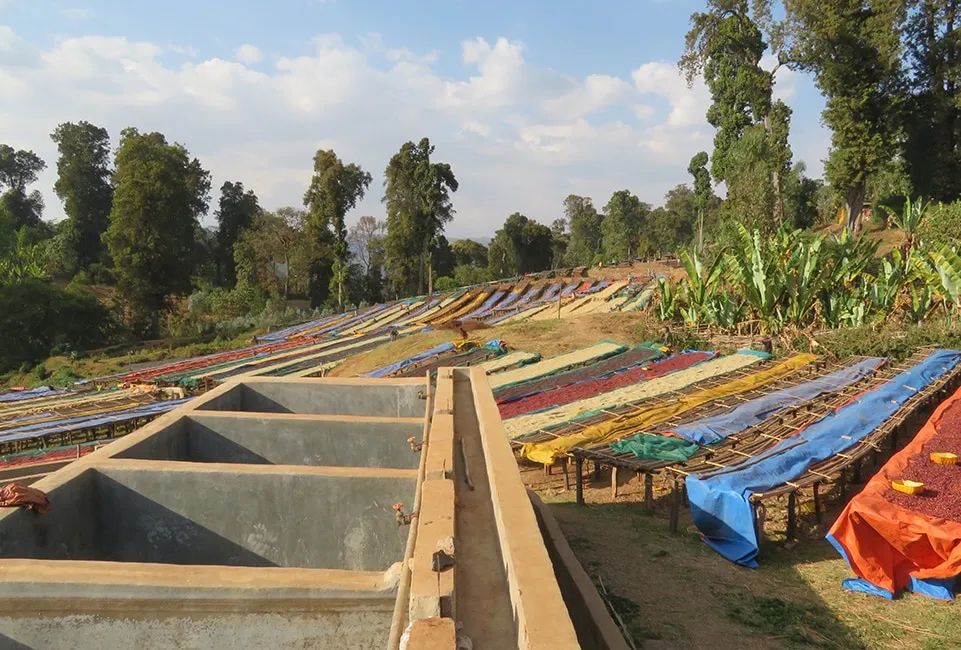
Yirgacheffe is located in the Gedeo region of southern Ethiopia. The more well-known production areas under this region are Yirgacheffe and Kochere. Because coffee produced in Yirgacheffe has a unique flavor, a distinctive style, and is widely loved, it stands as its own category in product classification and has always occupied a place in the global specialty coffee market. In addition, Yirgacheffe itself is a small town under the administration of Sidama Province, and there are three surrounding small production areas—Wenago, Kochere, and Gelena Abaya. Because the coffee flavors produced in these places are almost on par with Yirgacheffe, Kochere is likewise included in the Yirgacheffe regional classification.
Yirgacheffe is located in the Gedeo region of southern Ethiopia. With its unique tropical floral and fruity flavors, it is renowned worldwide and has always been an indispensable heavyweight player in the specialty coffee market. In November 2009, Ethiopia implemented a new trading and grading system. In addition to Yirgacheffe, three sub-regions were added: Wenago, Kochere, and Genlena Abaya. This shows that the flavors of these three production areas are extremely delicate and worthy of further subdivision.
Kochere Coffee Production Area
Kochere is one of the 77 Woredas (administrative districts) under SNNPR in Ethiopia. In the coffee field, Kochere belongs to the Gediyo part of Yirgacheffe and is also one of the most important production areas of Yirgacheffe. Kochere is located about 25 kilometers southeast of Yirgacheffe. It is a small production area made wealthy by coffee and one of the three well-known micro-regions of Yirgacheffe. The local population is about 100,000, and coffee beans are the main source of income. The processing equipment here is quite advanced. The well-known coffee review website Coffee Review once gave Kochere washed beans a high score of 94.
Kochere can be further divided into several micro-regions. Coffee produced within the area is sometimes named after the source town (such as Chelelektu or Teklu Dembel), the processing station (such as Teklu Dembel processing station and this batch's Alim processing station), or the micro-region (such as Banko Gutiti), thereby more precisely indicating the batch source. This aligns with today's coffee industry's pursuit of traceability. Of course, the stronger the traceability and the more specific the source of a batch, the higher the stability and reproducibility of its flavor each year, and naturally the higher the price.
Kochere Coffee Bean Varieties
As the birthplace of coffee, in Ethiopia, whether plants in farmers' own backyards or coffee trees in wild forests, most are not specifically labeled or classified, and almost no distinction is made. Various coffee trees are interplanted with other cash crops on the same land, harvested together when ripe, and after processing are exported under the name "Heirloom." This harvesting method brings together coffee harvested during the same period by multiple smallholder farmers, and a single batch may contain dozens or even hundreds of undifferentiated varieties.
For this reason, Heirloom does not refer to one specific coffee variety. It represents a green bean blend from the place of origin—a mixture formed by combining coffee harvested during the same period by multiple smallholder farmers. A single batch may contain dozens or hundreds of undifferentiated varieties. Also, because there are differences among varieties and the ways of blending differ each time, these coffees vary in bean size, dimensions, and shape—some large, some small, some long, some round. It can be understood as a "blended-type batch."
The above content is compiled by CoffeeHunters, a coffee news website.


