








Tanzania is an important specialty coffee-producing country in East Africa, with Mount Kilimanjaro and the Southern Highlands each having their own distinctive characteristics. Based on Front Street's cupping and brewing practices, this article reviews Tanzania coffee's varieties, processing methods, flavor performance, and regional differences. Thanks to volcanic soil and a unique climate, the Mount Kilimanjaro production region gives coffee outstanding sweetness and bright acidity, with citrus, nut, honey, and cocoa notes in the finish; the southern production region, by contrast, has stronger floral and berry notes, with softer acidity. The article also introduces the washed processing flow, the characteristics of Typica and Bourbon varieties, and Front Street's medium-light roast and three-pour brewing plans developed for different flavor profiles, helping coffee lovers gain a comprehensive understanding of Tanzania coffee's strengths, weaknesses, and directions for choosing it.

For more specialty coffee knowledge, please follow the WeChat public account: Front Street Coffee
Tanzania is a fairly representative coffee-producing country in East Africa, and when it comes to coffee here, the Mount Kilimanjaro production region is almost impossible to avoid. Coffee cultivation in Tanzania was first introduced by missionaries, and the variety was Bourbon. Mount Kilimanjaro is located in northeastern Tanzania and is the highest mountain range in Africa. The coffee produced in this area can be called the benchmark of Tanzanian coffee, and Front Street's bean list includes a coffee bean from Mount Kilimanjaro.
When many people think of African countries, what comes to mind is often heat and drought, but the Mount Kilimanjaro region of Tanzania is an exception. The reason Front Street says this is that temperatures in the Mount Kilimanjaro area can reach as high as 59 degrees Celsius, while the summit is covered in snow year-round and can drop to as low as minus 34 degrees Celsius, so it is also called the "Snow Mountain on the Equator." In terms of rainfall, the river valley receives about 800 to 900 millimeters annually; the mountain area is cool and humid, and the windward slope can receive 1,600 to 1,800 millimeters annually. Coffee grown under such climatic and geographical conditions is very conducive to the accumulation of flavor compounds.
In Front Street's view, this unique climate condition can be called an ideal place for growing coffee. The volcanic soil of Mount Kilimanjaro is fertile, slightly acidic, and well-drained. Climate and geology work together to make the coffee flavor richer. Therefore, this Tanzanian coffee bean listed by Front Street has a high-quality sweetness and red wine character, with the typical characteristics of African Ethiopian coffee beans.
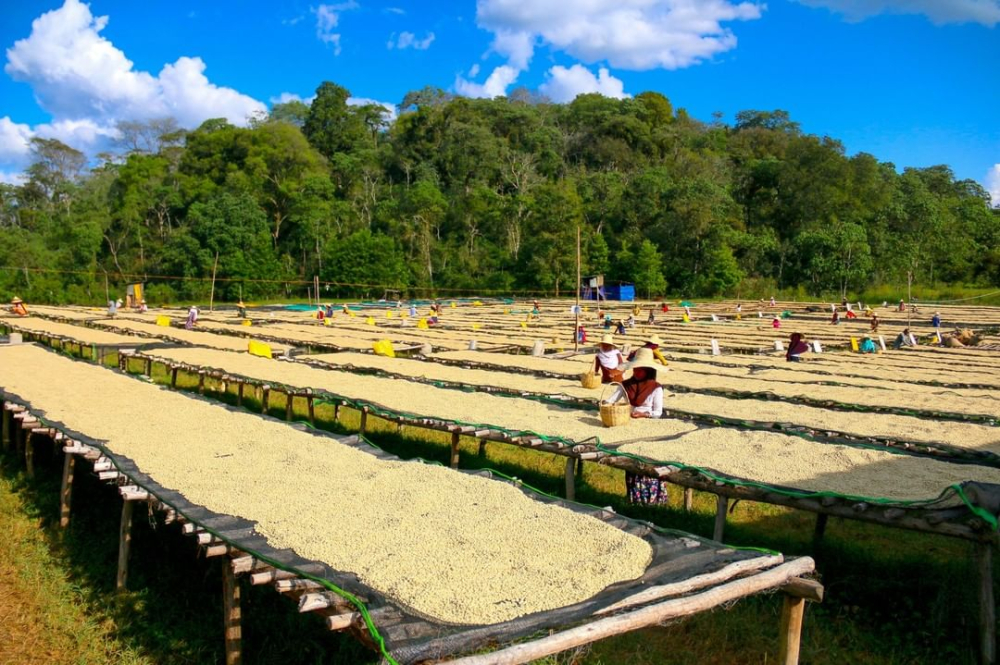
Tanzania has abundant rainfall, so locally most coffee beans are washed. This coffee bean from Mount Kilimanjaro in Tanzania's northern highlands, listed by Front Street, is washed-processed. Coffee farmers send the harvested cherries to the nearest processing station for processing. The general washed processing flow is:
1. Screen out impurities mixed into the coffee cherries.
2. Remove the coffee pulp and outer skin.
3. Send them into fermentation tanks, where fermentation removes the pectin layer attached to the parchment.
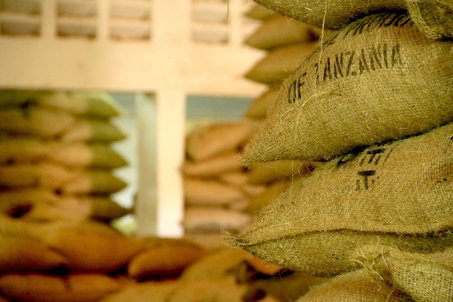
4. After washing clean, dry them; when the moisture content of the coffee beans drops to about 11%, they can be stored in the warehouse.
Because a washed process is used, the silver skin center line of Front Street's Tanzania Mount Kilimanjaro coffee beans is retained. However, too much silver skin is not a good thing, because after the coffee beans are ground into powder, the silver skin will also mix into the coffee grounds, affecting the extraction of flavor compounds.
Front Street's Tanzania Mount Kilimanjaro green coffee beans are uniform in size in appearance, slightly long in shape, and plump in body, a typical Ethiopian coffee bean Typica bean shape. The coffee varieties commonly grown in Tanzania are Bourbon, Typica, and Kent. The variety of this Front Street Tanzania coffee is precisely one of the ancient varieties, Typica. Its flavor performance is excellent and it is recognized as a specialty coffee variety. Its only drawback is low yield and susceptibility to leaf rust.
The Tanzania Mount Kilimanjaro coffee beans of the new crop season have a relatively high moisture content, so dehydration time needs to be extended to allow the bean surface and bean core to be heated evenly. At the same time, in order to highlight the sweetness, acidity, and floral and fruity aroma of this Tanzanian coffee bean, Front Street decided to use a medium-light roast, extending the caramelization reaction after first crack to make the sweetness more pronounced.
Afterward, Front Street cupped this roasted coffee bean. The dry aroma of this coffee bean from Mount Kilimanjaro, Tanzania, carries the fresh fragrance of orange and a caramel feeling, and this feeling is even more obvious in the wet aroma. During the overall cupping process, Front Street found that when the coffee liquid was still at high temperature, the flavor leaned more toward citrus, nuts, honey, and cream; after cooling, it shifted to acetic acid, cocoa, and spice reminiscent of the pungency of black pepper.
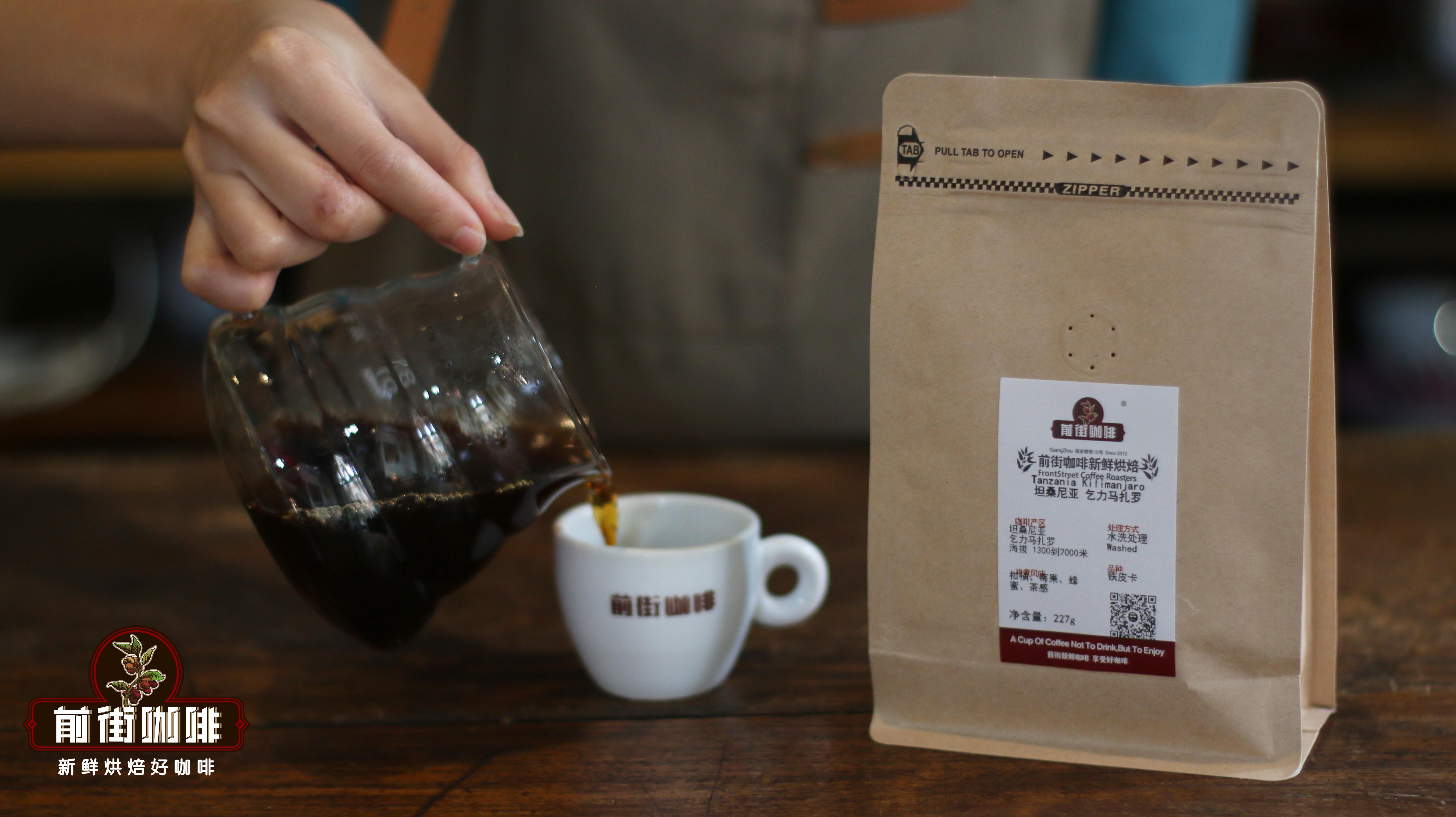
Therefore, after summarizing the cupping situation of this Tanzanian coffee, Front Street found that its advantage is medium-high sweetness, similar to honey, with balance as well, but its disadvantage is that the acidity is medium-low, not as pronounced as the acidity of Kenyan coffee beans, and it carries a slight astringency when cooled. Therefore, the brewing plan should enhance the strengths and avoid the weaknesses, highlighting the advantages and reducing the disadvantages. Front Street's parameters for brewing this coffee are: choose 15 grams of coffee beans, a coffee-to-water ratio of 1:15, a water temperature of 90 degrees Celsius, a grind setting of BG grinder #6M, and a V60 dripper.
Use Front Street's commonly used three-pour method for brewing. Use 30 grams of water for a 30-second bloom. Pour in a small stream in circles until 125 grams, then pause. When the water level is about to expose the coffee bed, continue pouring until 225 grams and stop pouring. When the water level is about to expose the coffee bed, remove the dripper. The extraction time is 2'00" (timing starts at the beginning of the bloom). The brewed Tanzania coffee tends more toward citrus, nuts, a smooth mouthfeel, and a black cocoa finish. When cooled, it carries honey sweetness, a spicy note, and less astringency.
This is the basic flavor of Tanzania's Mount Kilimanjaro production region. Tanzania's coffee-growing areas are mainly Mount Kilimanjaro and southern Tanzania. Front Street has already cupped the coffee beans from Mount Kilimanjaro, so how does the coffee flavor of southern Tanzania differ from Mount Kilimanjaro? Front Street was very curious and also compared coffee beans from southern Tanzania.
This southern-region coffee bean, like the Mount Kilimanjaro coffee bean, uses the washed method commonly used in the Yirgacheffe production region of Ethiopian coffee beans , but the variety is Bourbon. Bourbon coffee also has very high sweetness and bright acidity, and its yield is even higher than that of Typica coffee, while it is likewise susceptible to leaf rust.
This coffee bean from southern Tanzania, like the coffee bean from Mount Kilimanjaro, uses a medium-light roast to highlight the coffee flavor of the southern region. Its cupping situation is:
Dry aroma: berries, fermentation
Wet aroma: berries, floral
Cupping: citrus, caramel, nuts, fermented aroma
Flavor: Front Street used the same method to brew this southern-region coffee bean. The floral note is also very rich, with the acidity of berries and citrus, and a slight nutty flavor in the finish.
These two Tanzanian coffees each have their own unique flavor, and coffee beans from different altitudes also have very inconsistent flavors. Southern-region coffee has rich floral and winey notes and soft acidity; coffee from the Mount Kilimanjaro production region has bright acidity and a mellow mouthfeel, and thanks to fertile volcanic soil, it carries a sweetness like mineral water. It is precisely because Tanzanian coffee has a mellow texture, suitable acidity, and a rich aroma that Europeans in the past called Tanzanian coffee "coffee gentleman." Everyone can choose according to their own taste.
For more specialty coffee beans, please add the private WeChat of Front Street Coffee (FrontStreet Coffee), WeChat ID: kaixinguoguo0925
The above content is compiled by CoffeeHunters, a coffee news website.


