







The Indonesian island of Sumatra is world-famous for its unique wet-hulling process and the full-bodied, bitter-toned Mandheling coffee. This article will take you deep into the geography and planting traditions of Sumatra's two core producing regions—Lintong and Aceh—analyze PWN Company's strict selection standards for Golden Mandheling, and dissect in detail how the wet-hulling process gives Indonesian coffee its signature woody, spicy, and herbal notes. At the same time, Front Street Coffee will share the complete parameters and three-stage pouring technique for brewing Golden Mandheling with a KONO dripper, helping you consistently present at home the rich, full-bodied flavor where dark chocolate, caramel, and hazelnut intertwine.
To learn more about specialty coffee, welcome to follow: Front Street Coffee
On Front Street's bean list, Mandheling is the most representative of a full-bodied, bitter profile. Front Street Mandheling coffee not only presents rich dark chocolate, roasted hazelnut, and caramel flavors, but also carries a hint of unique herbal spice. Front Street PWN Golden Mandheling, located in the upper right corner of Front Street's bean list, has undergone multiple rounds of hand sorting, giving it an exceptionally outstanding cleanliness and a rare, clear sweetness.
Where does Front Street Mandheling coffee come from?
The Mandheling coffee we usually drink is typically dark roasted, with the aim of suppressing acidity and highlighting a full-bodied bitterness. Front Street's bean list currently has two Mandheling coffees: Front Street Lintong Mandheling daily-drink beans and Front Street PWN Golden Mandheling, originating respectively from Sumatra's Lintong producing region and Aceh producing region, both using a medium-dark roast. Front Street hopes to present dark chocolate and caramel flavors while retaining that wild herbal character of Mandheling. This unique aroma is inseparable from Mandheling's growing environment and processing method.
Mandheling coffee comes from Indonesia's mysterious island of Sumatra. Sumatra is divided into eight provinces in total, but only the high-altitude Aceh Province and North Sumatra Province cultivate Arabica coffee on a large scale. Sumatra has a tropical rainforest climate, with clouds and mist shrouding the mountains and forests year-round, adding a touch of mystery to this island. Every year from September to April of the following year is the season when coffee cherries ripen, and busy farmers can be seen picking throughout the mountains. Traditional Lintong Mandheling is grown by the Mandailing and Batak peoples, while the "rising star" Lake Tawar Mandheling is cultivated by the Gayo people.
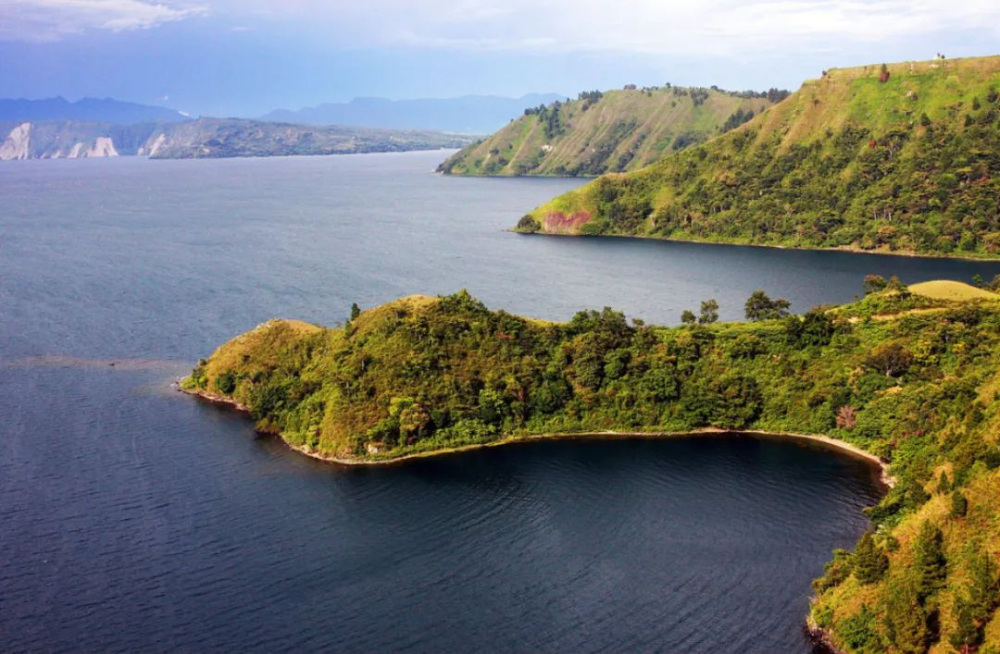
Locals plant coffee trees around two major volcanic lakes—Lake Tawar and Lake Toba. The Gayo Mountains around Lake Tawar possess ideal conditions for coffee cultivation, with organic farming widely adopted, and together with a long planting history, this gives the coffee produced here advantages in both quality and yield. Many green coffee buyers also place particular importance on this area, including the locally very well-known Pwani Coffee Company (abbreviated as PWN).
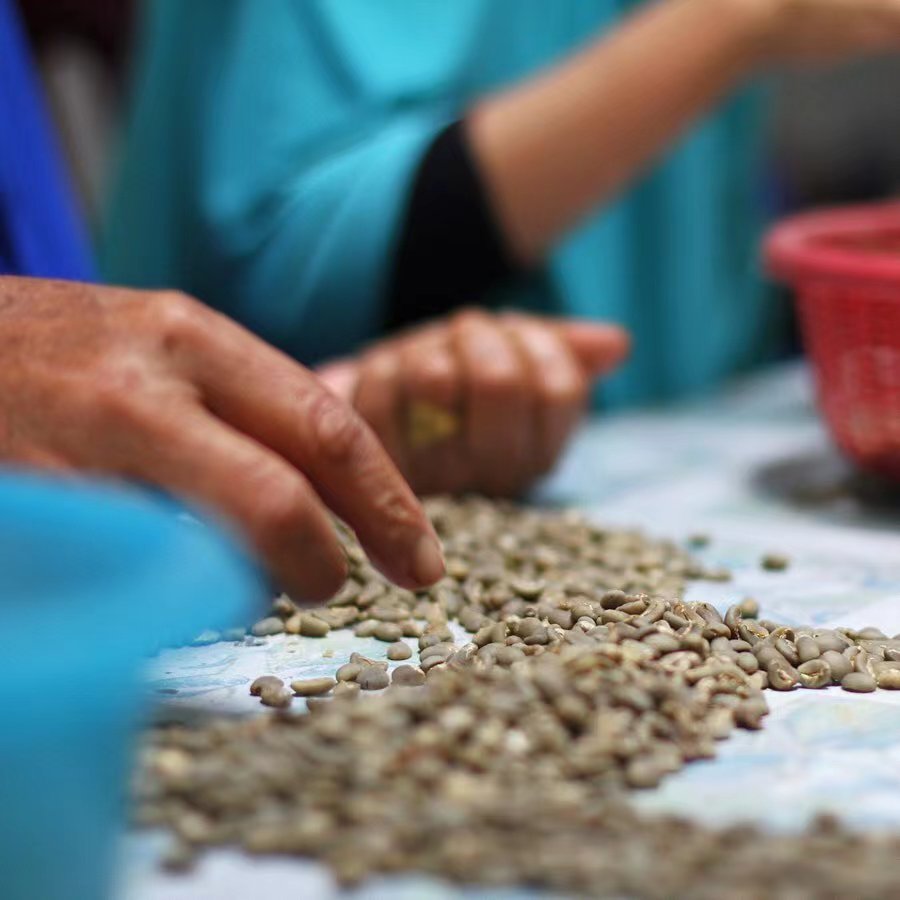
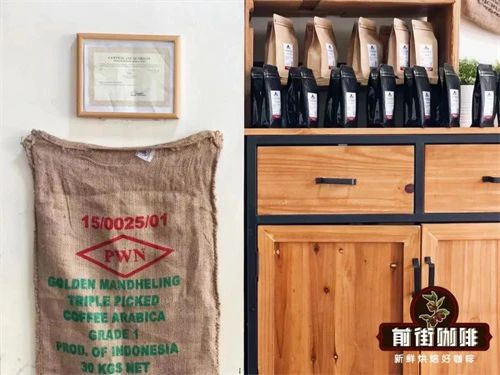
PWN Company mainly purchases high-quality Mandheling green coffee beans. After purchase, the beans undergo one mechanical sorting plus three rounds of manual hand sorting to pick out plump, flawless beans, and all the coffee beans produced reach specialty grade. "Golden Mandheling Coffee" is precisely its flagship product. In the early days, in order to become the exclusive supplier of Golden Mandheling coffee, PWN Company registered the English trademark for "Golden Mandheling," meaning that only the Golden Mandheling coffee produced by this company is truly authentic Golden Mandheling. Front Street Golden Mandheling coffee beans are of course also the "genuine product" purchased from PWN Company, using Indonesia's unique wet-hulling process.
The flavor characteristics of Indonesian Mandheling originate from the wet-hulling process
The biggest difference between Indonesia and many coffee-producing regions lies in the local humid weather. Indonesia's year-round humidity is between 70 and 90%, typhoons can arrive at any time, and annual rainfall even reaches over 2000 mm. Such harsh weather makes it impossible to use sun-drying of as long as 2 to 3 weeks like in Africa. Washed processing is not only time-consuming, but also consumes more labor costs and water resources, which Indonesia, with its aim of mass production, simply cannot afford. Thus a unique semi-washed method was developed—wet hulling.
Coffee cherries with the skin and pulp removed are poured directly into a pool for a short fermentation of a few hours. At this point, a small amount of mucilage still remains on the parchment. The mucilage is removed by scrubbing. Then the parchment beans are spread out to dry. The first drying only needs to reach a moisture content of 30–40%, about 2 to 3 days, after which the coffee farmers sell the green beans to collectors. The collectors then directly hull the semi-dried parchment beans they have purchased by machine to obtain the innermost green beans.
Because the hulling machine uses relatively strong friction, it tears open the parchment layer tightly attached to the green beans. At this stage, white or green viscous liquid usually flows out. Due to prolonged soaking in mucilage and the humid environment, the green beans ultimately become soft, whitish, and swollen, forming a grayish-green color. Through the stirring caused by friction, the green beans are also more likely to be crushed or damaged, especially at both ends, forming small notches that create "goat-hoof beans." The "naked beans" with the parchment layer removed dry very quickly, and at the same time are directly exposed to the humid environment, becoming susceptible to the growth of various types of bacteria. This gives Indonesian coffee its unique woody, spicy, and herbal notes. This is what we call the "taste of place."
I believe some friends are already curious about what the taste of Southeast Asia is really like. If you haven't yet tasted Front Street Mandheling coffee, Front Street suggests starting with the small-package Front Street Lintong Mandheling daily-drink beans. Front Street Lintong Mandheling, which uses the wet-hulling process, will present the classic Mandheling flavor after brewing, making it convenient for us to try at home.
The best pour-over method for Front Street Golden Mandheling coffee
To brew the best aroma of Front Street Mandheling coffee, here Front Street will use the most popular Front Street PWN Golden Mandheling coffee beans in our stores as an example to explain Front Street's pour-over approach.
For coffees with a full-bodied mouthfeel such as Front Street Indonesian Mandheling coffee, Front Street Brazil Queen's Farm coffee, and Front Street Jamaica Blue Mountain coffee, Front Street Coffee baristas will prioritize using the KONO dripper for brewing. Compared with the V60, the KONO dripper has a smooth curved surface. This design is actually intended to ensure that after the filter paper is wet, it clings tightly to the dripper wall. At the same time, the guiding ribs are only one-quarter the height of the dripper, restricting airflow from moving upward, so water can only pass through the bottom into the server. This increases the time for coffee grounds to absorb water, allowing the coffee bed and hot water to form an immersion extraction, making the coffee's taste rounder, fuller, and more concentrated.
Medium-dark roasted coffee beans greatly change the internal structure of the beans, making them porous, and once ground into coffee powder they absorb water more strongly. If the brewing parameters are not adjusted well, the coffee will easily be over-extracted and bitter. To have enough aroma in the coffee without over-extraction, the extraction yield needs to be reduced. Front Street uses a relatively low water temperature and a grind size like coarse granulated sugar to reduce the release of bitter large molecules in the coffee. Front Street stores use an ek43s grinder at setting 10, with a water temperature of 87–88°C.
Dripper: KONO
Water temperature: 87°C
Coffee dose: 15 g
Coffee-to-water ratio: 1:15
Grind size: 70% passing through China standard No. 20 sieve
Pouring method: three-stage pouring
For the first stage, pour 30 g of water for a 30-second bloom. Start timing as you begin pouring. Use a small stream throughout, starting at the center point and spiraling outward, making sure to wet the entire coffee bed.
After 30 seconds, begin the second stage by steadily pouring 95 g of water with a slightly larger stream, with the aim of lifting the entire coffee bed. The stream should be poured vertically and evenly. At this point the scale should read 125 g, and the pour should be completed in about 55 seconds.
When the liquid level drops to the halfway point, begin the third stage by pouring 100 g with a small stream in a small spiral, trying to keep the stream from spiraling too widely, as this can easily disturb the coffee bed and cause under-extraction. The final total pour weight is 225 g, and the drip finishes in about 2 minutes. After removing the dripper, swirl the coffee liquid in the server to mix it evenly, and it is ready to taste.
Pour-over Front Street PWN Golden Mandheling coffee: a rich dark chocolate aroma, with roasted hazelnut, caramel, and melon flavors blending very well, an obvious spice note in the mouth, a full-bodied and clean texture, and a long-lasting finish.
The above content is compiled by CoffeeHunters, a coffee news website.


