







Although Rwanda is located inland in central Africa, it enjoys superior growing conditions such as high altitude, volcanic soil, and a temperate highland climate, and is known as the "Land of a Thousand Hills." However, the 1994 genocide and the sharp drop in global coffee prices once dealt a severe blow to its coffee industry, after which coffee cultivation became an important pillar of economic recovery. Rwandan coffee is mainly Bourbon variety, with more than 90% washed processing, and its flavor is known for floral notes, citrus, berries, and honey sweetness. The Gateke coffee beans launched by Front Street Coffee come from the Nyamasheke region by Lake Kivu in the west, using a medium-light roast to highlight bright acidity and a rich mouthfeel. This article will systematically review the historical context, producing regions, variety characteristics, and processing techniques of Rwandan coffee, and include detailed information on Gateke coffee.
Today, Front Street wants to take everyone into the world of Rwandan coffee. This landlocked country in central Africa is not far from major coffee countries such as Ethiopia. By common logic, the spillover effect of neighboring producing regions should benefit Rwanda's coffee industry. Is that actually the case? Front Street will sort it out for everyone here.
According to information gathered by Front Street, in 1994 Rwanda broke out in a genocide between the Hutu and Tutsi, in which nearly one million people died. At the same time, international coffee prices plummeted sharply. Under this double blow, Rwanda's coffee industry fell into severe difficulty.
After that catastrophe, Rwanda faced a severe labor shortage, and those left behind were largely women and children. The country's economic foundation was extremely weak. Given the national conditions at the time, growing coffee was almost the most feasible path to improve people's living standards. Front Street learned that coffee production indeed injected positive momentum into Rwanda's overall economic recovery.
Rwanda is a well-known coffee-producing region on the African continent, but there is very little Rwandan coffee available on the market. Front Street currently has only one Gateke coffee listed. The reasons behind this are quite complex. In the early 20th century, Rwanda was successively colonized by Germany and Belgium, and coffee was first introduced to this African interior by German missionaries. The planting range gradually expanded from the initial Kivu region to the whole country, and the vast majority of Rwandan coffee belongs to mutated varieties of the Bourbon species. During the colonial period, the Belgian government strictly restricted the quality of Rwanda's coffee exports, causing the entire industry to remain trapped for a long time in low-price competition characterized by "high yield, low quality." At that time, there was hardly a single true coffee washing station in the country.
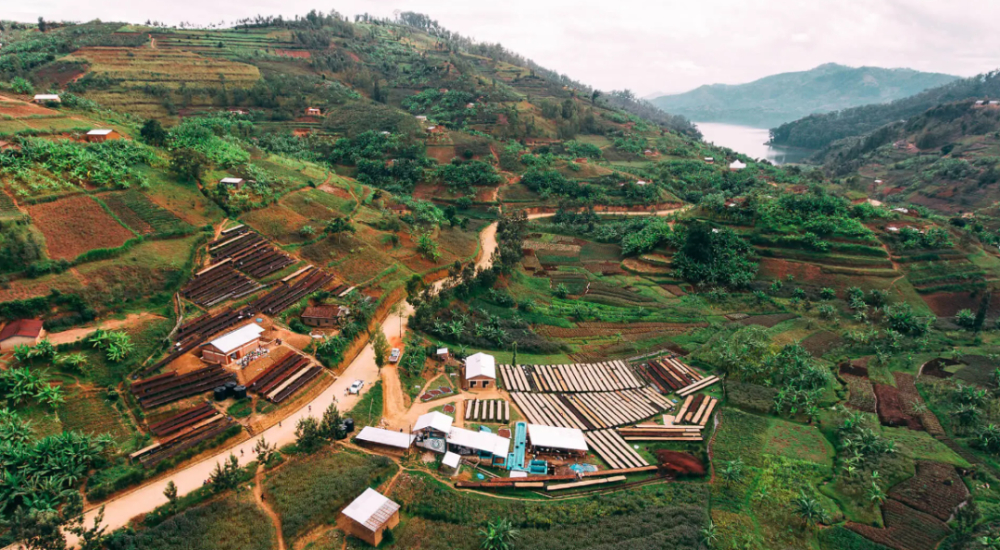
After Rwanda's independence, the first official coffee organization, OCIR, was established, and coffee bean production gradually gained attention. Rwanda has a temperate and tropical highland climate, with high altitude, volcanic soil, abundant sunshine, and other conditions all in place, making it very suitable for coffee cultivation. A large number of coffee trees grow on hillsides at altitudes of 1,700 to 2,000 meters, which is why Rwanda is also called the "Land of a Thousand Hills."
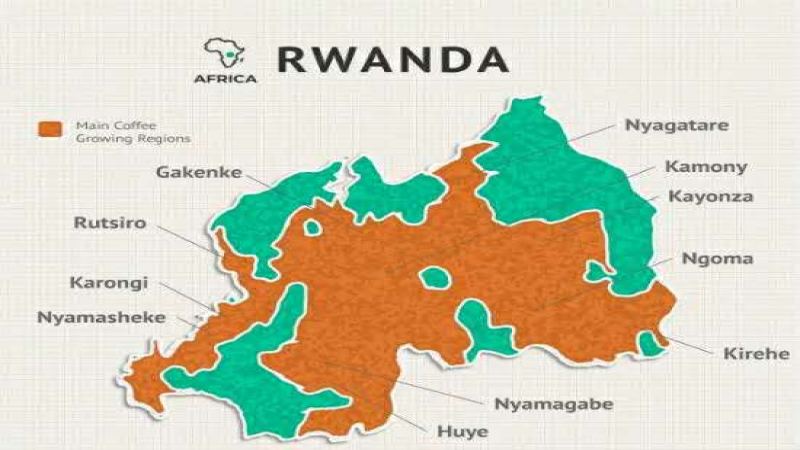
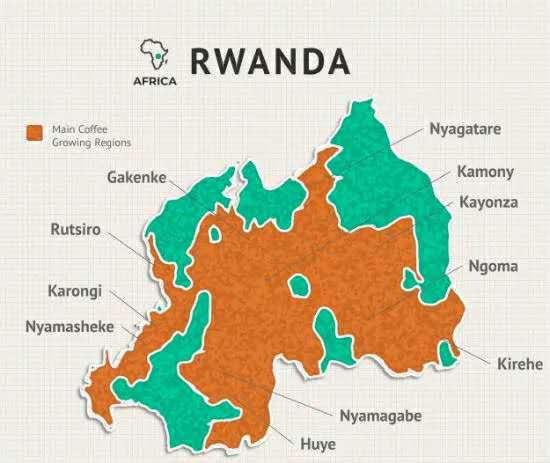
Rwanda's Arabica coffee bean producing areas are mainly concentrated in the south and west. The southern Huye mountainous area and Nyamagabe region are at relatively high altitude, and the coffee beans produced there have floral and citrus notes; the Nyamasheke region by Lake Kivu in the west is known for high-quality coffee with a full body, rich aroma, and juicy mouthfeel. The main producing areas are as follows: Southern region: Huye, at higher altitude, the coffee has floral and citrus acidity. Western region: Lake Kive, the coffee has a richer mouthfeel and a fruity juice-like texture. Eastern region: Ngoma Lakes, with chocolate and fruity flavors. Northern region: with citrus, nut, and caramel flavors. The Gateke coffee launched by Front Street belongs to the Nyamasheke region by Lake Kivu in the west and is mainly a Bourbon mixed variety.
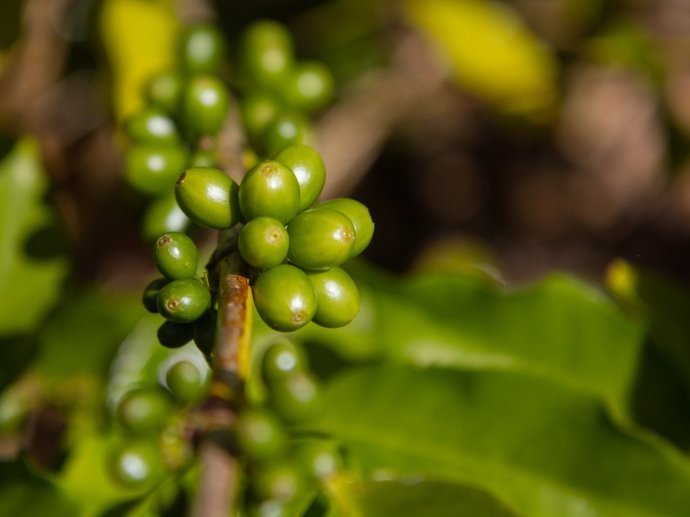
Among Rwandan coffee varieties, more than 90% are the early-introduced Bourbon species and its family hybrids. This type of coffee tree has relatively strong disease resistance and can withstand general natural disasters. Bourbon coffee was initially widely popular in Latin America, but because of poor disease resistance, fewer and fewer countries were willing to grow it. The several Latin American Bourbon coffee beans currently purchased by FrontStreet Coffee include Brazil Red Bourbon, Brazil Yellow Bourbon, and Colombia Pink Bourbon. In comparison, Rwandan Bourbon still has advantages, which is also one of the reasons FrontStreet Coffee is willing to list Rwandan coffee beans.
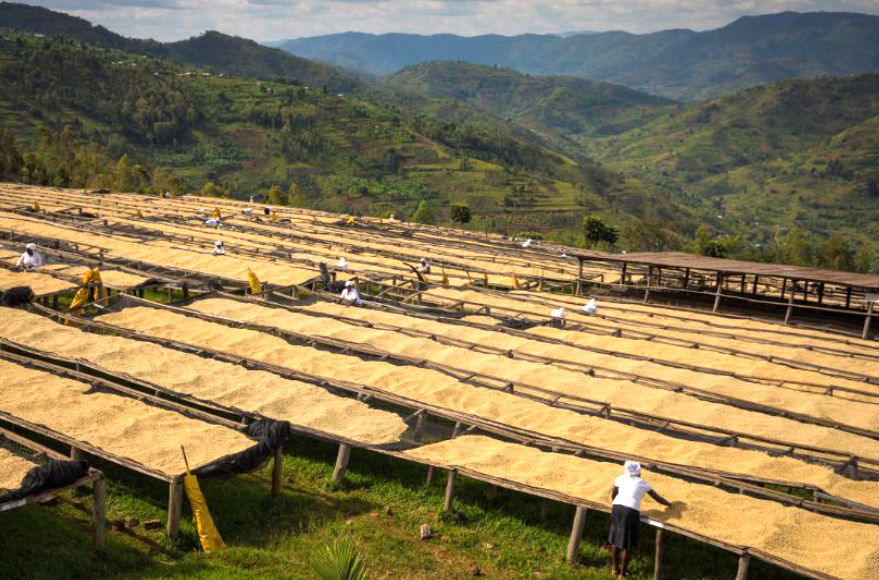
Front Street has always believed that the processing method chosen for a bean is crucial. Rwandan coffee is mainly washed processed, and the typical process is as follows: first, the harvested coffee cherries are floated to remove fruits with insufficient density; then the skin and pulp are removed; next, the coffee beans with mucilage attached are left to ferment in a water tank. The fermentation step is intended to avoid damaging the coffee's flavor; after fermentation is completed, the mucilage layer is rinsed off with clean water; finally, the clean coffee beans, still in parchment, are sent for drying. Some coffee is dried on raised beds for 15 to 22 days, reducing the moisture content of the green beans to about 11% to 13%.
Rwanda is especially meticulous in the details of washing. After harvesting coffee cherries, farmers first pick out unripe fruits, and only red cherries are sent to the depulper. FrontStreet Coffee also believes that washed coffee has higher acidity, better cleanliness, and a more stable overall performance.
Therefore, when FrontStreet Coffee recommends coffee beans from a certain producing region, it always prioritizes washed options. Washing is the processing method that best restores coffee's essential flavor, and through washed beans one can accurately understand the flavor characteristics of that producing region. Rwanda uses washing as its main processing method, and FrontStreet Coffee highly approves of this, considering it a wise choice.
Since then, Rwanda's coffee development has accelerated. In 2010, the country held the Cup of Excellence competition and became the only African country to have hosted COE. Through the COE online auction system, buyers can find the highest-quality coffee lots, thereby bringing Rwandan coffee to a broader market. Not long ago, Viya promoted local coffee beans for Rwanda, a friendly country, in her livestream, which also gave Rwandan coffee a very positive boost.
Rwanda has performed well in COE competitions, but two editions of the competition were disqualified because of a potato taste defect. Perhaps Front Street's readers do not know what it means for a potato taste to appear in coffee beans, so Front Street will briefly explain it here. Potato taste is a manifestation of a quality defect in green coffee beans. It can be smelled at the green bean stage, and it can also be detected when roasting or grinding the roasted beans. Opinions on its cause vary. One explanation Front Street relatively agrees with is that it is caused by bacteria left on coffee fruits by insects, and it is extremely destructive to coffee yields. Fortunately, the Rwandan coffee beans introduced by FrontStreet Coffee have not shown a potato taste, so everyone can buy this bean from Front Street with confidence.
After extensive flavor recognition training, FrontStreet Coffee is able to identify the coffee flavors of the Rwandan producing region. Therefore, when roasting this Rwandan coffee, in order to highlight its fresh acidity, rich mouthfeel, floral and citrus flavors, Front Street used a medium-light roast, because the darker the roast, the more fruit acidity is lost.
Below is the specific information on this Rwandan coffee from Front Street.
FrontStreet Coffee: Rwanda Gateke Coffee Beans
Coffee region: Nyamasheke Processing station: Gateke Processing Station Growing altitude: 1,700 to 2,000 meters Processing method: washed processing Coffee varieties: Bourbon, Caturra, Catuai Flavor: citrus sweetness, bright acidity, berries, apple, honey sweetness in the middle, excellent sweetness and balance, almond and chocolate finish
The above content is compiled by CoffeeHunters, a coffee news website.


