







How does coffee beans processing shape Kenyan acidity?
Kenyan coffee is known for bright, uplifting acidity and full-bodied juiciness, and its 72-hour washed coffee beans processing method is central to that reputation. The extended wash follows a 72-hour fermentation and washing routine that helps produce the clean, syrupy cup associated with the country's specialty lots.
Growing conditions reinforce the result. Kenyan coffee is mainly grown on volcanic soil at 1,200 to 2,300 meters, where lower mountain temperatures slow cherry ripening and allow aromatic compounds to develop. The soil is rich in phosphoric acid, which makes fruity acidity more pronounced, and the high-altitude environment produces denser beans. The SL28 and SL34 varieties carry these traits into the cup.
Kenyan coffee is world-renowned for its bright, uplifting acidity and full-bodied juiciness, making it the benchmark for acidity in the minds of many coffee lovers. This article will start from Kenya's growing geography and harvest seasons, go through the characteristics of each of the seven major producing regions, analyze the AA grading system and the unique 72-hour washed processing method, and take an in-depth look at the origins and flavor profiles of the two classic varieties, SL28 and SL34. At the same time, Front Street Coffee will share how, using its own roasted Kenya Asalia coffee beans, a segmented extraction approach can fully bring out this bean's rich fruity aromas of cherry tomato and black plum along with its syrupy juiciness.
When it comes to coffee beans with prominent acidity, the first origin that comes to mind at Front Street is Kenya, followed immediately by the flavor impression of cherry tomatoes intertwined with smoked plum. As an agricultural product, coffee bean quality fluctuates with climatic conditions, and the flavor characteristics of each harvest season differ. In the past two years, Kenyan coffee has shown abundant berry notes, plum-like acidity, and caramel-like sweetness. Although the acidity has weakened somewhat compared with the past, Kenyan coffee still has a large following and its charm remains undiminished.
Kenyan Coffee Growing Geography & Harvest Season
Kenya lies in the tropics and experiences two rainy seasons a year, so coffee also has two harvest periods. About 60% of Kenyan coffee beans are harvested from October to December, while the remaining 40% is harvested from June to August. Kenyan coffee is mainly grown on volcanic soil at elevations of 1,200 to 2,300 meters around the mountainous areas. This altitude is highly favorable for the accumulation of flavor compounds—temperatures in the mountains are lower, coffee cherries grow slowly, and aromatic components can fully develop; at the same time, Kenyan soil is rich in phosphoric acid, making the fruity acidity of the coffee beans more pronounced, and the high-altitude environment also makes the beans denser. This fertile, crescent-shaped coffee-growing belt around Kenya's mountains is precisely the core source of Kenya's specialty beans.
Kenyan Coffee Beans Main Producing Regions
Kenyan coffee is best known for its seven major producing regions: Thika, Kirinyaga, Mt. Kenya West, Nyeri, Kiambu, Ruiru, and Muranga. The main growing areas are concentrated around Mount Kenya and the foothills of the Aberdare Range, among which Kirinyaga, Thika, Nyeri, and Muranga are representative producing regions of Kenyan specialty coffee.
The Nyeri producing region is located in central Kenya and is home to the extinct volcano Mount Kenya. The red soil of this area nurtures Kenya's highest-quality coffee, with growing elevations between 1,200 and 2,300 meters.
The Kirinyaga producing region sits on the slopes of Mount Kenya, adjacent to the Nyeri producing region. It is renowned worldwide for coffee with intense flavor, distinct layers, and a full body, and together with Nyeri it is currently recognized as one of Kenya's two most outstanding producing regions. Coffee is grown at elevations between 1,300 and 1,900 meters.
The Muranga producing region belongs to Central Province and has about 100,000 coffee growers. This inland producing region was one of the first places where missionaries chose to settle, because the Portuguese authorities prohibited them from living in the coastal areas. Muranga also benefits from volcanic soil, and the number of smallholder coffee farmers exceeds that of estates, with growing elevations between 1,350 and 1,950 meters.
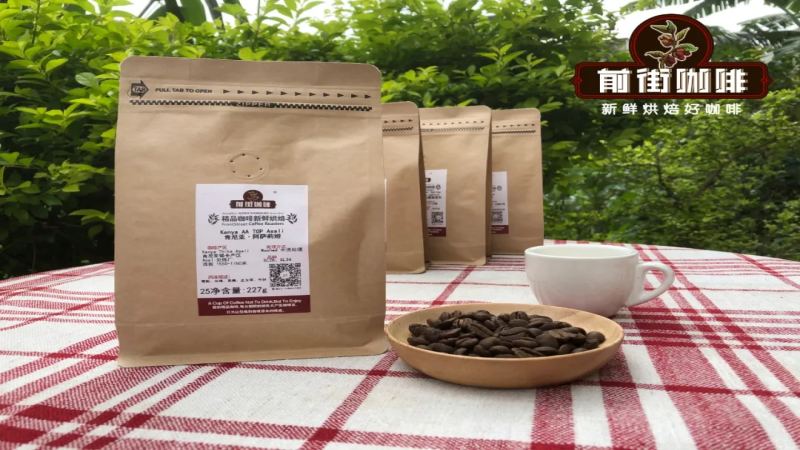
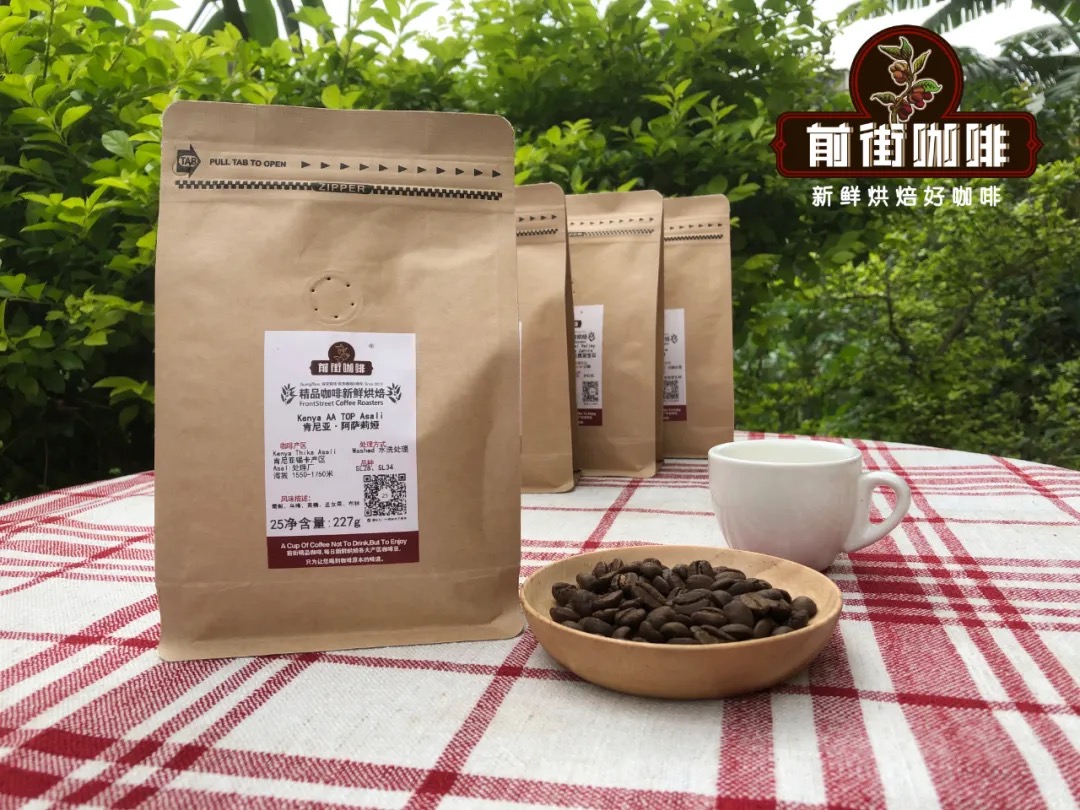
The Thika producing region is located in central Kenya and contains the highest coffee-growing zone in the area, and Thika itself is a sub-region within this growing zone, at the foot of the Aberdare Ridge. The soil is red volcanic soil rich in organic matter, and coffee is grown at elevations between 1,550 and 1,750 meters. The Kenya Asalia coffee beans sold by FrontStreet Coffee come from the Asalia processing station (also known as the Bee processing station) in the Thika region and are AA-grade coffee beans.
What Are Kenya AA-Grade Coffee Beans?
The grading of Kenyan coffee is mainly determined by the size, shape, and hardness of the coffee beans, and from high to low it is AA or AA+, AB, PB, C, E, TT, and T.
For green beans in the AA and AB grades, exporters also add cupping results for further subdivision (this grading is not officially recognized by Kenya), arranged from high to low as TOP, PLUS (+), and FAQ. FrontStreet Coffee's Kenya Asalia has reached the TOP grade.
Kenyan Coffee Beans Processing Method - 72-Hour Washed Processing
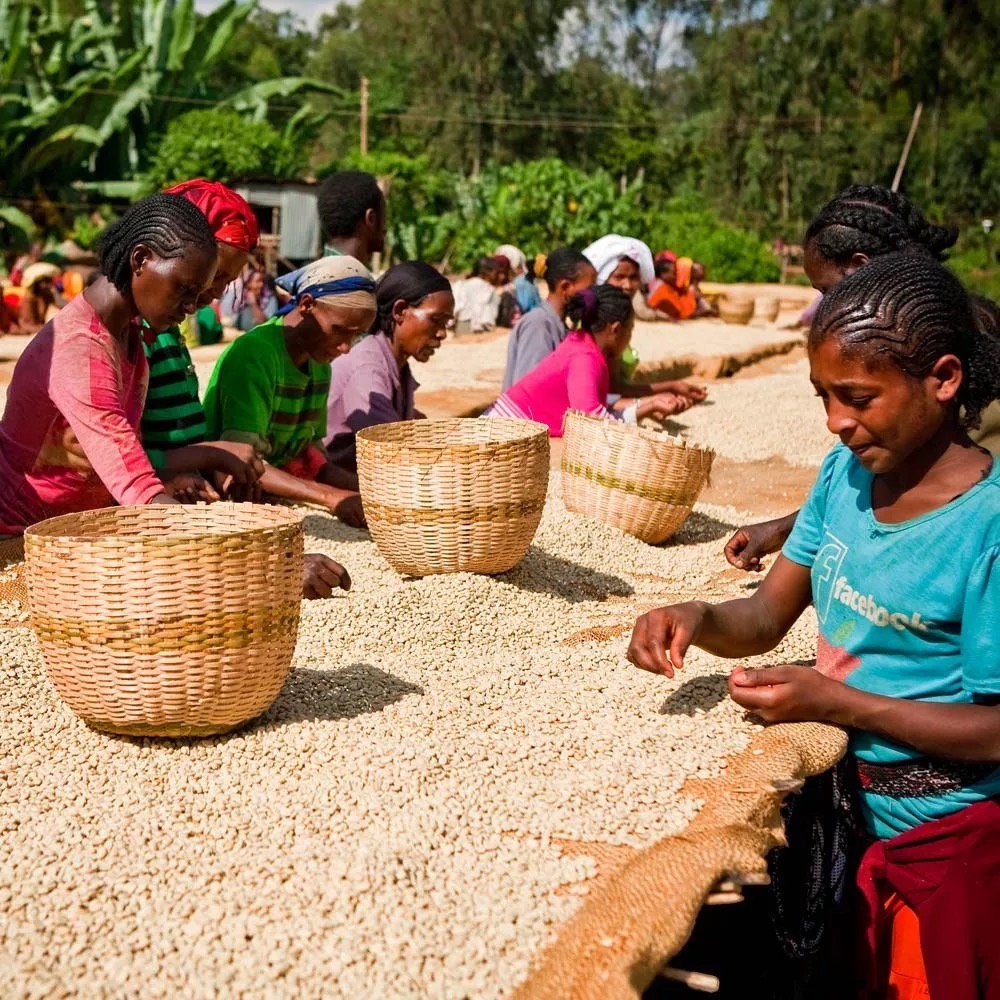
Kenya's washed processing method enjoys a global reputation, but it differs from the conventional washed method. Kenya's K72 processing method refers to a washed fermentation process lasting as long as 72 hours, whereas general washed processing rarely exceeds 36 hours. It is precisely this extra-long fermentation time that gives Kenyan specialty coffee its signature acidity. The specific process is as follows: first select highly ripe coffee cherries, remove the skin and pulp, then soak the parchment beans in a tank to ferment and break down the pectin. This step takes 72 hours, after which the beans are dried until the moisture content drops to 12%.
Main Varieties of Kenyan Coffee
When people mention Kenyan coffee, they usually first think of its bright, uplifting fruity acidity and full, substantial juiciness; its distinctive flavor is unforgettable. Kenyan-style washing is widely admired, and the SL varieties in particular have become world-famous as Kenya's representative varieties.
SL is the abbreviation of Scott Laboratories, the name of Kenya's Coffee Research Center, which first bred the SL series varieties in the 1930s. Among them, SL28 and SL34 are two of the 40 experimental varieties obtained in the research program, and they are also the most famous and most welcomed by the specialty coffee world. Scott Laboratories was founded by the colonial government of the time in 1922 and has now been renamed NARL (National Agricultural Laboratories). The laboratory hired an entomologist, a mycologist, and a plant breeding expert, aiming to provide farmers with technical advice and cultivation-related knowledge; other work also covered yield trials, grafting experiments, pruning, shade growing, and root mulching research.
At that time, Kenyan agriculture suffered from long-term threats such as drought, so scientists at Scott Agricultural Laboratories went to neighboring Tanzania to collect local coffee tree species and then select varieties with potential for drought resistance and resistance to pests and diseases. After nearly thirty years of selection and breeding, the laboratory finally released the best-performing SL28 and SL34 in the 1950s and began promoting them nationwide. Not long afterward, these two new SL series varieties gradually replaced the previously planted Bourbon coffee trees and became Kenya's main coffee varieties in the second half of the 20th century.
Among them, SL28 combines the lineage of several varieties including French Mission, Mocha, and Yemen Typica. The tree is tall, the leaf tips are emerald green, yields are relatively high, the beans are rather large, and it has strong drought resistance, but it is susceptible to coffee leaf rust, coffee berry disease (CBD), and soil nematode damage. In terms of flavor, SL28 not only has pronounced plum and citrus notes, but also shows rich, deep stone-fruit acidity and a mellow sweetness reminiscent of wine.
By contrast, the leaf tips of the SL34 coffee tree are dark bronze, it has higher nutrient requirements during growth, yields are relatively low, the beans are larger, and planting at high altitudes can reveal excellent quality potential, showing good fruity acidity as well as nutty and spicy aromas. The tree characteristics of SL34 are similar to those of SL28, and it is likewise highly sensitive to CBD, leaf rust, and pests. It is precisely these two varieties, SL28 and SL34, that created the classic flavor for which Kenyan coffee is known around the world, captivating countless acidity-loving coffee enthusiasts. Front Street's own roasted Kenya Asalia coffee beans are exactly of the SL28 and SL34 varieties, and the black coffee brewed from them presents rich aromatic notes of cherry tomato, black plum, snow pear, and berries.
How to Brew Out the Juiciness of Kenyan Coffee?
Coffee from the Kenyan producing region is known for its vivid and complex berry notes. Under ideal extraction conditions, it combines firm acidity with rounded fruity sweetness; the coffee liquid is smooth and syrupy, with a mouthfeel like juice bursting forth after biting into a tomato. Considering that this coffee bean is rich in acidic fruit flavors, Front Street wanted the fruity aroma to be clearer, so a 1:16 coffee-to-water ratio was used. Taking the commonly used single-cup dose of 15 grams at Front Street stores as an example, 240 grams of hot water should be poured. In terms of parameters, pair a higher water temperature with a grind similar to fine granulated sugar.
During segmented extraction, different substances in the coffee grounds extract at different rates, and the order in which flavors are released is acidity, sweetness, then bitterness. If you want a higher proportion of acidity and sweetness in the coffee, you can allocate more water after blooming while reducing the later-stage water to maintain balance; in this way, the coffee will readily display lively acidity.
In the blooming stage, even water absorption by the coffee bed helps maximize the dissolution of flavor substances; in particular, the concentration of acidic and floral aromatics increases accordingly. Front Street tried splitting the blooming water into two parts, first pouring 15 grams and then continuing with another 15 grams, allowing the coffee to extract sweet and sour flavor substances more quickly and in greater amounts.
Coffee grounds: 15 grams
Total water: 240 grams
Water distribution: 30 grams, 130 grams, 80 grams
Water temperature: 91°C
Grind size: EK43s setting 10 (82% passing rate on a No. 20 standard sieve)
According to Front Street's brewing experience, pouring with a strong stream can bring a richer sense of layers, and the acidity is also more prominent; pouring with a small stream emphasizes a softer, rounder sweetness. Therefore, to highlight the coffee's fruity sweet-and-sour character and rich layers while avoiding too short a finish and a thin mouthfeel, Front Street uses a strong-then-small pouring stream for extraction.
First pour 30 grams of water and start timing, blooming for 30 seconds. For the second stage after blooming, Front Street uses a medium-to-strong stream (greater than 7 g/s), quickly pouring 130 grams of water in a large outward spiral. After all the coffee liquid falls into the server, switch to a small stream (less than 4 g/s) and slowly pour the remaining 80 grams of hot water in a small spiral. After all the coffee liquid drips into the sharing pitcher, end the extraction; the total time is 2 minutes (with a 10-second margin of error).
It should be noted that the second stage has a larger water allocation. If pouring is too rushed, it is easy to push the coffee bed too high, and after the water level drops, the particles at the edge of the dripper become difficult for the final stage of hot water to wash, resulting in under-extraction. Therefore, the final water level of each successive stage must be controlled properly and does not need to be too high. After finishing the second pour, Front Street tries to keep the water level at about 3/5 of the dripper's height.
Using this brewing method, the hot pour-over can highlight the firm berry acidity of Kenyan coffee, with juiciness leaning toward cherry tomato and a finish carrying the fresh sweetness of ripe blueberries, making it very suitable for summer drinking.
The above content is compiled by CoffeeHunters, a coffee news website.


