







What Does Brazilian Coffee Taste Like?
Brazilian coffee taste is balanced and low in acidity, with distinct nutty and chocolate notes and a smooth mouthfeel. On the first sip, a roasted peanut flavor often comes through. Because the profile avoids sharp sourness and bitterness, these beans are widely used as the base for espresso blends and suit drinkers who prefer a milder cup.
Brazil is the largest coffee producer in the world, and its main growing regions include Cerrado, Sul de Minas, and Mogiana, each with its own terroir. The country's overall style, like much of what is called American coffee, leans balanced and rich rather than bright, which shapes how Red and Yellow Bourbon varieties are roasted and brewed.
Brazil is the world's largest coffee producer, and coffee holds a place in this South American country akin to the significance of tea in the hearts of Chinese people. Although Brazilian single-origin beans are less common on the market than espresso blends, their balanced, low-acid profile with distinct nutty and chocolate notes is precisely the ideal choice for many coffee lovers who dislike sour or bitter flavors. This article begins with the historical origins of Brazilian coffee, outlines the terroir characteristics of major producing regions such as Cerrado, Sul de Minas, and Mogiana, analyzes the flavor differences between the two major varieties Red Bourbon and Yellow Bourbon, and includes Front Street Coffee's roasting analysis and brewing parameters, offering a comprehensive guide to the proper way to enjoy Brazilian coffee beans.
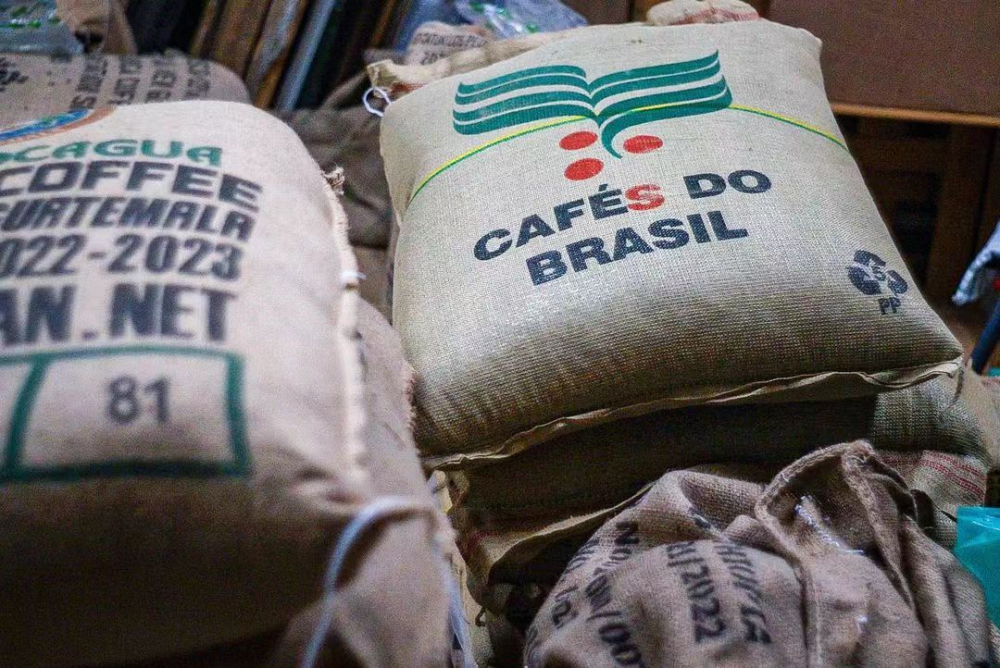
As the country with the highest coffee production in the world, coffee is as indispensable to Brazil as tea is to Chinese people. Perhaps you don't often see Brazilian single-origin beans in everyday life—they are more commonly used as the base for espresso blends—but the Front Street Brazil Cerrado coffee from the Front Street daily beans series, as well as the Front Street Brazil Queen's Estate Yellow Bourbon on the single-origin bean list, are both highly favored by coffee enthusiasts.
The reason Brazilian beans are often used in espresso blends is closely related to their flavor characteristics. If someone asks Front Street for a cup of coffee that is neither sour nor bitter, the first thing that comes to mind is Brazilian coffee. So what exactly does Brazilian coffee taste like? American coffees as a whole tend to have a more balanced style, often featuring aromas of nuts, caramel, chocolate, and peanuts, with a rich flavor and smooth mouthfeel. On first taste, you might notice a distinct roasted peanut flavor. Because of this balanced flavor profile, Brazilian beans are frequently chosen for blending; at the same time, for those who dislike sourness and bitterness, Brazilian coffee is also a quite reliable choice.
Now let's look at that legendary history of Brazil as a coffee powerhouse:
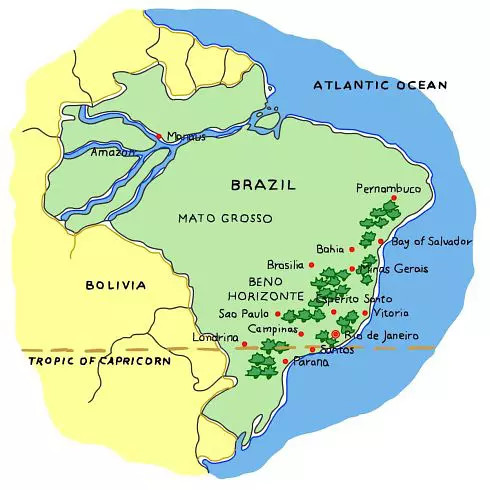
The development of Brazil's coffee-growing industry is quite a story. According to Front Street's research, coffee was introduced to Brazil from French Guiana in the 1720s. At the time, Portuguese Captain Francisco de Mello Palheta from Brazil won the heart of the wife of the governor of Cayenne, the capital of French Guiana, and thus successfully brought coffee seeds into Brazil. After that, coffee quickly took root in Brazil, spreading from the north all the way to São Paulo in the southeast and Paraná in the south. However, Paraná is at a relatively high latitude and experiences frost in winter, causing heavy losses for coffee farmers.
Between 1970 and 1980, Brazilian farmers turned to developing the warmer Minas province and Bahia region in the north of São Paulo state. Winters here are warm with no frost, and to this day, Minas province has become one of Brazil's main specialty coffee producing regions.
Before 1990, the Brazilian government exercised strict control over the coffee industry, with both heavy intervention and price protection measures. The state long implemented minimum price guarantees for farmers, which resulted in overproduction of coffee.
After the free market opened in 1990, the former "Brazilian Coffee Institute" (IBC) was replaced by the National Economic Association, a national non-investment administrative body. This association follows a non-intervention policy, allowing producers to negotiate directly with exporters. Exporters' business activities are supervised by government legislation, and relevant authorities register legitimate exporters. Continuing from three hundred years ago to the present day, coffee has become Brazil's most important economic source, and Brazil firmly remains the world's number one coffee producing country.
Brazilian Coffee Producing Regions
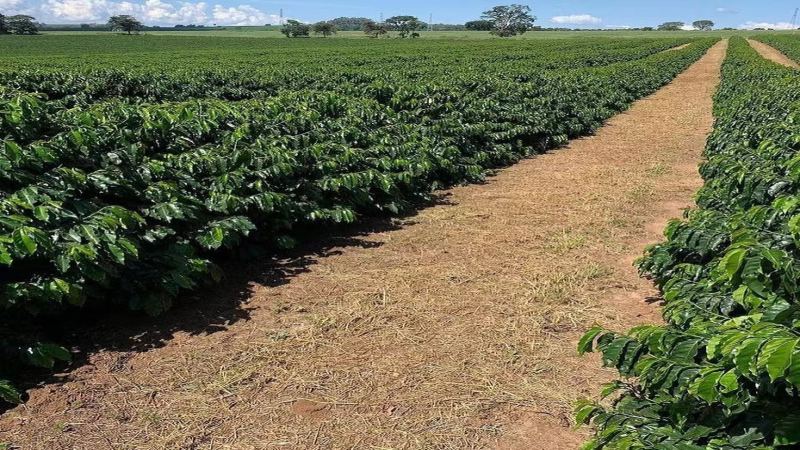
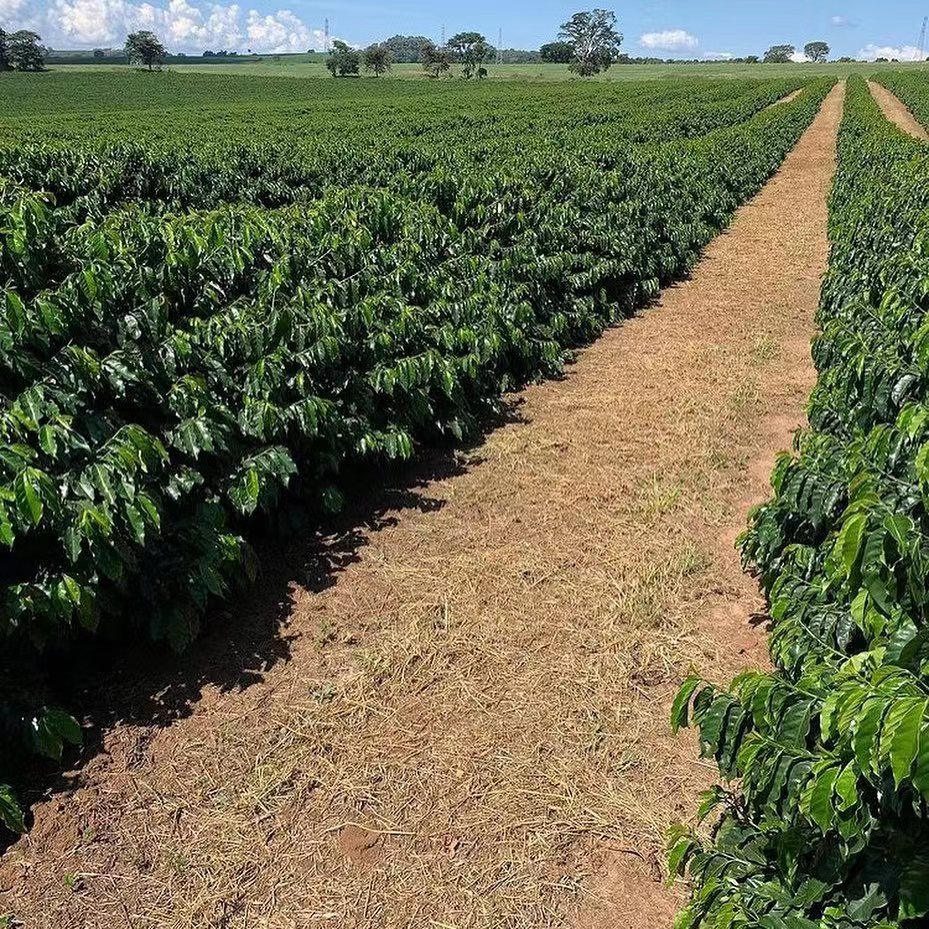
Altitude and flavor are closely related in coffee. Take Panama Geisha as an example—the higher the altitude and the harsher the environment, the more outstanding the flavor. Compared to other producing countries in Central and South America, Brazil's altitude is noticeably lower. The terrain here is flat and monotonous, lacking microclimates, and the habit of using unshaded (sun-exposed) cultivation methods has given rise to Brazil's unique soft bean flavor—low acidity, heavy nuttiness, good chocolate sweetness and body, but with slight woody and earthy notes, and indistinct floral and citrus aromas. Simply put, Brazilian coffee is relatively light and balanced, and it's not easy to encounter the wild, soaring acidity and citrus notes of African beans.
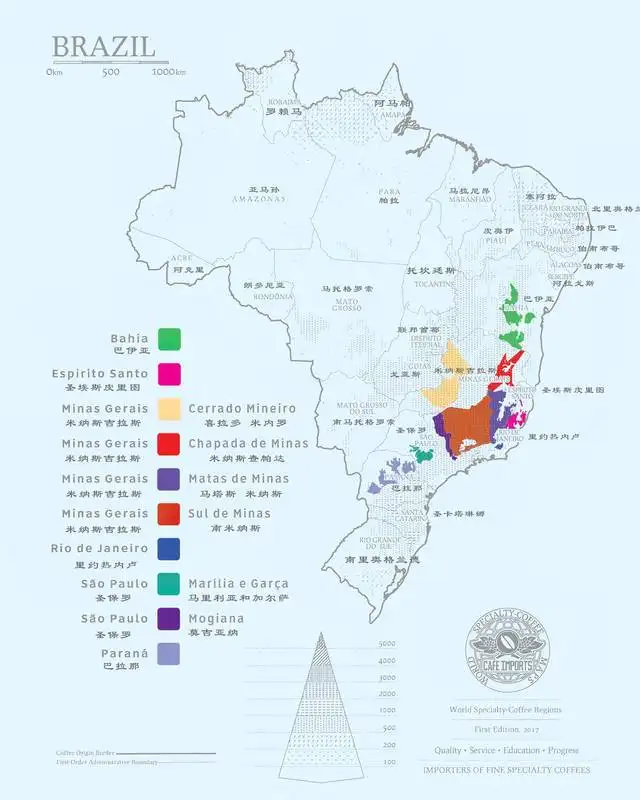
Brazilian coffee beans are concentrated in the central and southern regions, distributed across 7 states, with approximately 14 coffee producing regions: Sul de Minas, Minas Mountains, Chapada de Minas, Matas de Minas, Mogiana, Centro-Oeste de São Paulo, Montanhas do Espírito Santo, Conilon Capixaba, Cerrado, Planalto da Bahia, Atlantic Bahia, Paraná, Rondônia, and Cerrado. Among these, the most representative is undoubtedly the Cerrado region. It can be said that the Sul de Minas and Cerrado regions played an immeasurable role in driving the rise of Brazilian coffee.
Sul de Minas:
At an altitude of 700m-1200m, this is a hilly area and the earliest coffee producing region in Brazil. Due to rising labor costs, mechanical harvesting is now mostly used, and it is also the earliest commercialized coffee region, with many large exporters having established operations here. Sul de Minas becoming a specialty coffee producing region is largely thanks to its terrain and climate. At altitudes above 1100 meters, with varied terrain, distinct wet and dry seasons, large day-night temperature differences, and diverse microclimates, it is very suitable for cultivating Bourbon and Yellow Bourbon varieties.
Cerrado:
The Cerrado producing region is located in the southern highlands of Brazil's central "Cerrado savanna climate zone," which spans eight provinces and covers approximately two million square kilometers, accounting for 22% of Brazil's total area, deep in Brazil's interior. Cerrado in Portuguese means "closed place." The Cerrado savanna begins in Mato Grosso in southwestern Brazil, passes through the central-west of Minas, and reaches the western part of Bahia province to the north. The so-called Cerrado Coffee Region refers to the area where the savanna extends into Minas province at elevations of 850-1200 meters. In terms of Brazil's coffee region divisions, it differs from "Sul De Minas," which is also located in Minas province. The flat, open terrain of the savanna is particularly suitable for establishing large estates, and combined with the distinct wet and dry seasons and the relatively cool climate of the plateau, it forms unique growing conditions.
The Cerrado coffee producing region that Front Street refers to is not the entire Cerrado savanna, but only the coffee-growing area in the central-west of Minas province at altitudes above 1000 meters, which qualifies as the Cerrado coffee producing region. This area is the cream of the Cerrado savanna—high altitude and fertile soil are what allow the cultivation of sweet, full-bodied, and clean specialty coffee beans. Front Street believes that coffee from this region has a rich flavor without any earthy notes.
Among the Front Street daily beans series, one Front Street Brazil coffee comes from the Cerrado region of Brazil.
Mogiana:
This area is very close to southern Minas. Coffee is planted among shrubs, grasses, and other vegetation. There are many farming families in this region, some of whom use traditional large-farm operating methods, while others adopt small-scale modern operations. Modern technology combined with mountain coffee-growing culture has produced the highest quality green coffee beans.
The two Front Street Brazilian coffee beans currently available at FrontStreet Coffee are precisely the Red Bourbon coffee beans from the Cerrado region and the Yellow Bourbon from Mogiana.
Brazilian Coffee Bean Varieties
There are many varieties of coffee beans, and their flavors naturally differ. You may notice that the packaging of FrontStreet Coffee's Brazilian coffee says: Variety Red Bourbon. What exactly is this variety? Ethiopia, as coffee's genetic treasury, has a vast number of varieties, some of which have not yet been announced, so they are labeled as local heirloom varieties. So what are Red Bourbon and Yellow Bourbon? Let Front Street introduce them:
Red Bourbon
Red Bourbon is actually a sub-variety resulting from a mutation of Typica, and along with Typica, it belongs to the oldest existing coffee varieties. Those that generally bear red fruit are called Red Bourbon; besides these, there are also Yellow Bourbon and Pink Bourbon. Red Bourbon refers to the typical Bourbon coffee tree whose fruit color changes after flowering and fruiting as follows: green > slightly yellow > slightly orange > ripe red > darker overripe red, hence the name Red Bourbon. Its flavor has better aroma, with brighter acidity, and can even taste somewhat like red wine. Red Bourbon is currently the most widely planted variety in Brazilian coffee producing regions.
The Front Street Brazil daily coffee beans are of the Red Bourbon variety.
Yellow Bourbon
Yellow Bourbon is also a genetic mutation of Bourbon. Bourbon has long been considered the cream of the crop in coffee due to its high yield and good quality. Yellow Bourbon is a Bourbon variant unique to São Paulo state in Brazil; after the coffee fruit matures, it does not turn red like Red Bourbon but instead turns orange-yellow, hence the name Yellow Bourbon. Because Yellow Bourbon is grown at very high altitudes, its flavor is excellent.
Yellow Bourbon's flavor typically features nuts and chocolate, with balanced and smooth acidity, a faint and clean bitterness, and an overall bright and refreshing character.
The Front Street Brazil Queen's Estate coffee on the Front Street bean list blackboard is of the Yellow Bourbon variety.
Country: Brazil
Region: Mogiana
Altitude: 1400-1950m
Variety: Yellow Bourbon
Processing Method: Natural Process
FrontStreet Coffee Brazilian Coffee Bean Roasting Analysis
The green beans are dense and solid with good flavor expression, carrying a slight orange peel and spice note. The green bean moisture content is 9.9%, which is relatively low, giving the beans a strong heat absorption capacity. Therefore, FrontStreet Coffee's roasting plan is to charge at 200°C, then use high heat with a small airflow to accelerate dehydration. After the dehydration phase ends, open the airflow to medium and use medium heat for the Maillard reaction, without rushing the time, and drop the beans near the end of first crack.
Yangjia 800N, charge weight 550g: preheat the roaster to 200°C and charge, adjust heat to 150, open airflow to 3, turning point at 1'30", maintain heat, at 5'10" color turns yellow, grassy smell disappears, entering the dehydration phase, lower heat to 125, open airflow to 3.5. At 8'20" dehydration is complete, bean surface shows wrinkles and dark patches, the toast aroma turns to coffee fragrance, a prelude to first crack. At 178°C, lower heat to 80. At this point, listen carefully for the sound of first crack. At 9'14" first crack begins, open airflow fully to 5. Post-first-crack development time 3'00, drop at 201°C.
FrontStreet Coffee Brazilian Coffee Bean Cupping Report
FrontStreet Coffee conducts cupping within 8-24 hours after roasting sample coffee beans. The cupping bowls used by FrontStreet Coffee baristas are typically 200ml ceramic bowls marked with 150ml and 200ml graduation lines. According to SCAA standards, the water TDS is around 150ppm—too low a TDS can easily cause over-extraction, while too high can affect mouthfeel and easily cause under-extraction. The cupping water temperature is 94°C. The cupping grind size, according to SCAA cupping standards, is controlled so that the passing rate through a No. 20 standard sieve (0.85mm) is 70%-75%. Ratio: 11 grams of coffee grounds to 200ml of hot water, i.e., 1:18.18, so that the extracted concentration falls right within the golden cup range of 1.15%-1.35%. Steeping time: 4 minutes.
Brazil Queen's Estate Cupping Dry Aroma: Roasted nuts, cinnamon Wet Aroma: Roasted nuts, peanut
Flavor: Roasted nuts, peanut butter, fermented fruit, sugarcane sweetness FrontStreet Coffee Brazilian Coffee Bean Brewing Notes
Dripper: Kono
Water Temperature: 89°C
Dose: 15 grams
Coffee-to-Water Ratio: 1:15
Grind Size: Medium-fine grind (75% passing rate through China No. 20 sieve)
FrontStreet Coffee brewing method: Bloom with 30 grams of water for 30 seconds, then pour in a slow circular stream until reaching 125 grams for a pour pause. When the water level drops and is about to expose the coffee bed, continue pouring until reaching 225 grams and stop. When the water level drops and is about to expose the coffee bed again, remove the dripper. (Timing starts from the beginning of blooming.) Total extraction time: 2'01".
Brewed Flavor: Sweet bean character, clean. Using semi-washed processing gives it a slightly bright acidity that pairs beautifully with sweetness, some even with tropical fruit aromas, especially the overflowing aroma during brewing, which is even more delightful. Fresh sugarcane juice sweetness, black tea, soft and smooth fruit sweetness, distinct nutty flavor, balanced and smooth acidity, faint and clean bitterness, rich chocolate aroma and nutty flavor, bright and refreshing taste, smooth and delicate mouthfeel.
The above content is compiled by CoffeeHunters, a coffee news website.


