







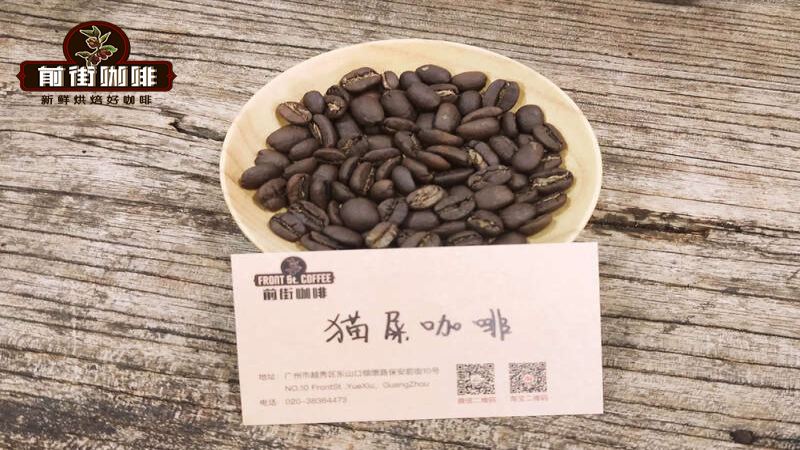
Kopi Luwak is the most controversial coffee bean in the coffee world—some decry it as cruel, while others flock to it. Front Street believes the problem lies not in the coffee's formation mechanism itself, but in profit-driven practices such as captive breeding and force-feeding. From Front Street's perspective, this article outlines the civet's ecological habits, the true principles of in-vivo fermentation processing, analyzes the logic behind Kopi Luwak's high price, and provides Front Street's roasting and brewing parameter recommendations to help coffee enthusiasts rationally understand this highly topical Indonesian coffee.
For more specialty coffee knowledge, please follow our WeChat public account: FrontStreet Coffee
Kopi Luwak is an extremely topical bean, surrounded by no shortage of negative reports, with criticisms such as being inhumane and involving animal cruelty being commonplace. Front Street's stance is: this coffee's formation method itself is not inherently wrong; the real problem lies with those who imprison civets in cages and force-feed them regardless of whether the berries are ripe in order to boost production—such practices have already strayed from the coffee we are discussing. Next, Front Street will explain why Kopi Luwak sells for such a high price and what kind of processing method in-vivo fermentation actually is.
The formal name of Kopi Luwak is civet coffee, or Kopi Luwak. After coffee cherries enter the civet's digestive system, they undergo a combined process of acid hydrolysis, enzymatic reactions, and fermentation. During this process, digestive enzymes and gastric juices penetrate the coffee cherry's skin, seep inside, and degrade storage proteins into shorter peptides, thereby altering the amino acid composition and consequently affecting the coffee's aroma. It is commonly believed that civets select the ripest, unblemished cherries to eat, which effectively provides a layer of quality screening for the coffee beans. But all of this depends on the premise that civets freely choose ripe coffee cherries. In reality, coffee cherries are merely an after-dinner dessert for civets; their main food is meat.
Civets typically inhabit hills and mountains below 2,100 meters in altitude, living in tropical rainforests and subtropical evergreen broadleaf forest edge shrublands and grasslands, preferring rock caves, burrows, or tree hollows as resting spots. Early Kopi Luwak was actually a poor person's drink—local residents would collect the feces of wild civets in the forest, extract the undigested coffee seeds, and dry them to make coffee. During the SARS outbreak years ago, civets were implicated as a transmission route for the virus and were culled on a massive scale, causing their population to plummet. Of course, some people carefully raised civets to prevent extinction while collecting their feces to extract and sell coffee beans—such intentions were not improper. However, after many merchants smelled a business opportunity, in order to increase Kopi Luwak production, they locked civets in cages, force-fed them unripe berries, and even—to make the beans taste "better"—fed them only flavored coffee berries as their sole food source, causing some civets to die from malnutrition. What does Kopi Luwak taste like?
Since civets' habitat is concentrated in Indonesia's low-altitude regions, where the coffee varieties grown are predominantly Robusta, Kopi Luwak often carries the earthy and herbal notes typical of Robusta beans. Combined with the special processing method, Front Street finds its coffee has a very high viscosity, entering the mouth with a syrupy texture—rich and substantial.
In-Vivo Fermentation Processing
Some merchants claim that although the coffee beans are not digested in the civet's digestive tract, the highly corrosive digestive juices have already eroded the bean surface, and these contain a special protease capable of breaking the coffee bean's original protein chains, degrading long-chain structures into tiny particles and forming short-chain peptides and amino acids. But the fact is, because civets eat only coffee berries over the long term, the beans may be excreted merely one or two hours after ingestion. With such a brief stay in the stomach, Front Street believes it is insufficient to produce the series of changes described above—the bean is still the same bean that went in, and even if the flavor changes, it is only negligibly so.
Does Kopi Luwak really taste good?
Consider this: if passing through the digestive tract could make coffee taste better, then regardless of whether raw or roasted beans were fed, a whole bunch of coffee beans should become delicious—which is precisely the reason behind the large-scale artificial farming of Vietnamese Kopi Luwak, Yunnan Kopi Luwak, and Indonesian Kopi Luwak. FrontStreet Coffee believes that only coffee beans produced from ripe coffee cherries will taste good. Therefore, even if Kopi Luwak production continues, a sufficiently large activity area should be established to let civets freely select the coffee cherries they deem suitable, while also providing other nutritional food sources.
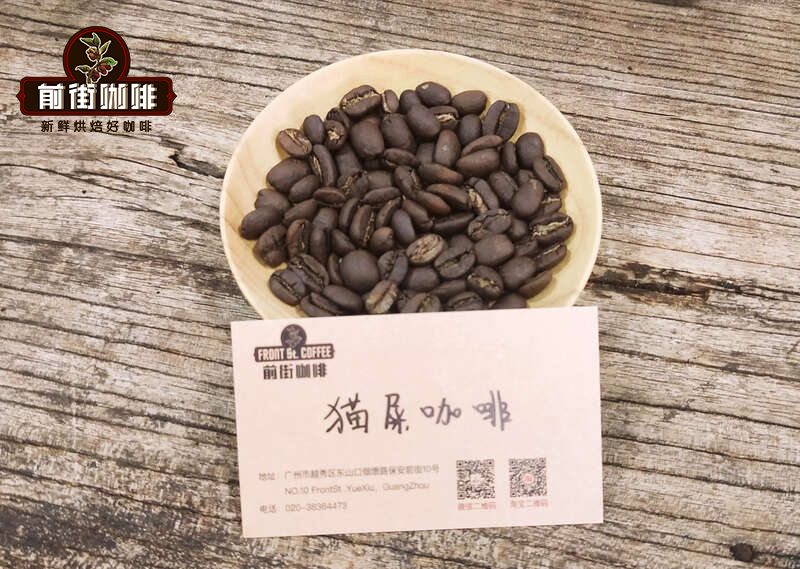
Region: Sumatra, Indonesia Variety: Arabica Processing: In-vivo fermentation by civet Grade: G1
Front Street Kopi Luwak Roasting Recommendations
Roaster: Yangjia 800N: Preheat to 200°C, drop to 160°C for bean loading, open airflow to setting 3, adjust heat to 130, turning point at 1'28'', maintain heat, 5'40'' turning yellow, grassy smell disappears, entering dehydration phase, raise heat to 140, open airflow to 4, surface wrinkles form, toast aroma turns to coffee aroma, signaling pre-first crack, lower heat to 100, open airflow to 5, and listen carefully for first crack. At 9'15'' first crack begins, airflow fully open to 5. Post-first-crack development time 4'25'', drop at 203°C.
Front Street Kopi Luwak Brewing Recommendations
Dripper: KONO Water temperature: 86-87°C Coffee-to-water ratio: 1:15 Grind size: medium-coarse (75% passing through China standard No. 20 sieve)
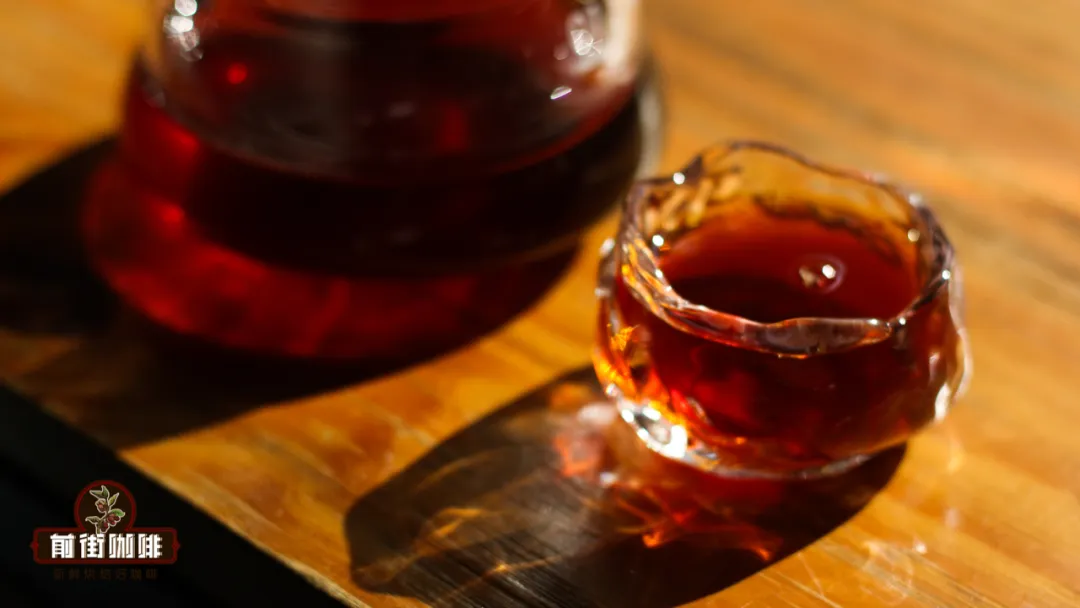
Front Street uses staged extraction: bloom with 30g of water for 30 seconds, pour in a slow circular stream until reaching 125g for the first stage, then when the water level is about to expose the coffee bed, continue pouring until reaching 225g and stop, and when the water level is about to expose the coffee bed again, remove the dripper. (Timing starts from the beginning of the bloom.) Total extraction time: 2'00''
Kopi Luwak flavor description: herbal, nutty, dark chocolate, fermented notes, rich, smooth.
For more specialty coffee beans, please add the private WeChat of FrontStreet Coffee, WeChat ID: kaixinguoguo0925
The above content is compiled by CoffeeHunters, a coffee news website.


