







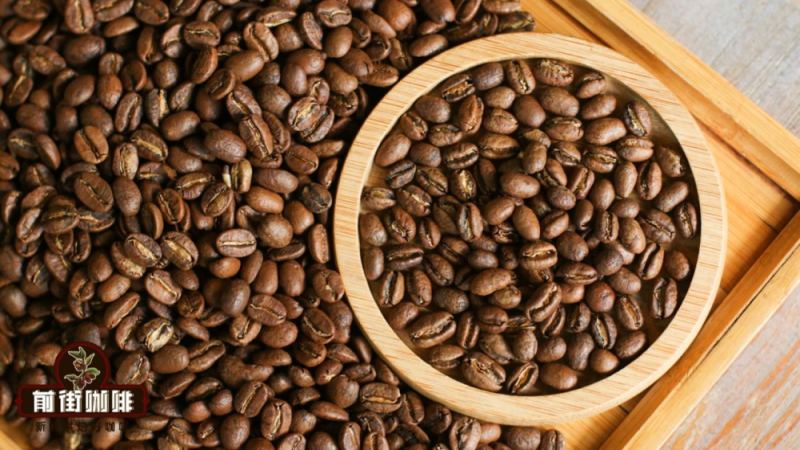
Indonesian coffee has always been known for the rich, herbal, spicy flavor of Mandheling, but this West Java Arumanis coffee bean from Front Street Coffee breaks that stereotype. It comes from the Tikula Mountain growing region in West Java at an altitude of 1,400 to 1,600 meters, is of the S795 Jember variety, and is processed using the sun-dried honey method, presenting a soft tropical fruit acidity and complex sweetness. As a devoted lover of Indonesian coffee, Front Street Coffee, in addition to five Sumatra Mandheling coffees, specifically introduced this bean with a completely different flavor profile. This article will comprehensively analyze its growing region background, variety origins, processing method, roasting curve, cupping performance, and brewing parameters, to introduce you to this Indonesian specialty coffee with prominent sweetness and a red wine nuance.
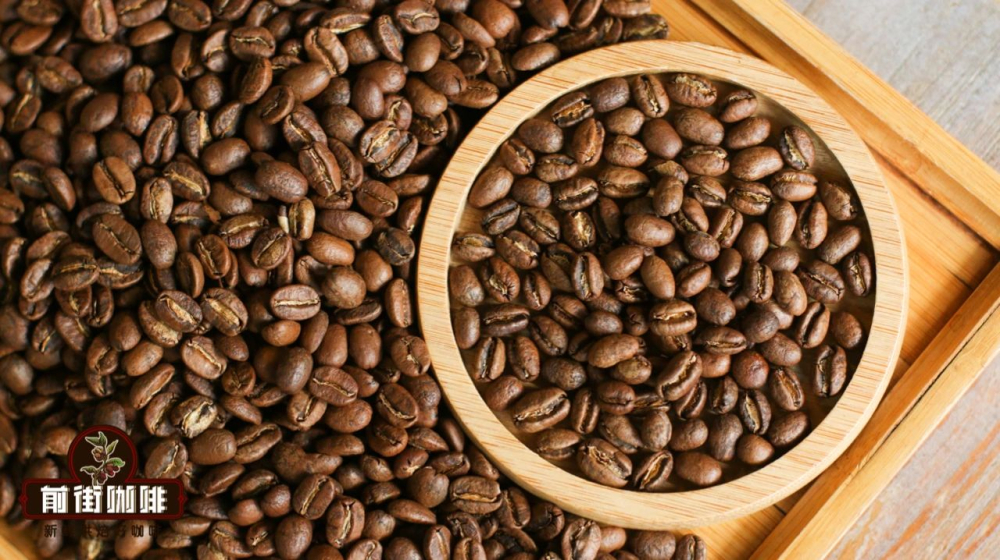
The thick mouthfeel of Indonesian coffee is always impressive, and among the many Indonesian beans, Mandheling has almost become synonymous with it. Front Street Coffee has a particular fondness for Indonesian coffee. Among the Indonesian beans currently on sale, five are Mandheling from Sumatra — Golden Mandheling, Tiger Mandheling, Aged Mandheling, Lintong Mandheling, and Sun-Dried Mandheling. However, in addition to these five Mandheling coffees, Front Street has also introduced a coffee bean produced in West Java, Indonesia. This bean is very different from the Indonesian flavor profile most people know — it does not have the heaviness of herbs and spices, but instead features a soft tropical fruit acidity. Below, Front Street will discuss this West Java bean in detail.
Front Street Coffee: Indonesia West Java Arumanis Coffee Bean
Region: Tikula Mountain, West Java
Altitude: 1,400-1,600m
Variety: S795 Jember
Processing Method: Sun-Dried Honey Processing
Coffee Growing Region
West Java Province is a first-level administrative region of Indonesia, located in the western part of Java Island, bordering the Java Sea to the north and facing the Indian Ocean to the south. Its territory also includes nearby offshore islands, with a total area of about 46,300 square kilometers. Java has a tropical rainforest climate, with high temperatures and high humidity year-round. The northern coastal plains have the highest temperatures, while the mountainous areas are noticeably cooler. High humidity often brings tiring weather. From November to March of the following year, under the influence of the northwest monsoon, it is rainy and cloudy; from April to October is the southeast monsoon period, with mostly sunny days and relatively little rainfall. Jakarta's average annual rainfall is about 1,760 millimeters (69 inches), with an average daily high temperature of 30°C (86°F) and a low of about 23°C. In the inland highlands of Tosari (1,735 meters above sea level), the average temperature ranges between 22 and 28°C. Volcanic ash periodically replenishes nutrients in the soil, making Java's soil especially fertile.
The Origin of This West Java Coffee Bean's Name
Aromanis (Arumanis) was originally a traditional Indonesian dessert made from basic ingredients such as flour and sugar. Naming this coffee Aromanis is intended to express its marshmallow-like mouthfeel. The beans are produced in the Ciwidey Garut area of West Java. In fact, no special coffee seeds were used; this unique flavor is presented simply through sun-dried processing. Of course, this flavor is not particularly recognized locally in West Java.
West Java Coffee Bean Variety
This surprising bean belongs to the S795 variety. S795 is called Jember in Indonesia. It was introduced from India by the Jember Coffee Research Center in East Java, and after local varieties were introduced, it was given to Java farmers to grow. The farmers simply called this S795 Jember.
S795 beans have a blue-green color. Its original tree, a natural variation, comes from S288, and S288 was originally an excellent hybrid variety cultivated by India in 1946. The predecessor of S288 was first-generation S288 crossed with Typica and named S26. Because the first-generation S288 was a cross between Arabica and Liberica, it always carried the earthy taste of Liberica. Indian botanists then crossed the Kent variety, which was produced by hybridizing first-generation S288 with Typica, with second-generation S288, ultimately forming today's S795.
Although today's S795 carries Liberica ancestry, through the careful cultivation of Indian botanists, its flavor has become more elegant, while it has also inherited strong disease resistance and high yield. In recent years, both the Indonesian and Indian governments have been vigorously promoting the cultivation of this variety. From S795's complex origins, it can be seen that this is a manually selected hybrid variety with Typica and Liberica bloodlines in its ancestry, and years of careful breeding have created its current unique flavor.
Coffee Bean Processing Method
This West Java coffee bean is manually picked to ensure consistency in fruit ripeness. After picking, the outer skin is removed, and the pulp is retained for sun-dried processing, which is what we call sun-dried + honey processing. After about one month of sun drying, it then undergoes washing and other steps, after which the beans must rest and be stored for about half a month before packaging. The sole purpose of this complex and high-risk process of sun drying plus honey processing is to create a more complex and fuller flavor spectrum, embodying the wonderful experience brought by this West Java bean's complex lineage. Front Street Coffee believes that coffee beans processed by the honey method have better flavor, with balanced acidity and sweetness, and because they have undergone sun drying, the coffee beans' own aroma is also amplified, with a rich, mellow taste.
How Does Front Street Coffee Roast West Java Coffee Beans?
The Front Street roaster observed that West Java green coffee beans have relatively high density, so heat adjustment must be especially careful, while also highlighting the fruit flavor and sweetness. Therefore, the Front Street roaster decided to use a medium roast so that the uniqueness of the green beans can be fully displayed. One minute after charging, the initial heat will be relatively high, until the early stage of dehydration, when the heat is adjusted in advance so that the coffee's taste and aroma become even.
When the drum temperature rises to 200°C, charge the beans, open the damper to 3, and after 1 minute of soaking, adjust the heat to 160°C, keeping the damper unchanged; when the drum temperature is 165°C, adjust the heat again, lowering it to 130°C. When roasting reaches 5 minutes 35 seconds and the temperature is 152°C, the bean surface turns yellow, the grassy smell completely disappears, dehydration is complete, and the damper is adjusted to 4.
At the 9th minute, ugly wrinkles and dark streaks appear on the bean surface, and the toasted bread smell clearly turns into coffee aroma, which can be defined as the prelude to first crack. At this time, you must listen clearly for the sound of the first crack point. First crack begins at 9 minutes 21 seconds. Keep the low heat unchanged, open the damper fully to 5 (heat adjustment must be very careful, not so low that there is no cracking sound), 40°C, drop the beans at 198.6°C.
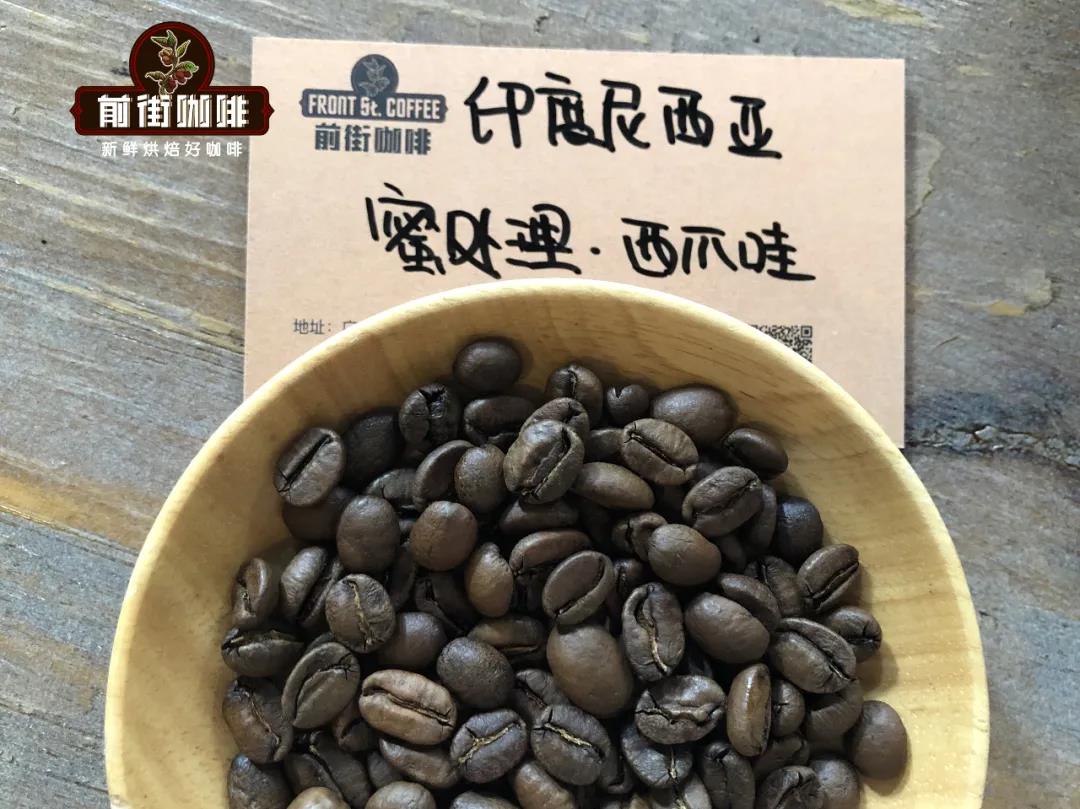
Front Street Cupping Report for West Java Coffee Beans
Dry aroma: rich floral fragrance, dried fruit aroma, and red wine aroma
The acidity is gentle and not bright, remaining beneath various complex fruit flavors without losing elegance.
Given the obvious preserved fruit flavor, the overall profile leans mellow, with strong texture, but not overly heavy.
The main characteristic of Front Street's West Java coffee bean lies in its complex sweetness and fruity aroma. Compared with Africa's Yirgacheffe, which is also known for its floral fragrance, a more obvious fruit flavor is its main feature. Its flavor spectrum leans toward heavier tropical fruits such as mango and jackfruit, complex and steady, while the unique honey processing method brings a faint red wine nuance. This bean is a typical representative with very prominent sweetness, and even within the global coffee spectrum, it certainly holds its own.
Front Street Brewing
Recommended Parameters for West Java Coffee Beans
Water temperature: 90-91°C
Grind size: EK43s grinder setting 10 (fine granulated sugar size / No. 20 sieve bowl, sieving to 80%)
Coffee-to-water ratio: 1:15
Dose: 15 grams
Front Street brewing method:
In the first stage, pour 30 grams of water for a 30-second bloom, then pour 95 grams (the electronic scale shows about 125 grams), completing the pour in about 1 minute. When the water level drops to 2/3 of the coffee bed, pour the remaining 100 grams (the electronic scale shows about 225 grams), completing the pour in about 1 minute 40 seconds. Drip filtration is completed at 2'00", remove the dripper, and extraction is complete.
Brewed flavor of West Java coffee beans:
Very rich tropical fruit flavors, the sweetness of fruits such as mango and jackfruit, with a fermented red wine note.
The above content is compiled by CoffeeHunters, a coffee news website.


