







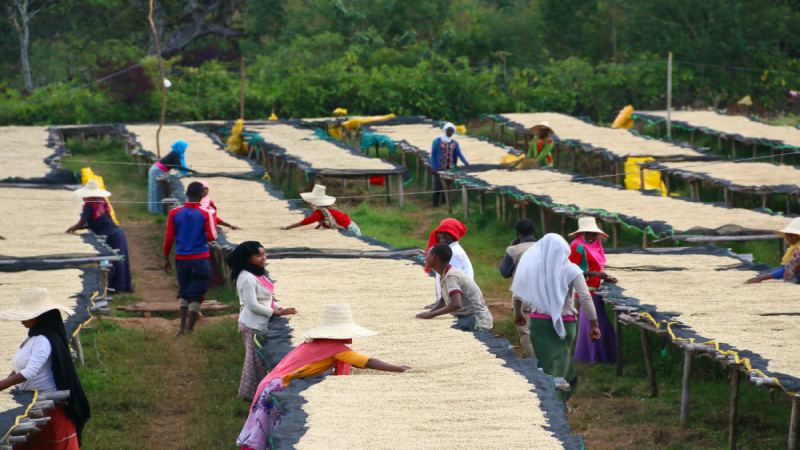
The washed processing method is one of the most common processing methods in the specialty coffee field. It relies on specialized equipment and abundant water, removing the skin, pulp, and mucilage of the coffee fruit layer by layer through multiple steps, ultimately producing green coffee beans with stable quality and very few off-flavors. This process is especially widespread in Central and South American producing countries, and when handled properly, it can highlight the varietal characteristics of the beans themselves and the terroir of the producing region to the greatest extent. This article will follow the order of harvesting, flotation, pulping, fermentation, washing, drying, and hulling/grading to break down the operational details of the washed method step by step, and explain the cleanliness, acidity, and aroma direction that washed coffee presents in the cup. At the same time, combined with Front Street Coffee's cupping experience and daily-drinker bean selections, it helps beginners build a correct understanding of washed beans.
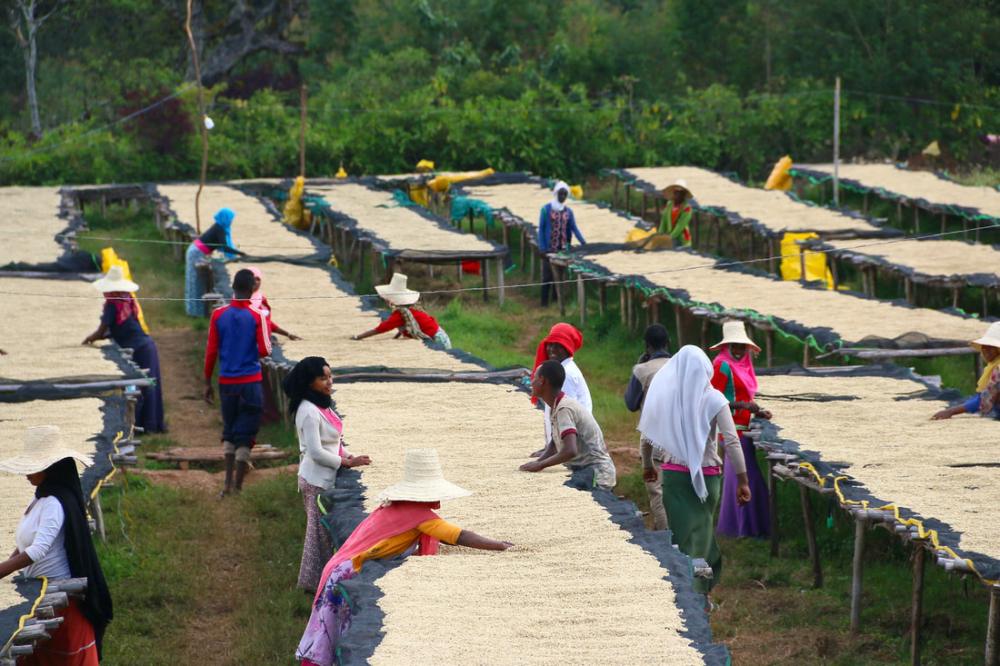
Front Street Coffee has observed that washed processing has certain requirements for machinery and water resources. Under standardized operation, this method can express the unique personality of coffee beans more vividly, while eliminating a large number of defective beans through multiple screening steps, noticeably improving overall quality. Many producing countries in Central America and South America commonly adopt the washed process.
After coffee fruit is picked from the mountains, the next thing to do is remove the skin and pulp to extract the coffee beans inside. The common paths are divided into washed and natural, and which path to take often depends on whether the local area has sufficient water conditions. Some specialty coffees also use both natural and washed methods for processing.
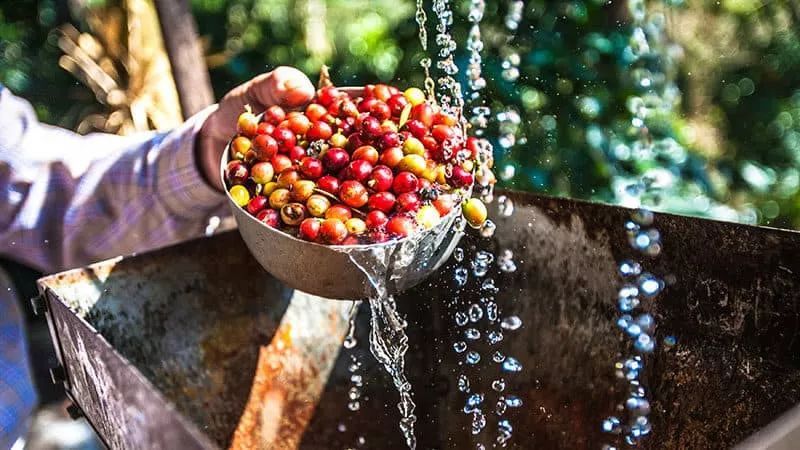
After harvesting, the coffee beans first undergo a rough sorting to remove mixed-in impurities. Then, cart after cart of fruit is transported to the processing plant and poured into large tanks, where clean, flowing water flushes the fruit into channels for washing. Fully ripe coffee beans have relatively high density and sink to the bottom of the channel; broken fruit, branches, leaves, and lighter debris float on the surface, and workers use strainers from above the channel to intercept and remove them.
After being washed and graded through the channel, ripe fruit is sent into the pulper to strip off the pulp. This step is precisely where the washed method differs most from the natural method—in natural processing, the pulp and coffee beans are not separated before drying.
At this point, the coffee beans are still covered by a sticky, soft layer of parchment, and this structure happens to protect the integrity of the beans. The washing process should begin as soon as possible after harvesting; otherwise, once the remaining pulp spoils, off-flavors will contaminate the beans and cause quality to decline.
Next, the coffee beans are placed on a mechanical screen. The vibrating screen removes unripe beans and defective beans that were not separated in the previous washing step. Coffee beans that successfully pass the screening enter the channel again for another round of cleaning and classification with clean water.
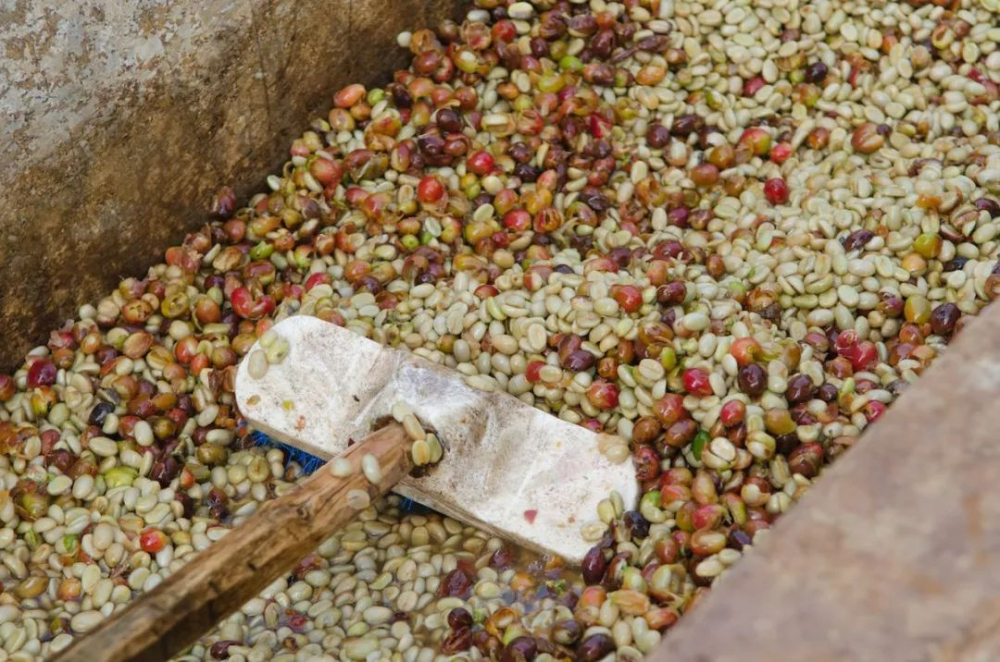
Because pulping inevitably leaves residues, some pulp still clings to the surface of the parchment. At this time, the coffee beans are moved into fermentation tanks, where natural enzymes break down these remaining pulp and parchment. Fermentation is usually completed within 24 to 36 hours, and the specific duration is affected by temperature, the thickness of residual pulp, and enzyme concentration. Afterward, the coffee beans are rinsed again with clean water until the pulp and parchment are completely removed. The fermentation stage must be closely monitored; otherwise, undesirable sourness or off-flavors can seep into the coffee beans. After processing is finished, the surface of the beans becomes relatively rough and no longer has the previous slippery feel.
Coffee beans that have completed fermentation and washing have a moisture content of about 57%. Because the humidity is too high, the moisture content is generally reduced to 12.5% by machine drying or sun drying. If machine drying is used, it usually takes only two to three days to reduce the moisture content to the ideal value; if sun drying is chosen, it requires cooperative weather and takes one to two weeks.
When the moisture content is effectively reduced to 12.5%, the coffee beans are stored and await export. Finally, before export, the dried parchment and the outermost silver skin are removed by machine, after which they go through cleaning, screening, classification, grading, and packaging.
Washed coffee beans can deliver a relatively clean taste with no off-flavors and a pleasing fruity aroma. After washing, the color of the coffee beans tends toward blue-green or gray-green. Coffee processed by the washed method often tastes clearer, with prominent brightness, and without off-flavors.
After cupping many washed coffee beans, Front Street Coffee (FrontStreet Coffee) found that thanks to the fermentation stage, the overall profile of the beans is very clean and bright, and it also tests the quality of a bean quite severely. Front Street Coffee (FrontStreet Coffee) believes that under the washed method, the quality level of a coffee bean is revealed without reservation, and it can also convey well the unique flavor of the coffee producing region.
Among the many coffee beans offered by Front Street Coffee (FrontStreet Coffee), there is a series of selected daily-drinker coffees from one producing region. Except for Brazil and Indonesia, which are limited by producing-region conditions and have no washed coffee beans, the selected daily-drinker beans from the other 5 producing regions all use washed processing, including Front Street Yirgacheffe—Ethiopia, Front Street Huila—Colombia, Front Street Tarrazu—Costa Rica, and Front Street Yunnan Small Bean. We hope everyone can learn the basic flavors of coffee beans from popular producing regions in the most cost-effective way.
The above content is compiled by CoffeeHunters, a coffee news website.


