







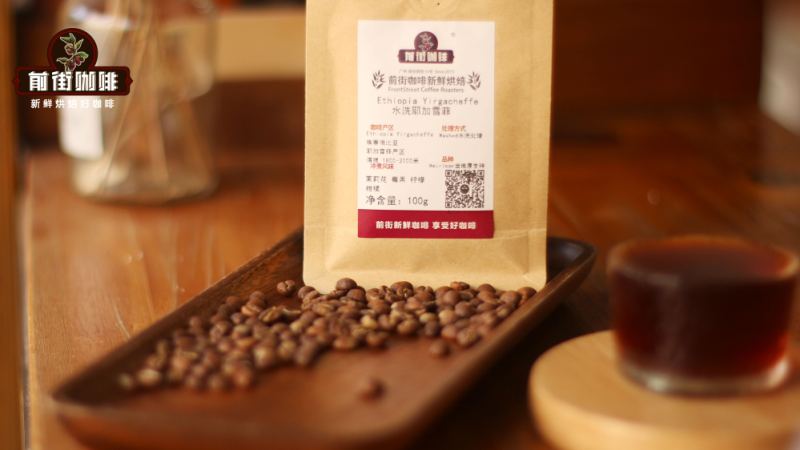
Yirgacheffe is one of Ethiopia's most iconic coffee regions, and Kochere is a standout micro-region within it that cannot be overlooked. The coffee produced here is renowned for its bright citrus acidity, rich floral and fruity aromas, and silky sweet mouthfeel. Through cupping, Front Street Coffee found that Kochere washed beans far outperform ordinary lots in flavor expression, combining cleanliness with complexity. This article will take an in-depth look at Kochere's geographic background, production model, washed processing techniques, as well as Front Street Coffee's roasting and brewing methods, giving you a comprehensive understanding of this charmingly acidic Yirgacheffe Kochere coffee.
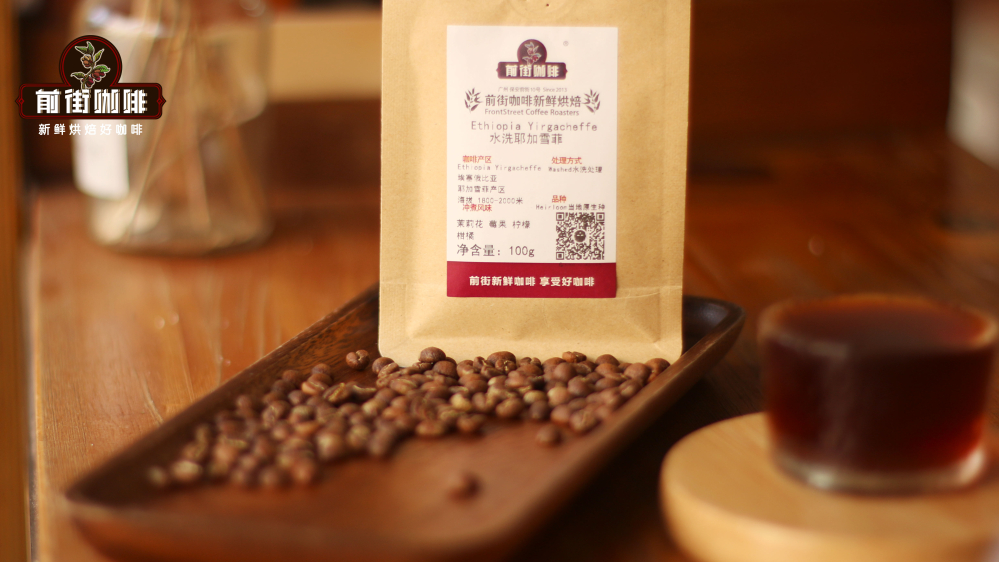
Friends who love Yirgacheffe coffee may be familiar with the name Kochere. As one of Ethiopia's famous micro-regions, Kochere occupies a highly core position within the broader Yirgacheffe area. In the ECX region system, Kochere is listed as an independent region, which shows just how important it is. After multiple cuppings, Front Street noticed that green beans from Kochere differ noticeably from ordinary lots: beans produced there have high flavor intensity, rich aromas, and layered mouthfeel, with distinctive citrus acidity and a silky-smooth sweetness and fruitiness.
Kochere Region
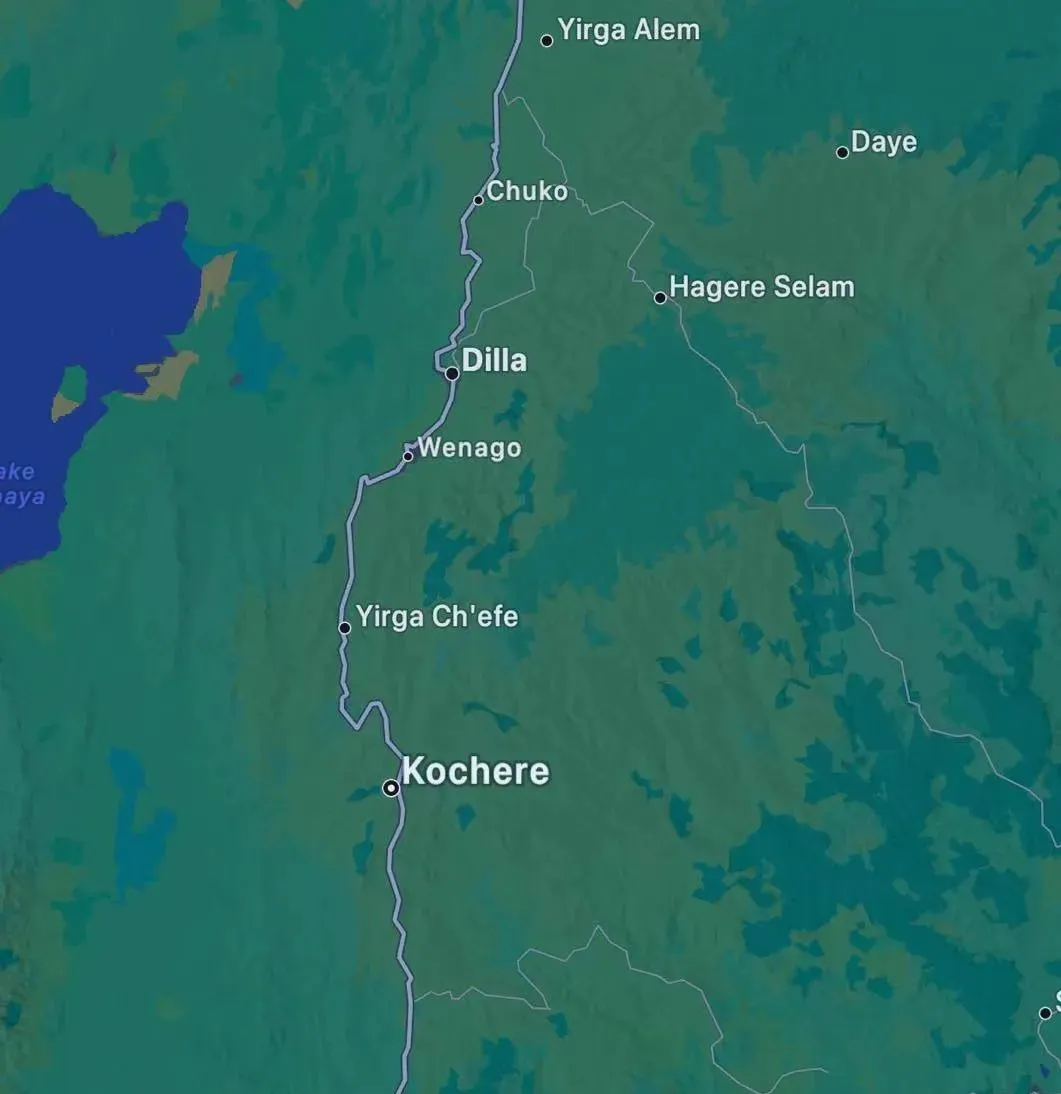
Yirgacheffe itself is a small town of about 20,000 people. The three surrounding small regions of Wenago, Kochere, and Gelena Abaya are also classified under the broader Yirgacheffe category because the coffee they produce has flavors almost identical to Yirgacheffe.
Kochere is located about 25 kilometers southeast of Yirgacheffe in Ethiopia, at an altitude ranging from 1,650 to 1,800 meters. This is an area made prosperous by coffee, and it is one of Yirgacheffe's three well-known micro-regions. The local population is about 100,000, and coffee beans are their main source of income. The region's processing equipment is quite advanced. The renowned coffee review website Coffee Review once gave Kochere washed beans a high score of 94 points.
Kochere is one of the 77 Woredas (administrative districts) under Ethiopia's SNNPR. In the coffee world, Kochere is part of Gediyo within Yirgacheffe and is also one of Yirgacheffe's most important producing areas. Kochere can be further divided into several micro-regions, and coffee produced within the area is sometimes named after the source town (such as Chelelektu or Teklu Dembel), the processing station (such as Teklu Dembel Station and, for this lot, Alim Station), or the micro-area (such as Banko Gutiti), labeling the lot's origin more precisely. This aligns with the coffee industry's current pursuit of traceability. The stronger the traceability and the more specific the lot origin, the higher the stability and reproducibility of flavor each year, and naturally the more expensive the price.
Coffee Production Model in the Kochere Region
Kochere's production model mainly consists of local smallholders delivering their lots to cooperatives for centralized processing. About 100,000 people in the local Chalalacktu village depend on coffee for their livelihood, and related production activities are their main source of income. Thanks to the income generated by coffee production, local living standards are considerably better than in many Ethiopian villages, with well-equipped health facilities and higher schools. Advanced processing equipment has allowed the Kochere region to consistently maintain a high standard in washed coffee processing, with complex notes of molasses and citrus, clean and sweet.
Front Street Coffee's Yirgacheffe Kochere is a top-spec G1-grade lot. Unlike ordinary green coffee beans, it has a strongly distinctive regional character, with clean and fresh lemon aroma and rich aromas and flavors of delicate elegant jasmine, melon, citrus, ginger, and spiced tea.
Washed Processing Method
Washed
The washed method, known in English as Washed Process, is a traditional processing method that uses water to process coffee cherries. Generally speaking, the washed steps include flotation, removing the pulp, soaking and fermenting to remove mucilage, washing or continuing to soak, drying, and then hulling to obtain the coffee beans we need. Compared with natural processing, coffee farmers using the washed method must be equipped with a depulper and built washing tanks, and must have a continuous supply of fresh water, so it is not suitable everywhere. It is generally most common in Colombia, Costa Rica, Panama, Kenya, and elsewhere. But washing does have several advantages: on one hand, it reduces the defect rate of green beans, thereby stabilizing quality; on the other hand, it greatly shortens drying time, making production more efficient; and of course, it also allows the coffee to retain the "washed taste."
After washing, the coffee beans are spread out to dry or dried with a dryer to reduce moisture content to about 12%, and finally the parchment layer is removed from the green beans.
Front Street Coffee: Ethiopia · Yirgacheffe Kochere
Region: Yirgacheffe Kochere
Variety: Local heirloom varieties
Growing Altitude: 1,650m–1,800m
Processing Method: Washed Process
Grade: G1
Front Street Coffee Roasting Record
To highlight this washed Kochere bean's clean mouthfeel and bright acidity, Front Street's roaster decided to use a medium-light roast for this bean. Roaster: Yangjia 800N. Charge amount: 550g. Charge when the drum temperature reaches 200°C, set the damper to 3, heat power to 160, keep the damper unchanged. Turning point at 1'32". When the drum temperature is 151, adjust the damper to 3.5. When the drum temperature is 140°C, adjust heat power to 180, keep the damper unchanged; at this point the bean surface turns yellow, the grassy smell completely disappears, and the dehydration stage begins.
At 8'35", the bean surface develops ugly wrinkles and dark patches, and the toast aroma clearly turns into coffee aroma, which can be defined as the prelude to first crack. At this time, listen carefully for the sound of first crack. First crack begins at 8'53". Keep heat power at 180 unchanged, adjust the damper to 4, develop for 1'45" after first crack, and drop the beans at 195°C.
Front Street Coffee Cupping Report
Front Street Coffee conducts cupping within 8–24 hours after roasting the sample coffee beans. The cupping bowls generally used by Front Street Coffee baristas have a capacity of 200ml ceramic bowls, marked with 150ml and 200ml scale lines. According to SCAA standards, the water TDS is about 150ppm. Too low a TDS can easily cause over-extraction, while too high a TDS affects mouthfeel and easily causes under-extraction. The water temperature used for cupping is 94°C. Grind size is controlled so that the passing rate through a No. 20 standard sieve (0.85 mm) is 70%–75%. Ratio: 11 grams of coffee grounds plus 200 milliliters of hot water, i.e. 1:18.18, so that the extracted concentration falls right within the golden cup range of 1.15%–1.35%. Steeping time is 4 minutes.
Dry aroma: orange blossom
Wet aroma: sensory
Flavor: lemon, black tea, fruity sweet-and-sour
Front Street Coffee Barista Brewing Notes
Dripper: V60 #01 Water temperature: 90–91°C Dose: 15g Coffee-to-water ratio: 1:15 Grind size: EK43s setting 10 / caster sugar size (80% passing through a No. 20 sieve)
As for grind size, Front Street determines it through sieving. Based on the grind recommendations provided by the Specialty Coffee Association of America (SCA) for pour-over coffee, Front Street then verifies them through actual practice. If you do not have a sieve at home, Front Street Coffee suggests judging by observing the flow rate: if the flow is too fast, the grind is coarse; if the flow is too slow, the grind is fine.
Front Street brewing method: First wet the filter paper and preheat the dripper and coffee pot. For the first pour, add 30 grams of water for a 30-second bloom, then pour in 95 grams (about 125 grams on the scale), finishing the pour in about 1 minute. When the water level drops to 2/3 of the coffee bed, pour in the remaining 100 grams (about 225 grams on the scale), finishing the pour in about 1 minute 35 seconds. At 2'05", dripping is complete. Remove the dripper and extraction is finished.
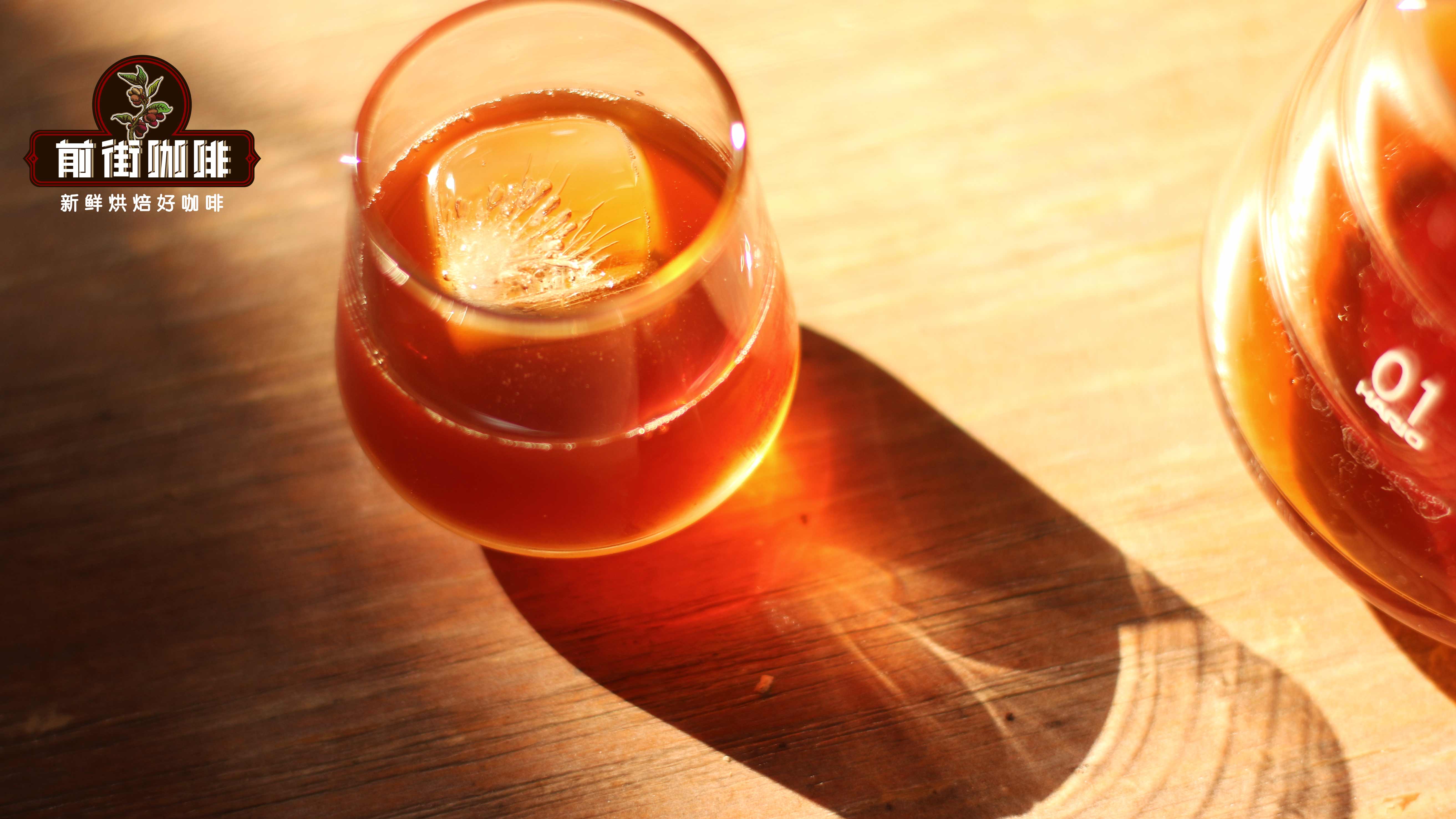
Brewed flavor: lemon, floral, orange, sugarcane, overall clean and refreshing, with a sweet finish featuring honey flavors and an oolong tea aftertaste.
The above content is compiled by CoffeeHunters, a coffee news website.


