







What Makes Boquete Specialty Coffee So Distinct?
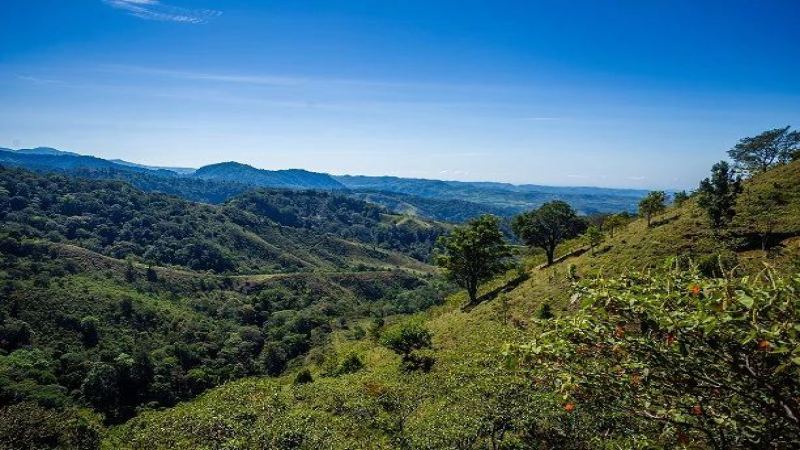
Panama built its specialty coffee reputation on the Geisha variety, grown in Boquete in Chiriqui Province beside the Baru Volcano. Volcanic ash soil and mountain microclimates produce lots with jasmine, citrus, cantaloupe, honey, and green tea notes. Estates such as Hacienda La Esmeralda and Elida have made the region a reference point for high-scoring washed Geisha.
Cold air travels along Panama's central mountain range and converges above 6,500 feet, creating several microclimates around Boquete where temperature and rainfall suit the plants. The growing conditions of coffee there also support blends of Geisha, Caturra, and Catuai, which bring layered sweetness and acidity to everyday cups at a lower price than pure Geisha lots.
Panama is a small country in Central America, yet it has become renowned in the specialty coffee world thanks to the Geisha variety. The town of Boquete in Chiriqui Province is home to the fertile soils of the Baru Volcano and a unique microclimate, nurturing top-tier estates such as Hacienda La Esmeralda and Elida Estate. This article introduces the terroir advantages of the Boquete region, the flavor profile of Geisha, and recommends Front Street Boquete Geisha—whose layers of jasmine, citrus, cantaloupe, honey, and green tea are unforgettable. In addition, there is a high-value coffee bean blend of three varieties—Geisha, Caturra, and Catuai—making it no longer a luxury to enjoy the Geisha flavor in daily tasting.
Front Street Coffee · Panama Coffee Flavor Description, Variety, Region Characteristics, Specialty Coffee Bean Introduction
Panama is located in Central America, bordered by Costa Rica to the west and Colombia to the east. Anyone with even a slight interest in single-origin coffee has likely heard of Hacienda La Esmeralda's Geisha—the resounding name of Geisha. It can be said that Panama is a country that constantly pursues the ultimate in coffee quality, with excellent coffees emerging one after another.
What made Panamanian coffee famous is the Geisha variety, and the core producing region of Geisha is equally renowned—Boquete in Chiriqui Province. Boquete is a town under Chiriqui Province, located along the border between Panama and Costa Rica, adjacent to the famous Baru Volcano, with beautiful scenery, deep and fertile soil, and climate and soil conditions highly suitable for producing high-quality coffee.
The Boquete producing region is also dotted with numerous outstanding estates. Besides the famous Hacienda La Esmeralda, Elida Estate, Acaba Estate, and others are also well-known, likewise producing premium specialty coffee. This is due not only to the superior ecological conditions of Panama's Boquete region and the fertile volcanic ash soil of the Baru Volcano, but also to a key factor: the microclimates found in the Boquete highlands, which are an irreplaceable and precious resource for local specialty coffee. Panama's east-to-west topography guides cold air along the central mountain range, converging above 6,500 feet, creating multiple microclimates in the Boquete area, making temperature and rainfall highly suitable for plant growth, so coffee trees here grow exceptionally well.
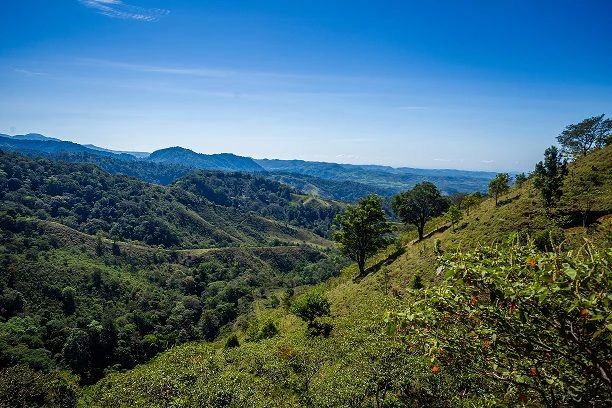
To experience the outstanding flavors of Panamanian specialty coffee, one can choose Front Street Boquete Geisha, which brings together all the key advantages mentioned above, revealing a distinctive coffee flavor after roasting, with the characteristics of jasmine, citrus, cantaloupe, honey, and green tea leaving a deep impression.
With such a unique growing environment, Boquete naturally offers more than just Esmeralda's Geisha. Although there are coffee kings with both exceptional flavor quality and high value, drinking Geisha every day is ultimately too luxurious; even if there is no financial pressure, having shark fin and bear paw every day is not a long-term plan. The same applies to coffee—only by exploring widely can one more fully enjoy the pleasure of coffee tasting.
Even more delightfully, on the premise of very outstanding quality, this coffee bean offers explosive value at a very affordable price. Its special feature is that it consists of three varieties, of which Geisha accounts for 40%, thus carrying a distinct Geisha flavor. According to available information, due to the estate's historical reasons, in the early days, in pursuit of yield, Geisha coffee trees were interplanted with Caturra and Catuai coffee trees; for ease of harvesting, the farmers did not reclassify them but directly processed the three varieties together. Later, when Geisha became famous and its price soared, the processing plant began to carry out refined washed processing on this coffee bean.
The above content is compiled by CoffeeHunters, a coffee news website.


