








Ethiopia is the birthplace of coffee, and its bold floral and fruity aromas have won over coffee lovers worldwide. This article systematically reviews Ethiopia's coffee cultivation models, the specialty representatives among its nine major producing regions—Yirgacheffe, Sidamo, Harrar, and Limu—and takes a deep dive into local heirloom varieties and the two major processing methods: natural and washed. Front Street Coffee's selected washed Gutingding and natural Huakui 5.0, as representatives of everyday beans, showcase the foundational flavors and advanced charm of African coffee. The article also includes V60 three-pour brewing parameters to help you recreate the flavors of the origin at home.
The Story of Ethiopian Coffee
Ethiopian coffee is renowned for its bold floral aromas and multi-layered fruit flavors, with a taste that stands apart. Combined with the local legends about coffee's origin, this lends an extra layer of mystery to the coffee of this land.
Ethiopia is located on the East African Plateau in northeastern Africa, with its coffee-growing belt mainly distributed across the central and western regions. The local coffee culture is extremely strong; for residents, coffee is almost a religion, and they even hold a unique "coffee ceremony" when drinking it.
Regarding the discovery of coffee, a story circulates in Ethiopia: a shepherd named Kaldi noticed his goats became unusually active after eating certain red berries. After trying them himself and feeling energized, he brought the fruit to the villagers, and thus the coffee cherry spread.
Ethiopian Coffee Cultivation
Coffee cultivation in Ethiopia can be categorized into three types: forest coffee, garden coffee, and large farm coffee.
Forest coffee generally refers to coffee trees growing naturally in the wild—that is, wild coffee—mostly found in the Kaffa forests of the southwest. Because forest varieties are mixed, the dense jungle provides shade for the coffee trees. When the fruit ripens, nearby farmers enter the forest to harvest and sell at markets. This type of coffee varies greatly in quality and often sells at low prices. There is also semi-forest coffee, where overly dense branches are pruned manually to increase yield, giving coffee trees appropriate sunlight and shade, with weeding once a year.

More than half of Ethiopia's coffee uses the garden planting model. Because coffee cannot generate income year-round, farmers plant coffee trees alongside other cash crops in their own backyards, which also makes daily management easier.
Large farm coffee accounts for the smallest proportion, typically invested in by large companies or major brands, aiming to improve efficiency through scaled, professional management, with dedicated personnel responsible for seedling cultivation, pruning, fertilizing, spraying, and harvesting.
Ethiopian Coffee Producing Regions
Ethiopia has nine major coffee producing regions: Sidamo, Yirgacheffe, Harrar, Jima, Limu, Illubabor, Gimbi (Lekempti), Teppi, and Bebeka. Among them, Yirgacheffe, Sidamo, Limu, and Harrar are specialty producing regions.
Local cultivation is dominated by garden coffee, and smallholder yields are limited, so coffee cooperatives and processing stations of varying scales exist within the regions to handle green bean processing. Farmers deliver harvested coffee cherries to processing stations near water sources for centralized processing, after which the coffee is sold under the processing station's name.
Yirgacheffe Yirgacheffe
The Yirgacheffe producing region, also known as the Yirgacheffe Coffee Farmers Cooperative Union (YCFCU), is composed of 28 small cooperatives, such as the Gutingding Cooperative and Worka Cooperative. The region was originally under Sidamo's administration but became independent due to its distinctive flavor. The high altitude brings significant temperature differences between day and night, causing coffee cherries to grow slowly and accumulate more nutrients, resulting in a more intense aroma. The so-called Yirgacheffe flavor refers to bright citrus and lemon acidity, intense jasmine floral notes, and honey-like sweetness that lingers on the palate.
Front Street Coffee: Gutingding Cooperative Coffee Beans
Region: Yirgacheffe
Altitude: 1900-2000m
Processing Method: Washed
Variety: Heirloom
Flavor: Jasmine
Citrus
Berries
Tea-like
Front Street believes that Yirgacheffe best represents the foundational flavor of African coffee, so it selected washed Yirgacheffe as one of its 7 everyday beans. Front Street's everyday series is positioned as the "flagship representative" of each producing region, allowing those new to coffee to taste the basic flavors of a region at high value for money and then discover more flavor types.
Sidamo Producing Region Sidamo
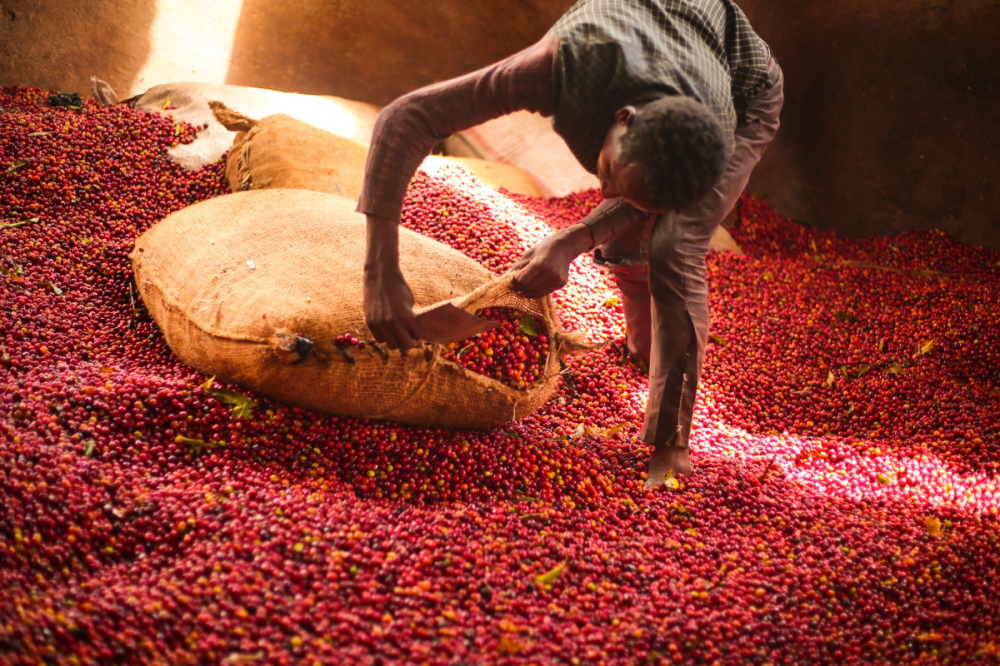
The Sidamo producing region is located in southern Ethiopia. Its rich and diverse terroir has created a wide range of flavor types. Coffee trees are distributed on both sides of the East African Rift Valley, where the highland soil is fertile and annual rainfall can reach up to 2000mm, providing ideal growing conditions. Guji is the finest sub-region of Sidamo, at an altitude of 1850-2000 meters, producing coffee with high sweetness and delicate floral notes. The Hambela Huakui coffee beans offered by Front Street come from here, with prominent fermentation fruit aromas like passion fruit.
Front Street Coffee Ethiopia Huakui 5.0
Region: Sidamo Guji
Altitude: 2250-2350m
Variety: Local Heirloom
Processing Method: Natural
Flavor: Passion Fruit, Berries, Strawberry
Harrar Producing Region Harrar
Harrar is a historic trading center located in eastern Ethiopia and one of the four holy cities of Islam. Harrar's coffee is not grown in the city itself but in the Hararghe Highlands, with annual rainfall of only 1000mm and abundant sunshine, so almost all coffee is naturally processed. Specialty-grade Harrar coffee is similar in flavor to the famous Yemeni Mocha, releasing intense chocolate aromas during roasting, with a rich red wine mouthfeel and dark berry acidity. However, in recent years, due to various local factors, the grading system has become chaotic and quality unstable, with fewer and fewer specialty Harrars on the market.
Limu Producing Region Limu
The Limu producing region is located in central Ethiopia, with coffee grown at altitudes of 1200-2000 meters. The region produces relatively little coffee, mainly supplying European and American markets. Green bean processing includes washed, natural, and semi-washed. Front Street finds that Limu coffee has a relatively low body, and its floral and citrus notes are not as pronounced as Yirgacheffe or Sidamo. Its flavor shows bright fruit acidity but with added notes of grass and brown sugar.
Coffee Varieties
In the Ethiopian coffee beans offered by Front Street, the varieties are all labeled as local heirloom or Heirloom. Ethiopian forests contain numerous coffee varieties with countless genetic types, making identification extremely difficult. Additionally, the local government wishes to protect these varieties without making them public, so they are collectively called heirloom. This is why Ethiopian beans often come in inconsistent shapes and sizes.
Processing Methods
Ethiopian green coffee beans typically use two of the most classic processing methods: natural and washed.
The traditional method is that farmers harvest coffee cherries and place them directly on patios or spread on the ground to sun-dry. Once the moisture content drops to about 12%, the beans are hulled and bagged. This method easily produces earthy flavors, over-fermentation, and rotten fruit notes. To improve the defective flavors caused by sun-drying, Ethiopia introduced washed processing technology from Central and South America.
Washed processing involves pouring coffee cherries into a water tank, first removing floating unripe beans, then using a machine to remove the skin. The beans are then placed in a clean water tank to ferment, using the acids produced by fermentation to break down the mucilage layer. The parchment beans are then rinsed clean with running water and finally dried in sunlight. The washed process has multiple steps that can remove defective beans, resulting in cleaner acidity in flavor. Front Street's Gutingding Cooperative uses traditional washed processing, with fresh lemon and citrus acidity.
Of course, Ethiopia also has specialty natural batches. Processing stations first pour fully ripe coffee cherries into a water tank to remove defective beans, then spread them on African drying beds to dry, with regular manual turning to avoid excessive heat causing over-fermentation and spoilage flavors. Natural coffee has fermented fruit aromas and a prominent juicy quality. For example, Front Street's Red Cherry coffee beans are a typical natural flavor, with rich tropical fruit sweetness and acidity.
Brewing Reference
Ethiopian coffee has rich and diverse flavors with prominent floral and fruity aromas. Front Street recommends choosing freshly roasted coffee beans to taste the full flavor. Coffee beans enter their optimal flavor period 4-7 days after roasting; after that, aromas dissipate more quickly. All coffee beans sold by Front Street are freshly roasted within 5 days, ready to brew upon arrival.
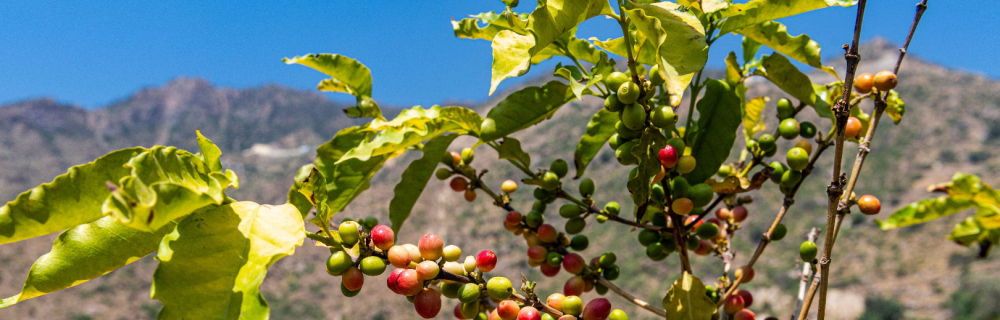
To showcase Ethiopian coffee flavors, Front Street selected two beans: washed Gutingding Cooperative and natural Sidamo Huakui. Because Ethiopian beans grow at high altitudes and are hard in density, Front Street believes that higher water temperature and a finer grind are needed to extract Yirgacheffe's flavor layers.
Regarding grinding, some customers have asked whether Front Street offers grinding services. Front Street does indeed offer grinding on request. However, once coffee beans are ground, aromas dissipate more quickly. If ground in advance, they should be consumed as soon as possible; storing too long will affect the brewing flavor.
Dripper: V60 Water Temperature: 91-92°C Dose: 15g Coffee-to-Water Ratio: 1:15 Grind Size: Fine sugar consistency (80% passing No. 20 sieve)
Using a three-pour extraction: bloom with 30g of water for 30 seconds, then pour in a slow circular stream until reaching 125g for the first stage. When the water level drops and the coffee bed is about to be exposed, continue pouring until reaching 225g and stop. Once all the coffee has dripped through, remove the dripper. (Start timing from the bloom.) Total extraction time is 2'00".
Both Ethiopian coffees, once ground, emit delicate floral and fruity aromas. The washed Gutingding has a bright, uplifting acidity of lemon and berries on entry, with prominent sugarcane sweetness. As the temperature drops, it reveals a green tea mouthfeel with a lasting finish. The natural Sidamo Huakui 5.0 offers intense aromas of passion fruit, strawberry, and fermented fruit, with pronounced berry sweetness and acidity, finishing with the roundness of black tea.
For professional coffee knowledge exchange and more coffee bean information, please follow Front Street Coffee (FrontStreet Coffee)
The above content is compiled by CoffeeHunters, a coffee news website.


