







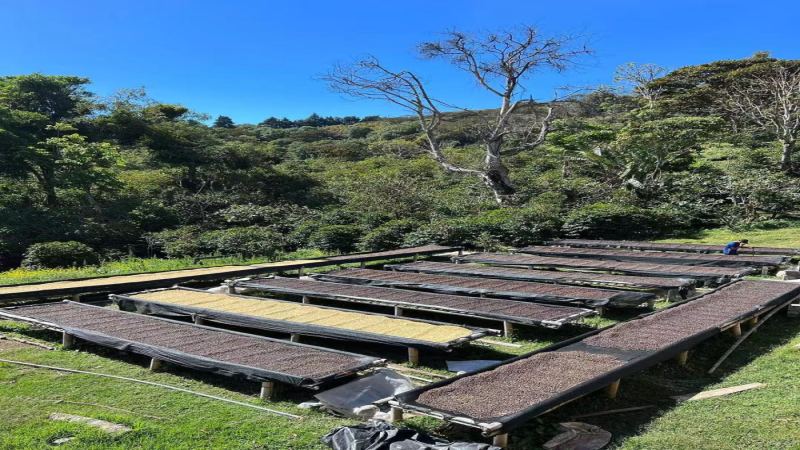
In the Boquete region of Panama, there is a legendary estate at nearly 1,850 meters above sea level—Elida. It belongs to the Lamastus family, with a history dating back to 1918. More than half of the estate lies within Baru Volcano National Park, making it one of the highest-altitude coffee estates in Panama. Here, Catuai, Typica, and Geisha are mainly grown. Thanks to its unique microclimate, strict shade-growing practices, hand-picking standards, and refined processing methods such as anaerobic fermentation and low-temperature slow sun-drying, the Geisha produced by Elida has a delicate and elegant flavor that is highly praised by coffee enthusiasts. Front Street Coffee will also use Elida Estate's ASD-process Geisha as an example to share brewing parameters and recommendations.
The history of Elida Estate can be traced back to 1918, and it belongs to the Lamastus family business. The name Elida was taken from the wife of the then farm owner, Mr. Robert Louis Lamastus.
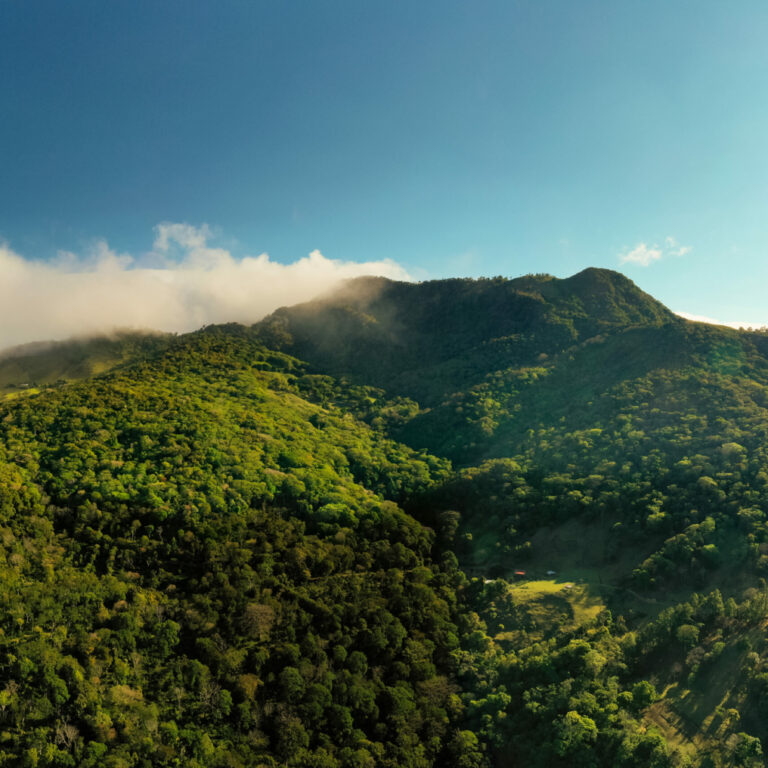
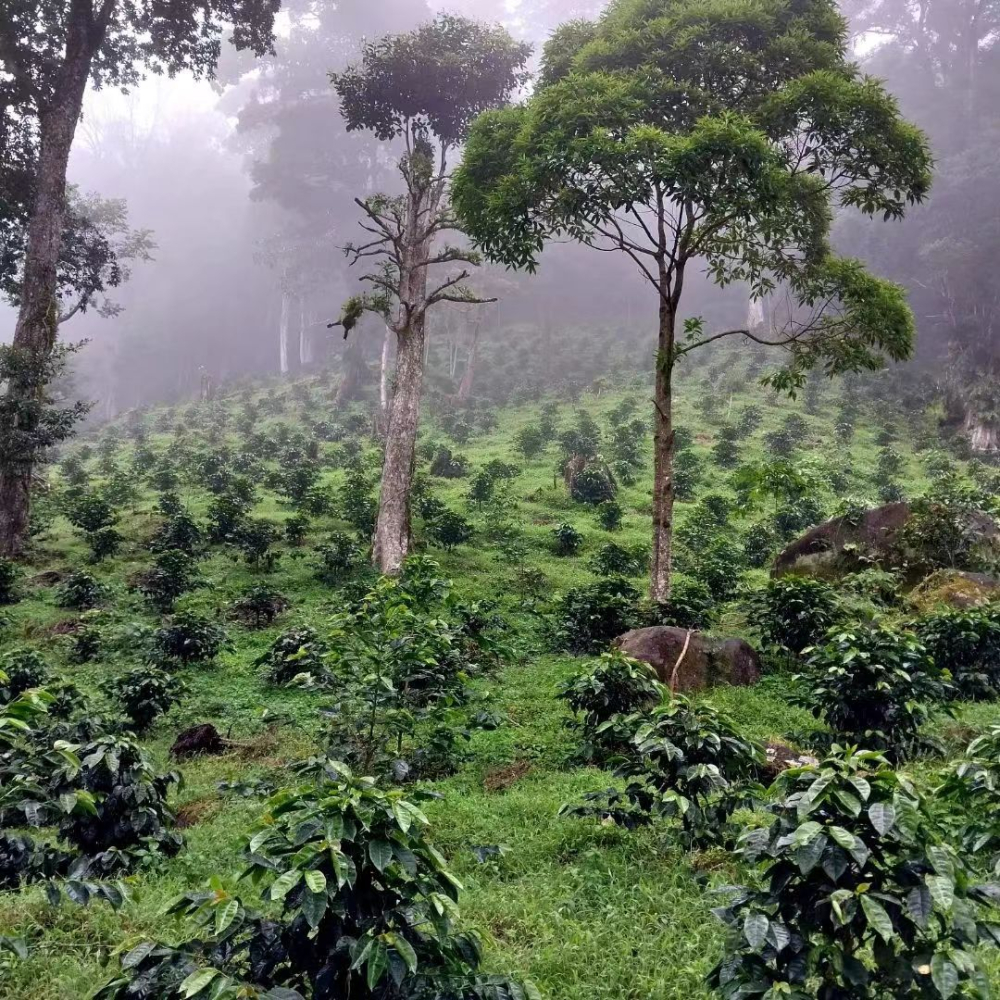
Elida Estate is located in the Boquete region, with an altitude that is almost the highest in all of Panama, and nearly half of the estate is included within the national protected park. Such an ultra-high-altitude estate is truly rare in Central America. Elida Estate covers a total area of 65 hectares, of which more than half is within Baru Volcano National Park. The area used for growing coffee trees is 30 hectares, while the other 35 hectares remain in a pristine forest state. The coffee-growing zone ranges from 1,670 to 1,850 meters above sea level, making it one of the two highest-altitude coffee estates in Panama (the other estate reaching the same altitude should be Carmen Estate in the Volcan Valley).
Baru Volcano is rugged, a young active volcano over 3,400 meters above sea level. Due to the extreme temperature difference between day and night, the coffee trees at Elida Estate require as long as five years of careful care from sowing to their first harvest—a quite lengthy wait (coffee trees in ordinary producing regions need only three years). Although plant growth slows down, this is greatly beneficial to the development of coffee flavor. After entering the harvest period, affected by temperature, the ripening period of the coffee fruit often exceeds one month. If, just before ripening, force majeure such as hurricanes or heavy rain occurs, even knowing it will cause major losses, the estate owner still insists on not harvesting early because the beans have not reached harvest standards, resulting in a sharp reduction in yield. Compared with low-altitude estates, the cultivation risk here is much higher.
According to Front Street, plantations in the Boquete region of Panama are mainly divided into three models: sun plantations, full-shade plantations, and semi-shade plantations. Those planting more than 50 trees per hectare are full-shade plantations; 25 to 50 trees count as semi-shade plantations; fewer than 25 trees are called sun plantations. So, under the same growing conditions, what exactly is the effect of shade or no shade on coffee?
Shade plantations can delay the ripening process of coffee fruit, allowing coffee cherries to accumulate more flavor compounds. Therefore, shade itself means increased costs and reduced yields, but the coffee produced has better flavor than semi-shade plantations under the same conditions. Today, most plantations in Colombia use a model of growing coffee trees together with banana trees, because Arabica varieties are becoming increasingly dwarfed, and banana trees can provide shade once they grow.
Most Geisha coffee beans from Panamanian estates undergo manual selection and are specialty Arabica beans, and each batch of beans can be traced. It is possible to trace which estate and which plot the beans come from, or which cooperative or which farmer, in pursuit of the taste of origin. Only by personally traveling to the coffee-producing region and stepping into a coffee estate can one possibly understand where that hint of coffee depth, captivating flavor, and shifting aroma actually comes from—whether it is the microclimate, the variety, the processing method, or the coffee farmer's secret recipe.
Geisha Variety
Geisha refers to a coffee variety, written in English as "Geisha/Gesha," which happens to be homophonous with the Japanese word for "geisha" (Geisha), so some people also call the Geisha coffee variety "geisha." The Geisha variety was discovered in 1931 in the Geisha forest of Ethiopia. After that, Geisha was sent to the Coffee Research Institute in Kenya, introduced to Uganda and Tanzania in 1936, to Costa Rica in 1953, and to Panama in 1970.
At first, Geisha did not attract much attention until Panama's Hacienda La Esmeralda (also known as Esmeralda Estate, Panama Geisha Hacienda La Esmeralda) separated it from other varieties in 2003 and then won the BOP competition in 2004. Only then did the Panama Geisha coffee variety formally enter the public eye. The Geisha variety has a delicate flavor, but such elegant flavor comes from a specific growing environment. Geisha is quite picky about its growing environment and requires cultivation in areas with higher altitude, cloud cover or abundant shade trees, and fertile soil. Among these, Boquete, Panama, is the most representative, and the Geisha produced there is deeply loved by coffee enthusiasts. The famous Hacienda La Esmeralda is also located there.
Back to the point, Elida Estate mainly grows three varieties: Catuai, Typica, and Geisha. The estate's processing plant is located halfway up the mountain, so after picking, the coffee can be transported to the factory for processing immediately, ensuring that the quality of the coffee fruit is not affected. Of course, Elida's environment is also suitable for growing other high-quality temperate crops, especially tree tomatoes and some uncommon high-altitude fruits. Interestingly, the flavors of these fruits can often also be captured in Elida's coffee.
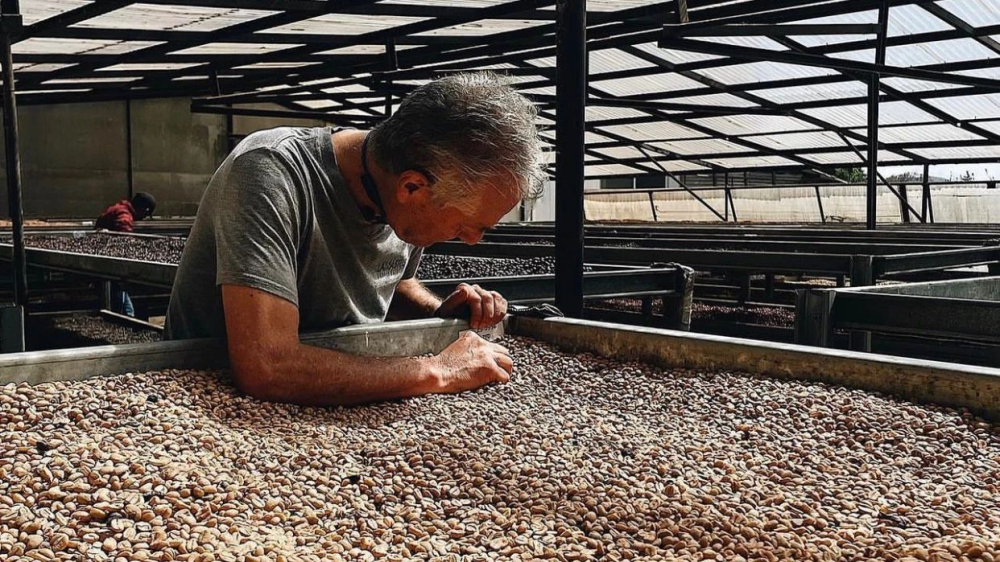
In addition to its exceptional ultra-high altitude and microclimate, the estate owner Mr. Wilford also put great effort into the harvesting and processing stages. To meet the highest standards, Elida Estate only allows hand-picking of the ripest coffee cherries (Ripe on Pinton). The higher the ripeness of the fruit, the naturally higher the sugar content of the mucilage, and this is also the foundation for forming Elida's high-quality flavor.
The estate owner Mr. Wilford is not only extremely strict about coffee cultivation and processing, but also more rigorous than his peers in the "purification" of green beans after processing. Taking Panama Elida as an example, after green bean processing is completed, it needs more than five months of low-temperature resting to remove greenness, which allows the coffee flavor to develop in a more balanced and fuller way. (Low-temperature resting is a green bean purification concept that coffee master George Howell began vigorously promoting in 2006. We have found that although green beans in subtropical regions certainly need low-temperature storage, different processing methods and altitude levels will change the low-temperature resting time. For Panama Elida, five months of low-temperature resting is optimal.)
Taking FrontStreet Coffee's Elida Estate ASD-process Geisha as an example
FrontStreet Coffee: Panama · Elida Estate Country: Panama Region: Boquete Estate: Elida Estate Altitude: 1,900 meters Variety: Geisha Processing Method: Anaerobic fermentation low-temperature slow sun-drying
Processing Method
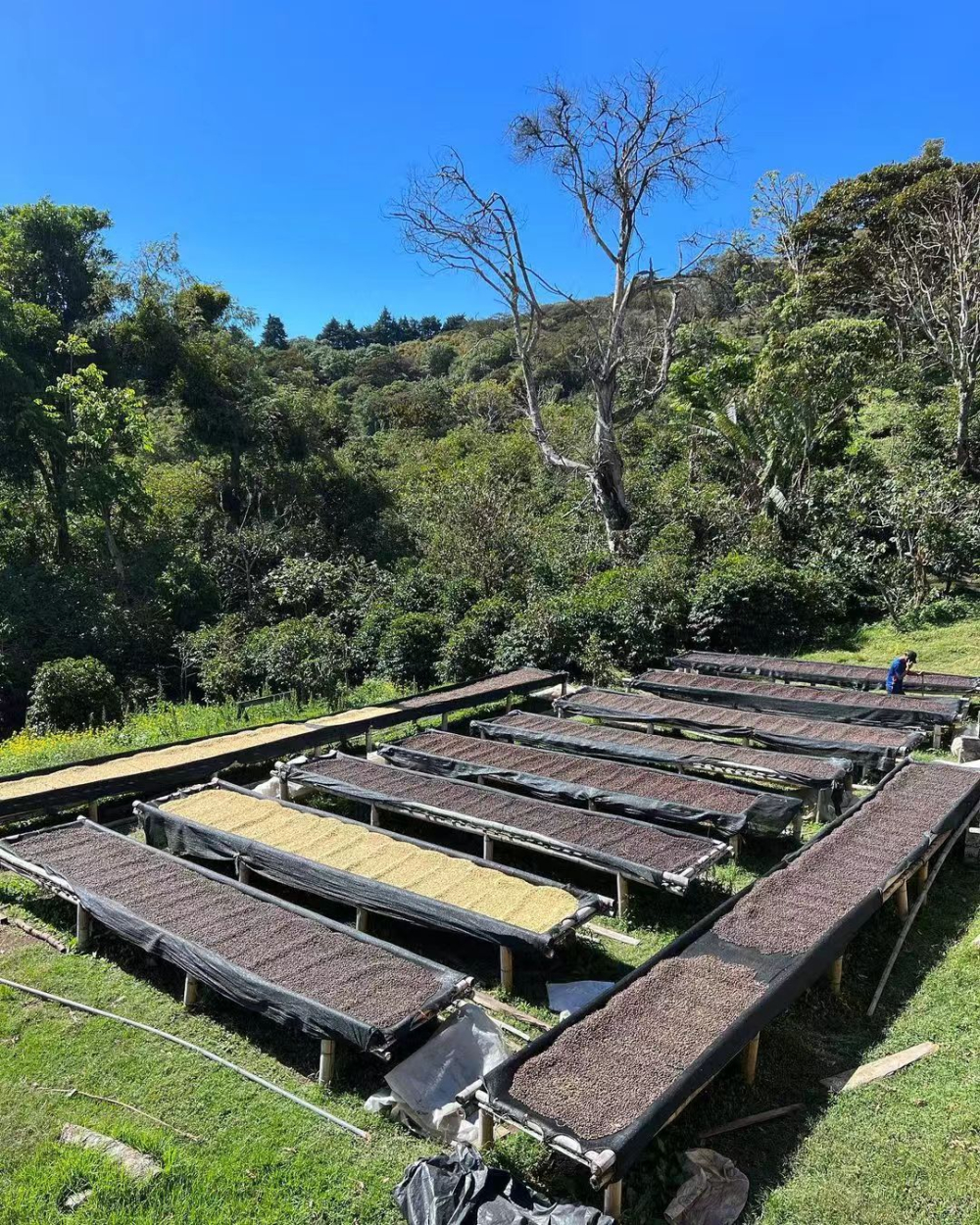
This coffee uses anaerobic fermentation low-temperature slow sun-drying processing. The harvested coffee cherries are placed in sealed containers to ferment for 4 to 5 days, and then a thick layer of coffee berries is spread on drying beds to allow them to dry slowly. The low-temperature slow sun-drying processing method requires producers to invest more time and energy. Nurtured by time, slow drying allows the coffee cherries to develop the best water activity during the process. First, the flavor develops better; second, the green beans can also be stored longer during the seasonal cycle. But at the same time, this method not only depends on favorable weather and requires climatic cooperation, but also extends the time required for each batch of production and increases the cost of green beans.
FrontStreet Coffee Barista's Pour-Over Parameters and Recommendations
Because Front Street takes into account that different batches of Geisha have different growing environments, the roaster will make corresponding adjustments according to the characteristics of the coffee beans, but the main roasting direction is to highlight Geisha's floral aroma and fruity acidity, using a medium-light roast.
In general, when brewing high-altitude hard beans and coffees with a flavor profile leaning toward prominent acidity, Front Street recommends using a higher water temperature of 92-93°C to extract more aromatic substances.
Dripper: V60 Water Temperature: 91-92°C Dose: 15g Coffee-to-Water Ratio: 1:15 Grind Size: fine granulated sugar size (80% passing a No. 20 sieve)
For brewing, Front Street uses staged extraction. Pour the ground coffee powder into the filter paper, start pouring 30g of water from the center and bloom for 30 seconds, paying attention to maintaining a steady circular pour from the inside out with a small stream throughout. In the second stage, pour 95g of water. Once the coffee liquid has almost finished flowing, begin pouring the third stage of 100g, and once the coffee has fully drained, remove the dripper. The total time is about 2 minutes, with an error margin of about 10 seconds either way.
The above content is compiled by CoffeeHunters, a coffee news website.


